

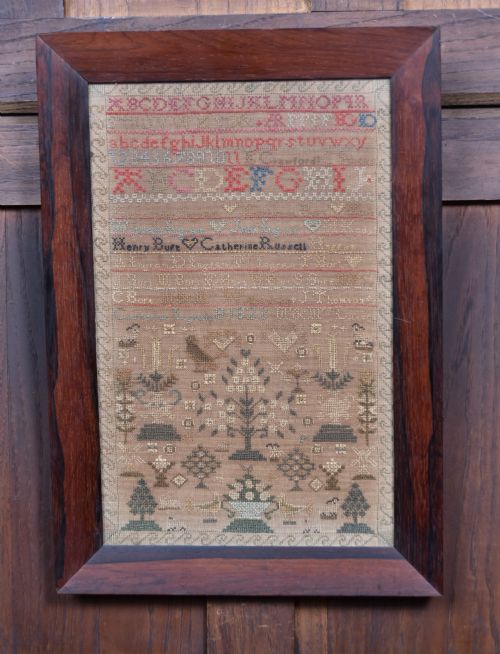


Framed Linen Needlework
These framed linen needlework pieces preserve centuries of domestic handiwork through alphabets, maps and verse stitched in silk and wool.
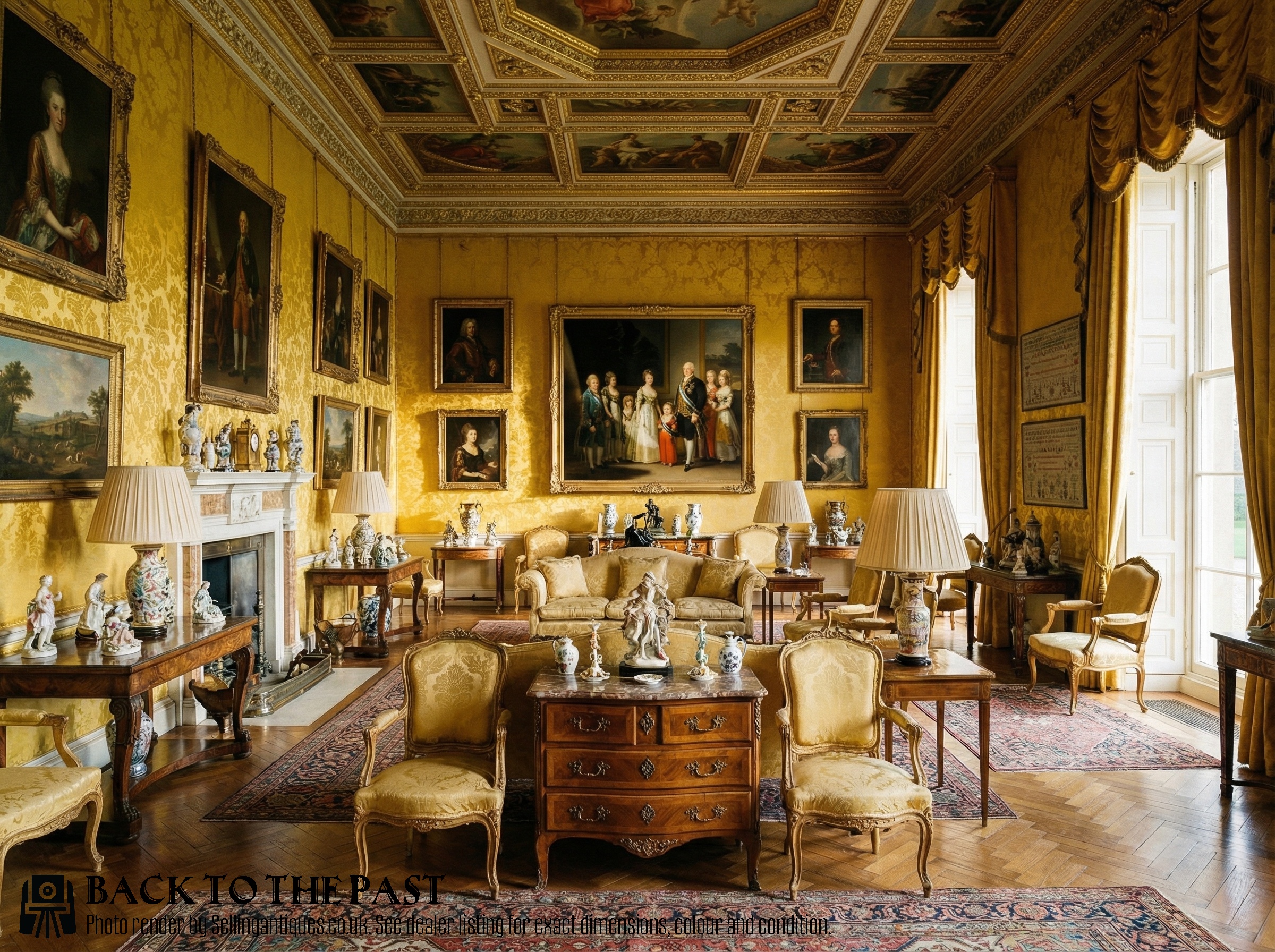
Framed Linen Needlework
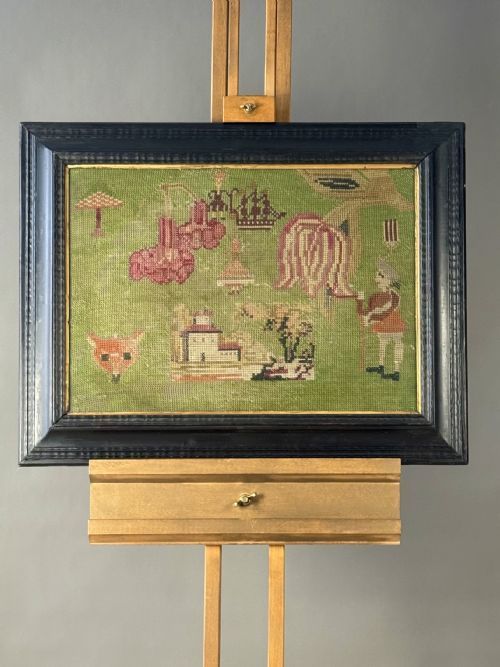
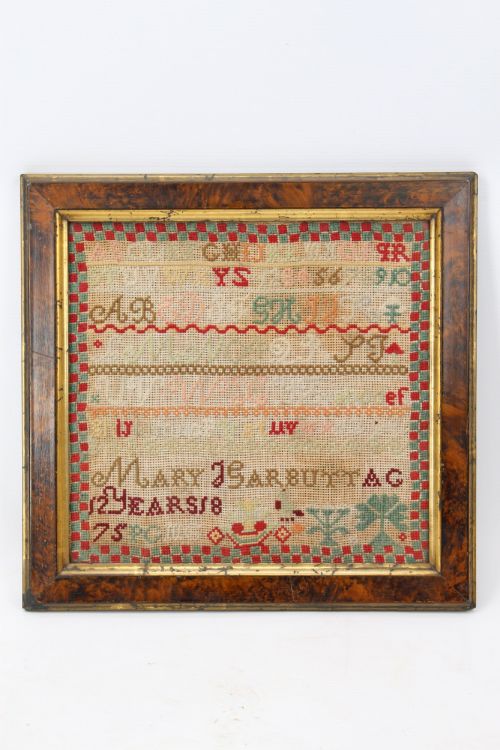
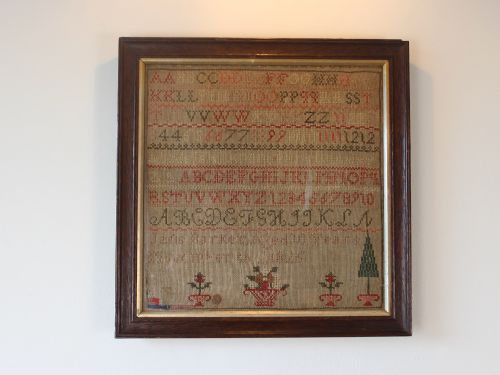
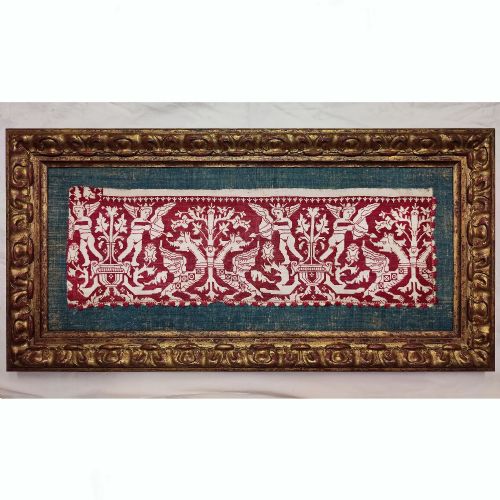
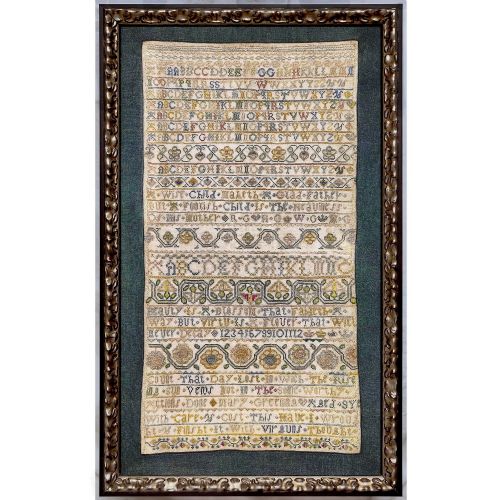
Framed linen needlework comprises historical samplers, maps and embroidered panels created across the seventeenth, eighteenth and nineteenth centuries. Examples range from early English band samplers and Scottish pieces to Greek island embroidery and French lace samplers. Makers often included young girls, such as Mary J Garbutt and Margaret Ann Blackow, who recorded their age and the date of their work.
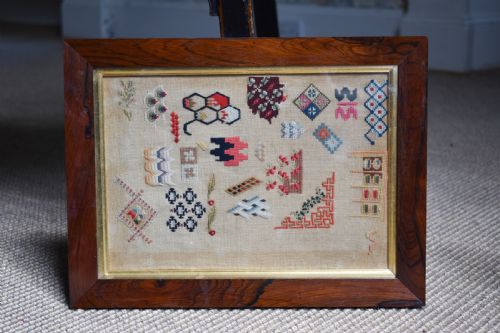
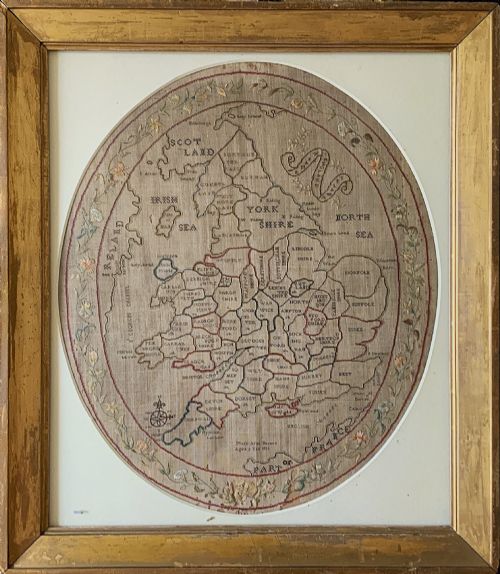
The format centres on textile panels mounted in wood and protected behind glass. Common variations include alphabet samplers, map designs of England and Wales, and religious texts like the Lords Prayer and the Commandments. Pieces span folk art styles as well as Georgian and Victorian aesthetic traditions.
Materials and construction
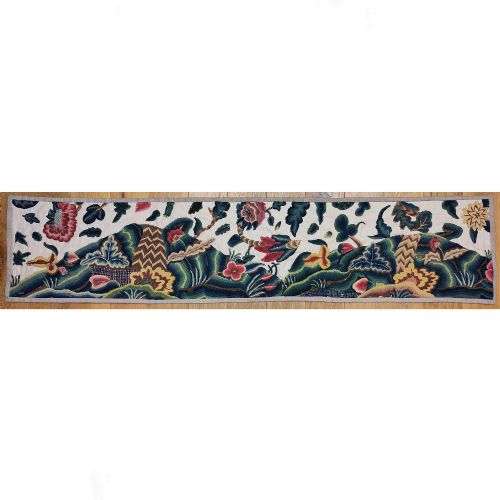
Makers stitched onto a linen ground using silk thread, silk floss and wool yarn. These textiles relied on natural fibres spun by hand and dyed in muted or rich tones depending on the period. Crewelwork panels and band samplers utilised varied stitches to build pictorial and textual compositions.
Mounting typically involves historical wood frames fitted with glass to protect the delicate fabric and thread work from dust and handling. The backing often consists of older timbers that enclose the textile panel securely.
Materials documented in the inventory comprise linen, silk, wool, glass, and wood used across samplers, maps, and crewelwork panels.
Distinctions in quality
Quality rests upon the execution of the stitching, the complexity of the design and the legibility of the lettering or cartography. Map samplers and detailed pictorial scenes demand higher technical skill than basic alphabet grids, while minor stitch errors add individual character to otherwise disciplined schoolroom exercises.
Condition plays a central role, particularly the preservation of the linen ground and the original vibrancy of the silk or wool threads. Intact early framing and legible inscriptions naming the maker and date elevate the historical significance of the piece.
Mary J Garbutt·Mary Banion·Mary Greening·Annabella Samon·Jane Wettmore·Louiss Elkins·Elizabeth Horn·Ann Hodson·Margaret Ann Blackow·Maggie Muir·Sarah Baker·Mary Mason·Ann B Gilies·Sarah Anne Hudson·Martha Hall·Mary Street·Rachel·Sarah Reading·Jane Pattinson·Eleanor Grady
The Framed Linen Needlework Glossary
- Sampler
- A piece of needlework produced as a demonstration or test of skill in various stitches. These frequently display alphabets, numbers and motifs.
- Band sampler
- An early format featuring horizontal rows of disparate patterns and stitches arranged in bands. They date predominantly to the seventeenth and eighteenth centuries.
- Crewelwork
- Embroidery executed with wool yarn on a linen or cotton twill ground. It appears in English panels depicting floral and botanical motifs.
- Map sampler
- A geographical needlework project depicting regions such as England and Wales. Young makers stitched these to combine needle skills with geography lessons.
- Silk floss
- Unspun or loosely twisted silk fibres used for embroidery. This material yields a high sheen compared to standard spun thread.
Framed Linen Needlework: Frequently Asked Questions
How old are these samplers?
The pieces span from the seventeenth century through the Georgian and Victorian eras up to the late nineteenth century. Many bear specific dates worked directly into the linen alongside the maker's name.
Earlier examples from the seventeenth and eighteenth centuries show distinct band sampler formats, while nineteenth-century works frequently feature alphabets, maps, and moral verses.
Who made these embroidered pieces?
Many samplers were worked by young girls and school pupils as part of their education in domestic needlework. Names, ages, and school affiliations often appear stitched into the fabric.
Names such as Mary J Garbutt, Margaret Ann Blackow, and Sarah Reading record the identities of these young makers across different decades.
How should I hang framed needlework?
Protect the textile from direct sunlight to prevent the silk and wool threads from fading. Hang pieces on stable interior walls away from dampness and extreme temperature shifts.
Ensure the existing wood frame and glass mounting remain secure to support the weight of the linen panel safely.
What subjects do the designs cover?
Designs range from simple alphabet and number grids to complex topographical maps of England and Wales. Other common subjects include religious texts like the Lords Prayer and the Commandments.
Greek island embroideries and Italian borders introduce regional folk art patterns and distinct floral motifs into the selection.