



Historic Embroidery Panel
A historic embroidery panel brings centuries of needlework into a modern room, offering intricate textiles worked in silk, wool, and linen.
Historic Embroidery Panel
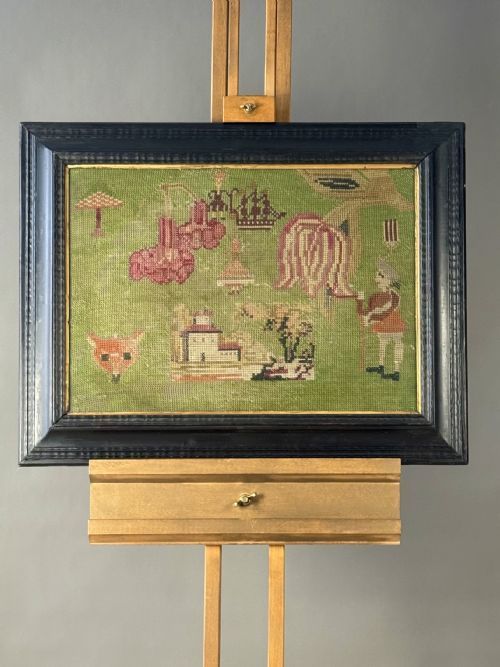
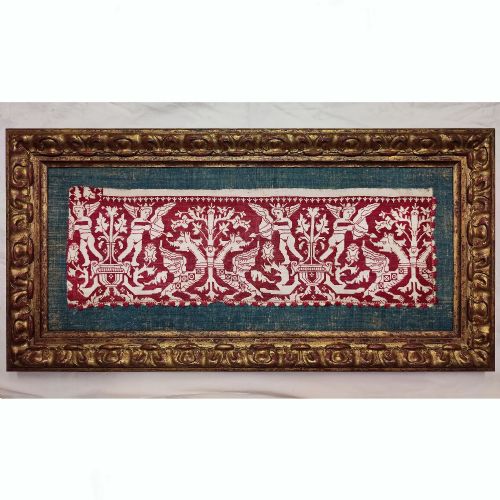
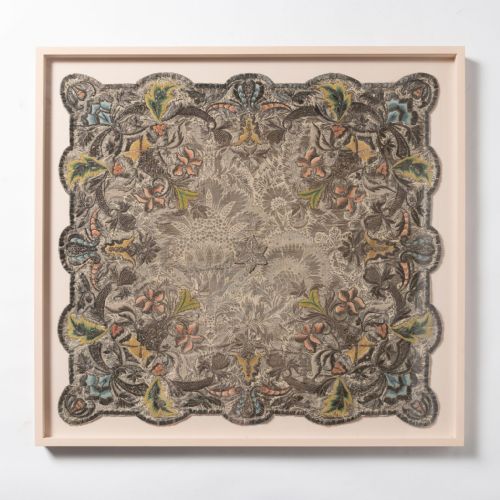
A historic embroidery panel encompasses needlework samplers, framed textile art, and wall hangings spanning from the seventeenth century through the Victorian era. These textiles record domestic skill, alphabets, religious verses, and pictorial scenes created by makers of various ages.
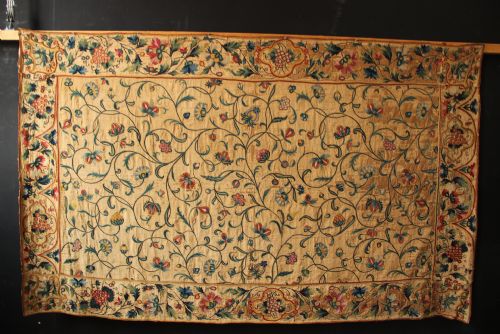
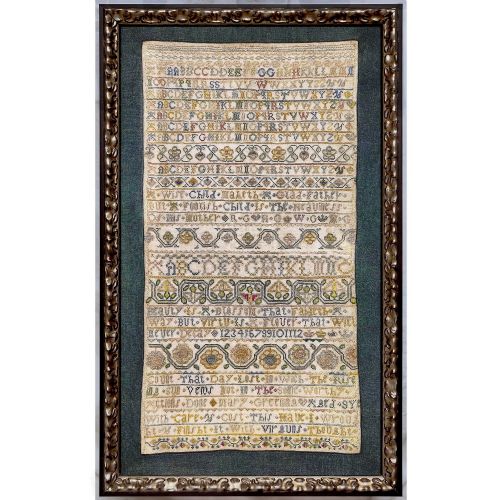
The most common examples on this page are nineteenth-century samplers worked by young girls alongside eighteenth-century crewelwork and framed silk pictures. Pieces range from modest band samplers to large crewelwork wall hangings mounted in period timber frames.
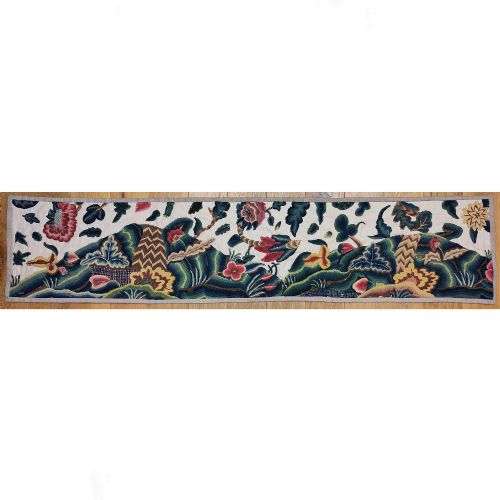
Origins span English, Italian, and Greek traditions, reflecting diverse regional styles such as Stuart motifs, Jacobean crewelwork, and Greek Island bedsheet borders. Each textile reveals the domestic or courtly aesthetic of its specific period of production.
Materials and construction methods
Makers utilised a foundation of linen or wool fabric, working surface stitches with silk thread, wool yarn, and occasionally metallic threads. These organic materials account for the surviving texture of the textiles over centuries.
Needlework techniques include crewelwork, needlepoint tapestry, and counted-thread embroidery. Panels are frequently framed in wood, gilt wood, or glass to protect the fragile textile surface.
Stitch execution varies from dense tent stitch and cross stitch to flowing crewel embroidery stitches. The interaction between the ground fabric and the coloured threads defines the visual depth of each panel.
Historic Embroidery Panel Retail Price Guide 2026
Typical asking prices for historic embroidery panel among the pieces listed under this phrase on Sellingantiques today, from the lower quarter to the upper quarter. They describe what is for sale here now, not the wider market.
One Victorian sampler preserves an authentic stitch error by young Maggie Muir, reminding us that schoolroom perfection was rarely absolute.
Distinctions in quality and execution
The sophistication of the design and the precision of the needlework distinguish finer examples from simpler schoolroom exercises. Advanced panels display complex pictorial compositions, varied stitch vocabularies, and accomplished shading.
Material selection impacts the character of the piece, with fine silk threads and well-preserved wool yarns retaining stronger colour relationships than degraded materials. The survival of the original ground fabric without extensive losses elevates the integrity of the textile.
The integration of the textile with its period frame contributes to the overall cohesion of the object. Gilded wood frames from the eighteenth and nineteenth centuries complement the visual weight of the mounted embroidery.
Mary Greening·Ann Hodson·Margaret Ann Blackow·Maggie Muir·Sarah Baker·Martha Hall·Jane Pattinson·Eleanor Grady
The Historic Embroidery Panel Glossary
- Band sampler
- A narrow strip of linen worked with a horizontal series of different stitch patterns and motifs. These served as reference folios for embroiderers before paper pattern books were common.
- Crewelwork
- Embroidery executed with two-ply wool yarn on a linen or cotton twill ground. It is frequently associated with seventeenth and eighteenth-century English decorative hangings and furnishings.
- Needlepoint
- Stitches worked on an open-weave canvas foundation that completely covers the ground fabric. This technique creates a rigid, durable tapestry surface often used for pictorial panels.
- Sampler
- A demonstration piece created to practice or exhibit needlework skill. Examples often include alphabets, numerals, verses, and pictorial motifs.
- Tapestry
- A heavy textile woven on a loom or executed in needlepoint to depict figurative scenes. Antique examples often portray courtly or mythological subjects within decorative borders.
Historic Embroidery Panel: Frequently Asked Questions
How old are these embroidered panels?
The pieces span from the seventeenth century through the Victorian period, with significant representation from the eighteenth and nineteenth centuries.
Dates are established through stylistic analysis of lettering fonts, motifs, and material composition, alongside occasional maker signatures and dates worked directly into the textiles.
How were samplers used historically?
Samplers functioned as working portfolios for young embroiderers to record stitch variations, alphabets, and decorative motifs. They demonstrated household competence and literacy.
Later Victorian samplers served primarily as decorative educational exercises, often commemorating the age and name of the maker alongside moral or religious verses.
How do I care for a historic textile?
Historic embroidery panels require protection from direct sunlight to prevent the fading of silk and wool threads. Stable indoor humidity helps preserve organic textile fibres.
Displaying panels behind glass within a secure frame prevents dust accumulation and physical contact with the delicate embroidery surface.
What is crewelwork embroidery?
Crewelwork involves stitching with wool yarn onto a sturdy linen or twill foundation. It is known for organic floral and fauna motifs.
Originating strongly in seventeenth-century England, this technique produces textured, tactile wall hangings and furnishings with a distinct sculptural quality.