




Traditional Needlework Art
Traditional needlework art brings together centuries of hand-stitched textiles, offering rich wall hangings and samplers that anchor a room with history.
Traditional Needlework Art
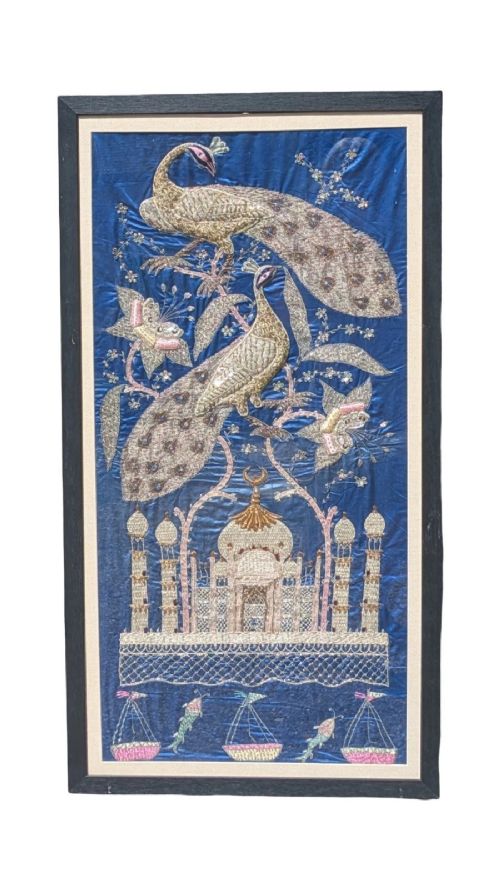
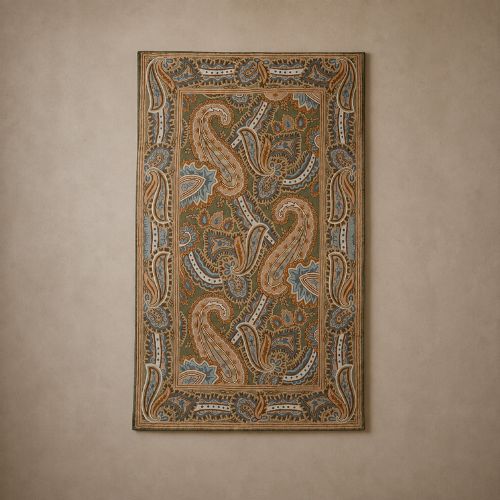
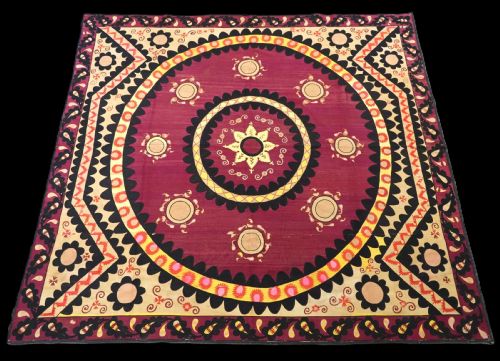
Traditional needlework art spans diverse global textile traditions, ranging from Central Asian Suzanis and Indian silk embroidery to Scandinavian pillow embroidery and British samplers. These pieces function primarily as wall art, textile panels, and mounted fragments designed to introduce colour and historical depth into interiors.
The selections on this page are dominated by embroidered panels and Suzanis originating from regions such as Bokhara, Tashkent, and Nurata, alongside folk art samplers and crewelwork. Buyers encounter both large wall hangings measuring over a metre and smaller framed fragments that showcase intricate regional stitching.
Originating across the eighteenth, nineteenth, and early twentieth centuries, these textiles reflect distinct cultural aesthetics and domestic handcraft. Whether viewing a fully embroidered Palak Suzani or a folky stitched sampler, the focus rests on authentic hand-stitched execution and period materials.
Materials and construction
Makers utilised natural textiles as a foundation, predominantly linen, cotton, and silk, providing a stable ground for complex thread work. These base fabrics were stretched or mounted for display, with larger wall hangings often incorporating substantial wooden frames or protective glass.
Needlework relied on specialised fibres including wool, wool thread, silk, and metallic thread to build texture and colour depth. Artisans employed varied regional stitches, from crewelwork techniques to dense Suzani embroidery, executing botanical, geometric, and figurative motifs by hand.
Traditional Needlework Art Retail Price Guide 2026
Typical asking prices for traditional needlework art among the pieces listed under this phrase on Sellingantiques today, from the lower quarter to the upper quarter. They describe what is for sale here now, not the wider market.
Makers stitched secret messages and private dates into regional samplers, leaving small historical puzzles for modern collectors to decode.
Assessing quality and execution
Quality in traditional needlework art depends upon the density of the stitching and the precision of the needlework execution. Fully embroidered panels with intricate floral designs on a red ground demonstrate greater artisan labour than sparsely worked fragments.
The condition of the natural fibres and the vibrancy of surviving silk, wool, or metallic threads determine the visual impact of a textile. Intact grounds and secure mounting preserve the structural integrity of pieces originating from the eighteenth to early twentieth centuries.
The Traditional Needlework Art Glossary
- Suzani
- A traditional embroidered tribal textile from Central Asia, typically featuring bold floral designs worked in silk on a cotton or linen ground. These large panels were traditionally made as part of a bride's dowry.
- Sampler
- A piece of needlework produced by a maker to demonstrate proficiency in various stitches and alphabets. Older examples often include dates, names, and pious verses.
- Crewelwork
- A type of surface embroidery using wool thread on a heavy linen or cotton twill fabric. It allows for rich texture and shading in traditional botanical motifs.
- Palak Suzani
- A fully embroidered Central Asian textile where the background fabric is almost entirely covered by dense stitching. This style represents the most labour-intensive tier of Suzani production.
Traditional Needlework Art: Frequently Asked Questions
How do I hang a textile safely?
Large textile panels and wall hangings require even weight distribution across the upper edge to prevent distortion of the fabric and linen grounds.
Professional mounting behind glass or using a padded Velcro suspension system protects delicate silk and wool threads from environmental dust and handling strain.
Where were Suzanis made?
Suzanis originated in Central Asia, with major production centres located in historical regions including Bokhara, Tashkent, and Nurata.
Nomadic and sedentary artisans in these areas stitched large silk panels featuring distinct regional floral and geometric motifs.
What is a sampler?
A sampler is a historical exercise in needlework where a maker practiced different stitches, borders, and lettering alphabets.
These pieces often record dates and maker names, serving as a vital record of domestic textile education and folk art.
How do I clean antique needlework?
Antique textiles made from silk, wool, and cotton require specialised conservation rather than standard domestic washing methods.
Surface dust can be gently removed with low-suction vacuuming through a protective mesh, while deeper cleaning must be left to textile conservators.