
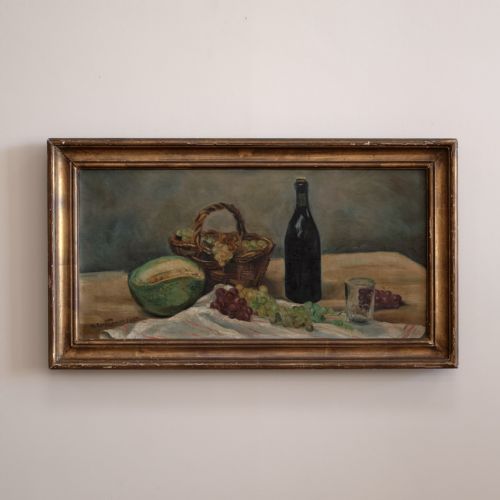
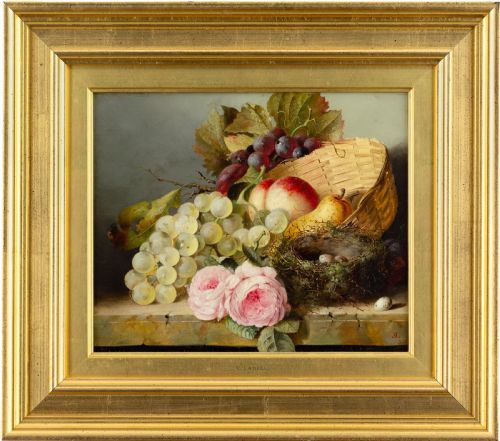
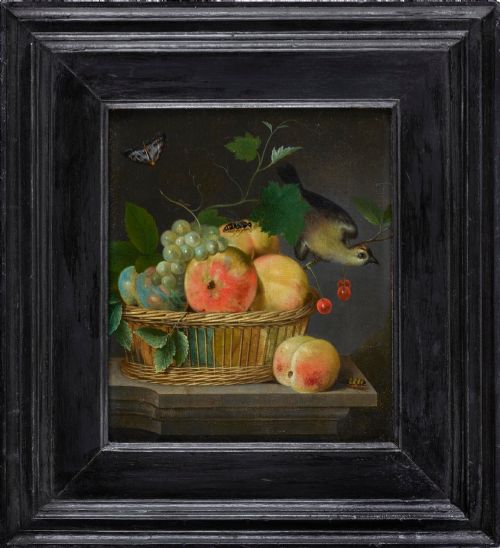
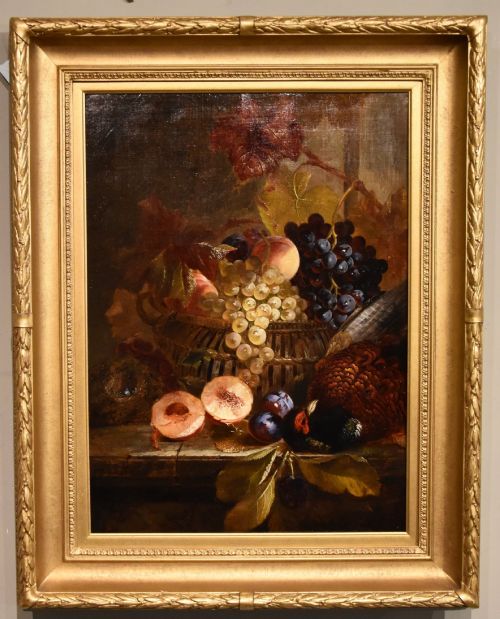
Framed Fruit Still Life
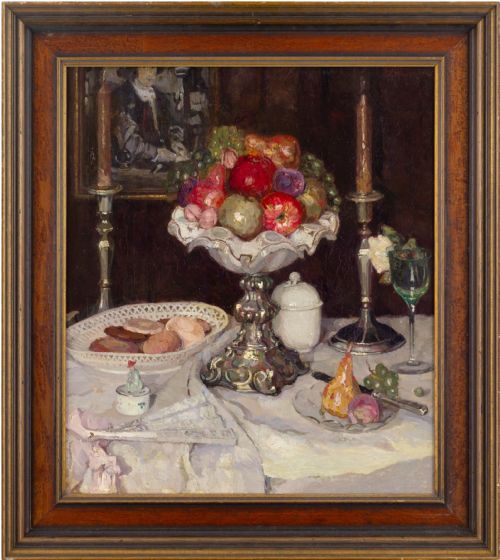
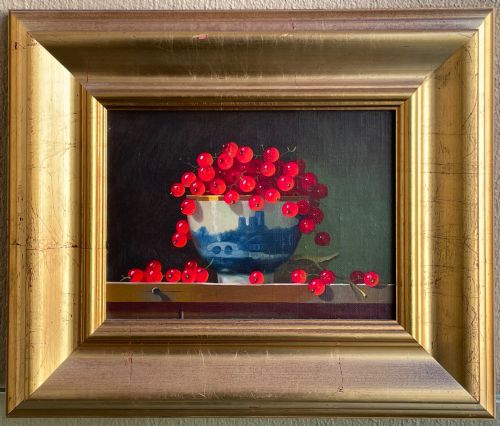
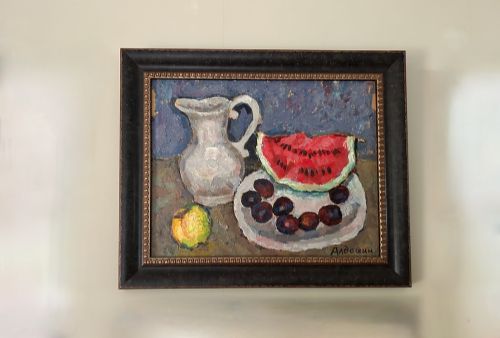
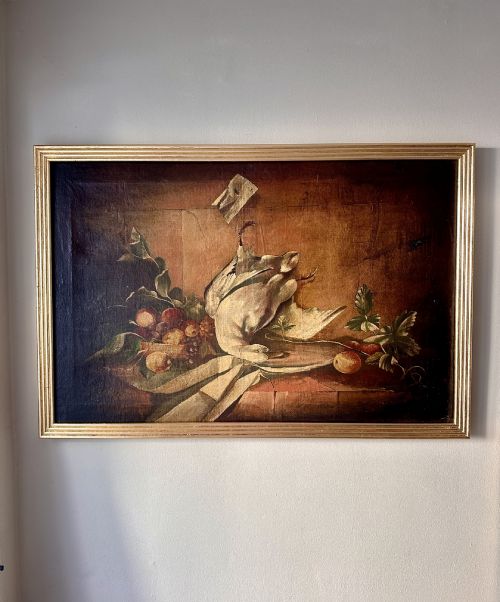
Framed fruit still life works bring centuries of domestic bounty to your walls, spanning precise Victorian academic studies to mid-century modern canvases.
Framed Fruit Still Life
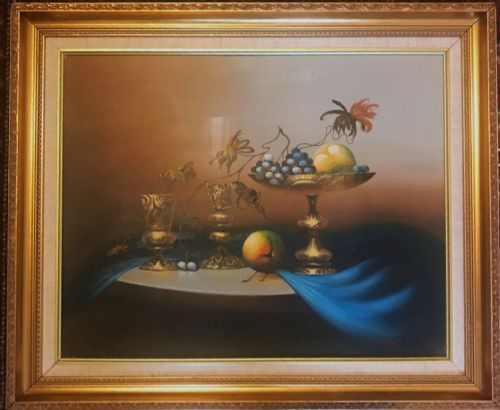
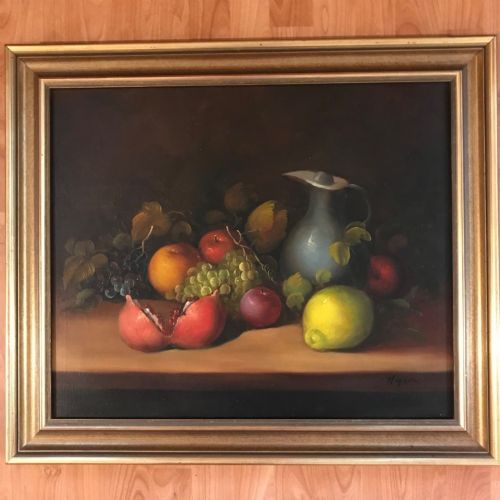
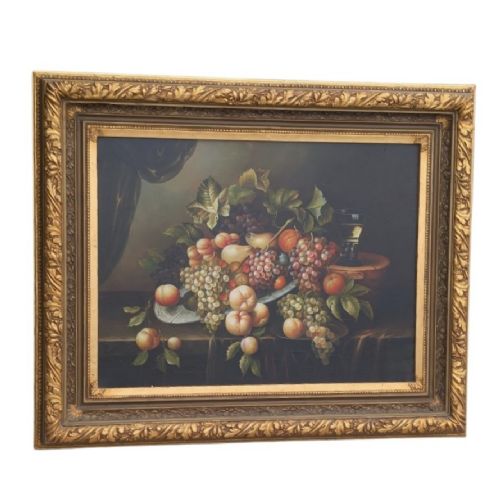
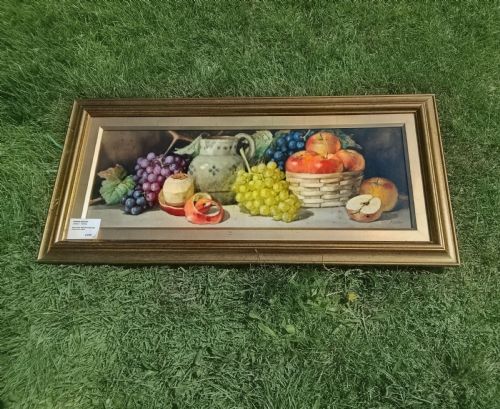
A framed fruit still life captures arranged harvests of apples, grapes, berries, and melons, often accompanied by baskets, jugs, or glassware. These works range from 17th-century compositions to mid-century modern interpretations.
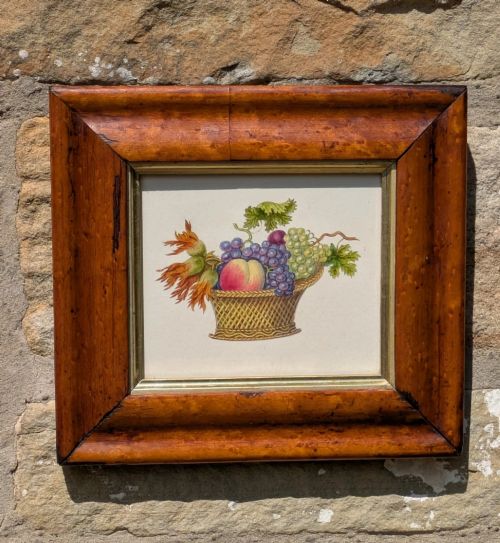
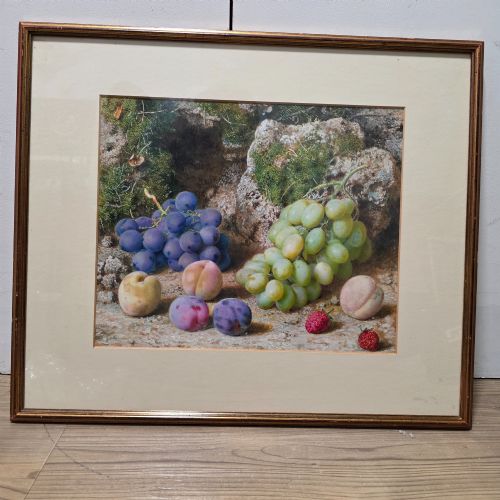
The selections available run through 19th-century Victorian, Edwardian, and early 20th-century periods, alongside post-impressionist and mid-century examples. Common formats include oil on canvas, wood panels, and watercolours.
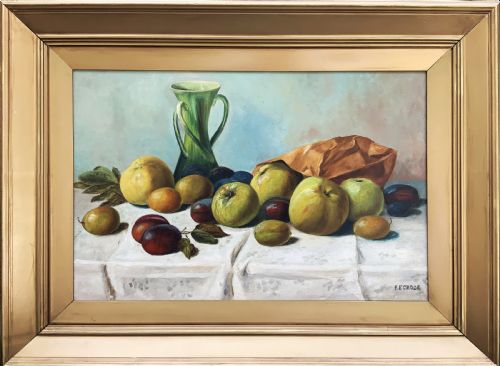
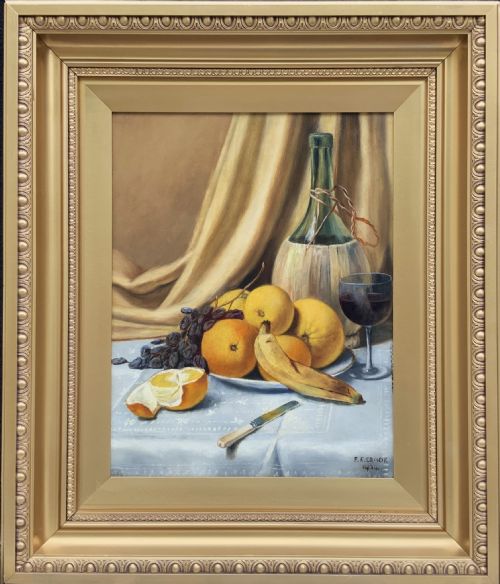
Many pieces display traditional Classical Realism, while others lean towards Post-Impressionism or abstracted European studies. Domestic settings often integrate game, flowers, or tableware alongside the fruit.
Materials and construction
Artists painted primarily with oil paint on canvas or wood panels, though watercolour on paper appears frequently in 19th-century pieces. Canvases are stretched over wooden frames and often housed in heavy gilt wood or solid period frames.
Gold leaf and gilt finishes accentuate the surrounds, adding warmth and depth to the compositions. The physical support structures utilise timber for stretchers and ornate decorative mouldings for the borders.
Several baskets of fruit mysteriously share table space with dead game birds and stray biscuits.
Evaluating quality and execution
Quality rests in the handling of light, texture, and naturalism, where the depiction of bruised rinds, dewdrops, and woven wicker reveals the painter's ability. Finer examples balance colour harmony with precise perspective in rendering fruit and tableware.
The integrity of the original period frame heavily influences desirability. Solid wood and giltwood surrounds that match the era of the canvas indicate careful preservation.
Edward Ladell·Gaspar Peeter Verbruggen·John Sherrin·Victor Simonin·James Tower·Maud Frances Eyston Sumner
The Framed Fruit Still Life Glossary
- Giltwood
- Wood that has been coated with a thin layer of gold leaf or gold paint. This technique provides an ornate, reflective border typical of period frames.
- Canvas
- A heavy woven fabric used as a surface for oil paintings. Artists stretch this material over a wooden frame before applying paint.
- Classical Realism
- An artistic style focused on accurate, lifelike representation of subjects. Works in this vein show detailed attention to natural textures and lighting.
- Watercolour Painting
- A method where paints are made of pigments suspended in a water-based solution. These works are typically executed on paper and mounted under glass.
- Post-Impressionism
- An art movement extending beyond impressionism to emphasise symbolic content and expressive use of paint. Artists in this style explore bolder forms and flattened perspectives.
Framed Fruit Still Life: Frequently Asked Questions
What periods do these paintings come from?
The selection spans from the 17th century through the Victorian and Edwardian eras into the mid-20th century. Earlier works often reflect Baroque or classical traditions.
Later pieces embrace impressionistic or abstracted European modernism while maintaining the central theme of harvested fruit.
How were these artworks originally displayed?
These paintings were traditionally hung in dining rooms, parlours, and larders to celebrate abundance and hospitality. Their rich colour palettes complemented formal domestic interiors.
Original giltwood frames were designed to catch candle or gas light, enhancing the luminosity of the canvas.
Are watercolours framed differently from oils?
Watercolour paintings require glass protection to prevent moisture and dust damage to the paper. They are typically mounted with paper mats behind the glass.
Oil paintings on canvas or wood panels remain unglazed, allowing the textured paint surface to interact directly with the room's air.
How do I identify a Victorian piece?
Victorian still lifes often feature dense arrangements of fruit in wicker baskets alongside birds' nests, glassware, or game. The brushwork tends toward high realism and deep shadow contrasts.
These canvases are frequently housed in heavy moulded gilt frames typical of the 19th century.