
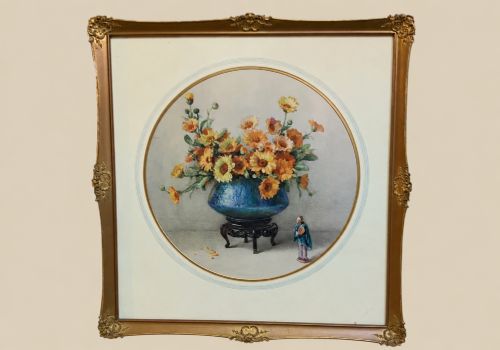
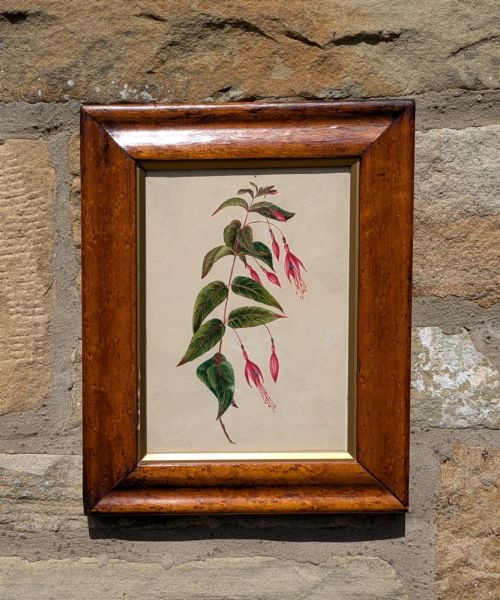
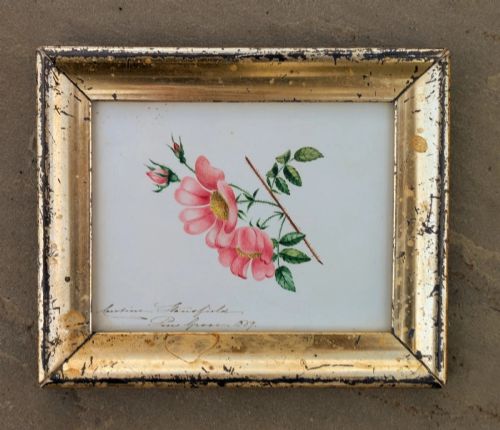
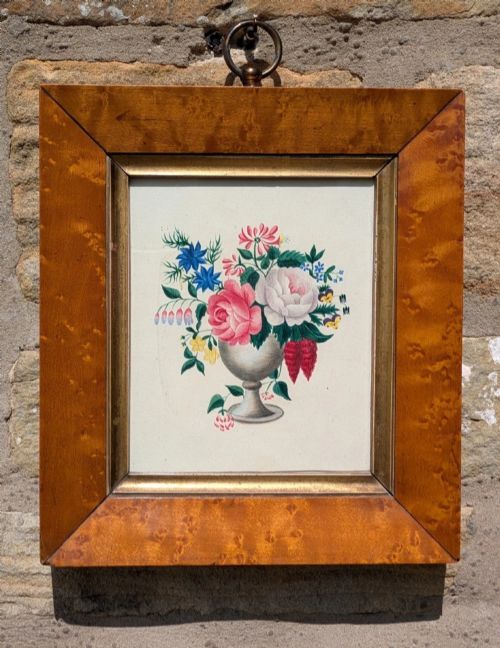
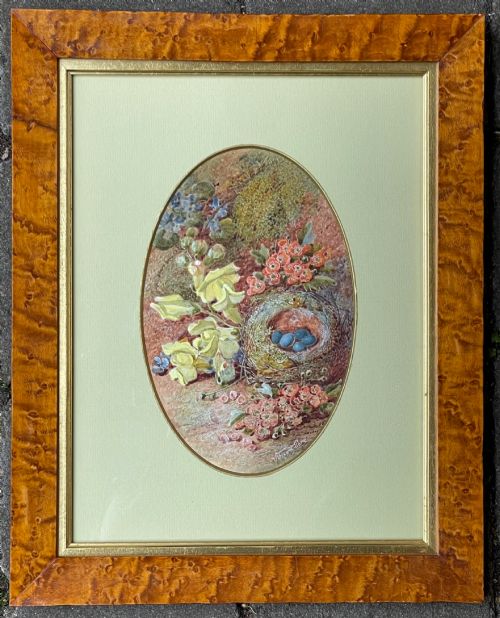
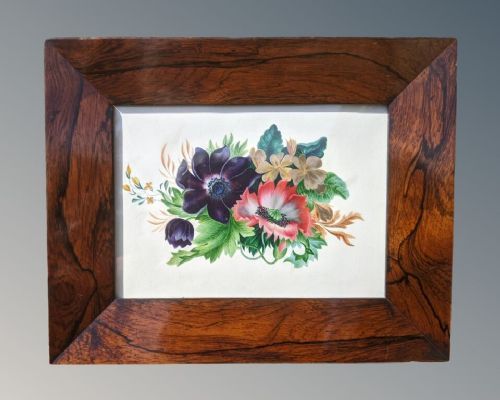
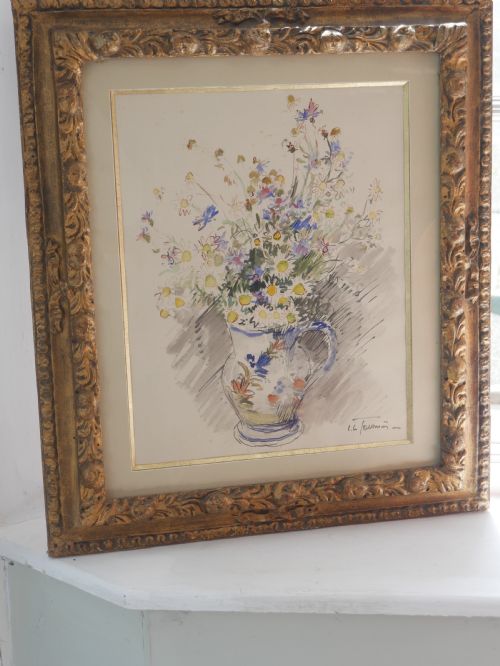
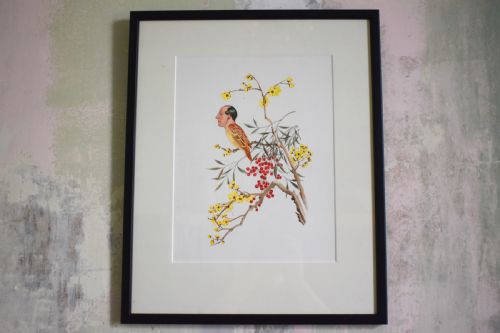


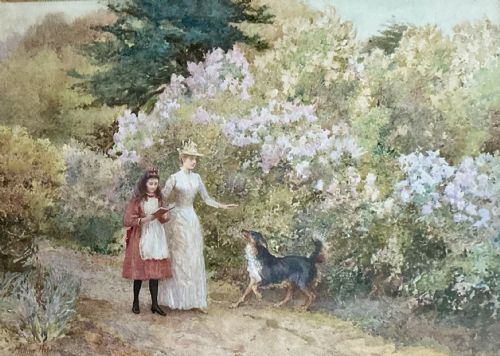
Framed Floral Watercolour
Framed floral watercolour works bring delicate botanical studies and garden scenes onto the wall in protective glass-fronted housings.
Framed Floral Watercolour
A framed floral watercolour presents delicate botanical studies, cottage gardens, and still-life arrangements created with water-based pigments on paper. These works capture transient blooms through transparent washes and fine pencil or gouache detailing.
The pieces on this page span from the nineteenth century through the mid-twentieth century, encompassing Victorian naturalism, Edwardian garden scenes, and mid-century modernist still lifes. Common subjects include roses, pansies, and summer flowers arranged in jugs or rendered in natural settings.
Buyers encountering this phrase will find everything from precise botanical illustrations to looser Impressionist garden views. Most examples arrive protected behind glass within wooden or gilt frames that preserve the paper support.
Materials and technique
Artists painted primarily with watercolour pigment on paper, occasionally adding body colour in the form of opaque gouache or pencil underdrawing to build depth and highlight specific petals.
Finished sheets were secured behind glass and mounted within timber surrounds, frequently utilising gilt wood or specialised frames such as French Aesthetic movement pewter.
The listings on this site encompass watercolours created across the nineteenth and twentieth centuries, utilising paper, glass, wood, and gouache.
Evaluating quality
Quality rests upon the artist's handling of pigment transparency and botanical precision, where confident brushwork separates skilled academic studies from rigid or flat illustrations.
The integrity of the paper support and the vibrancy of the remaining colours dictate overall excellence, alongside the harmonious pairing of the artwork with its period frame.
Vincent Clare·James Tower·Alice Anne Renshaw·Harry Wanless·Henrietta Creswell·Arthur Hopkins·William Edward Fox·Theresa Stannard·Lilian Stannard·William Hough·Eloise Harriet Stannard·Rowland Henry Hill·Grace Hastie·Margaret Laing·Phyllis I Hibbert·Marian Chase·Jabez Bligh·Owen Bowen·Charlotte Isa James·David Woodlock·Alice Macallan Swan·Marion Broom·Annie Mary Youngman·Edith Alice Andrews·Jane Utley
The Framed Floral Watercolour Glossary
- Watercolour
- A painting method where the paints are made of pigments suspended in a water-based solution. This medium relies on the white of the paper to provide luminosity through translucent washes.
- Gouache
- An opaque water-based paint that includes a white pigment filler, producing a heavier and more solid finish than traditional watercolour. Artists often combined it with watercolour to create opaque highlights on flowers.
- Gilt wood
- Timber frames covered with a thin layer of gold leaf or gold paint. These ornate surrounds were frequently employed during the nineteenth and early twentieth centuries to complement botanical paintings.
- Botanical study
- A detailed visual recording of plant anatomy or floral specimens. These works balance artistic composition with scientific observation of leaves, stems, and petals.
- Aesthetic movement
- A late nineteenth-century design current that emphasised visual and compositional beauty over narrative or moral themes. Frames and compositions from this influence often display refined craftsmanship.
Framed Floral Watercolour: Frequently Asked Questions
How should I hang these watercolours?
Keep them out of direct sunlight to prevent the pigments from fading over time. Direct UV rays can permanently damage the delicate washes on the paper.
Position them on interior walls where humidity and temperature remain stable. Avoid damp spaces like unventilated bathrooms to protect the paper support and frame.
What periods do these pieces represent?
The listings span from the nineteenth century through the 1950s. This includes Victorian naturalism, Edwardian works, and mid-century British modernism.
Earlier pieces often feature tight botanical accuracy, while twentieth-century examples lean towards expressive brushwork and looser still-life compositions.
Are these works original paintings?
Every piece listed under this phrase is an original hand-painted work on paper rather than a modern mechanical reproduction. Artists applied pigment directly by hand.
Close inspection often reveals individual brush hairs, pencil underdrawings, and the varied texture of the paper surface.