


Framed Equestrian Watercolour Artwork
These framed equestrian watercolour artwork pieces capture horses, riders, and rural sporting scenes across centuries of British and European draughtsmanship.
Framed Equestrian Watercolour Artwork
When you search for framed equestrian watercolour artwork, you enter a field populated by sporting scenes, coaching depictions, and precise studies of horses from the nineteenth and early twentieth centuries. The works span Victorian portrayals, Edwardian illustrations, and mid-century racing compositions, capturing subjects ranging from hunts and fairs to military cavalry and stable yards.
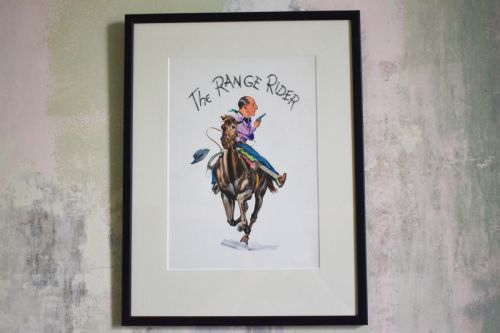
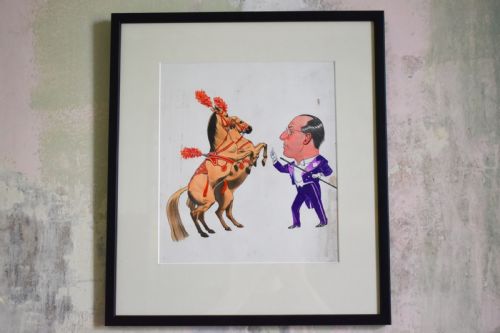
You are most likely to meet original watercolours and gouache paintings housed behind glass within period wood or oak frames. These pieces vary from lively cartoon sketches to detailed portraits by named artists, documenting historical rural life and human connection with horses.
Materials and Techniques
Artists painted primarily with watercolours and gouache on paper, occasionally incorporating ink for fine outlines and definition. These pigments were applied with varying opacity, allowing transparent washes to suggest light on a horse's flank or dense gouache to build up the texture of a coat.
The finished works were set behind protective glass and secured within wooden frames, frequently constructed from oak or finished with gilt moulding. This combination preserved the delicate water-soluble pigments from moisture and fading while providing a formal presentation for domestic display.
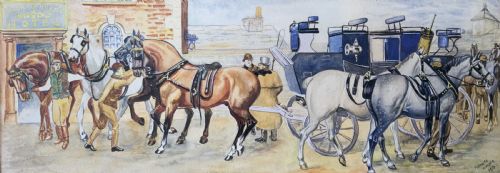
Several watercolours capture horses pausing from serious military drills to inspect baskets of fruit and curious onlookers.
Evaluating Quality
Quality rests upon the artist's command of anatomy, movement, and proportion when rendering the horse. The finest works demonstrate a confident, fluid line that captures muscle tension and the dynamic energy of a gallop or a restless team of carriage horses.
The integration of the medium further distinguishes the range, where skilled brushwork and balanced composition breathe life into the scene. Preservation also plays a role, as works retaining their original framing and vibrant, unfaded pigments stand apart from those marred by damp or excessive light exposure.
Herman S Melville·John Rattenbury Skeaping·Basil Nightingale·John Augustus Atkinson·Helena Maguire·Thomas Mackay·John Sanderson Wells·Charles Johnson Payne Snaffles·George Cattermole·Frank Dadd·George Soper·Johan Noah Bemmel
The Framed Equestrian Watercolour Artwork Glossary
- Gouache
- An opaque water-based paint that includes a white pigment to create a heavier, solid finish. It is frequently combined with transparent watercolour in these equestrian works to highlight details.
- Equestrian
- Pertaining to horses, horse riding, and horsemanship. In art, this defines subjects centred on horses, from hunting scenes to military portraits.
- Sporting Art
- A genre of painting dedicated to depicting rural sports, including horse racing, hunting, and shooting. These works often record specific events, hounds, and famous horses of the era.
- Provenance
- The documented history of ownership surrounding an artwork. A clear record helps establish authenticity and connects the piece to past exhibitions or collections.
Framed Equestrian Watercolour Artwork: Frequently Asked Questions
What periods do these watercolours cover?
The selections span from the early eighteenth century through the Victorian and Edwardian eras up to the mid-twentieth century. This timeline covers diverse artistic movements including British Impressionism and sporting illustration.
Earlier pieces often feature formal portraits or Dutch and German influences, while later works lean towards lively sporting scenes, racing, and humorous hunting illustrations.
How should I display watercolour art safely?
Watercolours are sensitive to direct sunlight, which can fade pigments over extended periods. Position pieces away from intense natural light sources to preserve the original tones of the paper and paint.
Keep them in stable environments away from excessive moisture and humidity to protect both the paper support and the historical wooden frames.
Are these works signed by the artists?
Many of the pieces carry signatures, monograms, or studio attributions linking them to notable Victorian and Edwardian illustrators and painters. Signatures often appear in ink or watercolour within the lower corners of the composition.
Unsigned works remain common, particularly among period sketches and anonymous studies, where style, subject matter, and materials provide the primary means of identification.
What framing is typically found on these pieces?
The artworks generally arrive behind protective glass within traditional wood frames, frequently constructed from oak or finished with gilt accents. These surrounds often reflect the period in which the painting was created or subsequently mounted.
Original frames contribute to the historical character of the piece, housing the paper securely while complementing the equestrian subject matter.