



Fox Hunting Watercolour Picture
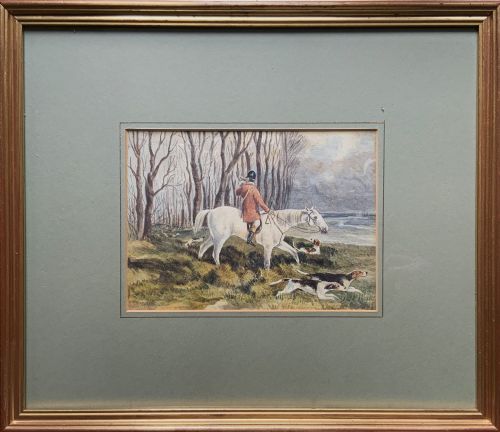
A fox hunting watercolour picture captures the brisk pace and traditional pageantry of British field sports in hand-painted pigment on paper.
Fox Hunting Watercolour Picture
A fox hunting watercolour picture records mounted riders, hounds in pursuit, and rural landscapes across the Victorian era, the Edwardian period, and the twentieth century. These works frequently arrive framed in wood under glass, preserving delicate paint layers on paper from environmental wear.
Collectors encounter single framed artworks alongside pairs and sequential sets that illustrate distinct moments of the chase. Subject matter ranges from monochrome compositions to vibrant depictions of full cry and specific hunting figures.
The material record spans traditional British sporting art produced by named illustrators and painters working from the late nineteenth century through to nineteen sixty. Each piece reflects the dominant sporting aesthetics of its specific decade.
Materials and construction
Artists executed these works on paper using watercolour pigment, often enhanced with gouache for opaque highlights and depth. Works are mounted behind glass within wooden frames, sometimes featuring gilt mouldings or traditional oak surrounds.
The structural integrity of each piece relies upon stable paper supports housed securely within glazed frames. Oak and gilt framing protects the delicate water-soluble pigments from atmospheric moisture and handling.
Fox Hunting Watercolour Picture Retail Price Guide 2026
Typical asking prices for fox hunting watercolour picture among the pieces listed under this phrase on Sellingantiques today, from the lower quarter to the upper quarter. They describe what is for sale here now, not the wider market.
Several pieces capture hounds mid-stride with such enthusiasm that the viewer can almost hear the horn blowing across the muddy fields.
Assessing quality and execution
Quality rests in the dynamism of the brushwork and the anatomical accuracy of horses and hounds in motion. Works by established sporting artists demonstrate a superior grasp of composition during fast-paced scenes like a full cry.
The preservation of the pigment against fading and the original condition of the paper surface influence the visual impact. Finer examples retain crisp details and vibrant colour tones beneath clear glass.
Basil Nightingale·Charles Clifford Turner·John Sanderson Wells·Charles Johnson Payne Snaffles·William J Hodgson·Frank Dadd
The Fox Hunting Watercolour Picture Glossary
- Watercolour pigment
- Colouring matter suspended in a water-soluble binder applied to paper. It creates transparent washes that capture light effectively.
- Gouache
- An opaque watercolour paint containing an added inert white pigment. It provides solid highlights and denser colour areas.
- British Sporting Art
- The genre dedicated to depicting field sports, horses, and hounds. It forms the primary artistic context for these watercolours.
- Full Cry
- The moment during a hunt when the hounds catch the scent and bay together in pursuit. It is a frequent subject for dramatic composition.
Fox Hunting Watercolour Picture: Frequently Asked Questions
What periods do these watercolours span?
The available selection spans from the Victorian era through the Edwardian period and into the mid-twentieth century, specifically including works dated around nineteen hundred, nineteen ten, nineteen twenty, and nineteen sixty.
This chronological spread shows how the conventions of British sporting art evolved over several decades while maintaining consistent thematic subjects.
How should these watercolours be displayed?
These framed works require placement away from direct sunlight to prevent the watercolour pigments and paper from fading over time. Maintaining stable indoor humidity also protects the paper support and the wooden or gilt frames.
Standard wall art hanging methods apply, ensuring the glass remains secure and the backing board provides adequate ventilation.
Are these watercolours original works?
The inventory consists of original hand-painted watercolours and gouache compositions rather than modern mass-produced prints. Each piece displays unique brushwork and individual artistic execution on paper.
Signatures from period artists frequently accompany the compositions, confirming their status as original studio pieces.
What framing materials are typical?
Most examples utilise wooden frames, often constructed from oak or finished with gilt details, enclosing the paper artwork beneath protective glass. This traditional framing method preserves the delicate pigment surface.
The combination of wood and glass has kept these sporting scenes intact since the Victorian and Edwardian periods.