





Vintage Hunting Illustration Picture
A vintage hunting illustration picture brings the traditional field sports of Britain and beyond straight to your wall with genuine character.
Vintage Hunting Illustration Picture
A vintage hunting illustration picture captures the energy and drama of historic field sports through works on paper. When buyers search for a vintage hunting illustration picture, they encounter original watercolours, signed pencil and chalk drawings, and early prints. These pieces originate from periods including the Victorian era, Edwardian sporting art, and the mid-century decades.
The selection here ranges from framed watercolour paintings to monochrome hunt scenes and printed cards. Works span from nineteen hundred through to nineteen sixty, capturing hounds, gun dogs, and riders across British and colonial landscapes. Each framed artwork preserves a specific moment in sporting history through traditional media on paper.
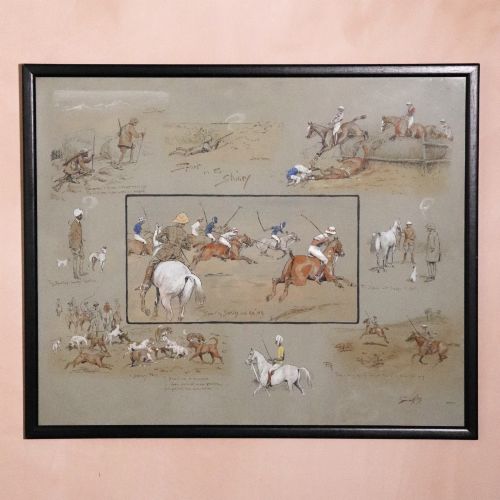
Buyers are most likely to meet works by notable equestrian and sporting artists such as Snaffles, alongside pieces by Charles Clifford Turner, Michael Lyne, and William J Hodgson. These items serve as traditional wall art that reflects the rich heritage of sporting illustration.
How they were made
Artists created these works primarily on paper using watercolour pigments, ink, pencil, and chalk. These mediums allowed illustrators to capture both fine anatomical details of hounds and horses and the expansive atmosphere of the hunt.
Framing typically involves wood and glass to protect the delicate works on paper from environmental damage. Original prints and watercolours are preserved within these traditional frames to maintain their condition over the decades.
Vintage Hunting Illustration Picture Retail Price Guide 2026
Typical asking prices for vintage hunting illustration picture among the pieces listed under this phrase on Sellingantiques today, from the lower quarter to the upper quarter. They describe what is for sale here now, not the wider market.
Materials across these listings include paper, wood, glass, watercolour, ink, pencil, chalk, and watercolour pigment.
What varies in quality
Quality in these works rests upon the precision of the draughtsmanship and the artist's ability to render movement in animals and riders. Pieces by recognised hands display a superior command of line and pigment compared to anonymous works.
The preservation of the paper, watercolour pigments, and pencil marks significantly influences the overall standard of the piece. Clean margins, stable framing materials, and minimal fading separate the finest examples from those showing heavy environmental wear.
Snaffles·Michael Lyne·Charles Clifford Turner·William J Hodgson
The Vintage Hunting Illustration Picture Glossary
- Watercolour
- A painting method in which the paints are made of pigments suspended in a water-based solution. This technique allows for translucent washes that give depth to skies and landscapes.
- Monochrome
- A work executed in a single colour or shades of a single colour, often black or sepia. Victorian artists frequently utilised this style for stark, dramatic illustrative effect.
- Sporting Art
- Artwork depicting field sports, equestrian subjects, hounds, and shooting. This genre forms the core subject matter of the hunting illustration tradition.
- Gouache
- An opaque watercolour paint that provides solid areas of colour and highlights in mixed media drawings. It works alongside pencil and chalk to build texture on paper.
- Original Print
- An impression printed directly from a plate, block, or stone created by the artist. These differ from modern mechanical reproductions by retaining direct ties to the period of production.
Vintage Hunting Illustration Picture: Frequently Asked Questions
What periods do these hunting pictures come from?
The works span from the Victorian era through the Edwardian period and into the mid-twentieth century. Artists were active across decades including nineteen hundred, nineteen ten, nineteen twenty, and nineteen sixty.
This broad timeline shows how sporting illustration evolved while maintaining traditional subjects like foxhounds, gun dogs, and riders in the field.
How should I frame and display paper art?
These works require framing behind glass to protect the paper, watercolours, and chalk from moisture and airborne dust. Wooden frames are traditional for this genre and complement the historic aesthetic of sporting art.
Keep framed pieces away from direct sunlight to prevent the pigments and paper from fading over time.
What subjects appear most often in these illustrations?
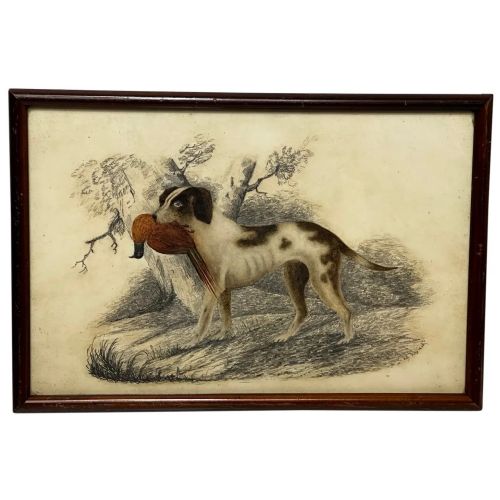
Common subjects include foxhounds, pointer gun dogs carrying game birds, and mounted riders during full cry. Scenes range from humorous observations of sporting characters to dramatic depictions of the hunt.
Artists also recorded the wider British and colonial landscapes that served as the backdrop for these field sports.