


Framed Edwardian Watercolour Art
Framed edwardian watercolour art brings domestic interiors historical charm through original landscape, marine and portrait scenes.
Framed Edwardian Watercolour Art
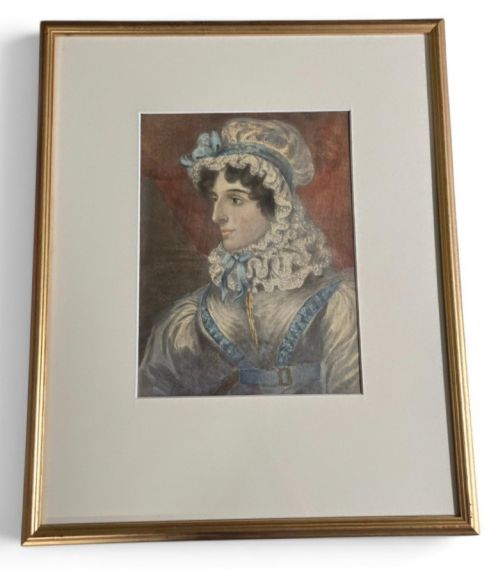
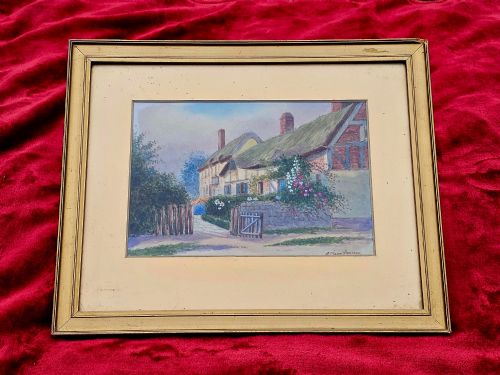
Framed edwardian watercolour art comprises original paper-based paintings executed primarily around the turn of the twentieth century, capturing landscapes, coastal views and genre scenes. These works frequently arrive in period wood frames under protective glass, preserving the delicate pigments used by artists of the era.
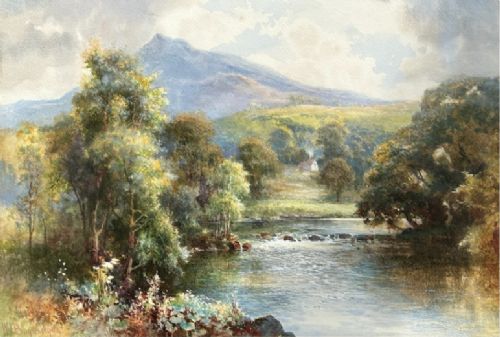
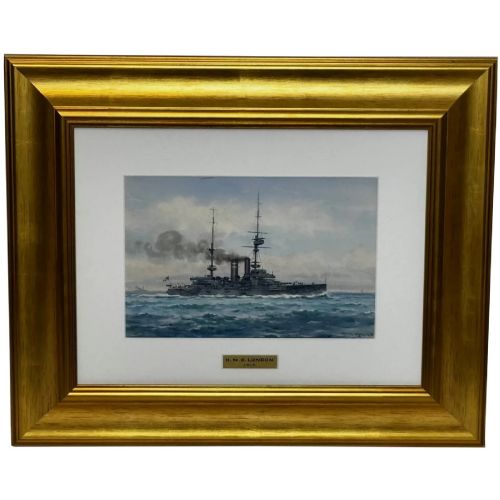
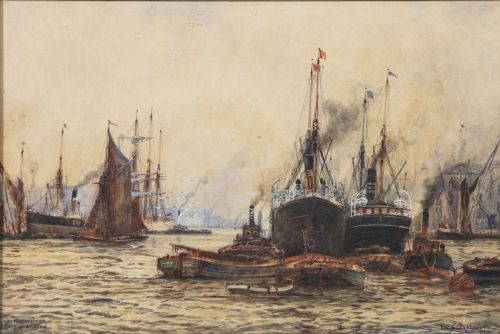
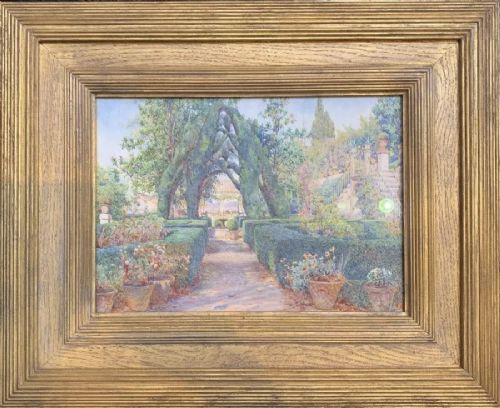
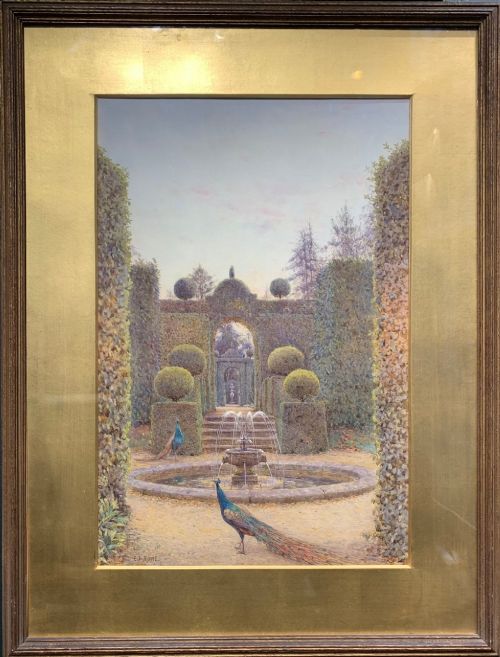
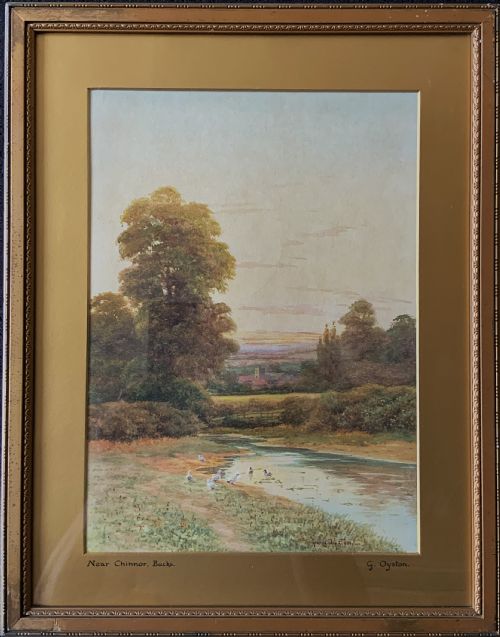
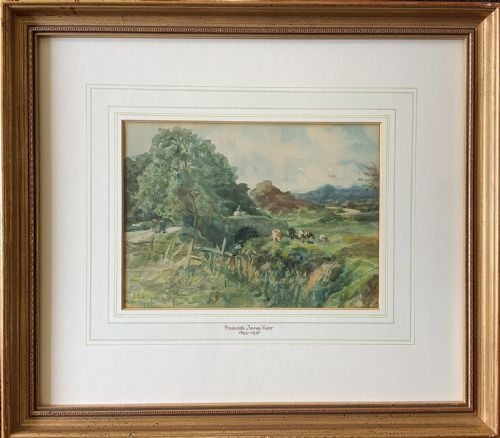
The selection ranges from detailed topographical views of British harbours and Welsh rivers to intimate garden studies and maritime subjects from the nineteen-tens. Buyers encounter works attributed to known painters alongside unsigned watercolours produced during the late Victorian and early twentieth-century periods.
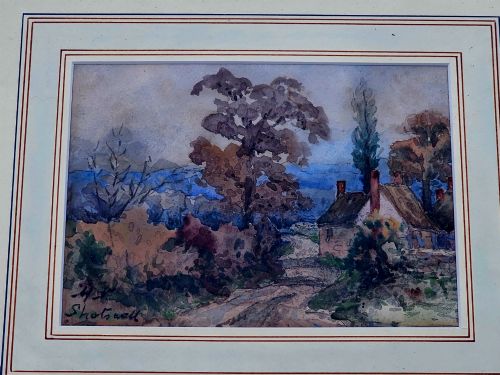
Most examples lean towards British Impressionism and traditional landscape styles, reflecting the popular tastes of the Edwardian era. Collectors look for these paintings to add period character to domestic spaces through genuine works on paper.
How they were made
Artists applied water-soluble pigments onto heavy paper, sometimes combining watercolour with gouache or ink to build opacity and fine linear detail. These sheets were then mounted behind glass within wooden frames to protect the soluble medium from moisture and atmospheric dust.
Makers utilised gold leaf on specific frame mouldings or incorporated pastel highlights into the painted surface for added visual depth. The physical construction relies on period mounting techniques, using paper supports that reflect the material standards of the nineteenth and early twentieth centuries.
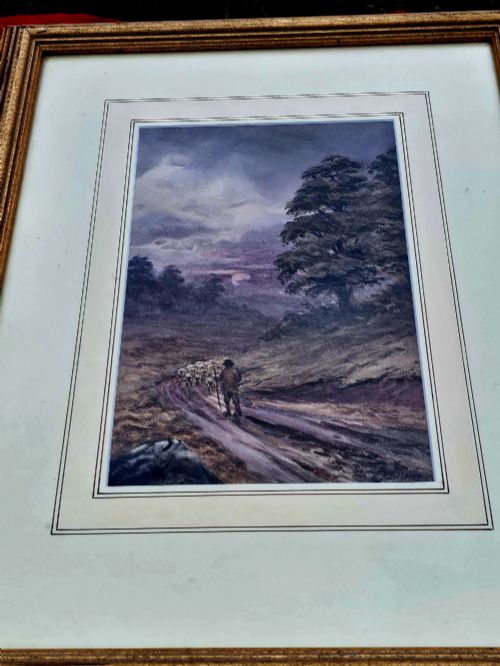
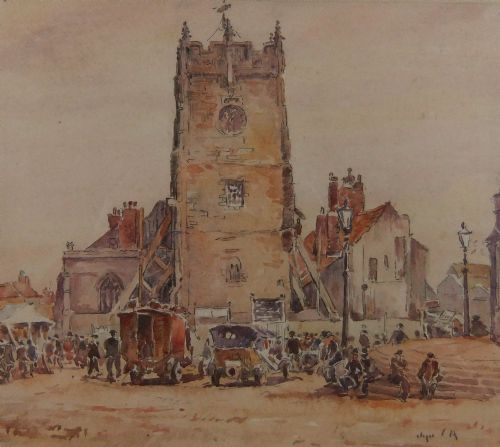
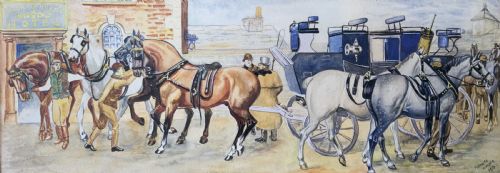
Several artists captured bustling market scenes and sheep being herded through town streets.
What varies in quality
The strength of the composition and the artist's handling of light and pigment distinguish finer paintings from routine topographical sketches. Superior examples demonstrate confident brushwork and atmospheric depth, particularly in marine and landscape subjects.
The originality and condition of the framing materials also influence the overall standard, alongside the survival of clear signatures and period attribution. Works displaying rich watercolour pigment retention hold greater visual presence compared to faded or chemically altered sheets.
John Hassall·Frank Watson Wood·Frank William Scarbrough·Ernest Arthur Rowe·George Oyston·Warwick Goble
The Framed Edwardian Watercolour Art Glossary
- Watercolour
- A paint consisting of colour pigments suspended in a water-based solution. It creates translucent washes on paper supports.
- Gouache
- An opaque water-based paint often used alongside watercolour to add highlights and solid areas of colour. Artists utilised it for dense detail in Edwardian illustrations.
- British Impressionism
- A painting style focusing on light and everyday subjects, prominent in British art around the turn of the twentieth century. Practitioners captured transient outdoor effects.
- Genre watercolour
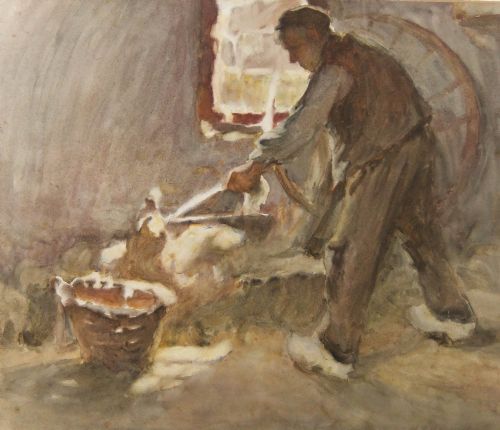
- A painting depicting scenes from everyday life, such as street markets or domestic interiors. These works document social history through detailed figurative illustration.
Framed Edwardian Watercolour Art: Frequently Asked Questions
What periods do these watercolours cover?
The listings span from the late nineteenth century through the Edwardian era up to the nineteen-thirties. Most pieces cluster around nineteen-hundred and the subsequent decades.
Victorian and Regency-influenced works also appear among the selections alongside early twentieth-century examples.
Are these paintings original works?
The inventory consists primarily of original hand-painted watercolours on paper rather than modern reproductions. Artists executed these pieces using watercolour pigment, ink and gouache.
Certain listings include period prints and lithographs alongside unique paintings.
How should I hang watercolour art?
Watercolour pigments remain sensitive to strong direct sunlight, which can cause fading over time. Position these framed pieces away from windows receiving intense daily illumination.
Glass protection helps shield the paper from dust and atmospheric moisture in domestic rooms.
What subjects are most common?
Coastal harbours, shipping scenes and rural landscapes dominate the available repertoire. Gardens, architectural views and genre portraits also feature frequently across the works.
Many paintings record specific British and European locations from the Edwardian period.