





Original 1900 Watercolour
An original 1900 watercolour brings the distinct atmosphere of the turn of the century into a room through hand-applied pigment on paper.
Original 1900 Watercolour
When you search for an original 1900 watercolour, you encounter British fine art from the turn of the century, spanning landscapes, coastal scenes, and pastoral views. These paintings capture domestic and rural life from a specific historical moment using traditional media.
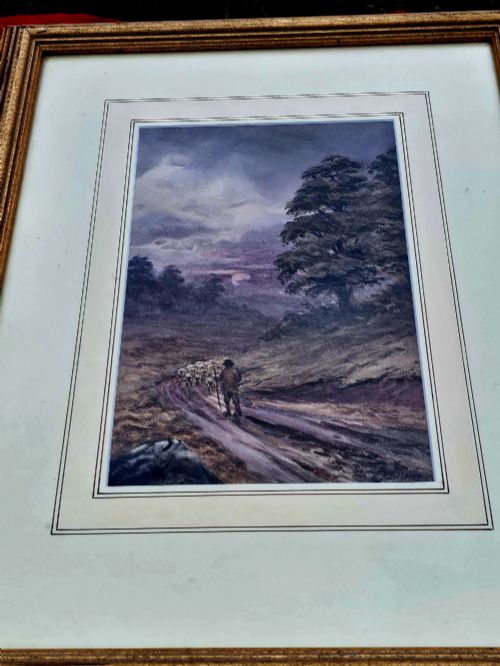
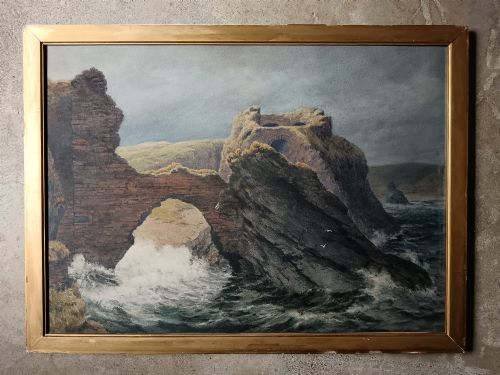
The pieces on this page most often take the form of framed works on paper showing Yorkshire harbours, Welsh landscapes, and English river scenes. Signatures by named artists frequently appear alongside unsigned examples from the broader Victorian and Edwardian periods.
Represented styles range from late Victorian and Edwardian fine art to turn-of-the-century impressionism. Subjects extend from domestic gardens and livestock to architectural views and coastal docks.
Materials and construction
These works use watercolour pigment applied to paper support surfaces, occasionally supplemented by wash techniques and gold leaf details. The application of pigment relies on water-soluble binders that create transparent washes of colour.
Framing materials commonly involve wood and gilt wood housings that protect the paper surface behind glass. These protective enclosures maintain the condition of the pigment and paper over decades.
Original 1900 Watercolour Retail Price Guide 2026
Typical asking prices for original 1900 watercolour among the pieces listed under this phrase on Sellingantiques today, from the lower quarter to the upper quarter. They describe what is for sale here now, not the wider market.
Represented periods include Victorian, Edwardian, nineteen-hundred, nineteen-thirty, and nineteen-sixty.
Factors that separate examples
Quality rests upon the skill of the brushwork and the precision of the wash technique, which determines how cleanly light and shadow are rendered across the paper. Competently executed perspective and confident handling of pigment distinguish the finer examples.
The strength of the composition and the clarity of the subject matter, whether a bustling harbour or a quiet riverbank, influence the presence of the artwork. Documented attribution to a listed artist adds historical weight to a piece.
EJ Letheren·John Moxon·Alfred George Morgan·Samuel Timmins·Arthur Wardle·L Sommer·Jules Evarist van Biesbroeck·William Joseph Boyes·Frederick William Booty·Henry J Neave·Mary Stevens·Robert Winchester Fraser·Henry Charles Fox·F Wood·Charles A Bool·John Dobby Walker·A Cialzohs·Fred Rider
The Original 1900 Watercolour Glossary
- Watercolour pigment
- Finely ground colour particles mixed with a water-soluble binder, used to create transparent layers on paper.
- Wash technique
- The application of a fluid, diluted layer of pigment across the paper to produce smooth backgrounds or skies.
- Gilt wood
- Wood framing treated with a thin layer of gold leaf or metallic gilt, typical of period presentation.
- Edwardian period
- The historical era spanning from nineteen-hundred to nineteen-ten, reflected in the lighter palettes and subjects of the time.
- Fine art
- Works created for aesthetic appreciation rather than practical utility, encompassing framed paintings and wall art.
Original 1900 Watercolour: Frequently Asked Questions
How should I hang an original watercolour?
Keep framed paper works away from direct sunlight to prevent the watercolour pigments from fading over time. Stable indoor humidity levels protect both the paper support and the wooden frame.
Ensure the glazing does not touch the surface of the painting directly. Professional framing with acid-free mounts preserves the integrity of turn-of-the-century art.
How do I identify a Victorian watercolour?
Victorian watercolours often feature pastoral landscapes, coastal shipping views, or detailed topographical subjects executed with careful brushwork. The framing and paper stock frequently match late nineteenth-century manufacturing methods.
Signatures or inscriptions on the reverse can provide specific dates and locations. Comparing the style to documented artists from the era helps confirm the period.
What subjects are most common?
English and Welsh landscapes dominate the selection, including river scenes, rural cottages, and agricultural valleys with livestock. Coastal views featuring harbours and fishing boats also appear frequently.
Architectural studies, such as town streets and churchyards, represent another common focus. These subjects reflect the artistic preferences of the turn of the century.
Are these paintings signed by the artist?
Many examples retain the original signature of the painter, sometimes accompanied by a date or inscription naming the location. These signatures help attribute the work to specific practitioners of the period.
Unsigned works also exist, often attributed to the broader English school of the era. The quality of the brushwork remains the primary indicator of skill in unsigned pieces.