





Framed Dutch School Painting
A framed dutch school painting brings centuries of northern European light, character, and atmosphere directly into a modern room.
Framed Dutch School Painting
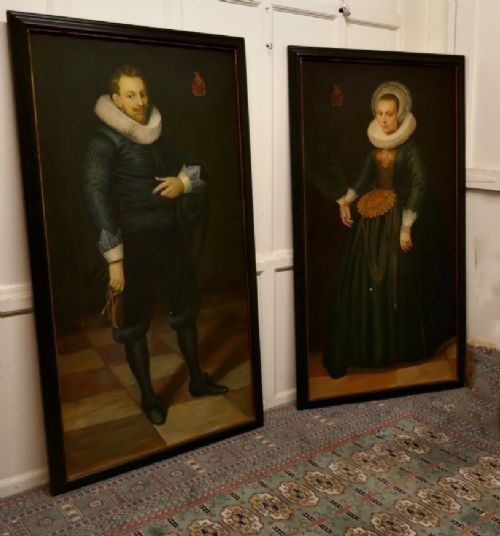
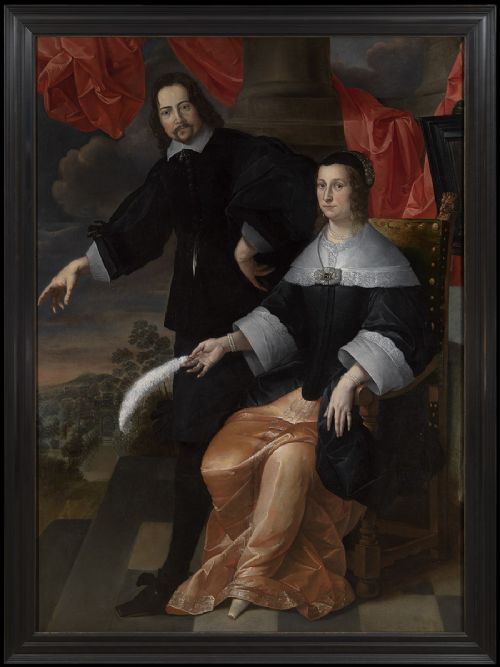
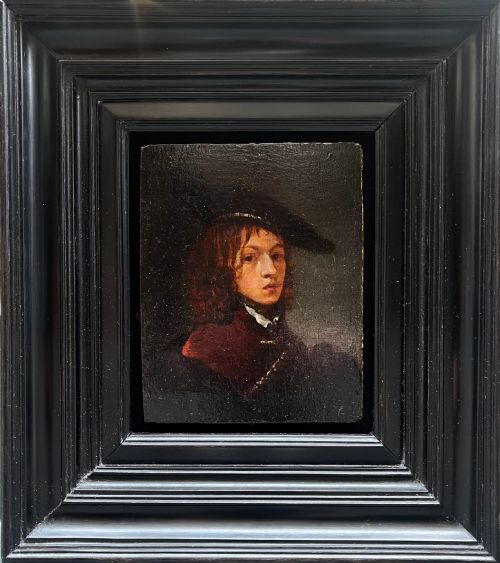
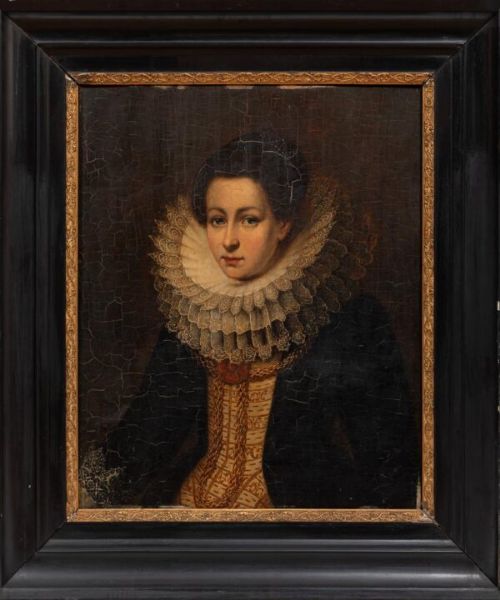
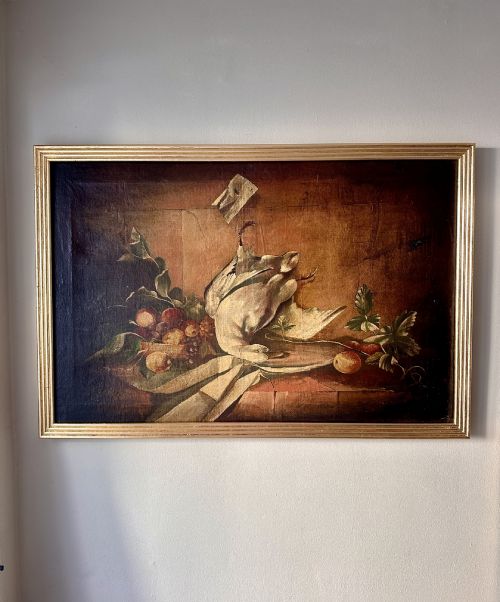
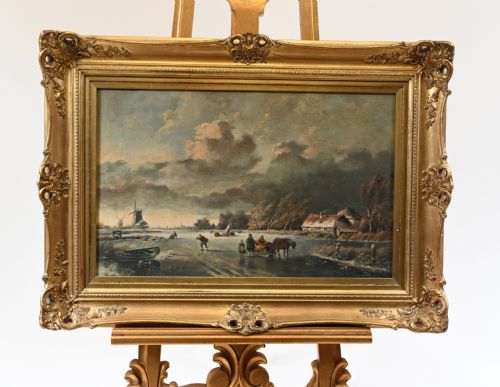
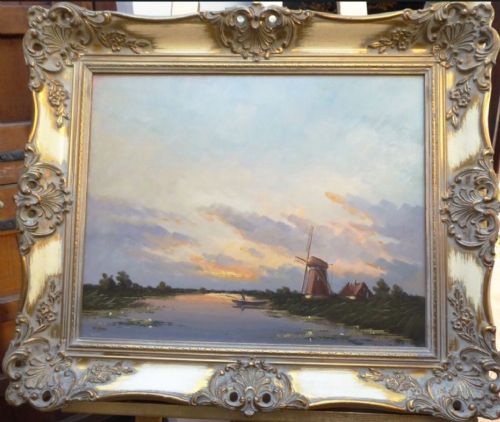
When you search for a framed dutch school painting, you enter a tradition spanning dark interiors, winter landscapes, and detailed portraiture. The pieces on this page range from seventeenth-century portraits of military officers and noblemen to nineteenth-century canal scenes and impressionist riverscapes.
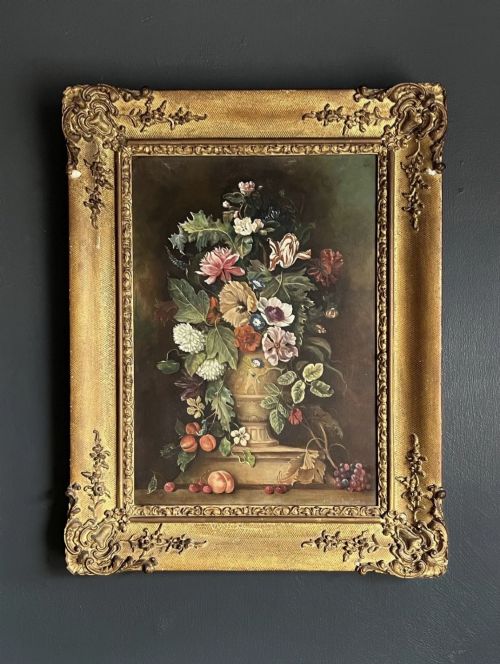
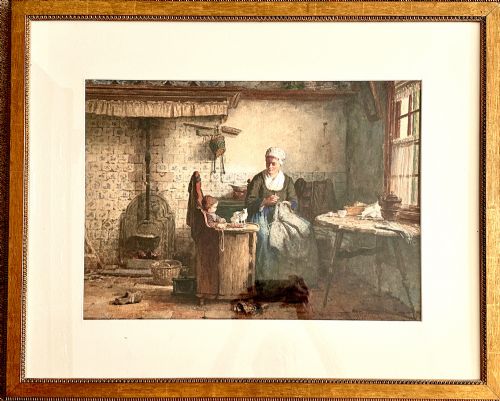
You are most likely to meet nineteenth-century interpretations alongside earlier seventeenth-century works and later twentieth-century rural views. These span oil on canvas, wood panels, and occasional watercolour paintings, often preserved within heavy giltwood frames.
How they were made
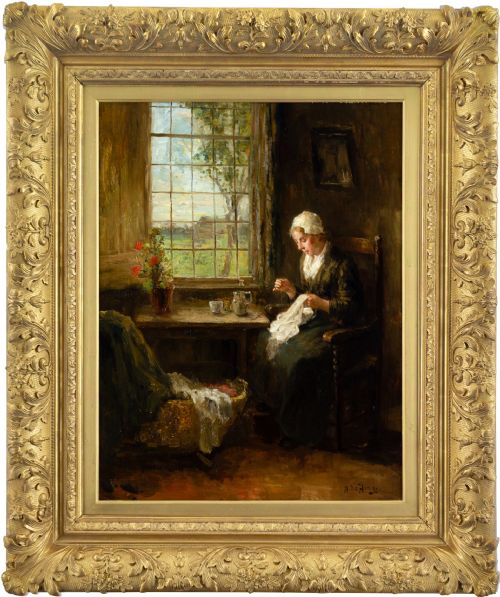
The primary materials recorded here are oil paint applied to canvas or wood panels, supported by elaborate gilt gesso frames. Painters utilised traditional layering techniques to build depth in subjects ranging from quiet domestic interiors to expansive frozen waterways.
Substantial wood panels and woven canvases formed the physical base for these works, while applied gesso and gilding shaped the decorative frames that often accompany the art.
Frogs, toads, and ducklings occasionally peek out from the corners of seventeenth-century wildlife and landscape scenes.
What varies in quality
Quality in a framed dutch school painting rests on the handled subtlety of light, the structural integrity of the canvas or wood panel, and the harmony between the artwork and its gilt frame. Earlier seventeenth-century origins and named artists generally command closer study for their handling of tone and detail.
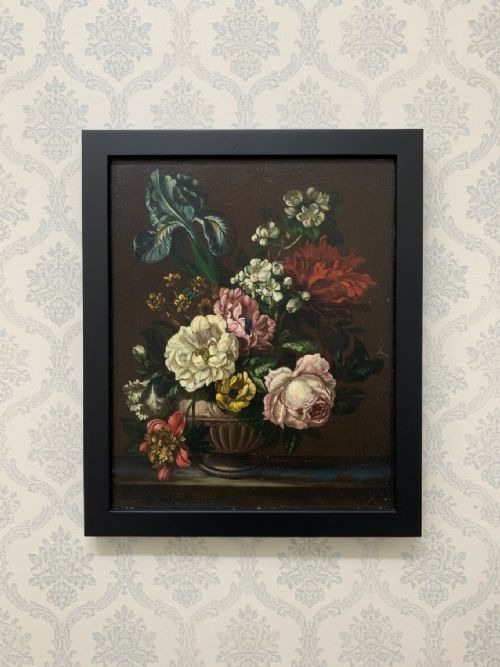
Works showing firmer brushwork in portrait ruffs, winter landscapes, or still-life subjects separate themselves from simpler decorative productions.
Cornelis Van Der Voort·Bartholomeus van der Helst·Rembrandt·Hendrik Valkenberg·Bernard De Hoog·David Teniers The Younger·Abraham Hulk I·Philipp Ferdinand de Hamilton·Cornelis Christian Dommersen·Johannes Philippus Galjaard·Hendrik Willebrord Jansen·Quirijn Van Brekelenkamp·Jozef Israëls·William Raymond Dommersen·Nicolaes Molenaer
The Framed Dutch School Painting Glossary
- Giltwood
- Wood carved and coated with gold leaf or a gold-coloured finish. This material forms the ornate frames frequently housing period canvases.
- Gesso
- A plaster-like mixture applied to wood or canvas as a base for paint or gilding. It allows craftsmen to mould intricate relief patterns onto picture frames.
- Panel painting
- Art executed on a flat piece of wood rather than stretched fabric. These rigid supports are common in earlier centuries.
- Baroque
- A style of European art spanning the seventeenth and early eighteenth centuries characterised by drama, tension, and rich detail. Many portraits and landscapes reflect this aesthetic.
- Impressionist
- A style focusing on the visual impression of the moment, seeking to capture light and shifting colour. Later listings on this page adopt these looser atmospheric methods.
Framed Dutch School Painting: Frequently Asked Questions
What is a dutch school painting?
A dutch school painting reflects the artistic methods, subjects, and traditions originating in the Netherlands across multiple centuries. These works encompass portraits, still lifes, and landscapes.
They capture historic domestic scenes, freezing winter weather, and maritime views using oil on canvas or wood panel.
How do I date a piece?
Dating relies on stylistic clues such as costume details, ruff collars, frame construction, and recorded artist signatures. Material choices like heavy wood panels often point toward earlier centuries.
Comparing brush techniques and subject matter against documented periods helps narrow down the timeframe of creation.
Were these always framed?
Most historic paintings were paired with frames to protect the edges of the canvas and enhance the visual presentation. Gilt gesso frames are particularly common companions for these artworks.
Some frames are original to the period of the painting, while others were added later to suit changing tastes in interior display.
Where should I hang one?
These works suit traditional studies, living rooms, and hallways where stable light and moderate humidity protect the oil paint and wood. Pairing them with complementary period furnishings accentuates their depth.
Avoiding direct sunlight preserves the pigments and prevents the gilt frames from drying out over time.