
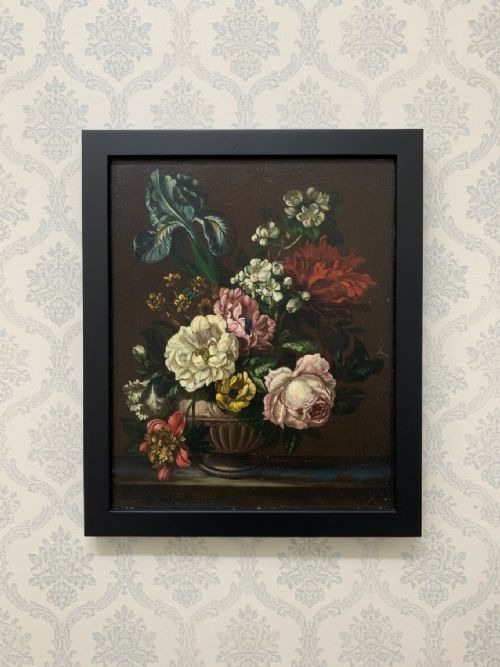
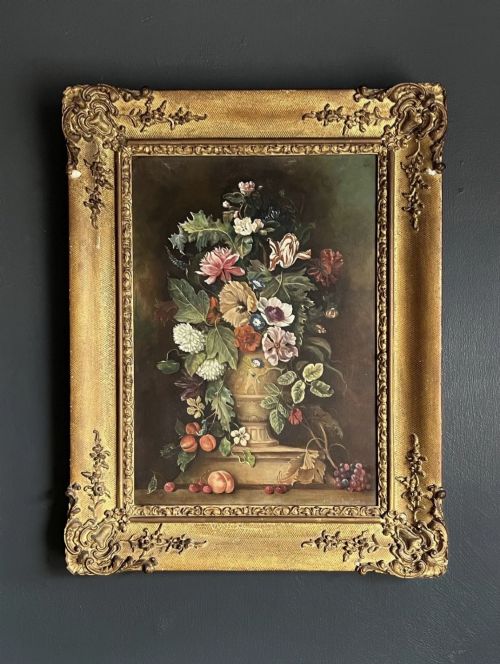
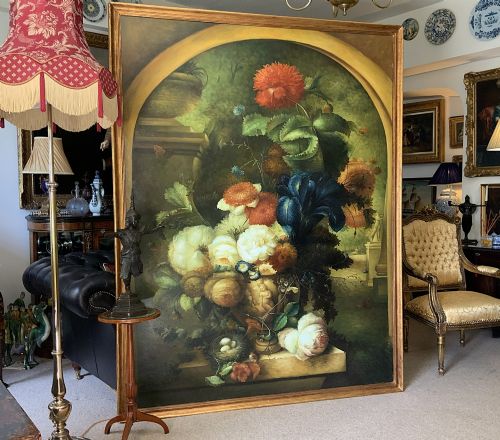
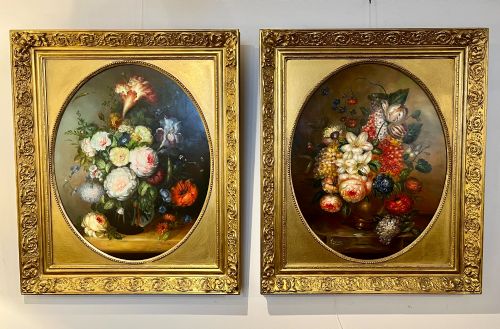
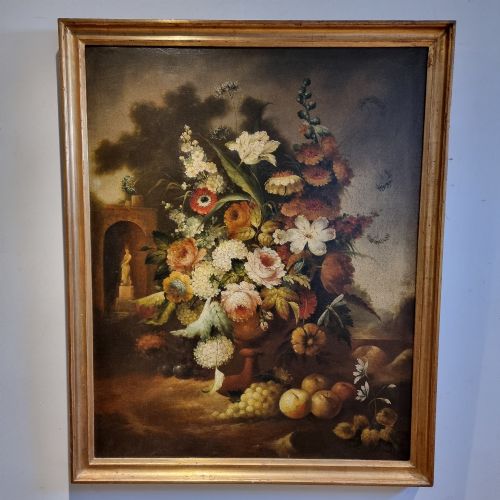
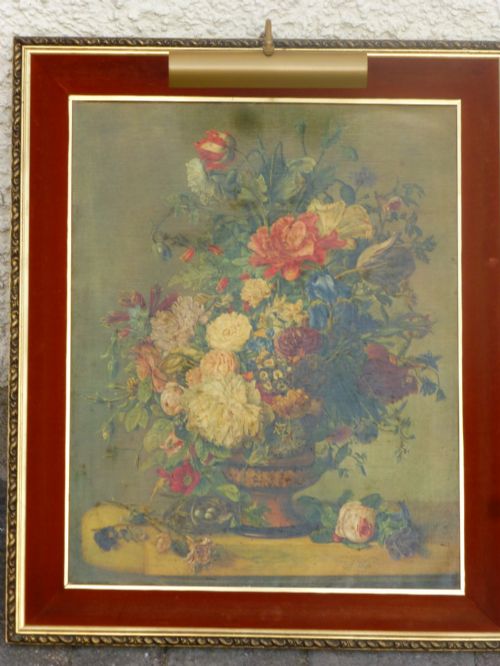
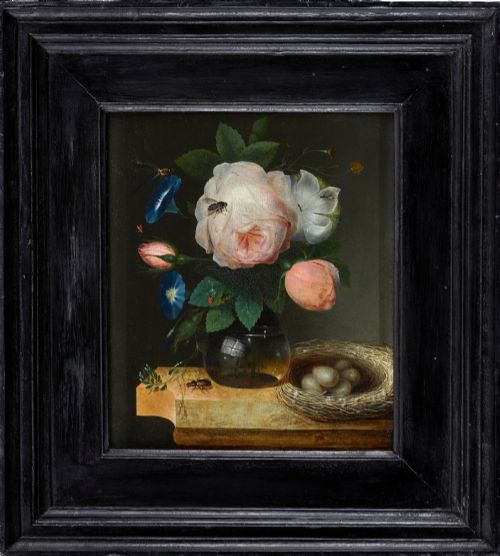
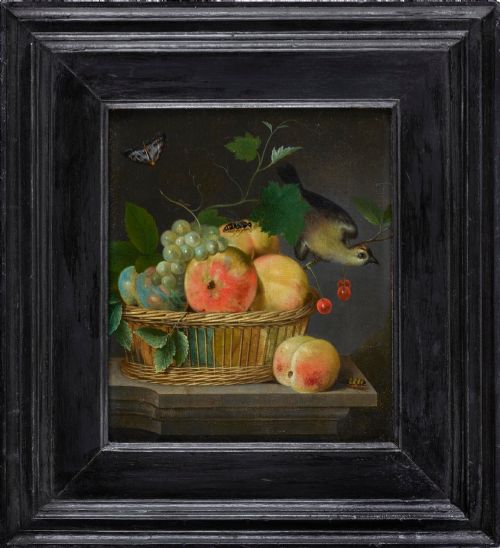


Dutch Floral Still Life
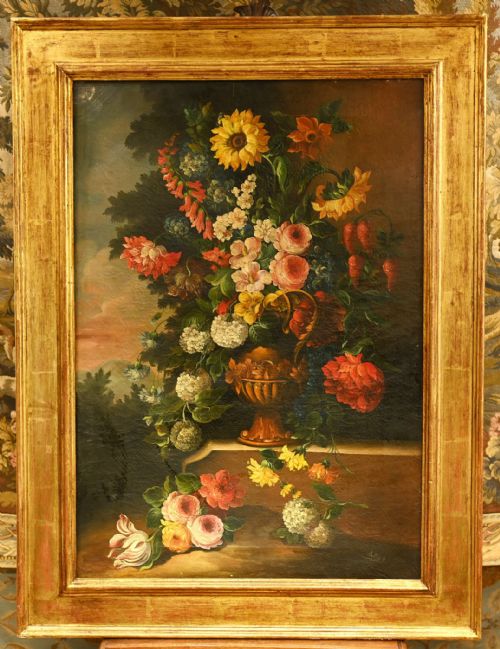
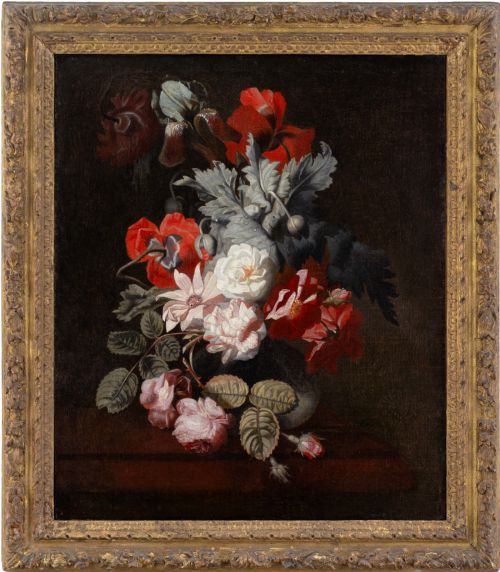
These Dutch floral still life paintings capture intricate arrangements of blooms across centuries of oil painting traditions.
Dutch Floral Still Life
A dutch floral still life presents meticulously detailed compositions of flowers, foliage, and sometimes fruit or insects, rendered in oil paint. Buyers searching for a dutch floral still life encounter works spanning original seventeenth-century creations to twentieth-century revivals.
The pieces on this page range from compact panel paintings to monumental canvases and pairs designed for balanced wall display. Many follow the traditions of the Dutch Golden Age and Flemish Baroque, whilst others reflect later eighteenth and nineteenth-century revivals.
Framing forms an integral part of these works, with many pieces housed in original or period-style gilt gesso and carved wood frames. The subjects focus predominantly on seasonal blooms, vases, and botanical specimens arranged with theatrical depth and shadow.
Materials and Techniques
Artists painted these works using oil paint applied to canvas, wood panels, oak panels, or board, building rich layers of colour and tone. The physical support often dictates the age, with wooden panels common in earlier examples and canvas favoured in later periods.
Frames utilise carved wood and gesso, frequently finished with gold leaf to complement the warm tones of the oil paintings. Surface preparation involved traditional grounds that allowed fine brushwork to capture the delicate petals and stems of the flowers.
Framing materials recorded across the collection include gilded wood, gesso, and gold leaf applied to period surrounds.
Assessing Quality and Execution
Quality rests in the precision of the brushwork, the depth of the glazing, and the naturalism achieved in rendering light across petals and leaves. Superior examples demonstrate a careful balance of composition, harmonious colour palettes, and sophisticated handling of shadow and highlights.
The integrity of the underlying support and the preservation of the original paint layer distinguish finer pieces from later decorative copies or oleographs. Original period frames that complement the painting without later alteration also elevate the overall execution.
Gaspar Peeter Verbruggen·Simon Pietersz Verelst·Terence Loudon·Julien Stappers
The Dutch Floral Still Life Glossary
- Gesso
- A plaster-like mixture applied to wood or canvas to prepare the surface for painting or gilding. It provides a smooth base for the detailed application of gold leaf in traditional frames.
- Oil on Panel
- A painting executed on a wooden support rather than canvas. Oak and other timbers were frequently utilised by artists during the seventeenth and eighteenth centuries.
- Dutch Golden Age Style
- An artistic approach emulating the seventeenth-century masterworks of the Netherlands. It emphasises dramatic lighting, dark backgrounds, and botanical accuracy.
- Flemish Baroque
- A dynamic artistic style characterised by opulent compositions, rich textures, and theatrical movement. Floral works in this tradition often include fruit and wildlife alongside abundant blossoms.
- Trompe l'oeil
- An artistic technique designed to create an optical illusion of three-dimensional space. In floral still lifes, this might include insects or dew drops painted with startling realism.
Dutch Floral Still Life: Frequently Asked Questions
How do I identify a true seventeenth-century painting?
Examination of the canvas or wood panel provides initial clues regarding the age of the materials used. Pigment analysis and the style of the preparation layers further assist specialists in dating the work.
Familiarity with the handling of paint and the specific botanical varieties popular in different eras helps distinguish period originals from later revivals.
Are these paintings supplied with their frames?
Many listings include period or revival frames, such as gilt gesso mouldings that match the era of the artwork. The description specifies whether the frame is original to the painting.
Framing choices often reflect the aesthetic of the period in which the artwork was created or subsequently restored.
Where should I hang a large floral still life?
These works require stable wall spaces away from direct sunlight and dramatic fluctuations in temperature or humidity. Their rich dark backgrounds and luminous flowers suit principal reception rooms or dining spaces.
Weight distribution must be assessed carefully, particularly for monumental canvases or works housed in heavy gilt wood frames.
What is the difference between Dutch and Flemish styles?
Dutch compositions often focus on botanical precision and restrained arrangements against dark backgrounds. Flemish works tend to incorporate a greater abundance of elements, including fruit, baskets, and wildlife.
Both traditions developed alongside one another, sharing techniques while maintaining distinct regional characteristics in colour and scale.