
Framed Dressing Mirror
A framed dressing mirror sits upon a chest or floor, reflecting light and character across the room through centuries of timber and gilt.
Framed Dressing Mirror
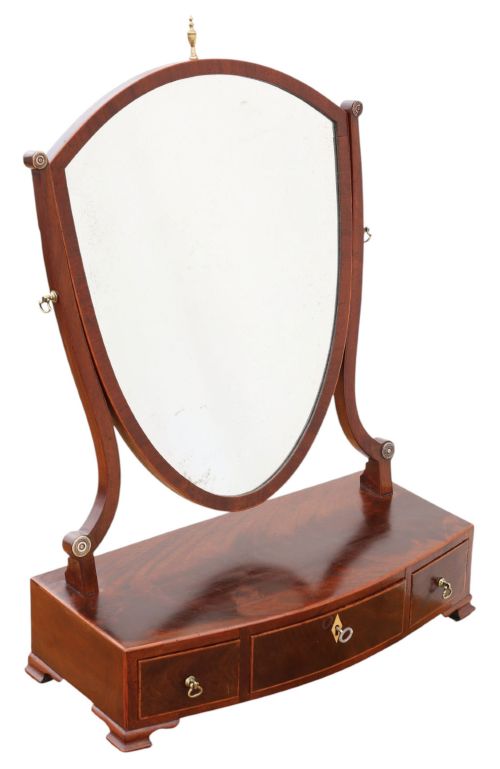
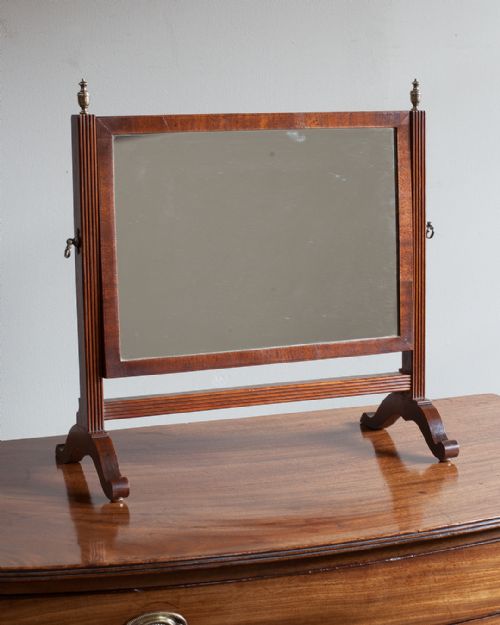
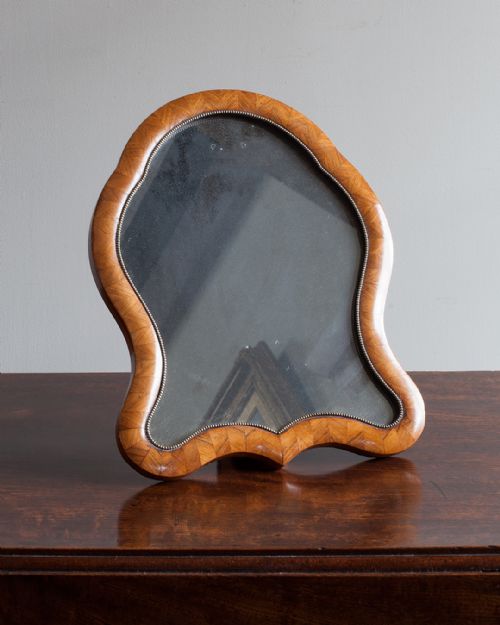
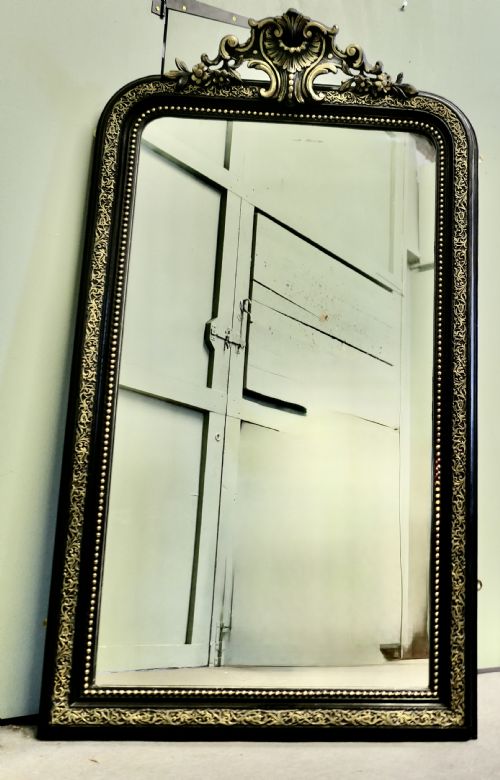
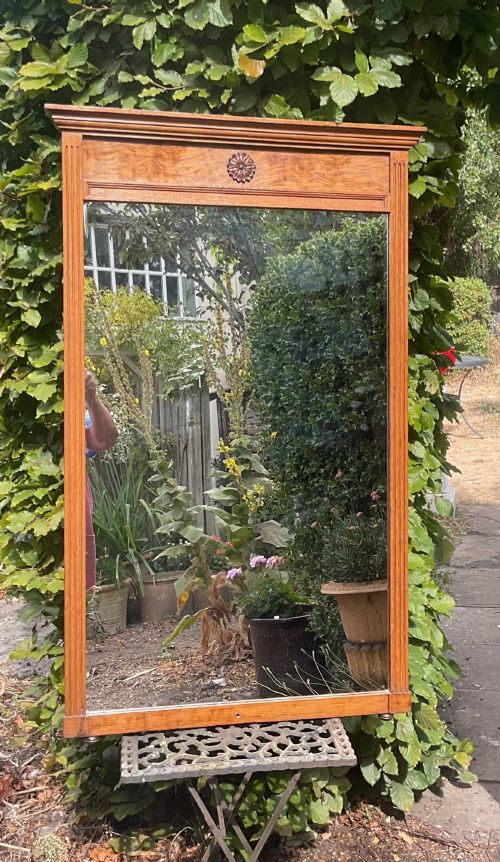
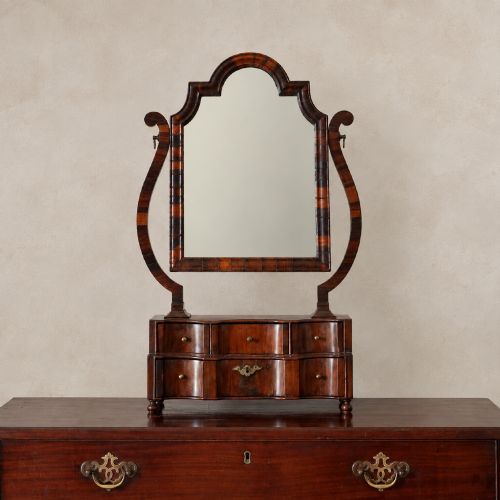
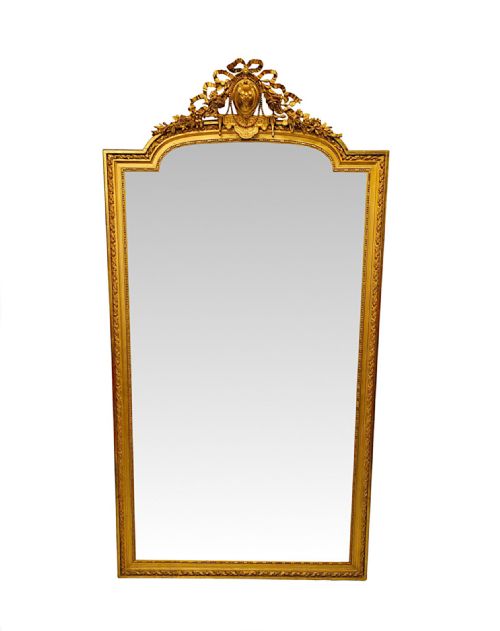
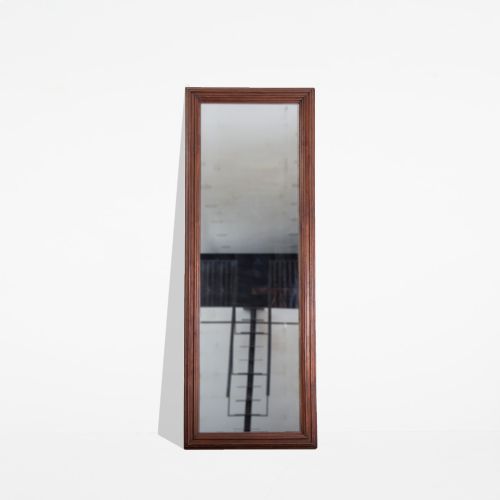
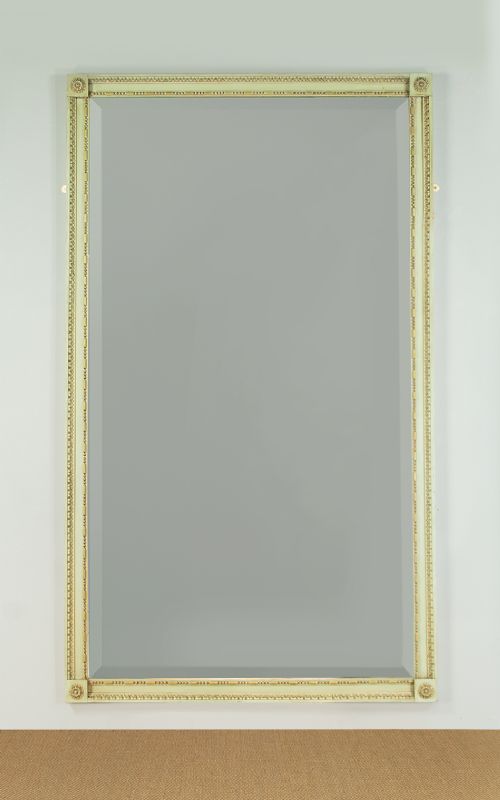
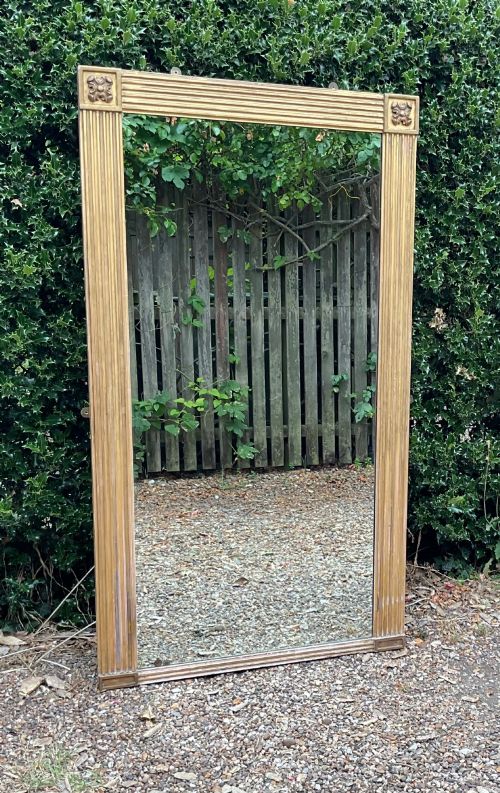
When you search for a framed dressing mirror, you encounter pieces designed to aid personal grooming, spanning table versions with drawer bases to tall cheval glasses that tilt on frames. The examples seen here range widely in form, from compact Edwardian brass strut designs and walnut toilet mirrors to large Regency and Victorian cheval and pier glass pieces.
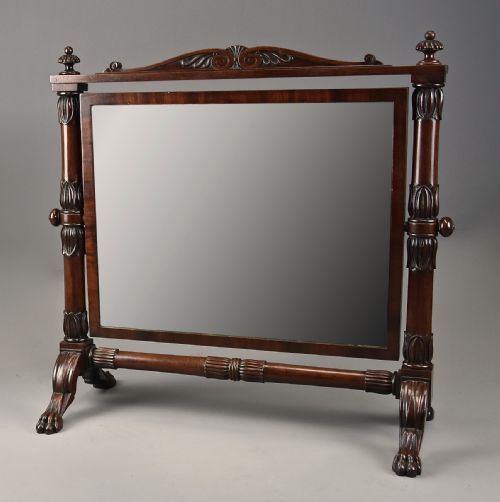
The selection leans heavily into the nineteenth century, encompassing Georgian proportions, Regency mahogany swings, and ornate giltwood interpretations. You will find items intended for the dressing table alongside larger floor-standing formats and smaller easel-backed specimens meant for a boudoir surface.
How they were made
Cabinetmakers constructed the wooden frames predominantly from mahogany, oak, walnut, and kingwood, often employing intricate carving, veneer work, or ebonised Chinoiserie finishes. Metal variants utilise brass, bronze, pewter, and sterling silver, frequently shaped through repoussé or casting techniques.
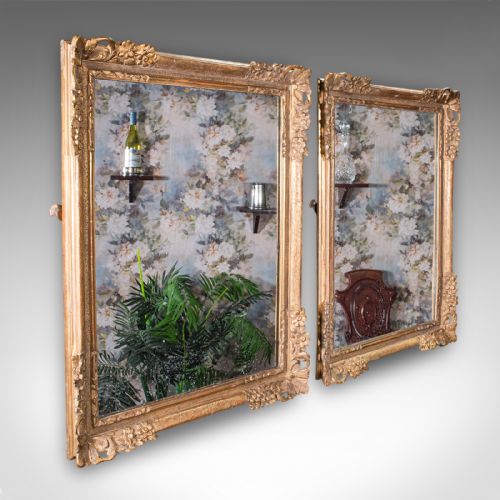
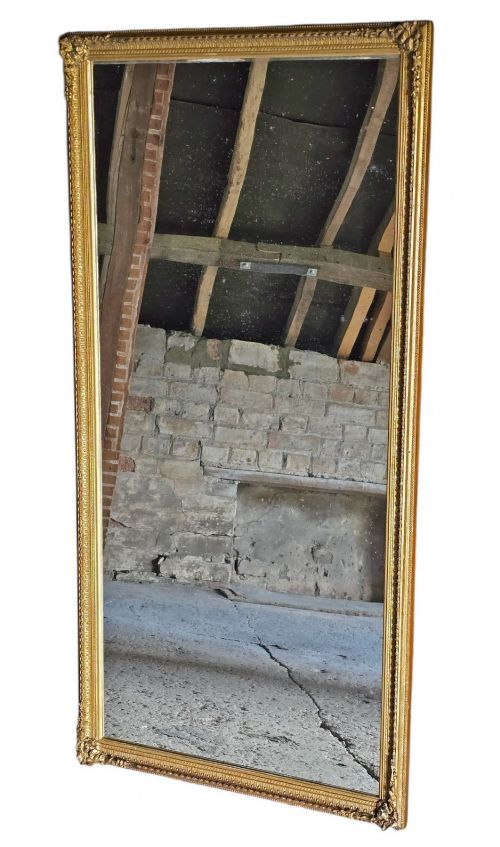
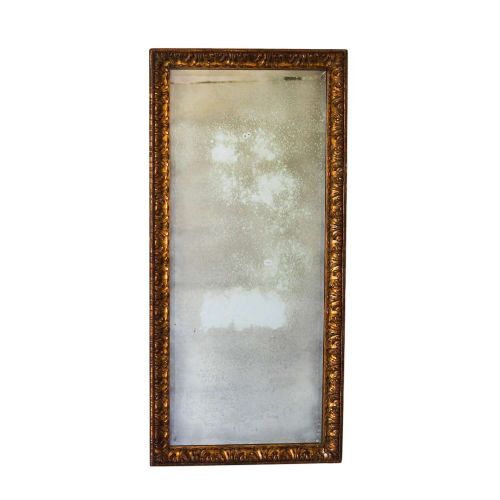
Giltwood and gesso pieces combine carved wooden foundations with layers of chalk preparation and gold leaf, creating reflective surfaces that pair with bevelled glass. Joinery methods reflect the period of origin, from traditional dovetails in dressing box drawers to sturdy swing pivot pins on cheval stands.
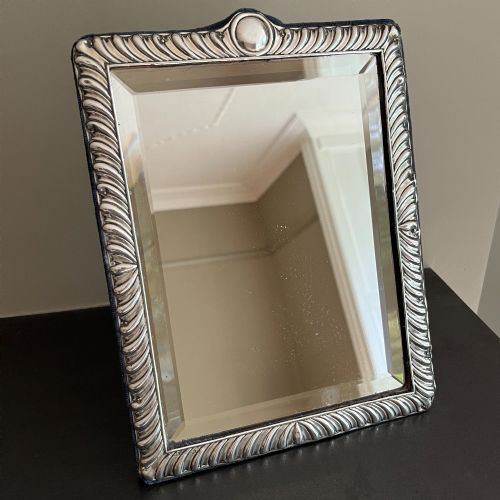
Some Edwardian silver frames depict lively animals and birds peering out from the repoussé metalwork.
What varies in quality
The excellence of a framed dressing mirror rests upon the depth of the carving, the choice of timber figurations such as Cuban mahogany or burr walnut, and the crispness of applied gesso ornaments. Finer examples display meticulous attention to secondary woods, original bevelled glass plates, and smoothly functioning brass pivot hardware.
Makers of distinction incorporated thoughtful proportions, such as functional trinket drawers beneath swing plates or robust floor stands with balanced weight distribution. Lesser pieces often exhibit simplified joinery, replacement glass, or mass-produced cast metal elements lacking the hand-finished definition found in superior workshop output.
Henry Matthews·Louis Auguste Moreau
The Framed Dressing Mirror Glossary
- Cheval mirror
- A full-length mirror hung in a frame that allows it to swing vertically on pivots. These freestanding pieces typically stand upon four supporting legs.
- Toilet mirror
- A smaller mirror designed to sit on a dressing table or chest of drawers, frequently incorporating small storage drawers in the base.
- Gesso
- A plaster-like material applied to wooden frames as a base for gilding or painting. It accepts deep, sharp carving before the application of metal leaf.
- Repoussé
- A metalworking technique where the artist hammers the design from the reverse side to create a raised pattern in relief. This appears often on Edwardian silver and brass frames.
- Pier glass
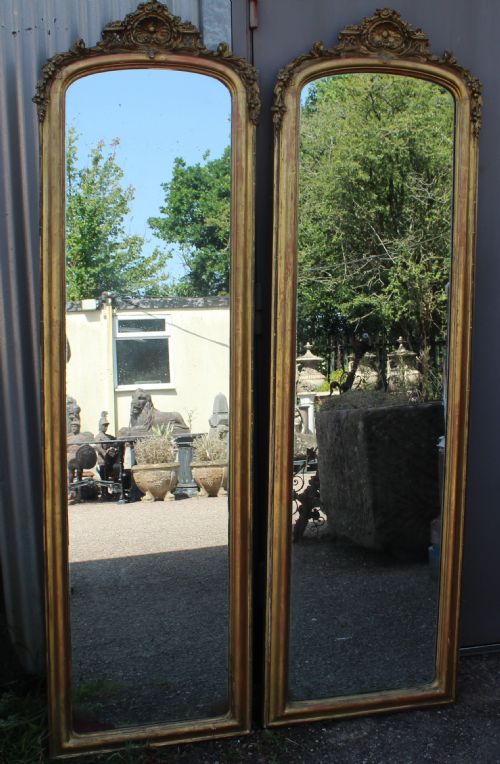
- A tall mirror intended to be hung on the pier, the section of wall space situated between two windows. They frequently feature decorative giltwood or gesso frames.
Framed Dressing Mirror: Frequently Asked Questions
How do I date a mirror?
Dating relies on examining the construction of the frame, the backing boards, and the characteristics of the glass plate itself. Hand-bevelled edges and old secondary timbers often point towards specific nineteenth or early twentieth-century periods.
Changes in decorative styles, such as Art Nouveau motifs or Regency reeding, also help narrow down the decade of manufacture.
Where should I place a cheval mirror?
Cheval mirrors work best in bedrooms or dressing areas where their full-length pivoting glass can be utilised fully. Placing them near a natural light source enhances their reflective quality in the room.
Ensure the floor surface is level so the freestanding frame remains stable when the glass is tilted.
Are dressing mirrors fragile?
While the wooden and metal frames are generally robust, the original glass plates and delicate gesso ornaments require careful handling. Moving the piece demands support beneath the main frame rather than lifting by the crest or ears.
Stable indoor humidity helps preserve both the wooden joints and the silvering on older glass.
What is the difference between a toilet mirror and a cheval mirror?
A toilet mirror is a tabletop piece, usually built with a small set of drawers in the base for storing trinkets. It sits on top of a larger piece of furniture.
A cheval mirror is a tall, freestanding floor model that allows the viewer to see their entire outfit at once.