





Framed Sampler Art
Framed antique sampler art brings centuries of hand-stitched needlework into domestic interiors, offering intimate glimpses into the lives of young makers.
Framed Sampler Art
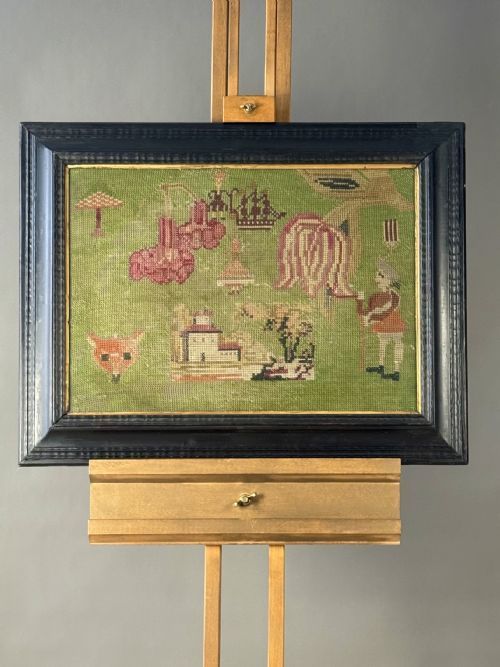
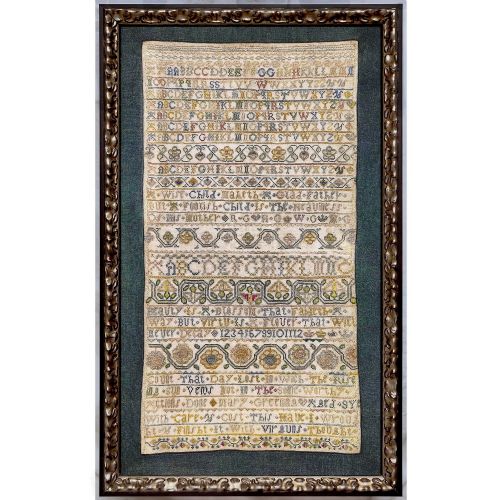
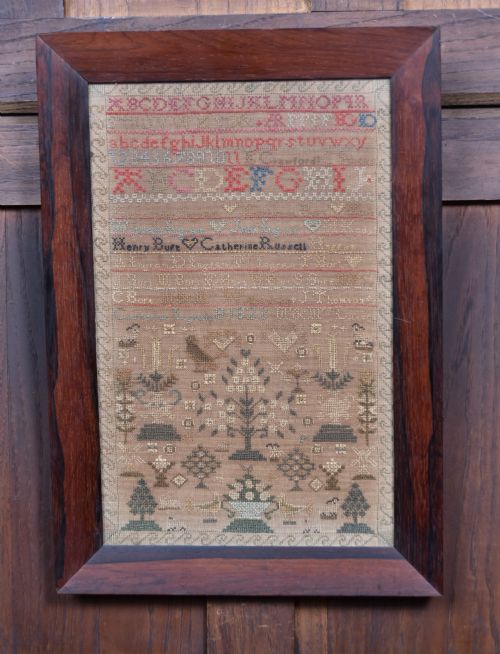
Framed antique sampler art consists of historical textile works created to demonstrate stitch proficiency, literacy, and arithmetic, often executed by girls and young women. These pieces span periods from the late seventeenth century through the Victorian era, encompassing regional styles such as English, Scottish, and French examples.
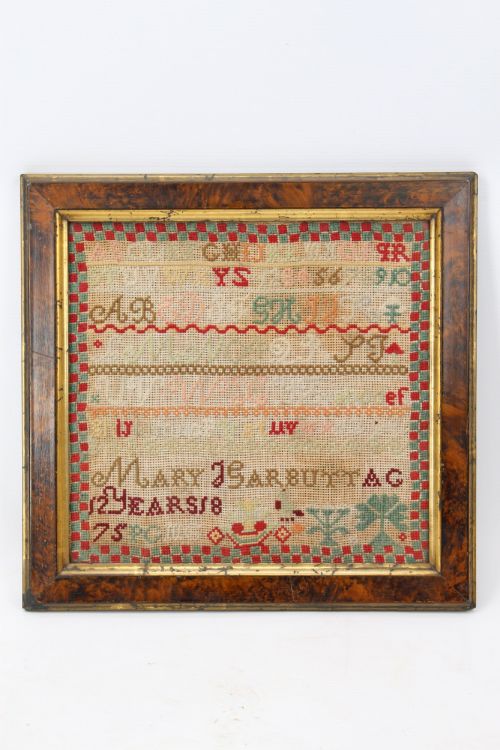
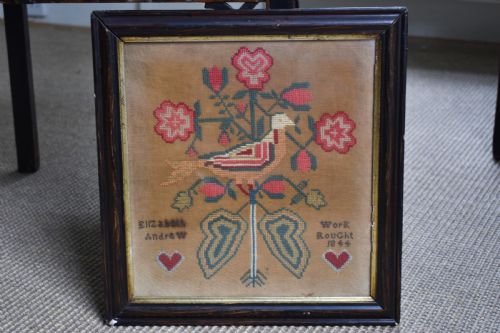
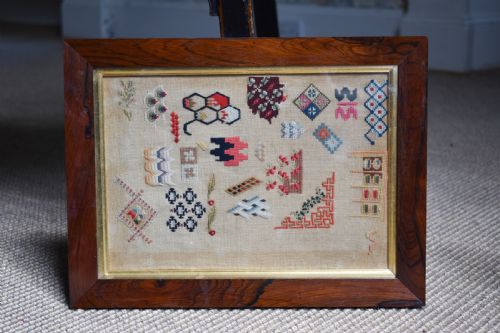
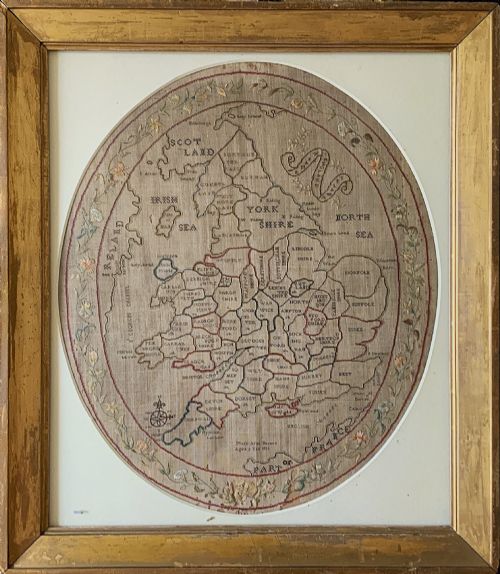
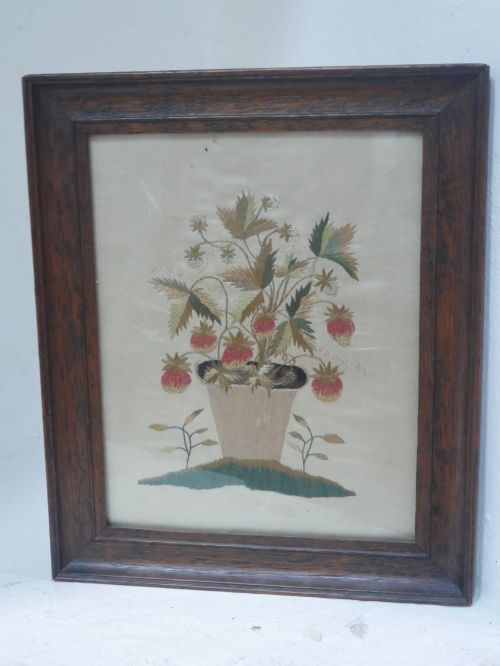
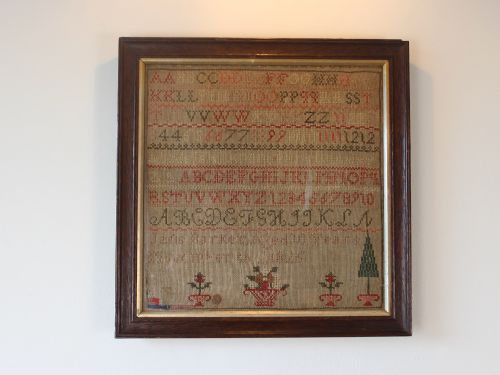
The most common pieces met in this category include alphabet boards, genealogical records, and map samplers, alongside pictorial panels depicting religious scenes, botanical studies, and moral narratives. Many retain their original or early wooden frames, protecting the delicate internal fabrics.
Makers recorded on these pieces frequently inscribed their names, ages, and dates of completion, transforming functional schoolroom exercises into enduring historical documents. Examples range from simple wool-work alphabets to elaborate silk-thread landscapes and topographical maps.
Materials and construction methods
Makers stitched onto grounds of plain-woven linen using dyed threads of wool, silk, and silk floss. Needles worked various techniques including cross-stitch, tent stitch, and gros point to build up letters, borders, and pictorial motifs.
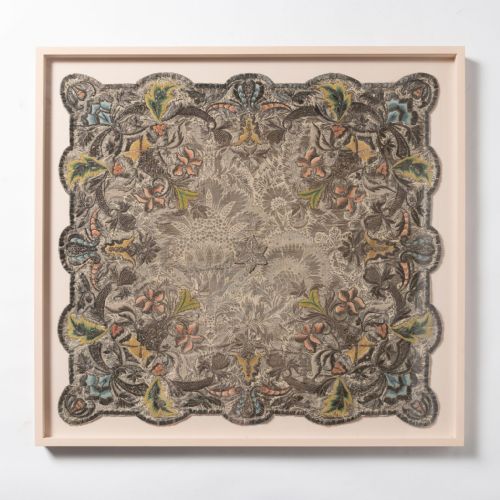
Pictorial scenes often incorporated fine silk thread for detailed shading in faces and foliage, while wool provided robust texture for larger geometric bands and backgrounds. Early works utilised coarse linen foundations, whereas later nineteenth-century examples frequently employed finer canvas or mesh grounds.
Finished embroideries were stretched over boards and housed within timber frames behind protective glass to prevent environmental degradation of the textile fibres.
At least one young maker carefully documented a stitch error in thread, ensuring future generations would forever note the human slip.
What separates examples in quality
Quality rests upon the complexity of the design, the precision of the stitching, and the condition of the textile ground. Pieces that combine multiple alphabets with pictorial scenes, figures, and verse demand greater technical skill than basic lettering exercises.
The integrity of the materials dictates longevity, with surviving silk threads retaining their colour showing superior original quality compared to faded or degraded equivalents. Furthermore, the inclusion of maker details, precise dates, and intact historical framing enhances the documentary value of the textile.
The Framed Sampler Art Glossary
- Band sampler
- A long, narrow textile displaying horizontal rows of diverse embroidery stitches and patterns, popular in the seventeenth and eighteenth centuries.
- Gros point
- A coarse counted-thread needlepoint stitch worked on canvas, commonly utilised for substantial pictorial scenes and figures.
- Map sampler
- An educational embroidery depicting geographical territories such as England and Wales, combining cartography with needlework practice.
- Silk floss
- Unspun or loosely twisted silk fibres used in needlework to create smooth surfaces with a lustrous sheen.
Framed Sampler Art: Frequently Asked Questions
What is an antique sampler?
An antique sampler is a piece of embroidered textile art created as a demonstration or test of a maker's skill in various stitches, letters, and motifs.
Historically produced by young girls in schools or at home, these works preserve names, dates, and domestic education methods from the Georgian and Victorian periods.
How do I date an old sampler?
Dating relies heavily on inscribed dates, maker names, and stylistic markers such as alphabet fonts, border designs, and pictorial subject matter.
Early pieces often feature band formats and muted palettes, while nineteenth-century examples frequently incorporate bright wools, genealogical details, and topographical maps.
How should I display framed samplers?
Framed samplers require placement away from direct sunlight to prevent the fading of silk and wool threads against the linen ground.
Maintaining stable indoor humidity levels protects both the historic wooden frames and the fragile textile fibres beneath the glass.
Why do some samplers show mistakes?
Mistakes in stitching reflect the learning process of the young makers who practised their needlework skills on these linen grounds.
Errors in spelling or pattern symmetry provide authentic evidence of human execution rather than mechanical production.