


Four Tier Etagere
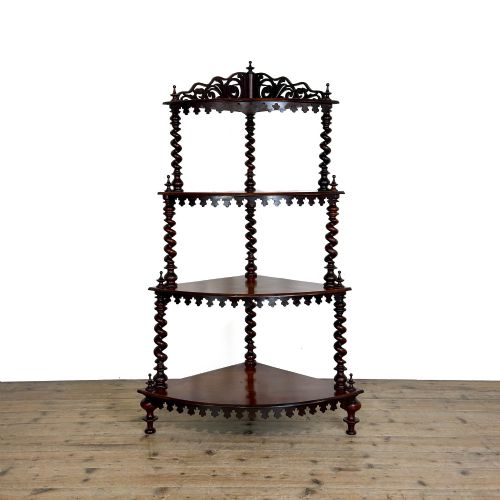
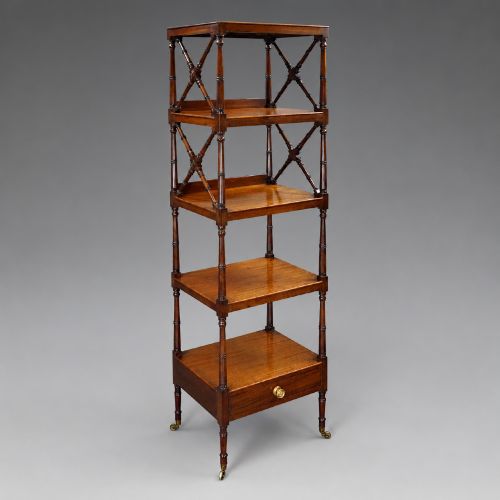
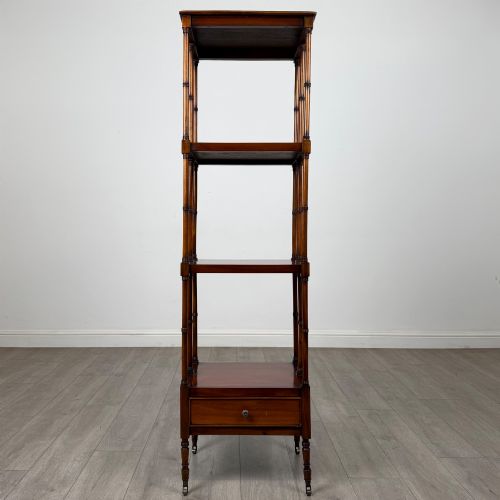
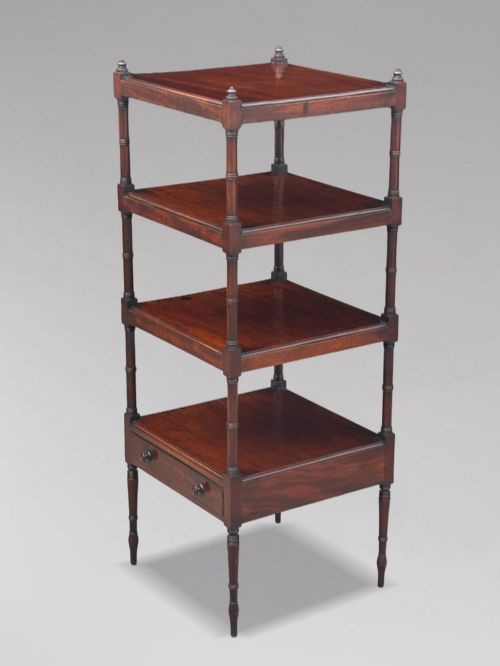
A four tier etagere brings tiered display space to a room, offering multiple open shelves for books and decorative objects.
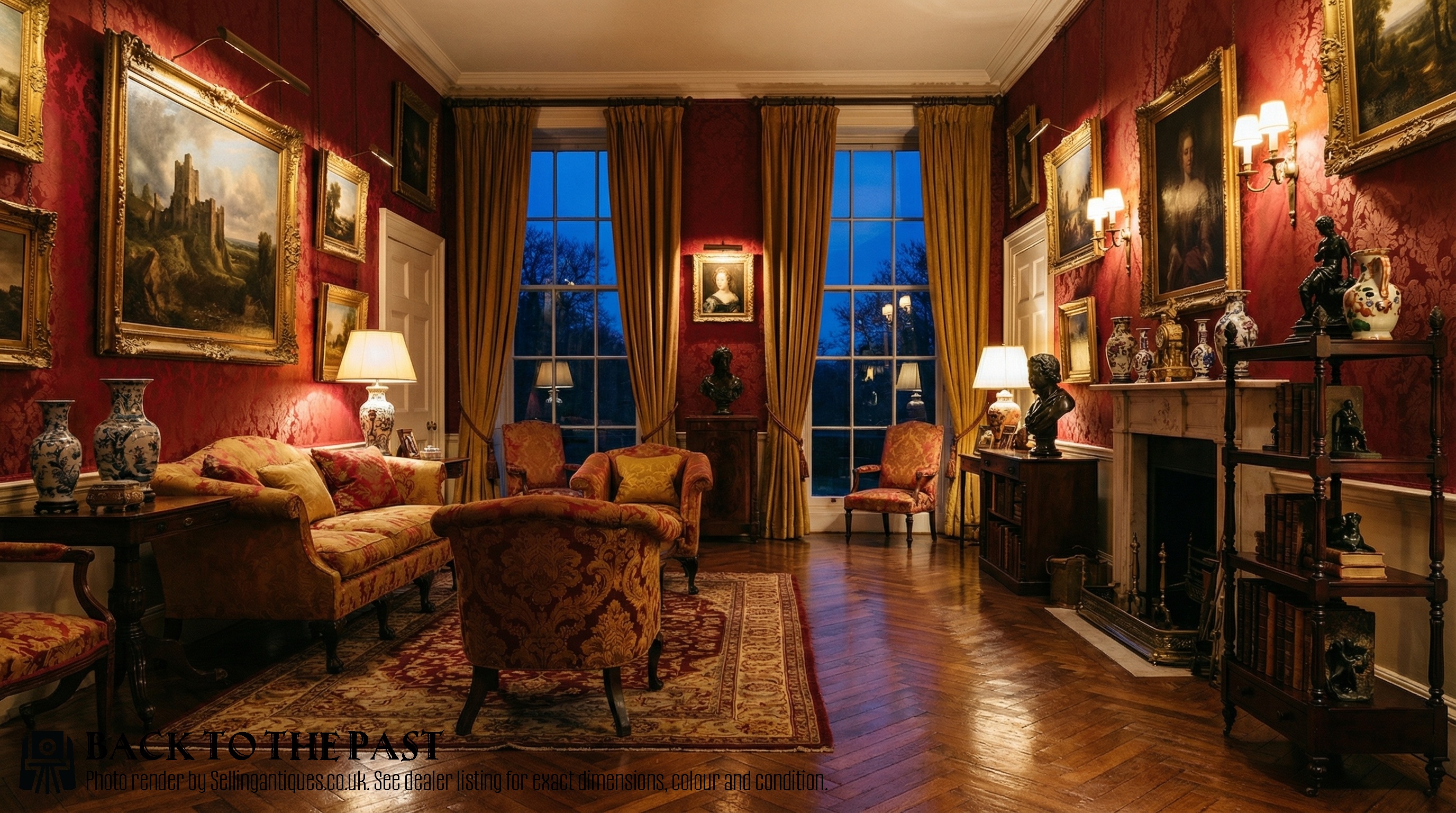
What a four tier etagere is
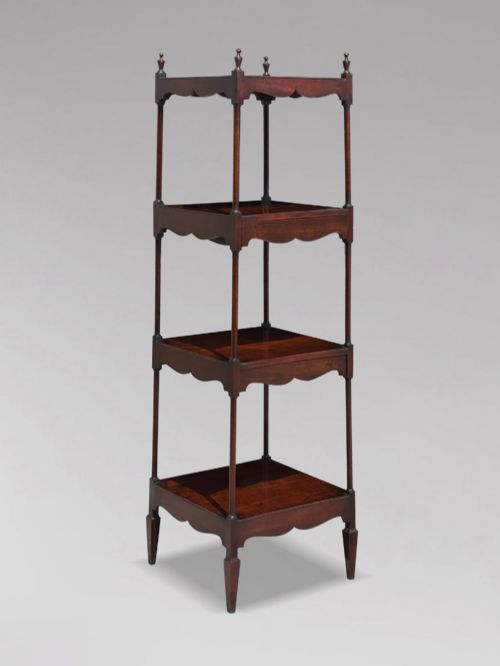
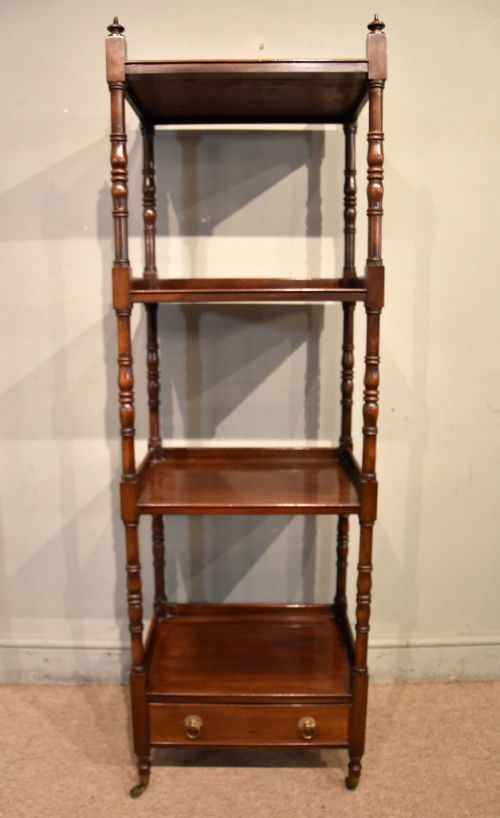
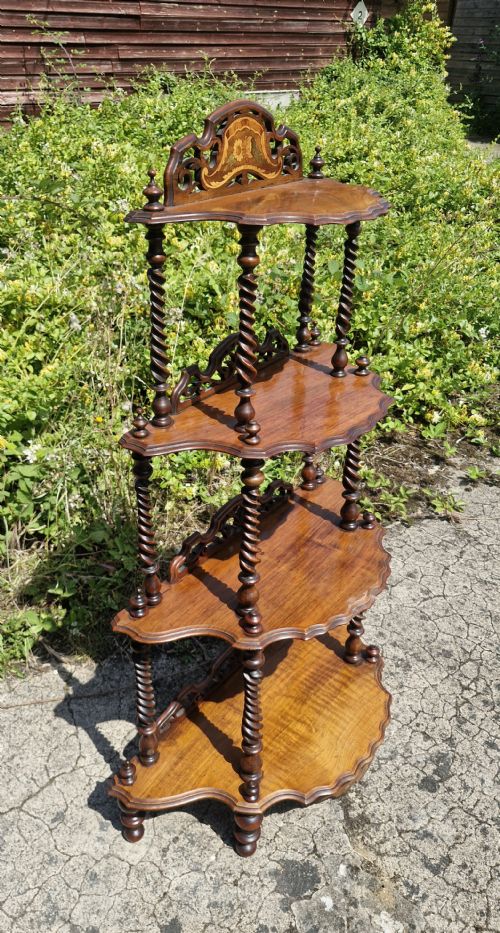
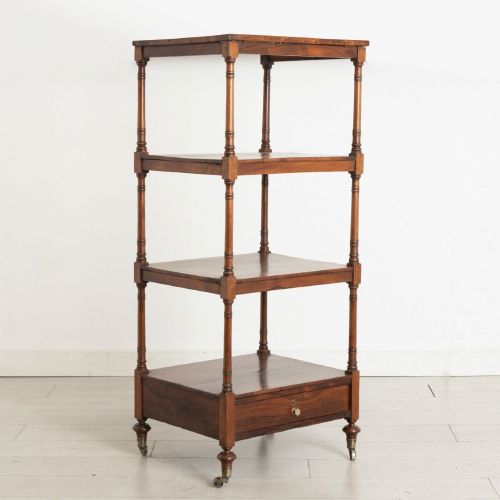
A four tier etagere is a multi-shelved stand designed for display, appearing in forms such as open bookcases and standing whatnots. These pieces emerge primarily from the nineteenth century, including Edwardian examples and Regency revival pieces.
The versions met most often on this page take the form of freestanding wooden shelf units with four distinct tiers. They originate from periods spanning the Georgian era, the nineteenth century, and the Edwardian epoch.
How they were made
Maker techniques utilise solid and veneered timbers including mahogany, rosewood, walnut, and Ceylonese ebony alongside satinwood. Brass elements appear in the construction, while boxwood inlay decorates individual surfaces.
Joinery techniques support the stacked shelf formation, connecting upright supports to horizontal tiers. Woodworkers combine figured timber grains with contrasting inlay work to articulate the profile of each whatnot.
Retail Price Guide 2026
Typical UK retail prices for four tier etagere, calculated from the Sellingantiques database of over a million retail prices indexed since 2003. This retail price guide relies exclusively on Sellingantiques data; no external sources or auction records are used, so the figures do not describe the wider market.
What varies in quality
The distinction between tiers rests upon timber selection, such as plum pudding mahogany or figured rosewood, alongside the crispness of boxwood inlay. Superior examples display refined turning on upright supports and balanced proportions across all four levels.
Construction integrity and timber choice dictate the standing quality of the piece. Subtle details in contrasting wood types and the finish of the polished surfaces separate standard production from master workshops.
GILLOWS
The Four Tier Etagere Glossary
- Etagere
- A piece of furniture consisting of a set of open shelves for displaying small objects. This form develops in France and gains popularity in British interiors during the nineteenth century.
- Whatnot
- A freestanding set of open shelves used for books or ornaments. The term is widely interchangeable with etagere in nineteenth-century trade records.
- Inlay
- A technique where pieces of contrasting wood, such as boxwood or satinwood, are inserted into a recessed surface to form a pattern. This ornamentation enhances the visual depth of mahogany and walnut pieces.
Frequently Asked Questions
What is a four tier etagere used for?
A four tier etagere functions primarily as an open display stand for books, ceramics, and decorative ornaments. The multiple open levels allow owners to arrange collections visibly within a reception room or study.
Historically, these pieces serve drawing rooms where ladies exhibit small decorative items. Today, they provide practical vertical storage while maintaining an open, airy silhouette in domestic interiors.
How do I date a four tier etagere?
Dating relies on timber choices, stylistic markers, and construction methods associated with specific decades. Pieces from the early nineteenth century often feature dense mahogany and precise turnings, whereas Edwardian examples introduce lighter walnut and boxwood inlay.
Examining secondary woods and the style of the upright supports helps clarify the period of manufacture. Makers during the Regency and Victorian eras employ distinct joinery techniques that distinguish them from later Edwardian revivals.
What woods are used in these etageres?
Cabinet makers utilise a range of dense hardwoods including mahogany, rosewood, walnut, and ebony. Satinwood and boxwood frequently appear as contrasting elements for inlay work and decorative stringing.
Certain pieces incorporate specialised figures like plum pudding mahogany to elevate the visual appeal. Brass details occasionally supplement the timber framework on specific models.
Are etageres and whatnots the same thing?
The terms are largely synonymous in nineteenth-century furniture records, both describing tiered shelving units for display. Makers and retailers often use etagere and whatnot interchangeably to denote open-shelved stands.
Regional preferences sometimes favour one term over the other, but the underlying form remains consistent. Both designations refer to freestanding furniture designed to hold multiple levels of ornaments or books.