



Four Panel Room Screen
A four panel room screen divides a space with movable hinged sections, offering privacy and decorative structure.
Four Panel Room Screen
A four panel room screen provides spatial division and privacy through articulated folding sections that adapt to various room layouts. These pieces function as decorative partitions or dressing screens within domestic interiors.
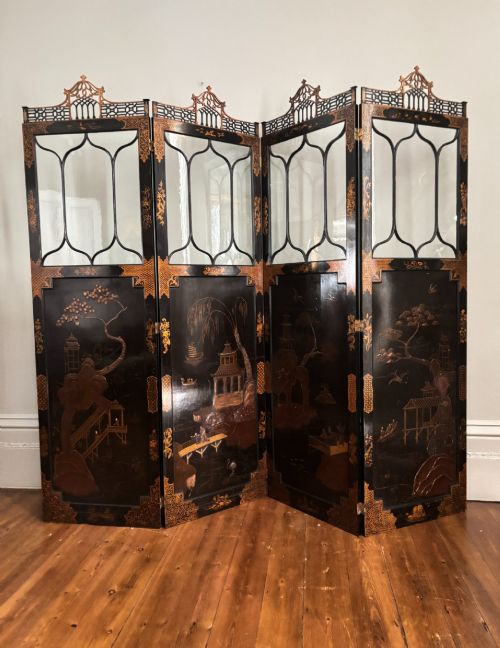
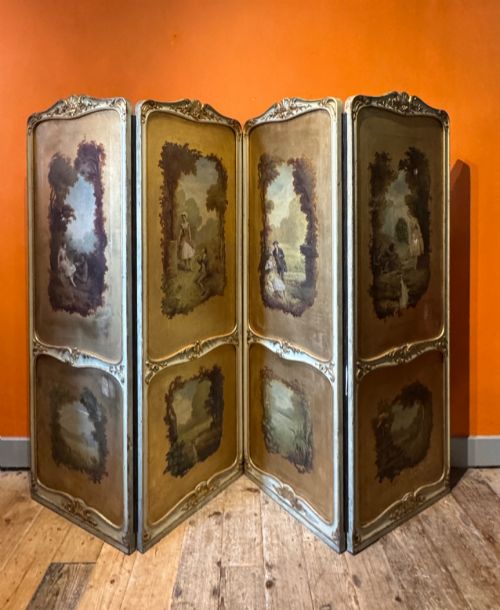
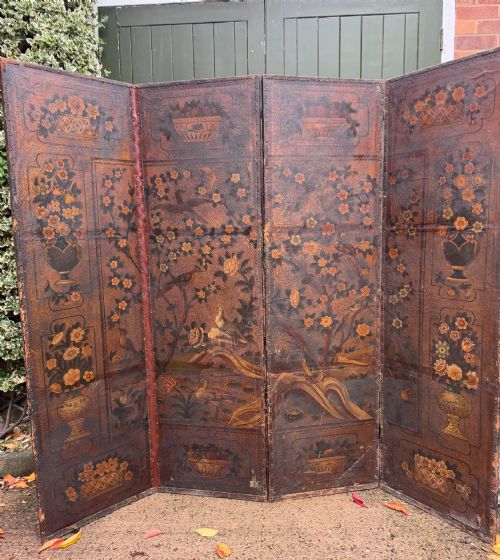
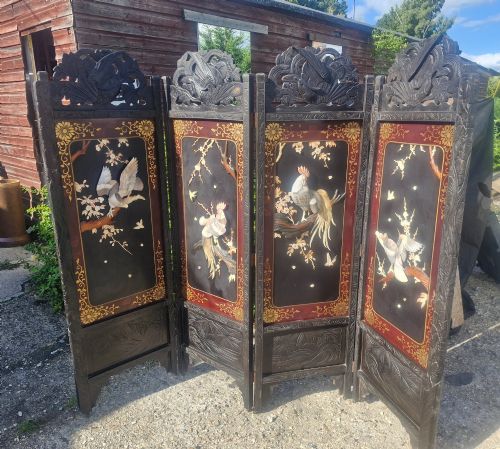
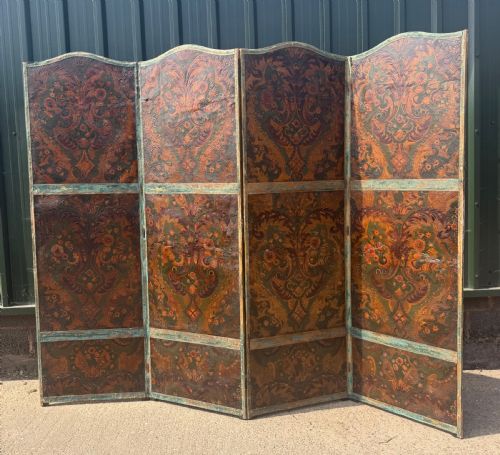
The selections available here span diverse aesthetic traditions, featuring Chinese Chippendale style, Chinoiserie lacquer, and Louis XV taste alongside Arts and Crafts oak and Regency needlepoint. Examples range from 18th century Cordoban leather to 19th century painted canvas and early 20th century Japanese textiles.
Most items on this page adhere to the four-fold format, though construction details vary from mahogany frames to ebonised oak and brass hinges. Buyers encounter both painted panels depicting romantic landscapes and intricate carved bone or hardstone-mounted surfaces.
Materials and Construction Techniques
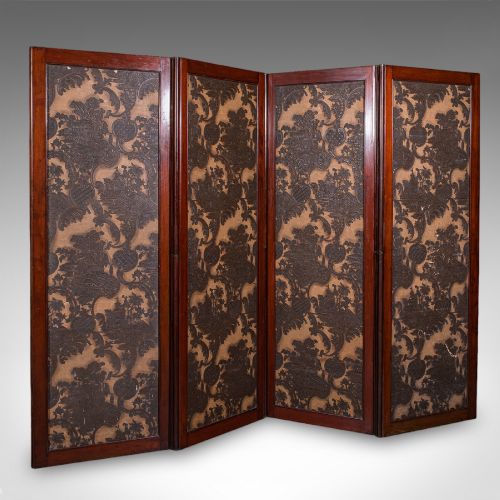
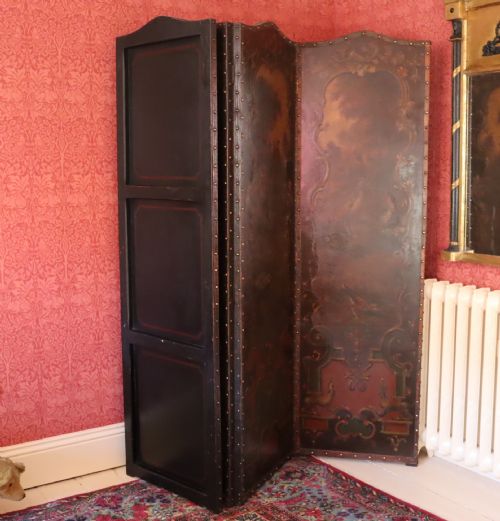
Craftsmen utilised timber frames of mahogany, oak, and other woods to support hinged sections of canvas, leather, paper, or silk cotton. Many panels received thick coats of lacquer, polychrome paint, or gilt embossing.
Surface ornamentation involved specialised techniques such as deep carving into bone or wood, needlepoint stitching, scrap work collages, and detailed hand painting of figural and landscape scenes. Edges were frequently bound in leather or secured with fretwork.
Four Panel Room Screen Retail Price Guide 2026
Typical asking prices for four panel room screen among the pieces listed under this phrase on Sellingantiques today, from the lower quarter to the upper quarter. They describe what is for sale here now, not the wider market.
Listings span from the 18th century through to 1930, incorporating materials such as brass, leather, canvas, lacquer, and paint.
Assessing Quality and Execution
Superior execution shows in the depth and precision of carved elements, such as multi-layered bone figures or intricate wood fretwork, compared to simpler painted surfaces. The refinement of hand-painted figural and landscape details separates standard decorative pieces from finer artistic works.
The integrity of the materials, from heavy Cordoban embossed leather to substantial mahogany or ebonised oak framing, determines the structural presence of the divider. Well-preserved lacquer and securely mounted hardstone or textile elements indicate superior original craftsmanship.
Paul Sormani
The Four Panel Room Screen Glossary
- Chinoiserie
- European decorative style reflecting Chinese artistic influences, frequently seen in lacquered screens with gilt motifs.
- Coromandel
- Chinese carved lacquer ware typically featuring incised designs filled with colours against a dark ground.
- Cordoban leather
- Heavy embossed and painted leather originating from Spain, utilised for luxury wall hangings and screen panels.
- Ebonised
- Wood treated with a dark finish to imitate ebony, common in Arts and Crafts framing.
- Needlepoint
- Embroidery stitched on canvas mesh, often applied to room divider panels in Regency and Victorian examples.
Four Panel Room Screen: Frequently Asked Questions
How are four panel room screens used?
These screens partition large rooms, create private dressing areas, or serve as decorative backdrops and photographic props.
Their folding design allows owners to adjust the span and angle to suit changing spatial requirements.
How do I identify a Chinoiserie screen?
Chinoiserie pieces typically display black lacquer grounds ornamented with gilt or painted oriental figures, landscapes, and architectural motifs.
This style appears across various periods, particularly in 19th and early 20th century European interpretations.
Are these screens stable on carpets?
The multiple hinged folds allow the screen to stand in a zigzag or curved configuration, which provides natural stability on most flooring.
Heavier wood and leather versions offer a more substantial barrier than lighter textile or paper panels.