
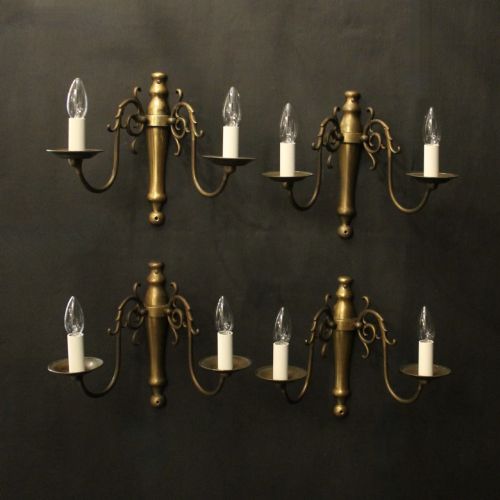
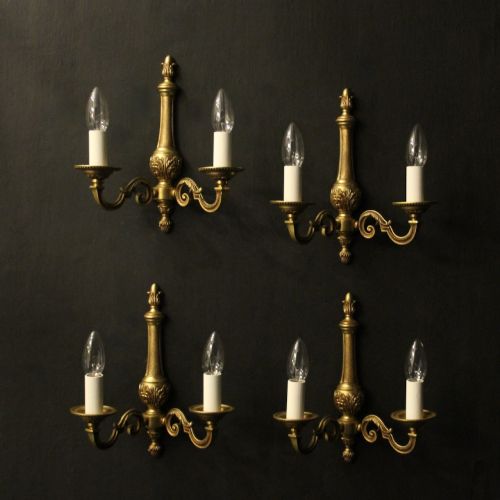


Four Arm Wall Sconces
Four arm wall sconces bring layered illumination and period character to a room, drawing the eye with their branching metal or giltwood arms.
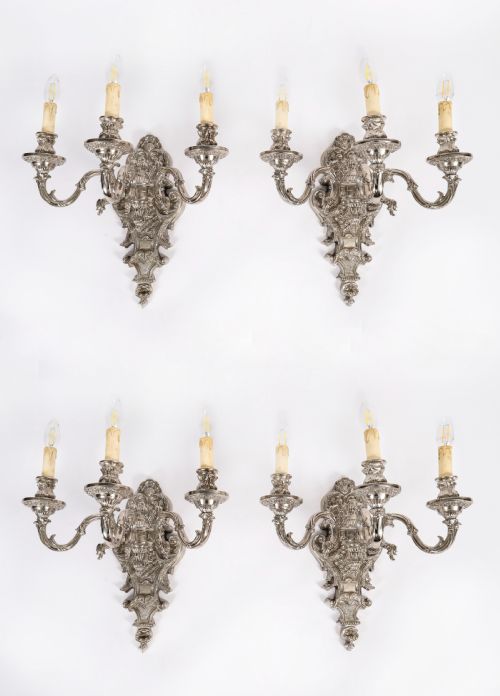
Four Arm Wall Sconces
When you search for four arm wall sconces, you encounter decorative wall lighting designed to mount directly onto a vertical surface and distribute light across multiple candle or bulb holders. The pieces listed range from the nineteenth century through the Edwardian era and the 1930s, reflecting diverse origins such as England, France, and Italy. You will find brass, bronze, silver plate, and giltwood constructions that project distinct historical styles into an interior.
The versions most commonly met on this page include matching sets of four or pairs that together satisfy a decorative scheme, often executed in Rococo Revival, Florentine Rococo, or Neoclassical designs. These fixtures frequently employ branching arm configurations, from twin-armed arrangements to triple and four-arm designs, offering substantial visual weight. They serve both as functional illumination and as sculptural wall ornaments derived from traditional domestic architecture.
How they were made
Makers utilised cast brass, bronze, and carved giltwood as primary structural materials, shaping metal through casting and finishing it with gilding or silver plating. Gilded brass and silvered surfaces required careful application of leaf or plating over a prepared base to achieve an even metallic lustre.
Wood elements in Florentine pieces relied on skilled carving and gesso application before receiving layers of gold leaf or silver gilt. The branching arms were engineered to support the weight of multiple candle or electrical fittings while maintaining the intricate curves characteristic of Rococo and Neoclassical styles.
Several sets feature Florentine giltwood arms that appear to have sprouted directly from a gilded forest floor.
What varies in quality
The crispness of the casting defines the upper tier of metalwork, where floral and scroll motifs retain sharp relief and clean edges rather than appearing soft or blurred. Hand-chased detailing on bronze and brass distinguishes superior pieces by adding depth and texture to the surface ornamentation.
In giltwood and silver-gilt examples, the integrity of the carved wooden substrate and the preservation of the original gold or silver leaf dictate the standard of execution. Superior construction ensures that the multiple arms align symmetrically and maintain structural rigidity where they join the main backplate.
The Four Arm Wall Sconces Glossary
- Giltwood
- Wood that has been coated with a thin layer of gold leaf or gold paint. This technique was widely employed on Italian and French wall lights to create a luminous decorative surface.
- Ormolu
- Gilded bronze, where a layer of gold amalgam is applied to a bronze base and heated to drive off the mercury. The term denotes high-status French metalwork from the eighteenth and nineteenth centuries.
- Applique
- A French term frequently used interchangeably with wall sconce or wall light. It describes a decorative lighting fixture mounted flush against a wall.
- Rococo Revival
- A nineteenth-century design style that revives the asymmetric curves, C-scrolls, and naturalistic plant motifs of the eighteenth-century Rococo movement. Pieces in this style often feature elaborate, flowing ornamentation.
- Neoclassical
- A style inspired by the classical art and architecture of ancient Greece and Rome. It prioritises symmetry, restraint, straight lines, and classical urn or leaf motifs.
Four Arm Wall Sconces: Frequently Asked Questions
How were four arm wall sconces used?
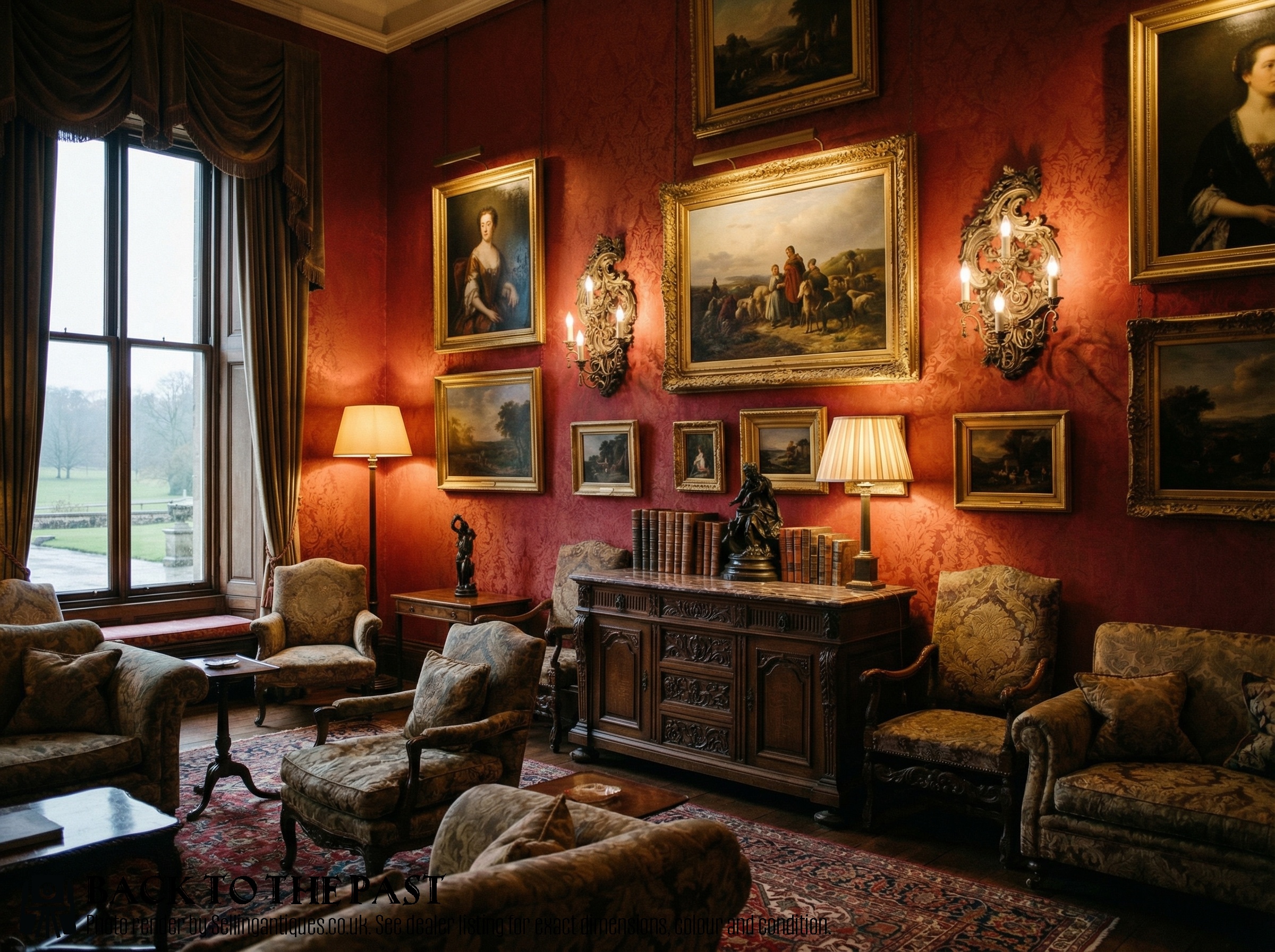
These fixtures were mounted on walls in principal rooms to supplement natural daylight and candle illumination, often positioned flanking mirrors, fireplaces, or architectural doorways.
Their branching arms allowed multiple light sources to project outward, distributing a warm glow across panelled or wallpapered surfaces.
How do I clean antique brass wall lights?
Maintenance requires gentle dusting with a soft, dry cloth to prevent the accumulation of grime on intricate castings and scrollwork.
Harsh chemical polishes should be avoided to preserve the patination and any remaining original lacquer or surface finish.
Are these sconces wired for electricity?
Many wall lights from this era have been adapted for modern electrical wiring while retaining their historical appearance and structural components.
Buyers should inspect the internal wiring and consult a qualified electrician to ensure compatibility with current domestic safety standards.
How can I tell French styles apart from English ones?
French pieces often display exuberant Rococo or classical detailing with gilt bronze or silver plating, emphasising sculptural form and ornate backplates.
English equivalents tend to favour more restrained brass constructions aligned with traditional domestic proportions and simpler neoclassical influences.