
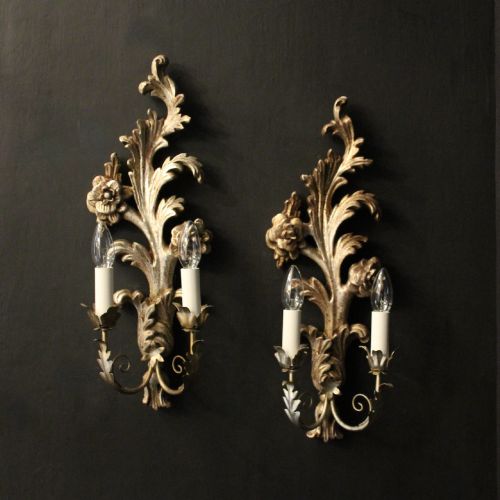


Carved Silver Wall Lights
These carved silver wall lights bring immediate atmosphere to a room, offering the decorative weight of antique Florentine and Italian baroque work.
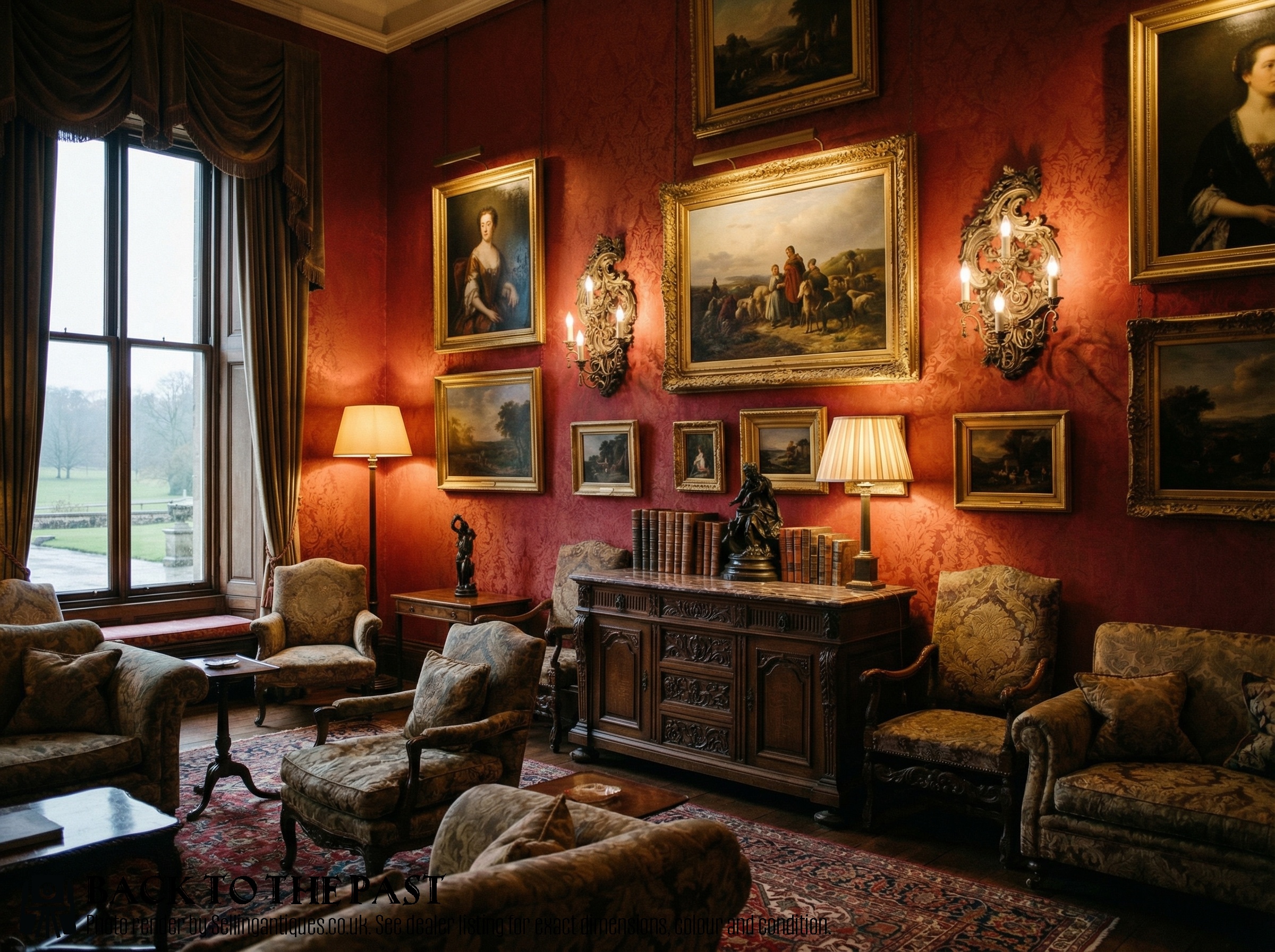
Carved Silver Wall Lights
Carved silver wall lights encompass wall sconces, girandoles, and candle holders fashioned primarily from wood and finished with silver leaf or silver gilding. They draw heavily on Italian design traditions, ranging from the seventeenth century through to the art deco era.
The version most commonly met on this page is the Florentine silver giltwood wall light, usually fitted with twin or triple arms. These pieces often feature elaborate carved wooden structures coated in gesso before the application of silver leaf or gilt.
Beyond standard sconces, the selection includes specialised forms such as large girandoles with pink mirror glass and figural pieces like mermaid candle holders. Origins span from seventeenth century examples to Edwardian and 1930s revivals.
How they were made
Makers shaped the foundational bodies from wood, employing detailed carving to achieve baroque scrollwork, cherubs, and architectural motifs. Gesso was then applied over the carved wood to create a smooth, responsive ground for gilding.
Surfaces received silver leaf or silver gilding, sometimes combined with polychrome details or giltwood to heighten contrast and depth. Iron components occasionally provided structural support for the branching arms, while specialised pieces integrated glass elements such as pink mirror panels or Murano components.
Listings feature materials spanning silver leaf, giltwood, metal, carved wood, gesso, iron, and glass across multiple decades.
What varies in quality
The refinement of the carving dictates much of the distinction between examples, separating fluid, deeply undercut foliage and figures from more rigid, shallow execution. The application and survival of the silver leaf and gesso layer also determine visual richness, particularly where underlying giltwood or polychrome shows through.
Scale and complexity shift across the range, moving from simple single forms to substantial multi-arm girandoles paired with specialised glass. The integration of secondary materials, such as Murano glass or pink mirror plates, introduces another layer of distinction in the construction.
The Carved Silver Wall Lights Glossary
- Giltwood
- Wood that has been coated with gold leaf or a gold-coloured finish. It frequently appears alongside silver leaf in Florentine lighting to create a dual-tone metallic effect.
- Girandole
- An ornamental bracket candlestick equipped with a mirror that reflects the candlelight. These pieces often incorporate carved wooden frames and multiple branches.
- Gesso
- A plaster mixture applied to wood surfaces to prepare them for gilding or painting. It provides a smooth base that allows carvers to achieve crisp, detailed edges.
- Silver Leaf
- Extremely thin sheets of silver applied to the prepared wooden surface of an object. This technique gives the appearance of solid silver while retaining a lighter wooden core.
- Baroque
- An ornate artistic style originating in Italy, characterised by dramatic movement and rich detail. This aesthetic heavily influences the scrollwork and figures seen on these wall lights.
Carved Silver Wall Lights: Frequently Asked Questions
What periods do these wall lights come from?
The pieces span from the seventeenth century through to early twentieth-century periods including Edwardian, 1920, and 1930. Many of the later pieces reflect historical revivals of Florentine and baroque styles.
Italian workshops produced a large proportion of these designs, maintaining traditional carving and silvering techniques across different decades.
How were girandoles used historically?
Girandoles served to illuminate rooms while multiplying the available light through the use of an integrated mirror plate. Placed on walls, they caught and reflected the glow of candles.
Pink mirror glass and branching arms enhanced this reflective quality, turning functional lighting into a decorative focal point.
What materials are used in these lights?
Wood forms the primary structural base, finished with gesso and covered in silver leaf, silver gilding, or giltwood. Some examples incorporate iron for structural arm support and glass elements.
Polychrome pigments and Murano glass also appear on specific Italian pieces to add colour and texture.
How do I distinguish Florentine styles?
Florentine pieces typically display characteristic carved wood structures finished in silver giltwood, often configured with twin or triple candle arms. They lean heavily on baroque and rococo revival motifs.
Detailing ranges from standard scrollwork to elaborate figural elements like cherubs and mermaids depending on the specific workshop and period.
Can these wall lights hold candles safely?
Most of these pieces were originally designed for candle use, featuring dedicated holders at the ends of their branching arms. Consideration should be given to the physical stability and historical nature of each individual sconce.
Many examples have also been adapted for electricity over time while retaining their original carved frames.