
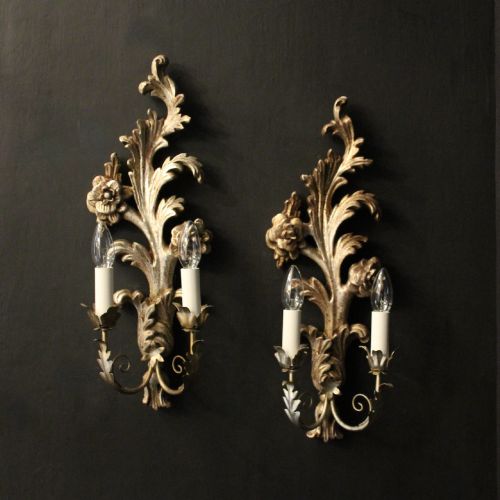


Silver Gilt Wall Sconces
Silver gilt wall sconces bring layered illumination and architectural presence to a room, catching candle or electric light across gilded surfaces.
Silver Gilt Wall Sconces
When you search for silver gilt wall sconces, you encounter lighting fixtures designed to mount directly onto vertical surfaces, predominantly taking the form of twin, triple, or four arm wall lights. The pieces listed here span from the seventeenth century through to the early twentieth century, incorporating periods such as nineteen thirty, nineteen twenty, and nineteen hundred.
The dominant aesthetic traditions on this page draw from Florentine, French, and Italian design vocabularies, featuring styles such as Rococo Revival, Baroque, and Florentine Baroque. You will most frequently meet Florentine silver giltwood examples alongside French silver gilded pieces, often wired with multiple arms for candle style illumination.
How they were made
Construction relies heavily on carved wood, giltwood, and gesso foundations, which receive applications of silver leaf or silver gilding to achieve their characteristic metallic sheen. Artisans shaped these wooden bases into elaborate scrollwork and architectural motifs, building up the gesso layers to capture crisp detail before applying the silver finish.
Certain examples incorporate contrasting elements such as iron, glass, and crystal drops or Murano components, pairing structural metal or carved timber with transparent or reflective accents. The integration of cherub figures and multi arm configurations requires joinery and metalworking techniques suited to supporting weighted branches against a wall.
Several cherub wall lights on this page cheerfully shoulder multiple candle arms, refusing to let structural lighting duties dampen their wooden spirits.
What varies in quality
Quality reveals itself in the depth and crispness of the carved wood and gesso ornamentation, where superior pieces exhibit sharply defined acanthus leaves, scrollwork, and figurative details rather than softened contours. The application and ageing of the silver leaf and gilding also set examples apart, with finer pieces showing a harmonious interplay between the silvered surfaces and the warm wood or gesso underneath.
The architectural scale and structural ambition of the frame dictate much of the distinction, ranging from simple single or twin arm arrangements to complex triple or four arm Florentine compositions and pieces incorporating Murano glass or crystal elements. Heavier timber construction and integrated hardware that securely balances multiple candle arms denote superior workshop production.
The Silver Gilt Wall Sconces Glossary
- Silver Gilt
- Wood, metal, or gesso surfaces coated with silver leaf or silver gilding to create a reflective metallic appearance. This technique gives the sconces their characteristic dual tone interaction with light.
- Giltwood
- Timber carved and prepared with gesso before receiving a layer of gold or silver leaf. It forms the structural and decorative body of many Italian and French wall lights.
- Gesso
- A plaster mixture applied to carved wood bases to create a smooth, buildable surface for gilding. It allows artisans to carve intricate details that hold crisp edges under metal leaf.
- Murano
- Glass originating from the Venetian island renowned for traditional glassmaking techniques. Pieces incorporating Murano elements feature specialised hand-formed glass components.
- Rococo Revival
- A nineteenth century style drawing on the asymmetrical scrolls, shell motifs, and naturalistic curves of the eighteenth century French Rococo movement. It appears frequently in the revival pieces on this page.
Silver Gilt Wall Sconces: Frequently Asked Questions
How were silver gilt wall sconces used?
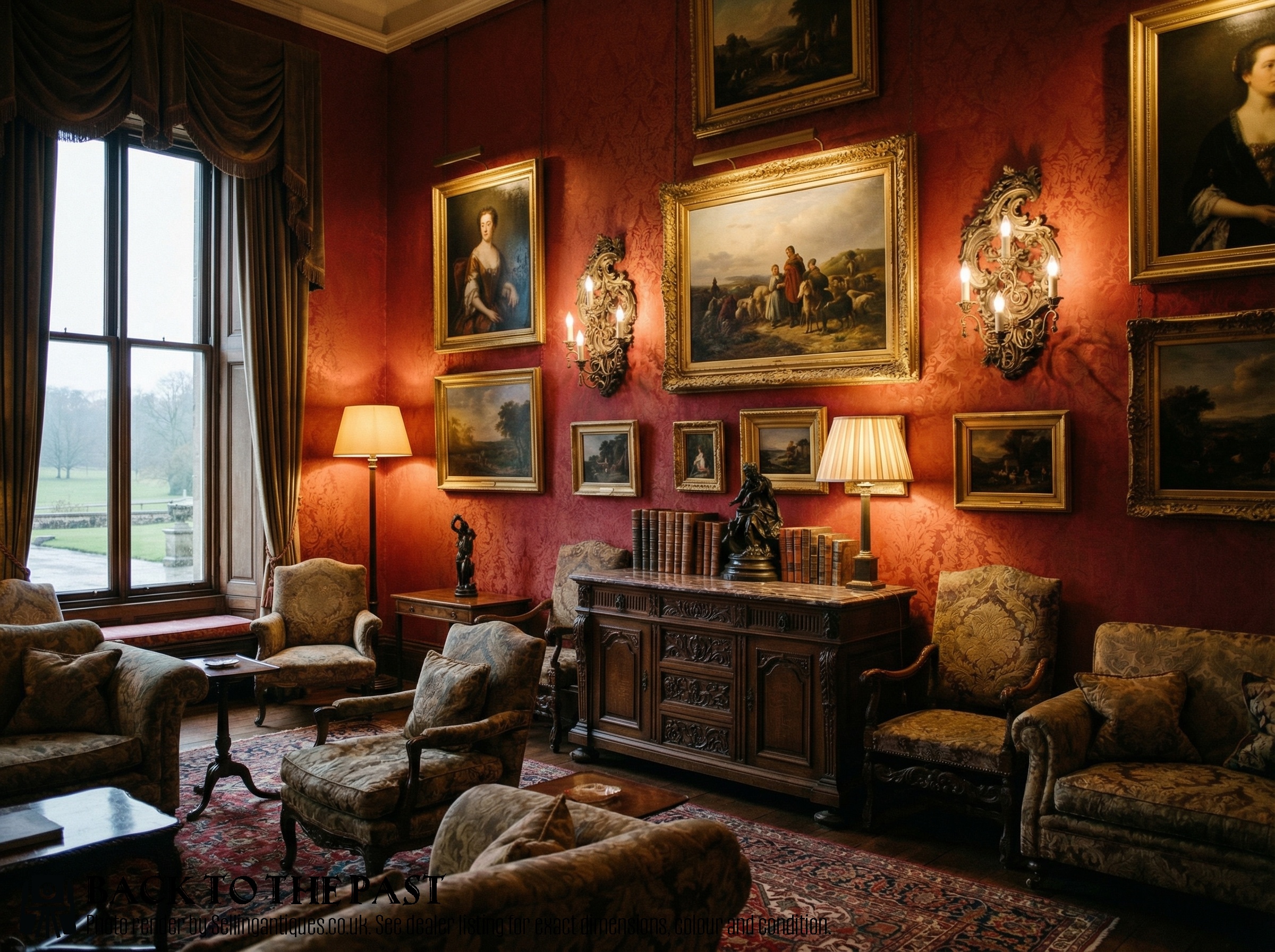
These fixtures served to illuminate rooms by reflecting candle or ambient light off their metallic silver gilt surfaces, mounted strategically along walls to brighten dark corners and formal spaces.
Pairs and matching sets were typically placed flanking mirrors, fireplaces, or architectural doorways to create balanced lighting schemes in grand interiors.
How do I live with wall sconces?
Integrating these pieces into a modern interior involves mounting them at eye level or slightly above, depending on the ceiling height and surrounding furniture scale, to ensure the light distributes evenly.
Many antique sconces are wired for electricity by past owners, allowing them to function safely as practical wall illumination while retaining their historical decorative presence.
How do I tell periods apart?
Differentiating seventeenth century examples from early twentieth century revivals relies on examining the character of the carved wood, the wear of the gesso, and the specific application of the silver leaf.
Earlier pieces show the tool marks and patination of age in the timber foundation, whereas twentieth century revivals often employ specific regional styles like Florentine Rococo with crisp, intentional uniformity.
What materials are used in these sconces?
The primary body is typically constructed from carved wood, gesso, and giltwood, finished with silver leaf or silver gilding to achieve the signature metallic exterior.
Additional materials include iron for structural support, glass, crystal drops, and Murano elements that introduce reflective transparency to the heavy wooden frames.