






Folk Art Cupboard
These pieces of folk art cupboard bring together regional utility and vibrant surface design, offering practical storage with a distinct historical narrative.
Folk Art Cupboard
A folk art cupboard represents domestic storage shaped by regional traditions across Europe, spanning the eighteenth and nineteenth centuries. These pieces encompass wall cabinets, full-height armoires, corner cupboards, and kitchen dressers originating from Sweden, Hungary, France, Austria, and Britain.
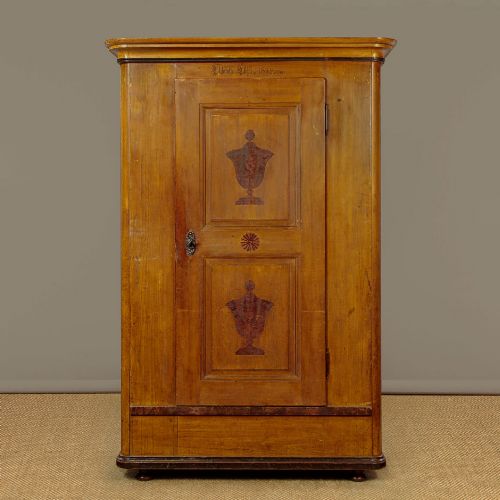
The version most commonly encountered on this page is the nineteenth-century painted pine cupboard, often carrying Scandinavian or Austro-Hungarian origins. Such pieces range from compact wall-hung boxes to substantial two-piece dressers and hall wardrobes.
Buyers look for these items to anchor an interior with authentic rural character, relying on traditional forms that served functional purposes in European farmhouses and village homes.
Materials and construction methods
Makers relied primarily on native pine and occasionally oak, constructing carcases with pegged joints, hand-planed panels, and simple dovetailing suited to local workshop practices. Iron and brass hardware, including strap hinges and latches, fastened doors and secured contents.
Surface decoration defined much of the production, utilising oil-based or milk paints mixed with local pigments. Artisans applied solid ground colours, floral motifs, or ragwork patterns directly onto the timber, sealing the wood while adding decorative distinction.
One listed cabinet began its life integrated into a traditional enclosed Breton sleeping bed.
Evaluating quality and character
Quality rests in the integrity of the original paint surface and the balance of the proportions. An uncompromised layer of early pigment, whether weathered cream, teal, or green, holds greater visual weight than a later, unsympathetic overpaint.
Construction honesty also distinguishes superior examples, where traditional joinery remains sound and hardware corresponds to the period of manufacture. The strength of hand-carved details or regional painting execution determines the overall distinction of each piece.
Melissa White
The Folk Art Cupboard Glossary
- Ragwork
- A decorative paint technique where rags or cloths are used to manipulate wet colour on a surface, creating textured patterns often found on Scandinavian furniture.
- Armoire
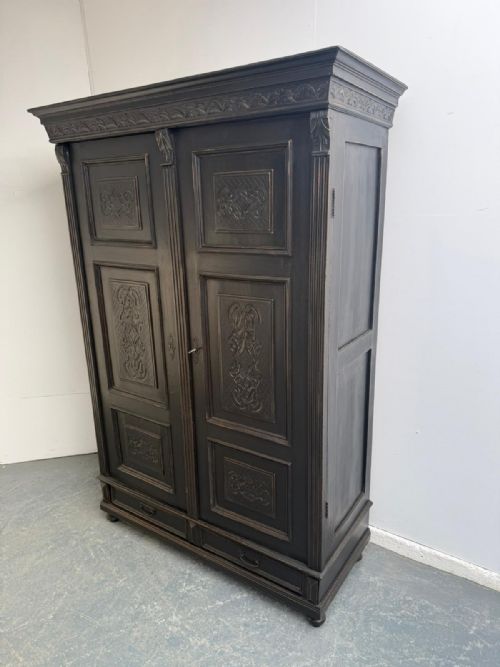
- A large freestanding wardrobe or cupboard with doors, traditionally used for storing garments and household textiles.
- Armoire
- A large freestanding wardrobe or cupboard with doors, traditionally used for storing garments and household textiles.
- Linen press
- A tall cabinet specifically designed for storing folded linen and bedding, usually featuring sliding trays or shelves behind the upper doors.
- Gustavian
- The Swedish interpretation of French neoclassical style, characterised by restrained carving, pale painted finishes, and balanced proportions.
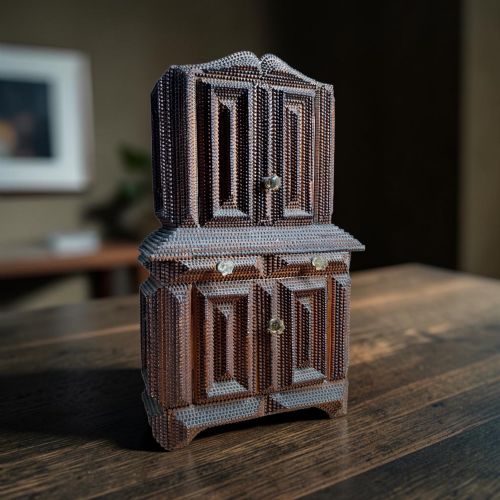
- Tramp art
- A style of woodworking where small items are constructed from scrap timber, cigar boxes, and packaging crates using notch-carving and layering techniques.
Folk Art Cupboard: Frequently Asked Questions
How do I date a folk art cupboard?
Dating relies on examining construction marks, timber preparation, and the composition of the paint layers. Hand-planed boards and forged iron hardware point to earlier periods of production.
Changes in style, such as the shift from eighteenth-century architectural mouldings to nineteenth-century vernacular painted surfaces, help narrow the timeframe of manufacture.
Are painted finishes usually original?
Many pieces retain their original surface decoration, though touch-ups and later overpainting occurred during subsequent generations of use. Examining the paint under magnification reveals underlying layers and wear patterns.
Original schemes often show craquelure, natural fading, and integration with the underlying timber joints.
Where were these cupboards made?
The pieces originate from various European regions, with a strong representation from Sweden, Hungary, Austria, and France. Each area developed distinct palettes and decorative motifs.
Local timber availability, such as Baltic pine or regional hardwoods, also points to the geographic origin of the workshop.
How should I care for the painted surface?
Maintaining these pieces involves keeping them away from direct sunlight and fluctuating humidity to prevent paint flaking and wood movement. Dusting with a dry, soft cloth is sufficient for routine cleaning.
Avoid using modern chemical polishes or water on painted timber, as moisture can damage historical pigments.