




Folding Wooden Cake Stand
A folding wooden cake stand is a clever piece of tiered furniture that collapses for easy storage, perfect for serving afternoon tea in compact spaces.
Folding Wooden Cake Stand
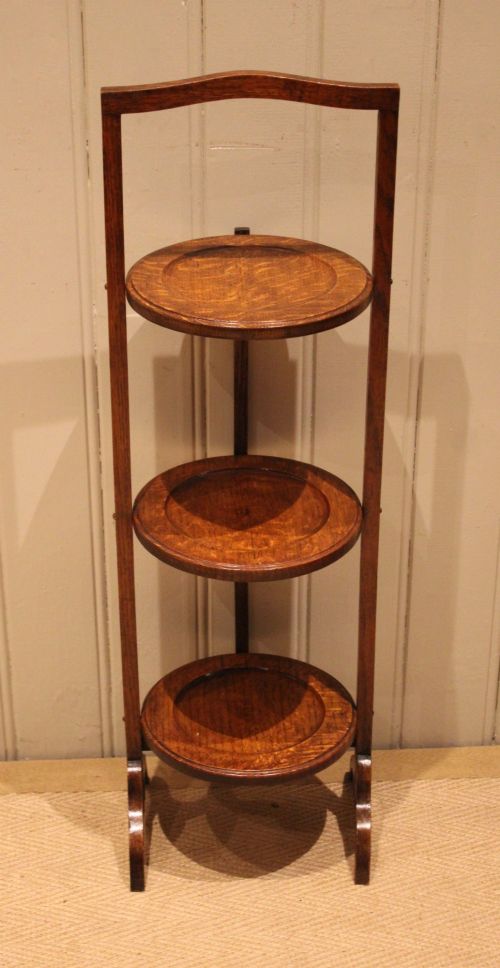
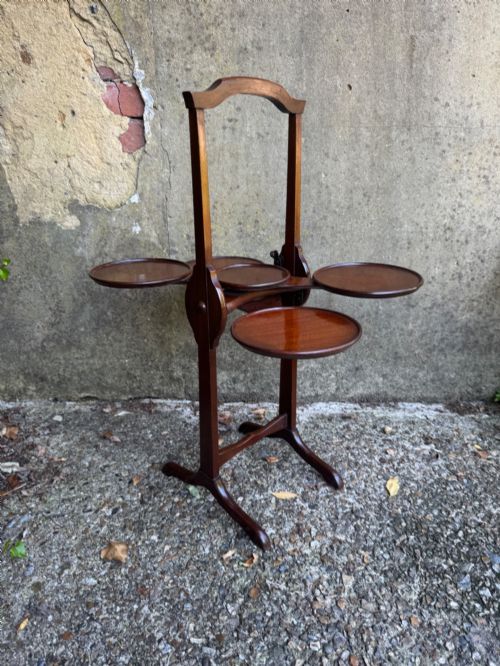
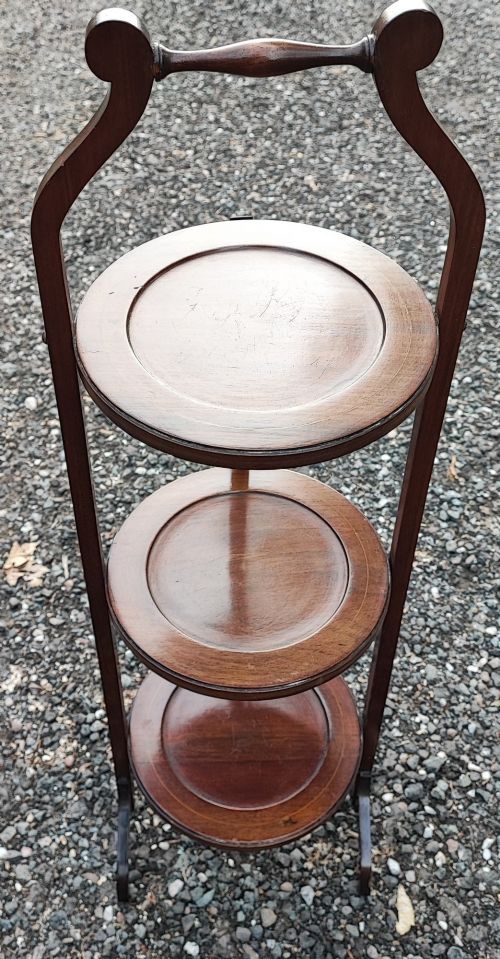
When you search for a folding wooden cake stand, you are looking at practical tiered furniture designed for serving pastries and tea. These pieces typically feature multiple circular or shaped trays mounted on a central pivoting frame that collapses flat when not in use.
The versions you are most likely to meet on this page hail from the Edwardian era, spanning the early twentieth century, alongside examples from the nineteenth century and earlier Georgian periods. They appear as two, three, or four-tier stands, occasionally crossing over into occasional tables or dumbwaiters.
Oak and mahogany dominate the offerings, frequently enhanced with boxwood or satinwood inlay, brass fittings, and occasionally felt or iron elements. Their forms range from plain, solid timber constructions to delicate Sheraton Revival pieces with inlaid decoration.
How they were made
Cabinetmakers constructed these stands predominantly using mahogany, oak, and occasionally rosewood or walnut, selecting timbers that offered both strength and a fine grain. The central stems and pivoting legs required careful joinery to ensure the tiers remained level when open and folded smoothly when packed away.
Decorative detailing on finer examples involved contrasting veneers and stringing in boxwood or satinwood, often set into the timber surfaces in geometric or floral motifs. Brass hinges and locking pins secured the folding mechanisms, while some heavier tables incorporated iron components for stability.
Folding Wooden Cake Stand Retail Price Guide 2026
Typical asking prices for folding wooden cake stand among the pieces listed under this phrase on Sellingantiques today, from the lower quarter to the upper quarter. They describe what is for sale here now, not the wider market.
The selection includes two, three, and four-tier formats alongside occasional tables and dumbwaiters.
What varies in quality
The distinction between standard utility items and finer examples rests on the choice of timber and the precision of the folding mechanism. Superior pieces employ dense, well-figured mahogany or quarter-sawn oak with crisp, tight joinery that allows the tiers to swing and lock without sagging.
Decorative refinement also separates the grades, moving from plain turned supports to delicate Sheraton Revival stringing, intricate inlay work, and shaped tier edges. The presence of original brass hardware and well-preserved surface finishes distinguishes the best-executed pieces from simpler workshop productions.
The Folding Wooden Cake Stand Glossary
- Tiered stand
- A piece of furniture featuring multiple horizontal surfaces arranged vertically above one another. These provide elevated display or serving space while maintaining a small footprint on the floor.
- Sheraton Revival
- A late nineteenth and early twentieth century design style drawing on the neoclassical furniture forms of George Sheraton. It typically incorporates satinwood inlay, tapered legs, and refined proportions.
- Dumbwaiter
- A multi-tiered serving table or stand used in dining rooms for holding dishes or food. Older examples from the eighteenth century occasionally share forms with later folding stands.
- Inlay
- A technique where pieces of contrasting timber, such as boxwood or satinwood, are set into recesses flush with the main surface to create decorative patterns.
Folding Wooden Cake Stand: Frequently Asked Questions
How do you fold a wooden cake stand?
Most stands operate on a scissor action or pivoting central hinge where the tiers lift slightly and swing inward toward the main upright stem. This allows the frame to collapse flat for storage against a wall or in a cupboard.
Take care to support the tiers evenly when operating the mechanism to avoid straining the pivot joints or scratching the polished timber surfaces.
Were these stands only used for cake?
While named for afternoon tea and serving pastries, these versatile tiered pieces served various domestic functions in the parlour and drawing room. They frequently held small plants, books, decorative ceramics, or smoking requisites.
Their tiered structure made them ideal for displaying small decorative objects without cluttering surface space in smaller Victorian and Edwardian rooms.
How do you date an Edwardian cake stand?
Edwardian stands, typically dating from around 1900 to 1910, often feature lighter mahogany or oak construction with delicate inlaid decoration influenced by the Sheraton Revival style. Examining the turning on the central column and the type of brass hardware used helps confirm the period.
Earlier nineteenth-century examples tend to be heavier in proportion, while Georgian pieces from the eighteenth century utilise different cabinet-making techniques and heavier timber scantlings.
How do you care for a polished wood surface?
Maintain the timber by dusting regularly with a soft, dry cloth and applying traditional beeswax periodically to nourish the polish. Avoid placing stands in direct sunlight or near heat sources, which can dry out the wood and cause timber shrinkage or splitting.
Keep moisture away from the surfaces by using coasters under any items placed on the tiers, as water can mark the antique polish.