



Folding Tier Cake Stand
These folding tier cake stand pieces offer tiered surface space for serving or display, collapsing flat when not in use.
Folding Tier Cake Stand
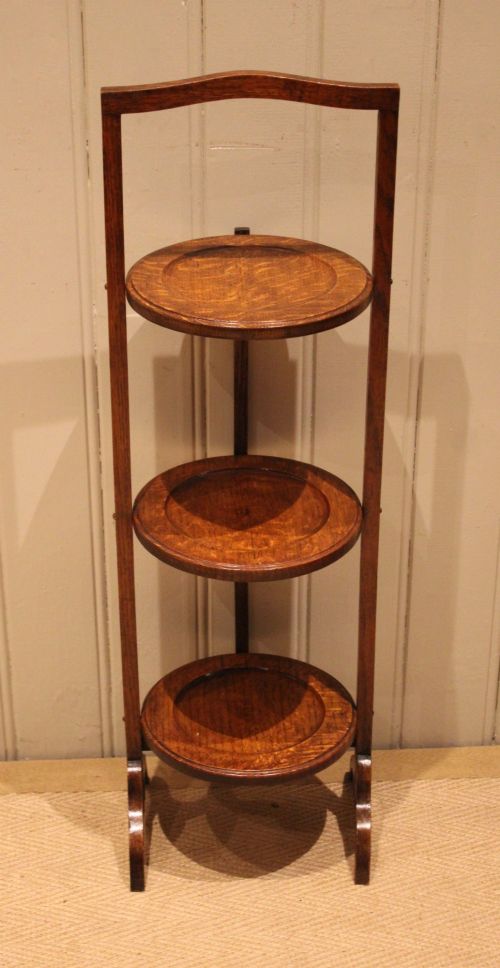
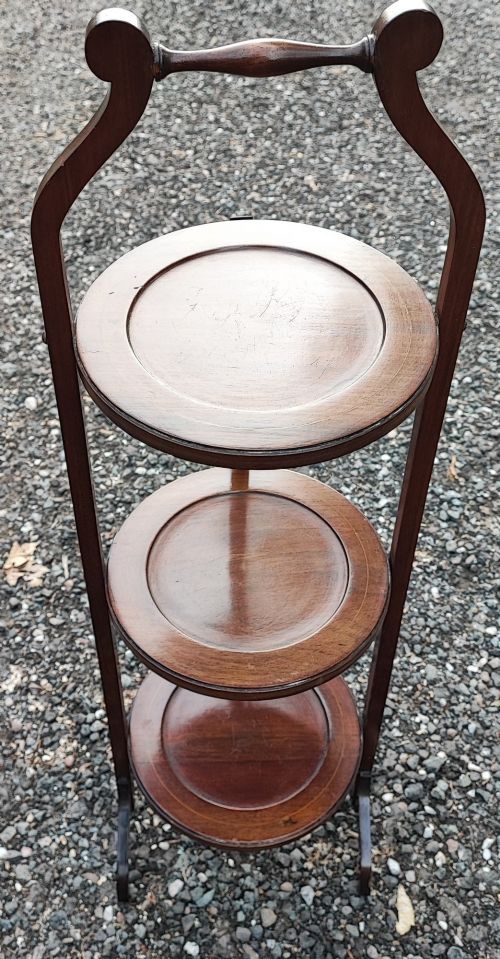
A folding tier cake stand provides multiple graduated levels arranged vertically to hold baked goods, tea accessories, or small decorative items in domestic interiors. Most examples encountered here date from the Edwardian era and the early twentieth century, taking the form of three-tiered or four-tiered collapsible furniture.
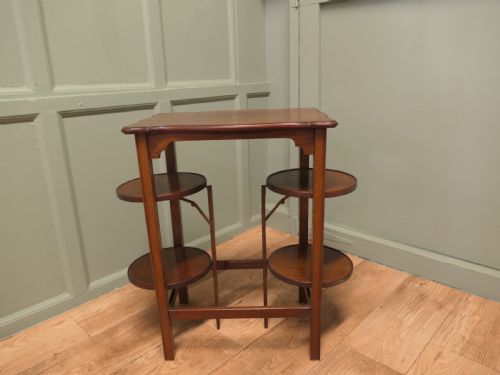
Makers designed these tiered stands using clever hinged or pivoting mechanisms so the circular shelves fold neatly together for storage against a wall or in a cupboard. While primarily associated with Edwardian afternoon tea rituals, the category also encompasses campaign style serving tables, Georgian dumbwaiters, and occasional side tables adapted for tiered display.
Materials and construction
Cabinetmakers constructed these stands predominantly from mahogany, oak, and rosewood, sometimes incorporating satinwood, boxwood, and walnut for decorative contrast. Timber selection focused on combining structural rigidity in the upright supports with light weight in the folding tiers.
Workshops utilised fine wood veneers and detailed string inlay, particularly in Sheraton Revival and Edwardian pieces, alongside brass hardware for folding hinges and pivot pins. Felt surfaces occasionally appear on tiers to protect delicate tableware during service.
Folding Tier Cake Stand Retail Price Guide 2026
Typical asking prices for folding tier cake stand among the pieces listed under this phrase on Sellingantiques today, from the lower quarter to the upper quarter. They describe what is for sale here now, not the wider market.
One curious variation includes monoplane styling, bringing early aviation enthusiasm directly to the afternoon tea table.
Distinctions in quality
Quality rests primarily on the precision of the folding mechanism and the stability of the tier supports when fully extended. Superior pieces maintain a level balance across all tiers without lateral wobble, demonstrating careful carpentry in the joints.
The choice of cabinet timber and the finesse of any inlaid banding or marquetry separate standard production items from finer workshop output. Robust brass hinges and well-figured mahogany or rosewood indicate higher standards of original manufacture.
The Folding Tier Cake Stand Glossary
- Tiered Stand
- Furniture featuring multiple horizontal surfaces arranged vertically above one another. This arrangement maximises display capacity while occupying a compact footprint on the floor.
- Campaign Style
- Portable furniture designed for easy transport and rapid assembly. These pieces often feature specialised folding frames and robust joints suited to travel.
- Sheraton Revival
- A late nineteenth and early twentieth century design movement inspired by the neoclassical furniture of George Sheraton. It relies on restrained classical motifs, satinwood highlights, and delicate proportions.
- Inlay
- A technique where contrasting pieces of wood, brass, or shell are fitted into a recess in the primary timber surface. This creates flat decorative patterns across the tiers or frame.
Folding Tier Cake Stand: Frequently Asked Questions
How do folding tier cake stands work?
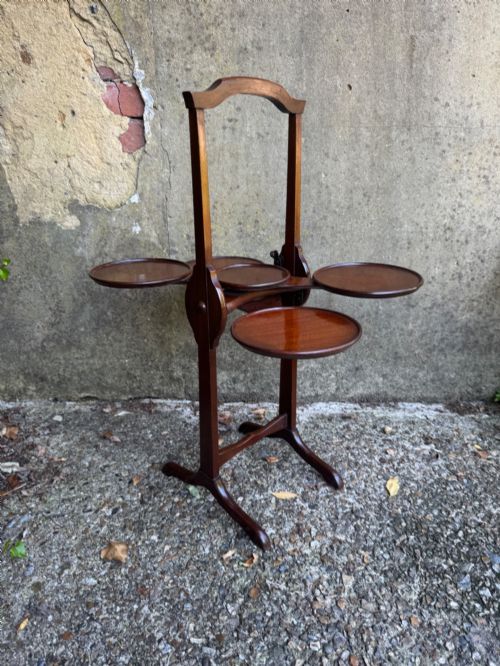
The vertical frame incorporates pivoting struts or hinged brass joints that allow the circular shelves to swing inward and collapse flat. This clever mechanism enables the entire structure to be stored compactly against a wall when not in service.
Users simply lift the central handle or top tier to expand the levels into a stable triangular or square array. The supporting arms lock gently into position to hold each shelf steady during use.
Where were these stands used?
These tiered stands served primarily in drawing rooms and parlours during afternoon tea gatherings to present cakes, pastries, and small sandwiches. Their vertical design kept tables clear for teapots and cups.
Outside of tea service, households utilised them as occasional side tables for displaying decorative ceramics, books, or small plants in constrained spaces.
How do I care for a wooden cake stand?
Protect the polished timber surfaces by avoiding direct placement of hot dishware or wet items without a protective mat or doily. Regular dusting with a dry cloth keeps the finish clean.
Condition the wood occasionally with a suitable wax to maintain the lustre of the mahogany or rosewood. Keep the furniture away from direct heat sources and strong sunlight to prevent timber splitting.
How do I identify an Edwardian cake stand?
Edwardian examples typically feature light mahogany or inlaid satinwood decoration reflecting the Sheraton Revival taste popular around the turn of the twentieth century. They often employ simple folding tripod or scissor-action frames. nConstruction details such as machine-sawn timber components and modern brass screw fittings help distinguish these Edwardian pieces from heavier eighteenth-century furniture like dumbwaiters.