



Vintage Cake Stand
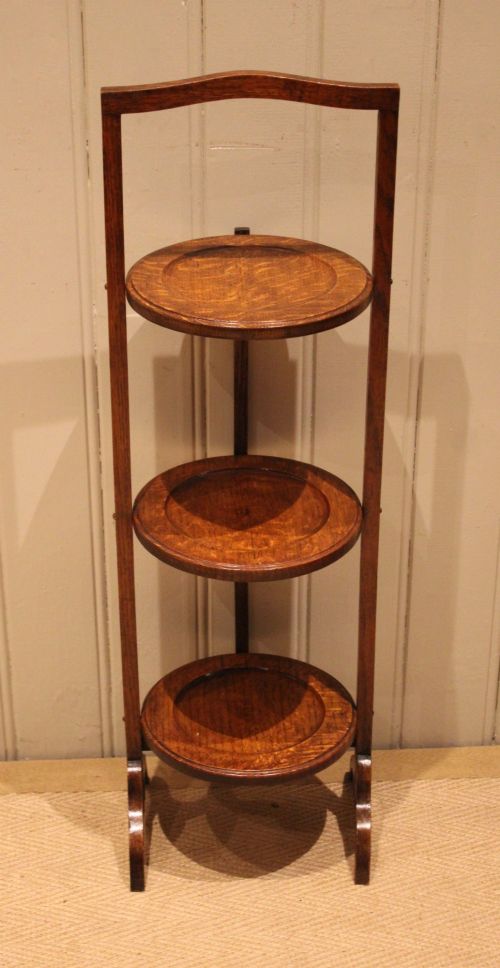
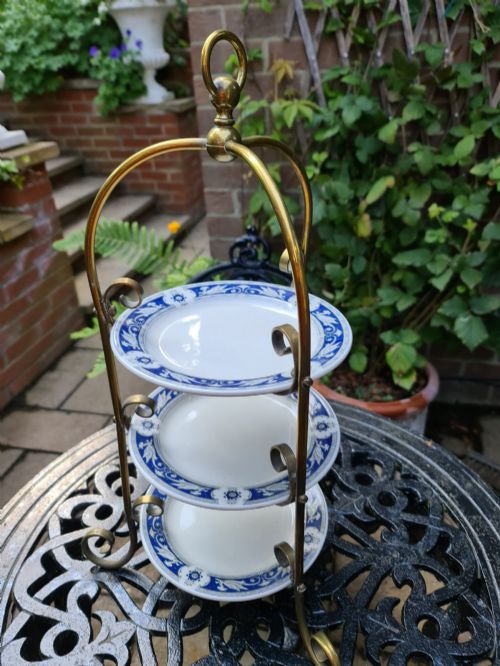
These vintage cake stand examples span timber folding tiers and silver plate serving pieces designed to display baked goods in style.
Vintage Cake Stand
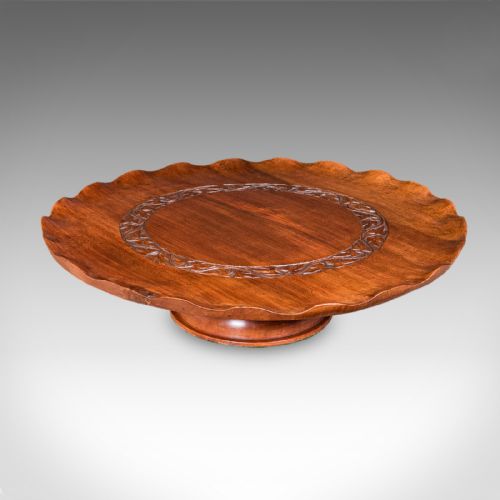
A vintage cake stand encompasses tiered folding frames, revolving dumb waiters, rotating lazy susans, and pedestal tazzas used for serving and display. The pieces met here range across Edwardian, Victorian, Georgian, and Art Deco periods, drawing on centuries of domestic entertaining traditions.
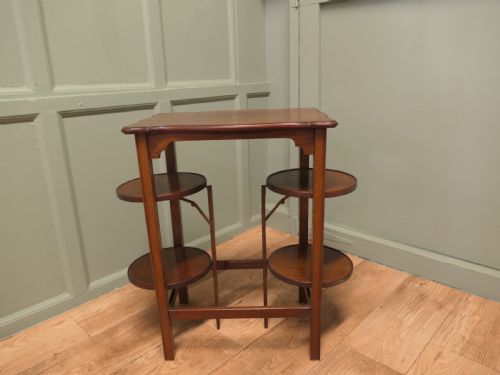
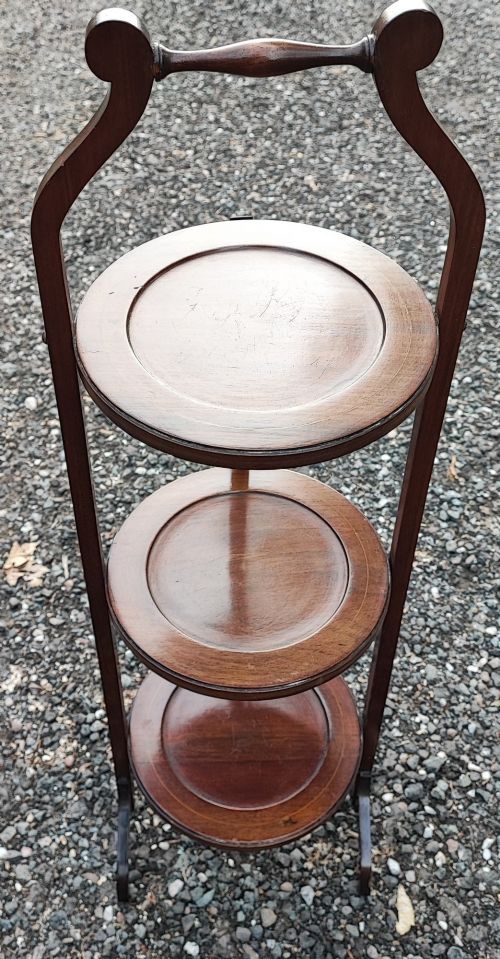
Edwardian three-tier folding models in mahogany and oak dominate the selection, built for afternoon tea and easily collapsed when not in use. Alongside these timber frames, silver plate platters, glass tazzas, and mirrored display surfaces provide alternative ways to present cakes and confections.
Materials and Technique
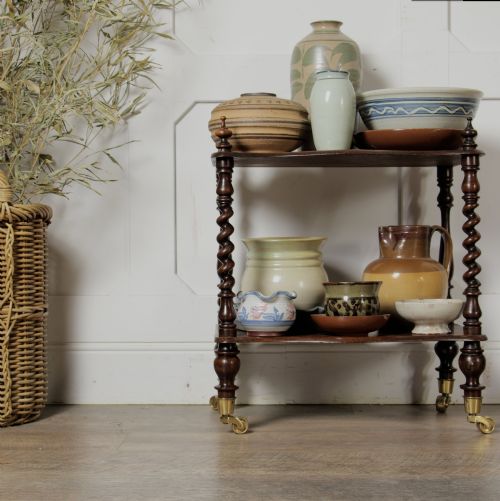
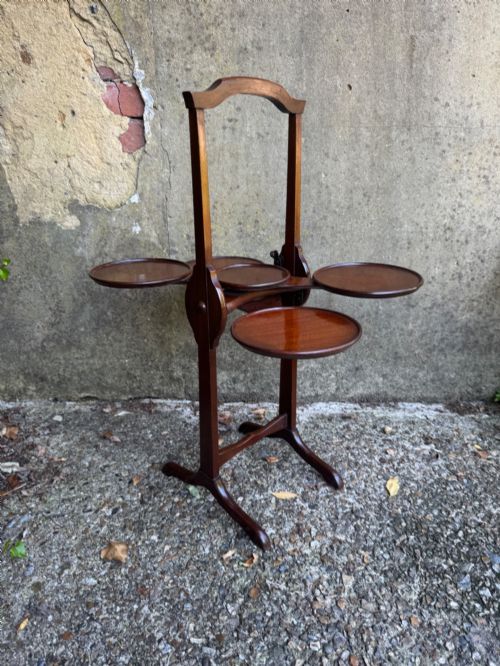
Timber frames rely on mahogany, oak, walnut, and satinwood, frequently enhanced by boxwood inlay, barley twist turnings, or brass hardware. Cabinetmakers constructed folding tiers with hinged joints that allow the circular shelves to drop flat.
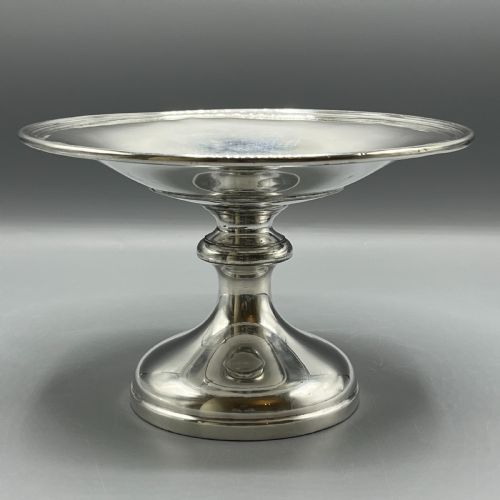
Metal and glass examples utilise silver plate over base metals, etched glass, polished brass, and mirrored glass centres. Makers such as Mappin and Webb, Elkington, and Marples and Company applied durable silver plating to support heavy use on tea tables.
Vintage Cake Stand Retail Price Guide 2026
Typical asking prices for vintage cake stand among the pieces listed under this phrase on Sellingantiques today, from the lower quarter to the upper quarter. They describe what is for sale here now, not the wider market.
Listings feature timber folding stands from the Edwardian era alongside Georgian dumb waiters and Art Deco silver plate.
Quality and Construction
Quality reveals itself in the rigidity of the joints and the selection of timber veneers. Superior pieces maintain stable alignment across multiple tiers without wobble, utilising well-fitted brass hinges that operate smoothly.
Surface finish and decorative detail separate standard production from finer examples. Hand-inlaid stringing, substantial silver plate thickness, and finely turned columns distinguish the better workshops.
Mappin and Webb·Elkington·Marples and Company·Royal Worcester·Mason
The Vintage Cake Stand Glossary
- Tazza
- A shallow bowl or saucer raised on a central pedestal, used for serving fruit or small cakes.
- Dumb waiter
- A multi-tiered revolving piece of dining furniture designed to hold food without domestic staff present.
- Lazy Susan
- A rotating circular tray placed on a table to allow easy sharing of dishes.
- Comport
- A decorative vessel on a footed base intended for presenting desserts at the table.
- Stringing
- A narrow inlay of contrasting wood used to outline panels on cabinet work.
Vintage Cake Stand: Frequently Asked Questions
How do folding cake stands work?
Hinged central columns allow the circular wooden tiers to pivot downwards and collapse flat for compact storage when not in use.
This clever mechanism made them practical for smaller Edwardian drawing rooms where space was at a premium during afternoon tea.
What is the difference between a tazza and a cake stand?
A tazza is traditionally a single shallow vessel raised on a central foot, whereas a cake stand often incorporates multiple tiers or a folding frame.
Both serve the same culinary purpose of elevating sweet treats above the main table surface.
How do I clean silver plate stands?
Silver plate requires gentle cleaning with a specialised non-abrasive polish to protect the thin metal layer over the base metal.
Avoid harsh chemical dips that strip the original patina built up over decades of use.
Were dumb waiters used for cakes?
Georgian dumb waiters with revolving circular tiers served multiple courses and baked goods during formal dining.
Their rotating shelves allowed diners to help themselves before multi-tier folding stands became popular.