



Traditional Cake Display
Traditional cake display pieces are tiered stands built to present pastries and gateaux elegantly at tea, combining sturdy timber frames with practical tiers.
Traditional Cake Display
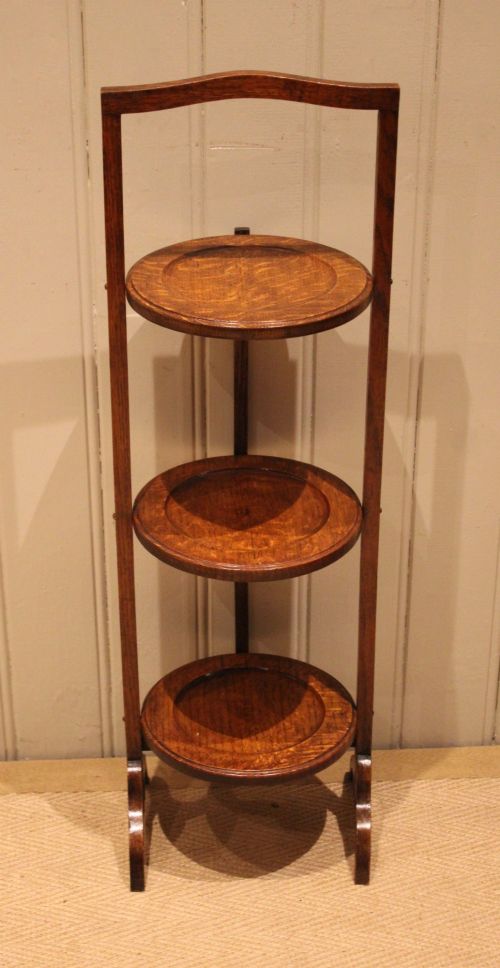
Traditional cake display pieces include cake stands, cake stands, and display stands designed for serving or exhibiting baked goods in domestic settings. The pieces found on this page span several decades, reaching back to the Victorian era and moving through the Edwardian period into the early twentieth century.
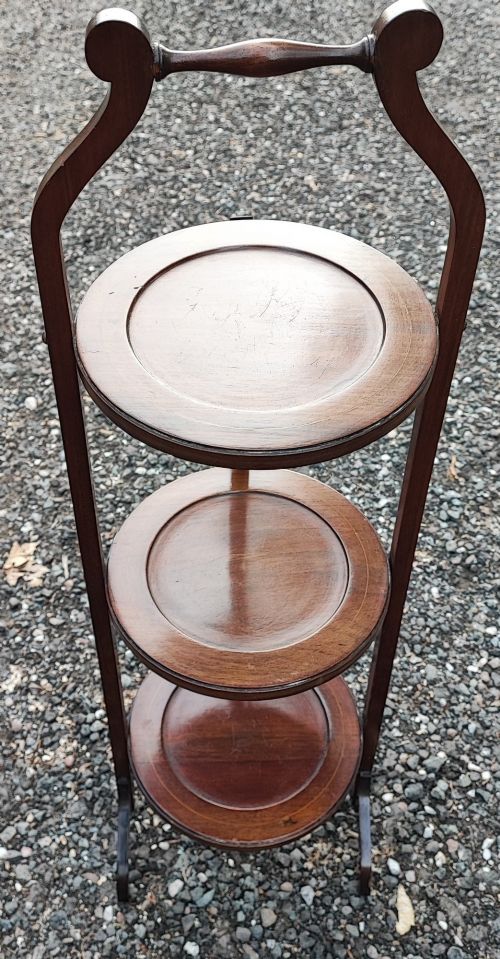
Edwardian examples appear frequently alongside Victorian and later designs, often taking the form of multi-tiered structures. Buyers frequently encounter forms with two, three, or four tiers constructed to hold items securely while saving table space.
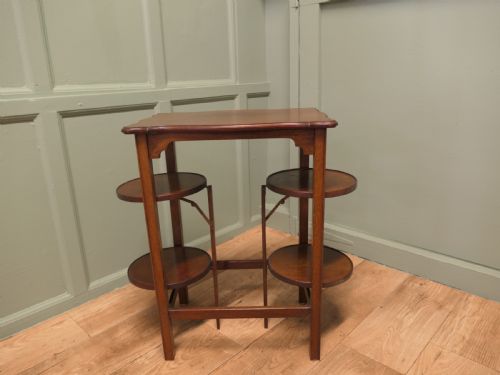
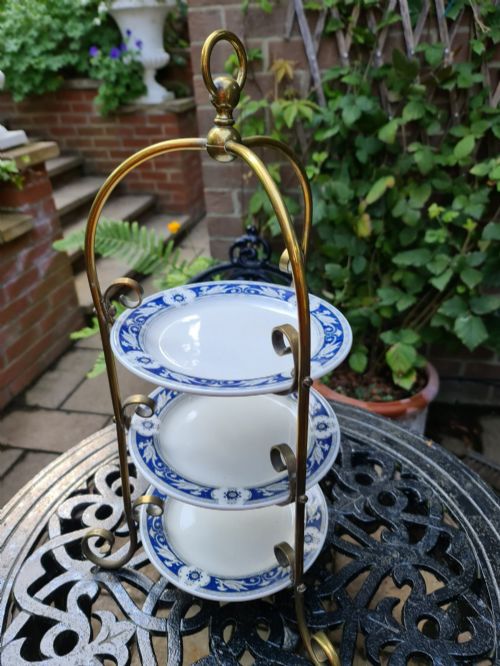
Timbers such as mahogany and oak dominate the forms, supplemented by occasional brass and glass tiered display stands. These functional objects range from simple circular revolving stands to folding stands intended for easy storage.
How they were made
Cabinet makers utilised dense hardwoods including mahogany, oak, and rosewood to construct the primary frames and tier supports. Boxwood and satinwood inlay frequently ornamented the timber surfaces, demonstrating refined woodworking skills during the Sheraton Revival and Edwardian periods.
Metal and glass elements were integrated into specific designs, combining polished brass frameworks with transparent glass tiers for specialised display. Folding mechanisms relied on clever hinge construction, allowing multi-tier stands to collapse compactly when not in use.
Traditional Cake Display Retail Price Guide 2026
Typical asking prices for traditional cake display among the pieces listed under this phrase on Sellingantiques today, from the lower quarter to the upper quarter. They describe what is for sale here now, not the wider market.
Listings feature woods such as mahogany, oak, rosewood, boxwood, and satinwood alongside brass and glass.
What varies in quality
The refinement of the timber and the intricacy of the joinery set finer examples apart from standard utility pieces. Sheraton Revival models with delicate boxwood and satinwood inlay demonstrate superior decorative ambition compared to plain oak or mahogany frames.
The cleverness of the tier arrangement and the smoothness of any folding mechanism dictate the overall utility of the stand. Heavier woods like rosewood and polished brass components indicate higher initial manufacture costs and greater material substance.
The Traditional Cake Display Glossary
- Tiered
- Arranged in successive levels one above another. This construction allows multiple cakes or dishes to occupy a single vertical footprint.
- Sheraton Revival
- A late nineteenth and early twentieth century design style reviving the classical elegance and fine inlays associated with eighteenth century cabinet maker Thomas Sheraton.
- Inlaid
- Decorated by embedding contrasting strips or pieces of wood into the surface of the primary material. Boxwood and satinwood are typical choices for this delicate ornamentation.
- Folding
- Designed with hinges or pivot points that allow the stand to collapse flat. This practical feature facilitates compact storage between afternoon tea services.
Traditional Cake Display: Frequently Asked Questions
How were traditional cake stands used?
These pieces served during afternoon tea to present cakes, pastries, and small sandwiches across multiple levels. The tiered arrangement kept the table organised and allowed hosts to serve various treats within easy reach of guests.
Folding versions were especially practical in parlours and drawing rooms where space was limited. Staff could bring out the stand when tea was served and store it flat afterwards.
What woods were used for cake stands?
Cabinet makers relied heavily on sturdy hardwoods such as mahogany and oak to support the weight of multiple tiers. Rosewood also appears in finer examples, offering a darker and richer grain pattern.
Decorative details often involved contrasting timbers like boxwood and satinwood. These lighter woods formed delicate inlaid patterns on the surfaces of Edwardian and Sheraton Revival pieces.
How do I date an antique cake stand?
Dating relies on observing the timber, style, and construction methods characteristic of specific periods. Victorian pieces often feature heavier mahogany or circular rotating designs, while Edwardian examples frequently introduce folding frames and light inlays.
Stylistic revivals, such as Sheraton Revival, provide clues through their specific decorative vocabulary. Examining the types of wood and joinery helps narrow down the decade of manufacture.
Are all cake display stands tiered?
Most traditional examples utilise multiple levels to maximise display capacity on a compact footprint. Pieces range from simple two-tier models up to taller four-tier standing structures.
However, single surface designs also exist, such as circular stands intended for a single large cake or cheese. These lower profiles focus on a broad presentation surface rather than vertical stacking.