






Folding Partition Screen
A folding partition screen divides a room, drafts out, or creates privacy, combining practical utility with decorative presence.
Folding Partition Screen
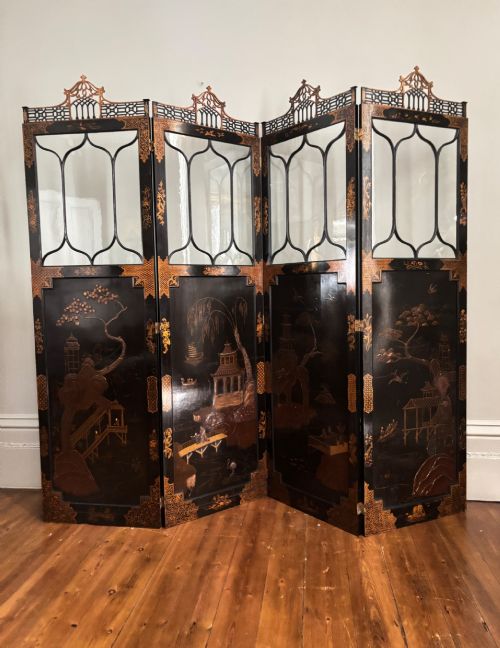
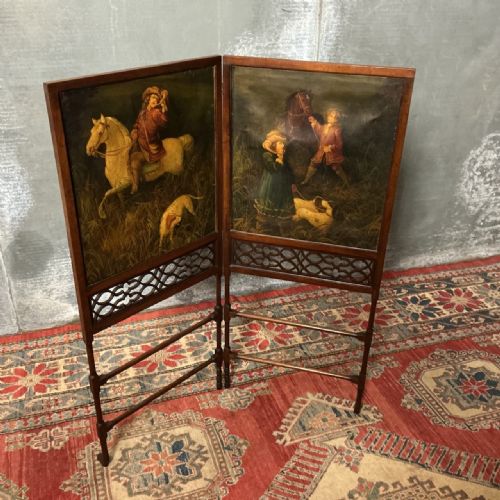
A folding partition screen is a hinged multi-panel barrier used to divide interior spaces, block draughts, or create privacy. The selections here span floor-standing room dividers, smaller dressing room vanity screens, and low table screens originating from British, European, and Asian workshops.
Floor-standing examples usually comprise three to eight folding panels constructed from wood, brass, or leather. Tall four-fold and eight-fold pieces dominate the record, alongside specialised forms such as fire screens, photographic props, and college debating screens.
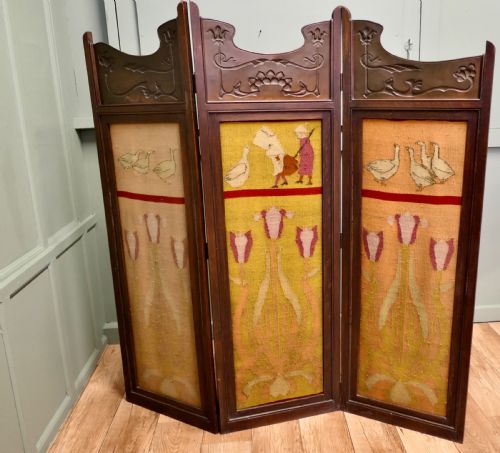
The aesthetic vocabulary stretches from Victorian and Edwardian domestic styles to Chinoiserie, Anglo-Indian, Art Nouveau, and French Rococo Revival. Buyers find both European painted canvases and imported Asian lacquer work across these listings.
Materials and Construction
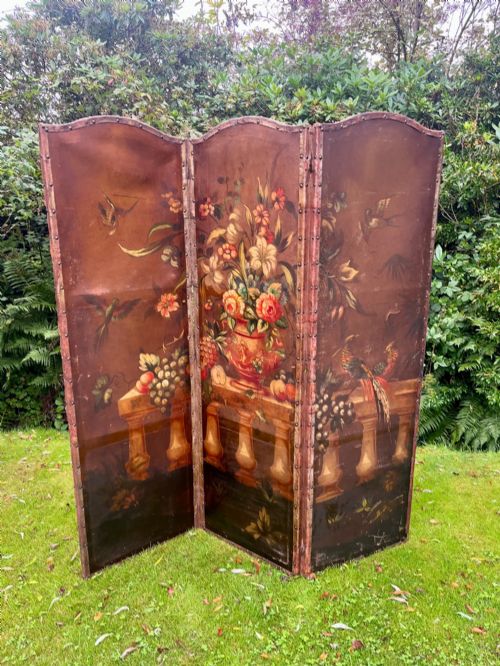
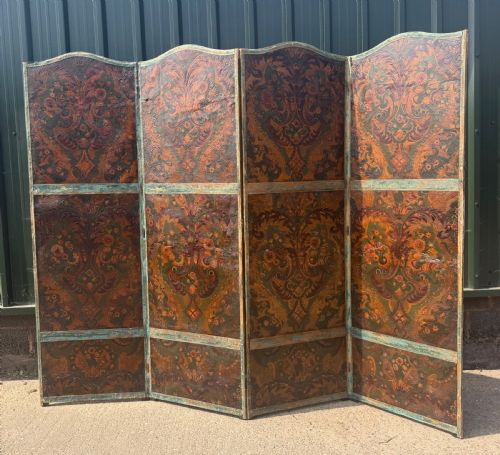
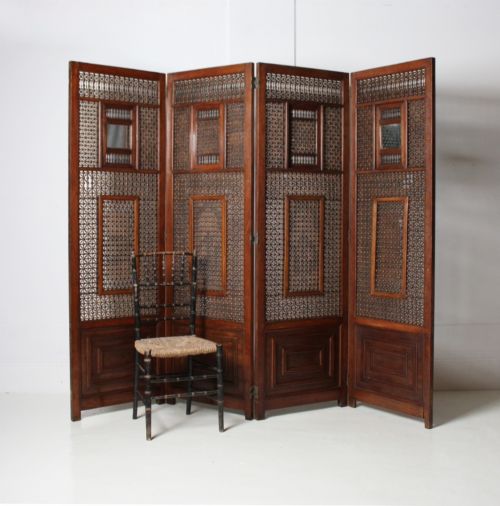
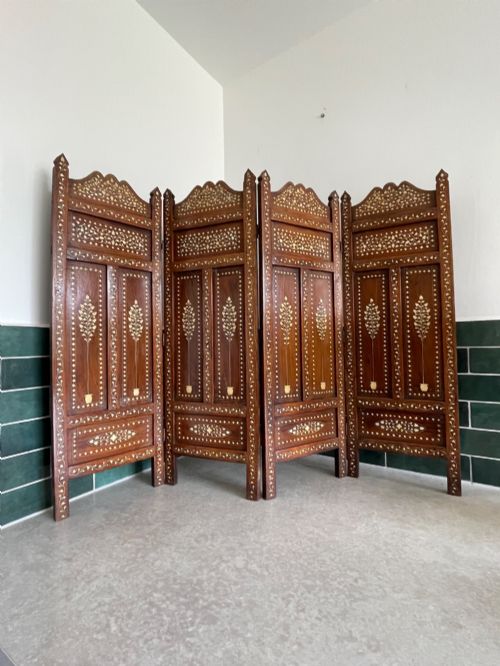
Makers constructed frames from timbers such as oak, mahogany, walnut, padauk, and giltwood, frequently incorporating brass hinges to allow bi-fold or multi-directional movement. Panel surfaces range from carved hardwood and fretwork to stretched canvas, silk, wool, and leather.
Decoration relied on hand-painted oils, polychrome pigments, gilt embossing, lacquering, needlepoint, and scrap work collages. Specialised examples utilised glazed glass panels, photographic prints, or carved mashrabiya lattice work.
Craftsmanship and Execution
Quality rests on the depth of the carving, the execution of the hand-painting, and the structural integrity of the timber framing. Superior examples display finely detailed lacquer work, intricate needlepoint, or carefully tooled leather panels rather than plain fabrics.
The complexity of the hinging system and the weight of the panels influence stability. Larger screens require substantial joints and robust framing to support eight-fold configurations without sagging over time.
Paul Sormani·William Morris
The Folding Partition Screen Glossary
- Coromandel
- A type of Chinese incised lacquer where designs are carved into a dark ground and filled with colours or gold leaf. This technique appears frequently on eighteenth and nineteenth century oriental screens.
- Mashrabiya
- An architectural wooden lattice screen utilising turned bobbins fitted closely together. These panels provide ventilation and privacy while casting geometric patterns of light.
- Scrap work
- A Victorian decorative technique involving layers of printed paper cut-outs pasted onto a panel and varnished. These screens document popular imagery and domestic pastimes of the period.
- Cordoban leather
- Heavy leather decorated with embossed patterns and hand-gilt finishing originating from Spanish traditions. Dutch and English makers frequently imitated these luxurious panels.
- Bergere
- A type of enclosed upholstered armchair, though the term appears here in screen framing describing cane work panels. This technique utilises woven rattan to create lightweight, ventilated sections.
Folding Partition Screen: Frequently Asked Questions
How do I stabilize a heavy four-fold screen?
Place the panels in a zig-zag or serpentine configuration rather than pulling them flat. This angle distributes the weight and keeps the structure upright without additional support.
Heavier wood and leather screens require sturdy floor placement, so ensure the hinges move freely to allow proper positioning.
Can these screens divide a modern open-plan room?
Tall multi-panel screens work effectively to zone open spaces, create a reading corner, or hide home office areas. Eight-fold and four-fold variations provide enough span to partition larger footprints.
Consider the height of the ceiling and the weight of the panels before placing a screen in a high-traffic thoroughfare.
How do I care for painted leather or canvas panels?
Keep screens away from direct sunlight and strong heat sources to prevent the leather or painted canvas from drying and cracking. Dust gently with a dry, soft cloth and avoid liquid cleaners.
Oiled surfaces and lacquered finishes require minimal intervention beyond regular dusting to preserve their original patination.
What is the difference between a dressing screen and a room divider?
Dressing screens generally feature three panels and smaller dimensions, designed for bedrooms or vanity areas to provide privacy while changing. Room dividers usually consist of four to eight taller panels built to partition larger spaces.
Both utilise folding hinges, but their scale dictates where they function best within an interior.