


Folding Leaf Oak Table
These folding leaf oak table pieces offer practical extending surfaces built from solid timbers, bridging centuries of utilitarian British furniture design.
Folding Leaf Oak Table
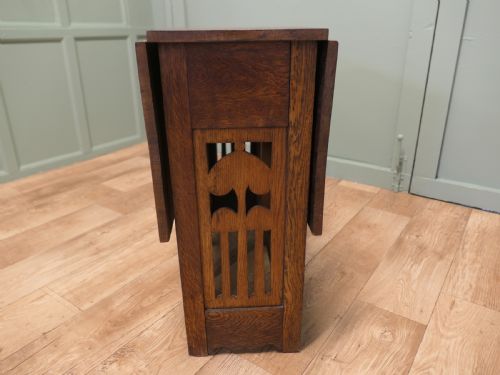
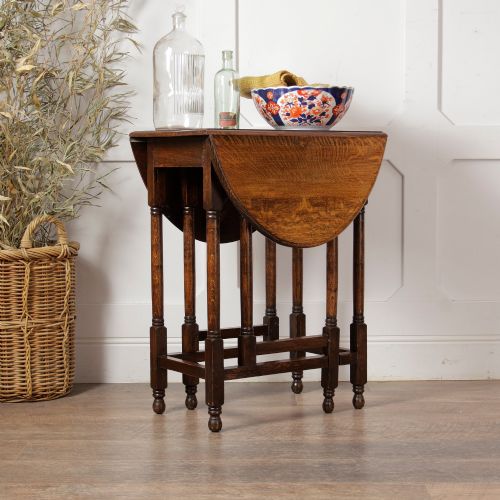
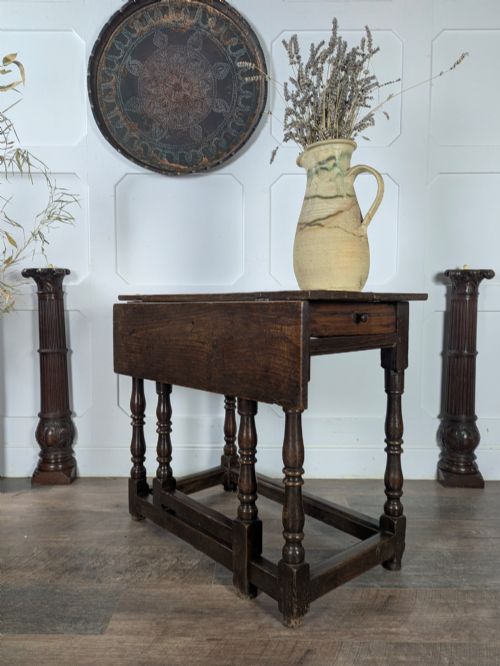
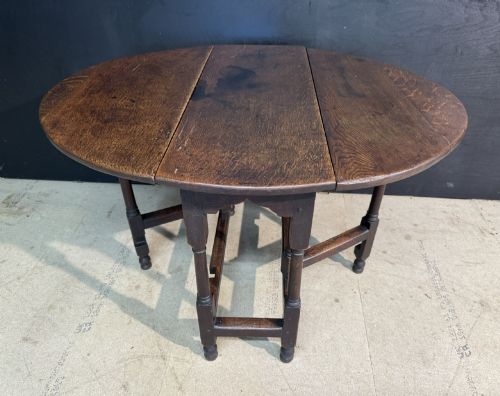
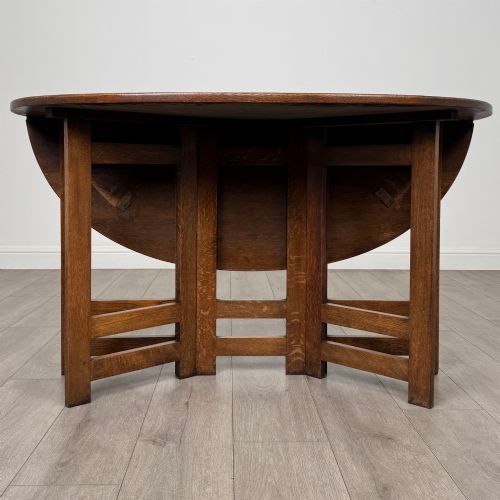
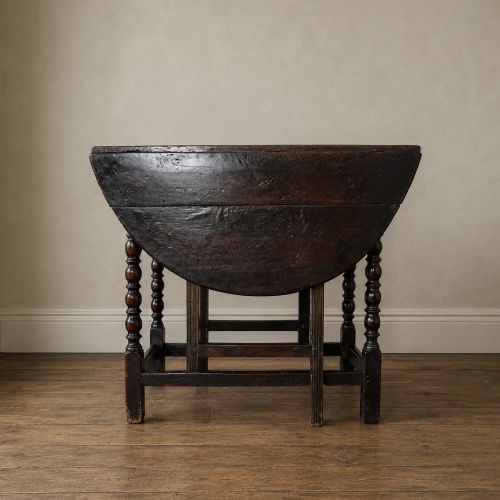
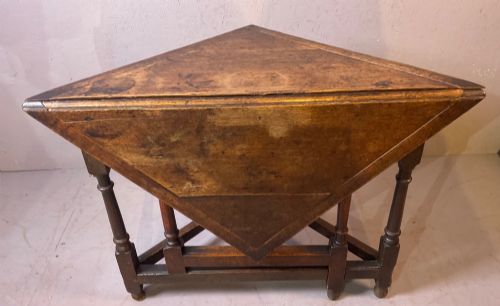
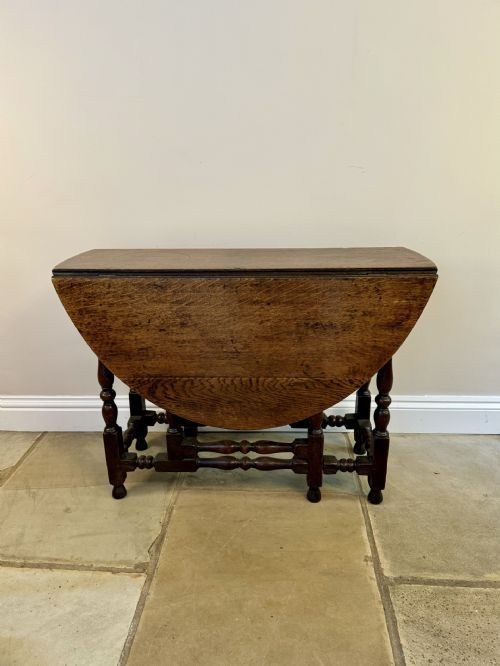
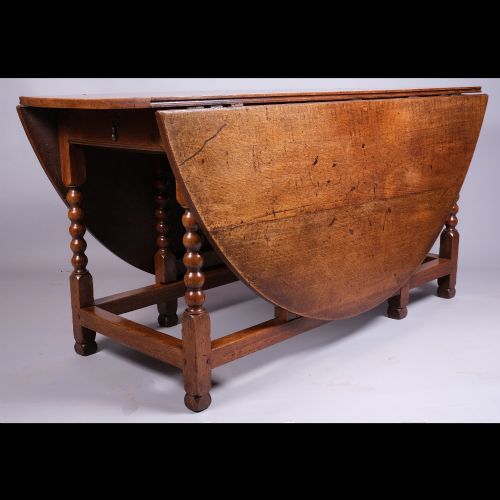
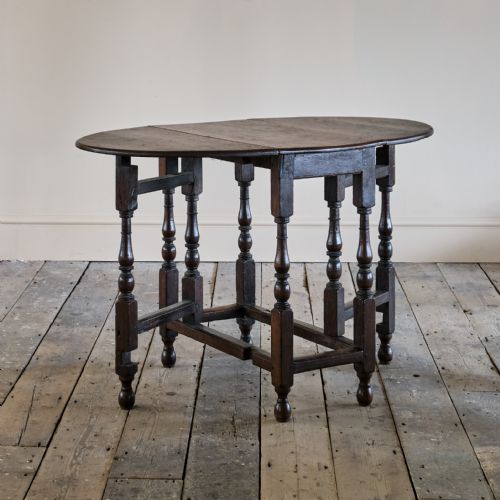
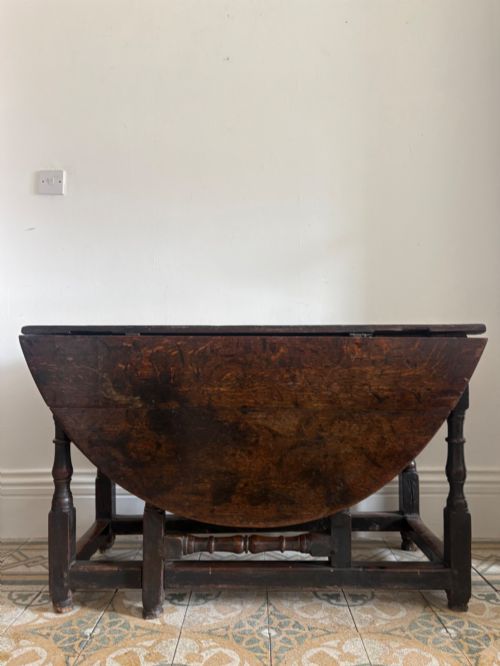
When you search for a folding leaf oak table, you encounter practical surfaces designed to expand for dining and fold down for compact storage. These pieces frequently appear as gateleg or drop leaf formats constructed primarily from sturdy native timbers.
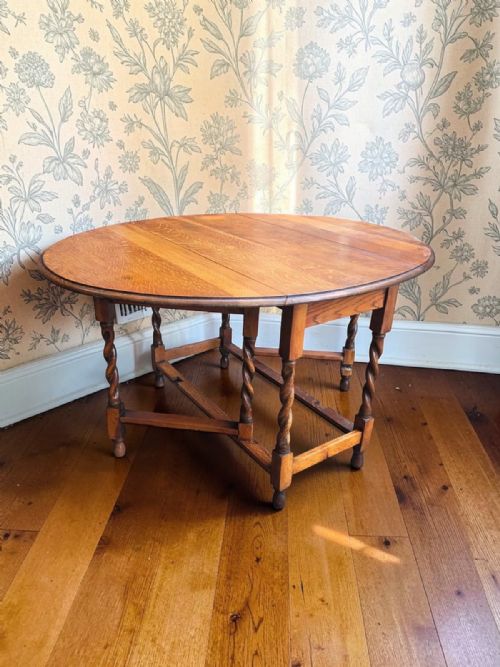
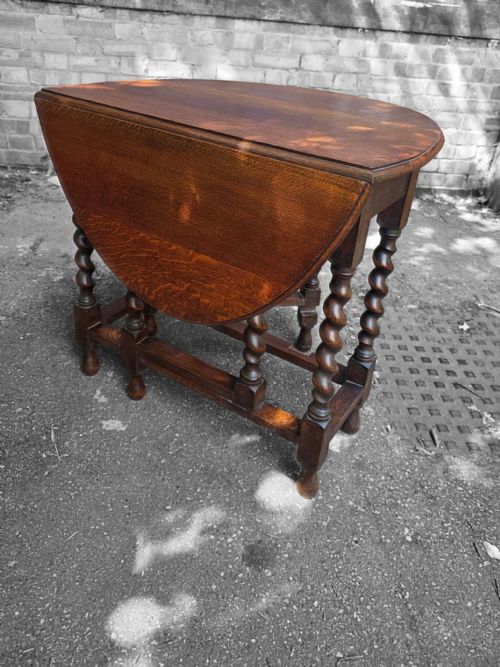
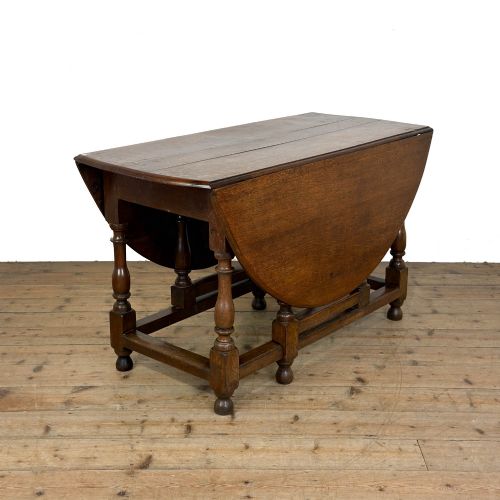
The selection ranges from robust seventeenth and eighteenth-century examples with turned baluster supports to twentieth-century revivals featuring barley twist legs. Dining tables, side tables, and occasional variants dominate the forms available here.
Originating across distinct historical periods from the seventeenth century through the Edwardian era and the nineteen-twenties, these items serve modern homes seeking traditional utility combined with versatile sizing.
How they were made
Makers utilised solid oak alongside supporting materials like iron, brass, mahogany, and walnut for hinges, drawers, and secondary elements. Plank tops rested on pivoting gateleg frames designed to support folding leaves securely.
Turned baluster legs, sometimes in barley twist configurations, provided structural stability while adding decorative relief to the underframe. Hand-planed surfaces and traditional joinery methods governed the construction of these drop leaf and gateleg designs.
Listings span from the seventeenth century through Victorian iterations up to nineteen-sixty, predominantly built from solid oak with occasional walnut and fruitwood.
What varies in quality
The degree of refinement in the turned woodwork and the thickness of the solid oak plank top distinguish finer examples from simpler provincial work. Better proportioned tables maintain structural balance when fully extended on their folding leaves.
The depth of the natural patina accumulated on the timber surface over centuries indicates how well a piece has aged and been maintained. Subtleties in the joinery and the original integrity of the gateleg mechanism separate standard items from superior specimens.
The Folding Leaf Oak Table Glossary
- Gateleg table
- A drop leaf table with hinged legs that swing out to support the raised leaves. This design became popular in the seventeenth century for maximising dining space.
- Barley twist
- A spiral turning technique carved into wooden legs or stretchers. It gained widespread popularity during the seventeenth century and saw major revivals in the early twentieth century.
- Drop leaf table
- A table with a fixed central section and hinged flaps that fold down on either side. These items allow users to alter the footprint of the furniture depending on room requirements.
- Patina
- The surface sheen and colour acquired by wood through age, use, and waxing. Collectors value this indicator of historical authenticity.
- Plank top
- A table surface constructed from wide boards of solid timber joined edge to edge. This construction method typifies earlier periods before the widespread use of veneers.
Folding Leaf Oak Table: Frequently Asked Questions
How do I use a folding leaf oak table daily?
These tables adapt easily to modern living by folding down against a wall as a console when space is tight, then opening fully for meals.
Drop leaf and gateleg mechanisms allow you to raise one or both leaves depending on how many people are gathering.
How can I tell a seventeenth-century table from a twentieth-century revival?
Examine the construction marks on the underside and the nature of the timber shrinkage over time.
Seventeenth-century examples display hand-tool marks and pegged joints, whereas twentieth-century Arts and Crafts or Jacobean revival pieces show different machining techniques and lighter frame weights.
What rooms suit a gateleg dining table best?
Kitchens, dining rooms, and open-plan living spaces accommodate these flexible formats very well.
Because the leaves fold down completely, they fit into smaller nooks where a permanent large table would obstruct movement.
Are these tables sturdy enough for regular dining?
Solid oak construction provides robust structural integrity designed to withstand daily use.
The swinging gateleg supports distribute weight evenly when the leaves are fully extended for supper or work.