
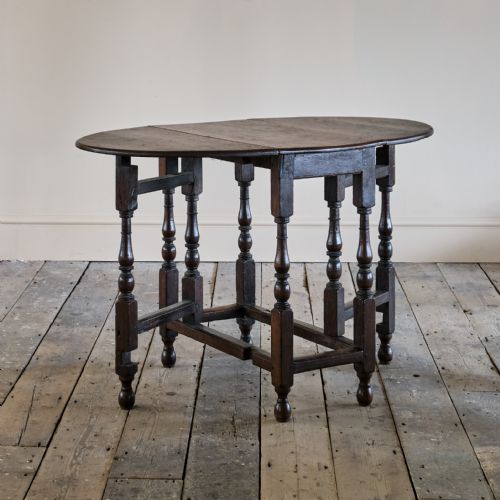

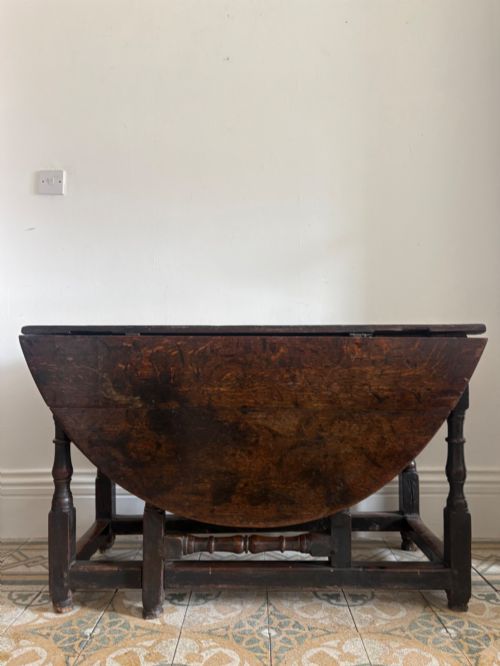

Folded Oak Dining Table
A folded oak dining table brings centuries of functional timber craft into a modern interior.
Folded Oak Dining Table
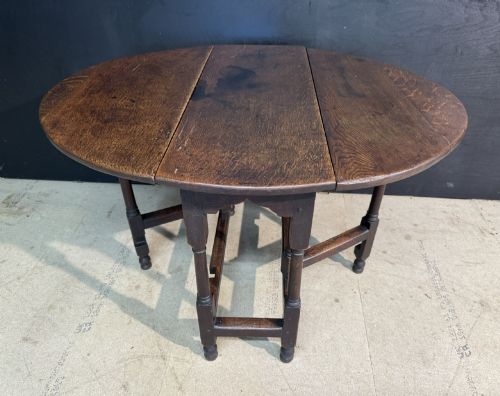
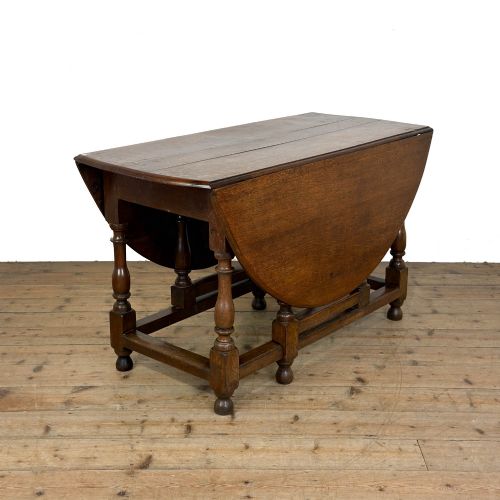
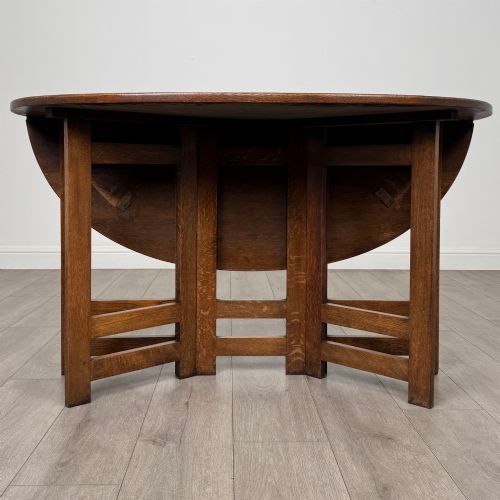
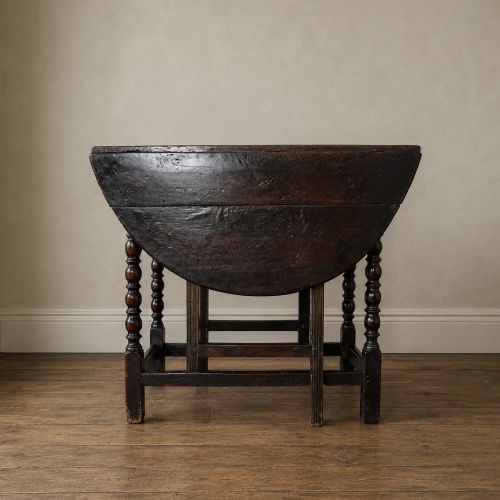
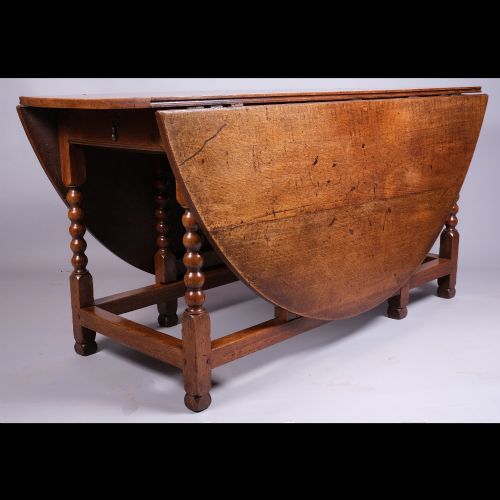
A folded oak dining table offers flexible surface space through hinged flaps or gateleg movement, allowing the structure to expand for meals and contract when floor space is at a premium. The pieces grouped under this heading draw primarily from seventeenth, eighteenth and early twentieth-century traditions, spanning vernacular country workshops and formal revival periods.
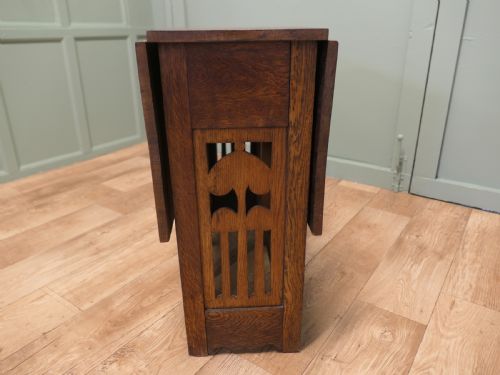
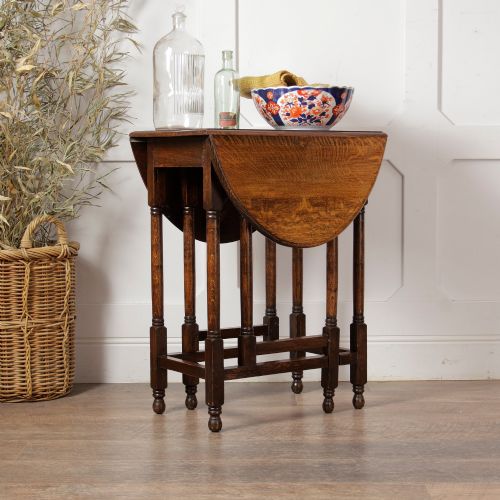
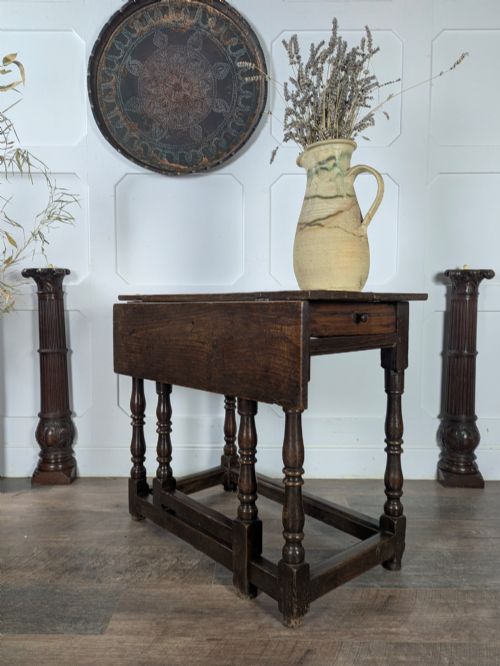
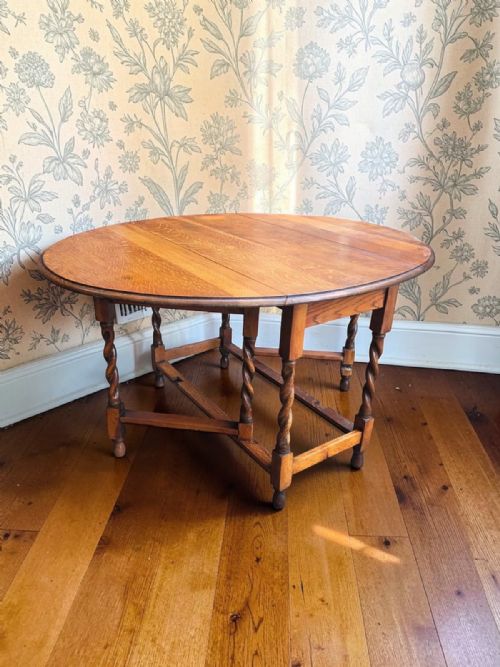
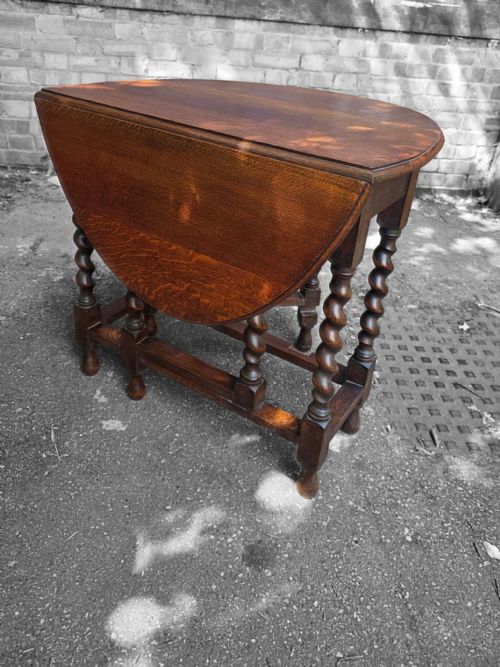
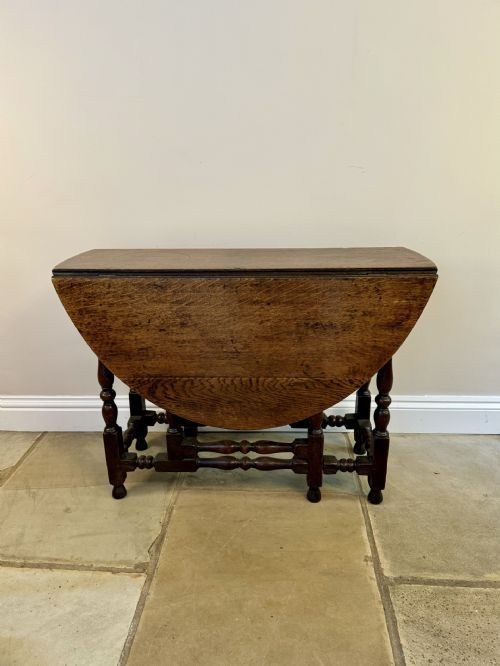
Gateleg and drop-leaf variants dominate the selection, utilising swinging supports to hold the folding leaves securely in position. Buyers frequently encounter seventeenth-century plank-top examples alongside early twentieth-century interpretations featuring barley twist legs and golden oak surfaces.
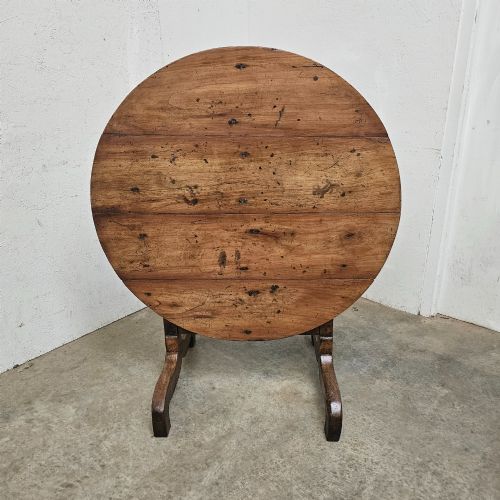
Alternative forms include French vendange tables in mixed cherry and oak, designed with folding actions for vineyard harvests. These diverse origins mean a buyer can choose between heavy seventeenth-century proportions or lighter Edwardian revival pieces built for compact rooms.
Materials and construction methods
Solid oak serves as the primary timber, supported occasionally by fruitwood, cherry, walnut, or mahogany in specific sections like tabletops or framing. Joinery relies on pegged mortise and tenon joints for structural stability, whilst hinges and drawer pulls incorporate forged iron and brass.
Turned supports take the form of baluster legs or barley twists, shaped on a lathe to carry the weight of the folding leaves. Surfaces receive wax or oil finishes that build a deep patina over generations of use.
Listings feature oak alongside cherry, walnut, and mahogany, spanning periods from the seventeenth century through the Edwardian era.
Distinctions in quality
Quality rests in the selection of the timber and the tightness of the joinery where the folding leaves meet the fixed centre. Early examples show hand-riven boards and pegged joints that endure centuries of movement, whereas later revival pieces may rely on machine-cut elements.
The sophistication of the turning on the legs and the presence of original brass or iron hardware elevate an item. A deep, natural patina developed through decades of polishing distinguishes superior surfaces from flat, over-restored timber.
The Folded Oak Dining Table Glossary
- Gateleg table
- A table with hinged leaves supported by swinging legs that pivot outward like a gate. This mechanism provides sturdy support for drop leaves.
- Drop leaf table
- A table with a fixed centre section and two hinged flaps that lower when not in use. It saves floor space in smaller rooms.
- Barley twist
- A spiral turning carved into furniture legs, popular during the seventeenth century and revived in the Edwardian era. It creates a dynamic vertical line.
- Vendange table
- A French vineyard table featuring a folding base and a round or oval top, originally used during grape harvests. They are often constructed from oak and cherry.
- Patina
- The surface sheen and colour developed by timber over years of handling, waxing and light exposure. It indicates age and careful maintenance.
Folded Oak Dining Table: Frequently Asked Questions
How do I operate a gateleg table?
Lift the drop leaf until it rests level with the fixed centre top. Swing the hinged leg outward from the frame until it locks beneath the outer edge of the leaf to support the weight.
To close the table, swing the support leg back toward the centre base and lower the leaf gently. Ensure no items remain on the flap before folding.
Where were these tables used originally?
These tables served dining and general utility roles in domestic farmhouses, country cottages, and town houses. Their folding design allowed households to clear floor space between meals.
Larger variants accommodated families and guests in main dining spaces, whilst smaller gateleg and side versions sat in parlours or hallways.
How do I care for an oak surface?
Maintain the timber by applying a traditional beeswax polish sparingly and buffing with a soft cloth to preserve the patina. Avoid placing the table near direct heat sources or strong sunlight to prevent the oak from splitting.
Use coasters and placemats to protect the finish from moisture and hot serving dishes. Clean spills immediately with a dry or barely damp cloth.
How do I date an oak table?
Examine the construction marks, timber grain, and hardware to determine the period. Hand-cut joints, pegged tenons, and uneven board widths typically point to seventeenth or eighteenth-century origin.
Uniform machine sawing, standardised fixings, and revival styles such as barley twists usually indicate an Edwardian or early twentieth-century manufacture date.