
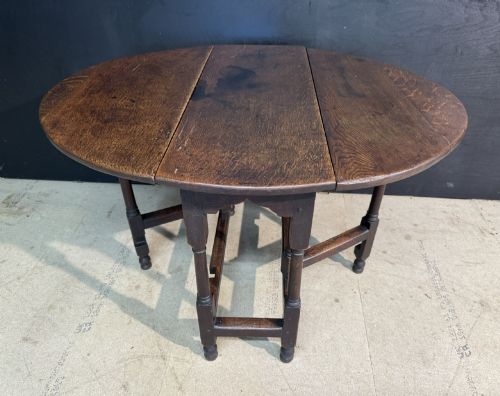
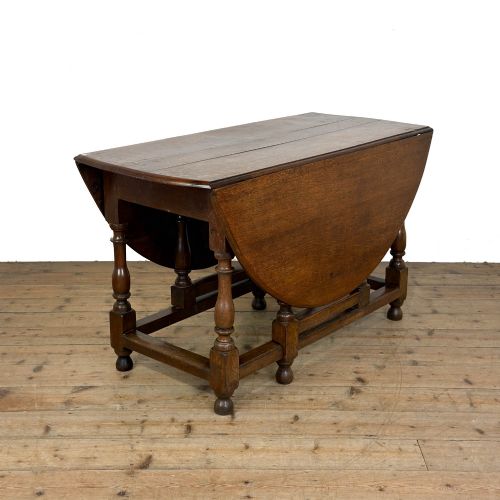
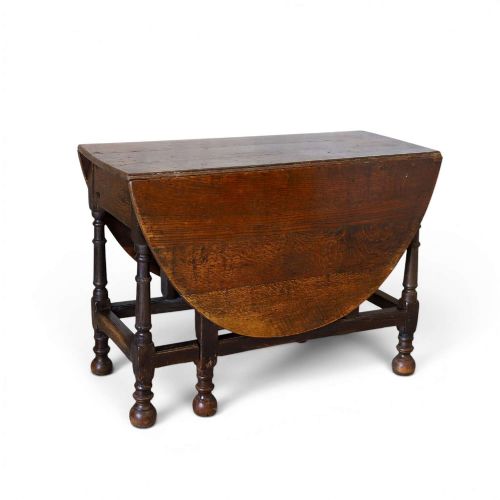
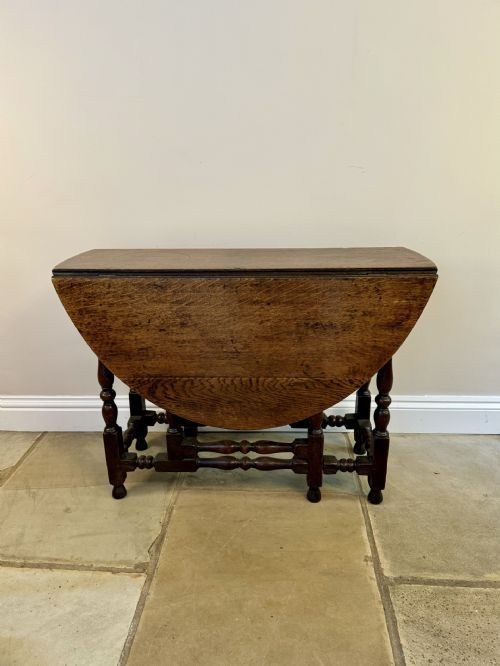
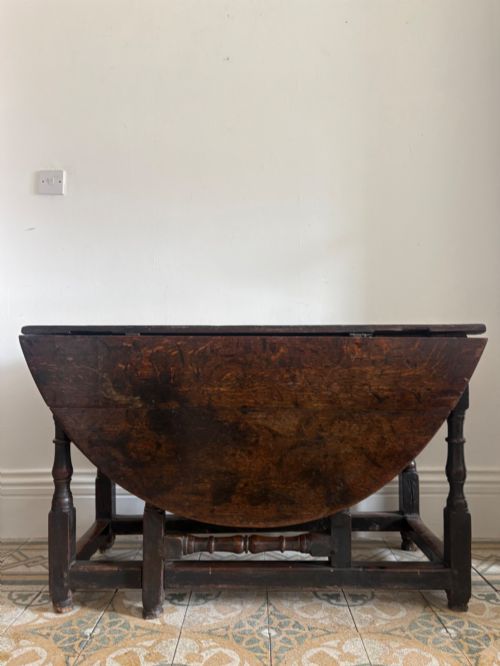


Georgian Oak Drop Leaf Table
When you search for a georgian oak drop leaf table, you discover versatile timber furniture designed to expand for dining and fold away when space is needed.
Georgian Oak Drop Leaf Table
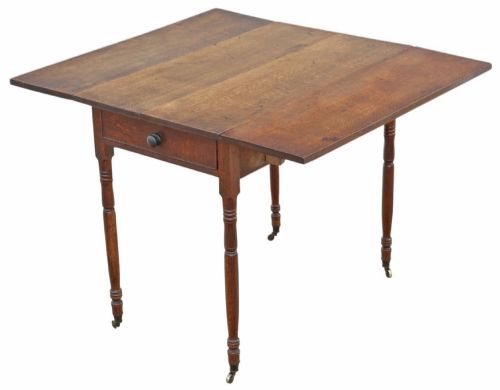
A georgian oak drop leaf table primarily functions as a dining surface or domestic work table constructed with folding flaps supported by pivoting legs.
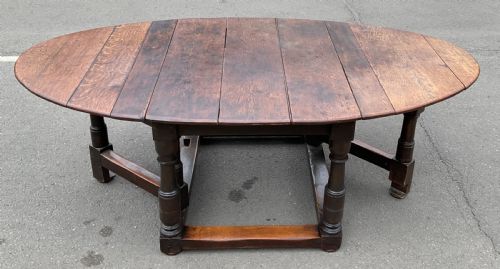
The evidence shows forms ranging from compact occasional tables to large gateleg dining tables seating up to eight people, frequently originating from the eighteenth and early nineteenth centuries.
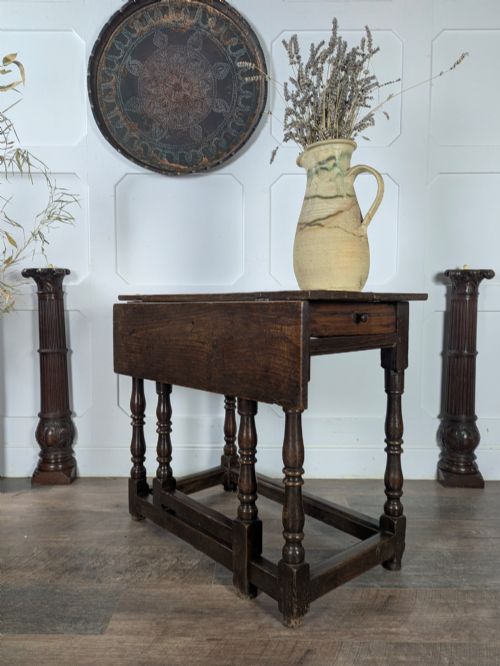
Makers often utilised solid timber plank tops, positioning drawers at the ends or integrating sophisticated gateleg frames to support the drop leaves.
Materials and construction methods
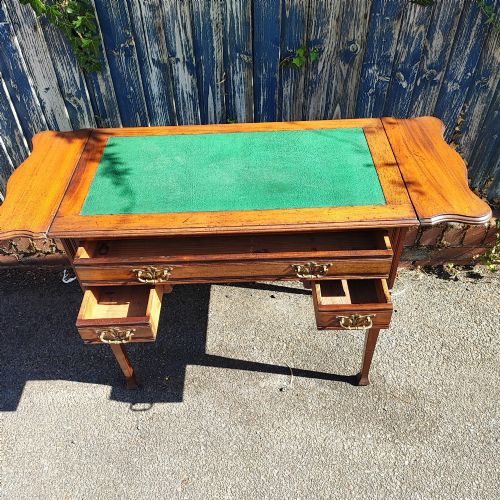
Cabinet makers constructed these pieces predominantly from solid oak, sometimes incorporating secondary woods such as walnut or elm alongside decorative veneers like pollard oak.
Structural integrity relied on turned baluster legs, sturdy gateleg actions, and traditional iron or brass hardware including original hinges.
Surfaces were finished to highlight the natural grain and warmth of the timber, developing character over centuries of domestic use.
Listings feature oak, walnut, pollard oak, brass, and iron materials across the eighteenth and nineteenth centuries.
Assessing build quality and proportions
Quality depends on the thickness of the oak plank top, the stability of the pivoting gateleg mechanism, and the retention of original surface patination.
Finer examples display careful timber selection for the oval or rectangular leaves, well-turned baluster legs, and minimal timber replacement over time.
The Georgian Oak Drop Leaf Table Glossary
- Gateleg table
- A table with hinged flaps supported by legs that swing outward like gates. This clever design provides substantial surface area when open while occupying minimal floor space when folded.
- Drop leaf
- A hinged flap attached to the fixed centre of a table top. It lifts to extend the surface and drops down when not in use.
- Patina
- The surface sheen and colour developed by timber over decades of handling and polishing. It serves as an indicator of age and authenticity.
- Pembroke table
- A small rectangular table with two drop leaves on opposing sides. It often includes one or more small drawers beneath the top.
- Baluster leg
- A turned vertical wooden support shaped like a vase or column. These legs are commonly found on seventeenth and eighteenth-century frames.
Georgian Oak Drop Leaf Table: Frequently Asked Questions
How many people do these tables seat?
Depending on the overall dimensions and whether the drop leaves are fully raised, these tables accommodate anywhere from four to eight diners comfortably. Larger gateleg versions provide ample legroom when opened fully.
Compact occasional or Pembroke variations suit smaller rooms and function as intimate dining spots for two.
How do I care for an oak surface?
Maintain the timber by dusting regularly with a dry cloth and occasionally applying natural beeswax to nourish the wood grain. Avoid placing furniture in direct sunlight or near heat sources to prevent timber splitting.
Use protective mats beneath hot dishes and liquids to safeguard the historic finish against water rings and heat marks.
Are all drop leaf tables from the Georgian period?
The listings demonstrate that while many examples date from the eighteenth century and the Georgian era, construction spans from the late seventeenth century through the nineteenth century and into later revival periods.
Stylistic markers such as turned baluster legs, drawer construction, and hinge types help distinguish earlier forms from later nineteenth-century interpretations.
How does a gateleg action work?
A gateleg action utilises one or two legs mounted on a pivoted wooden frame that swings outward from the centre base. This swinging gate physically supports the extended drop leaf when dining.
When closing the table, the leg swings back inward parallel to the main frame, allowing the leaf to drop vertically.