
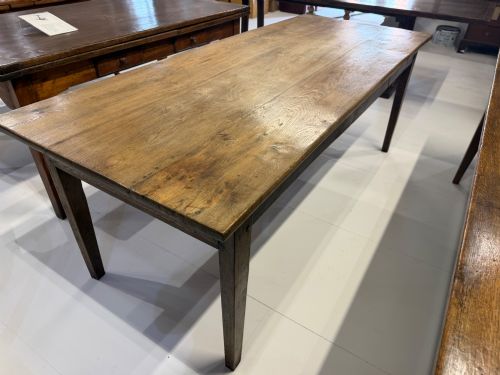
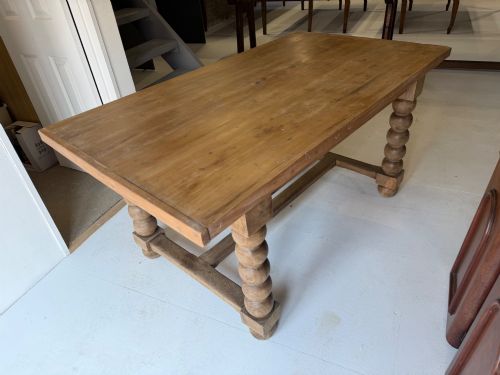
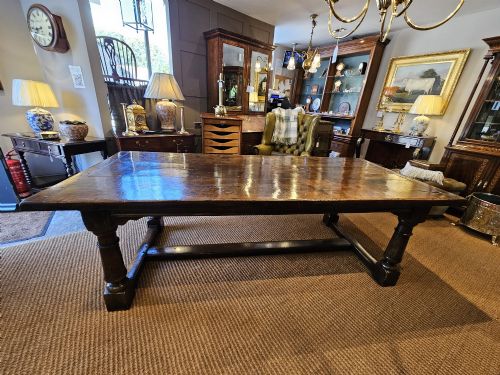
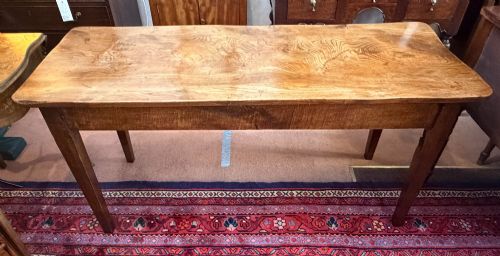
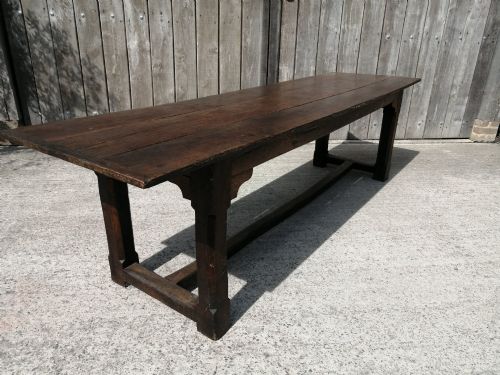
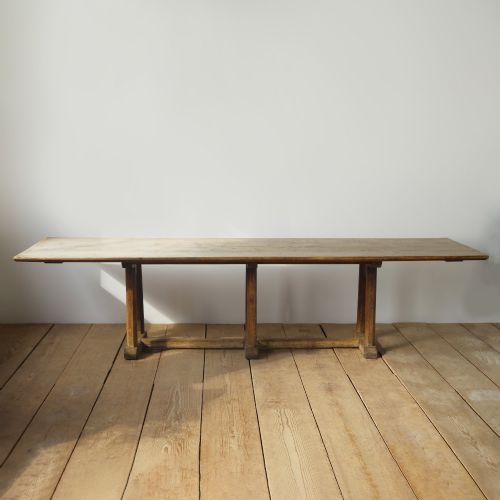
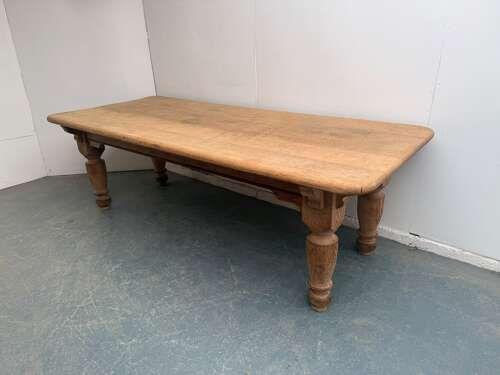
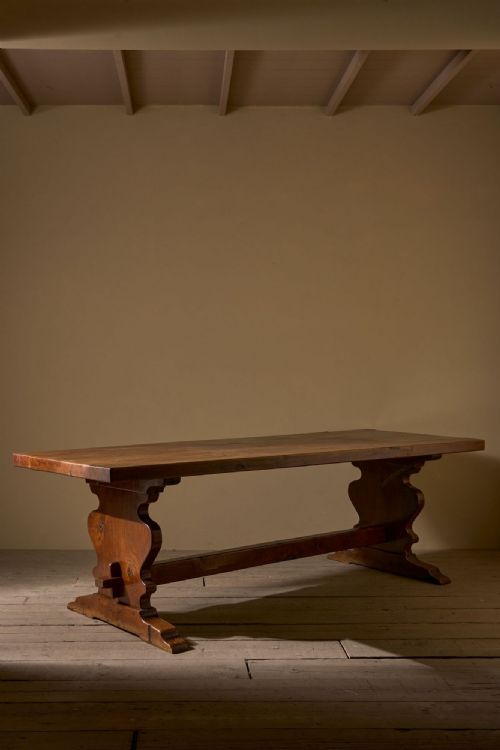
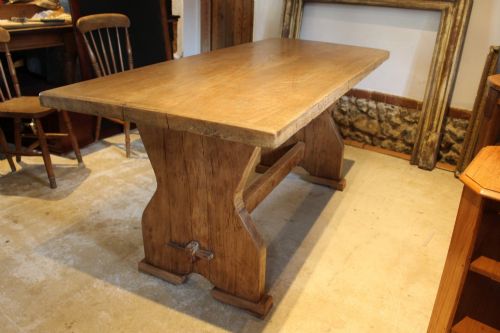
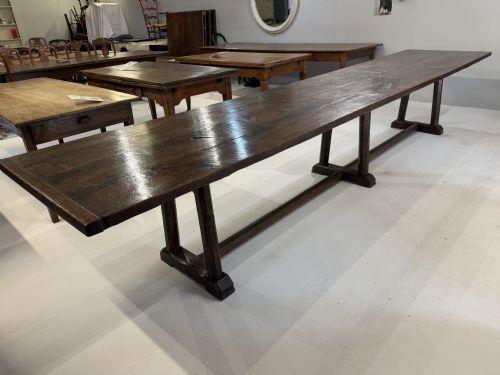
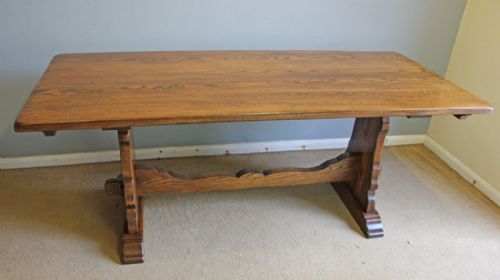
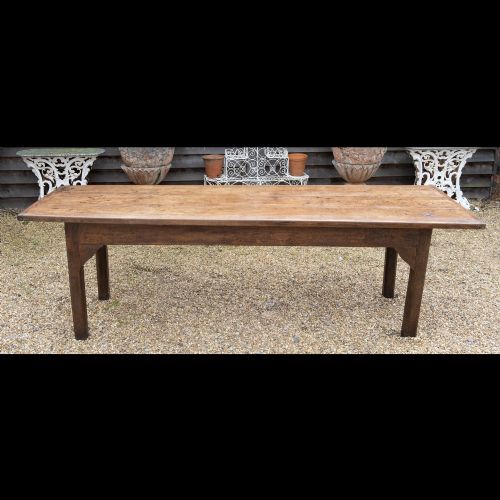
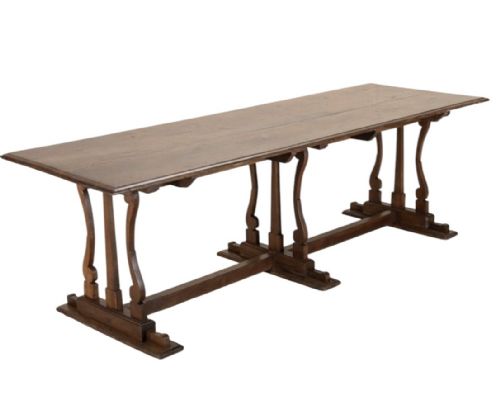


Country House Oak Dining Table
A country house oak dining table grounds the large-scale dining room with heavy timber, honest construction and centuries of accumulated domestic history.
Country House Oak Dining Table
A country house oak dining table represents the traditional heart of communal dining, combining utilitarian strength with generous proportions designed to seat large families and guests. When searching this phrase, you encounter substantial furniture built to endure heavy daily use in historic domestic settings.
The versions most frequently met on this page include long refectory formats, rustic farmhouse designs and drop-leaf gateleg tables spanning from the seventeenth century through the Victorian era and into early twentieth-century revivals. These pieces range from austere, unadorned seventeenth-century boards to extended George III dining surfaces and lightened nineteenth-century bleached oak interpretations.
Regional and international influences emerge across the selection, featuring English farmhouse builds alongside French monastery tables, Italian trestles and Swedish pine-and-oak hybrids. This variety reflects the diverse architectural tastes of large country estates where kitchens and dining halls demanded robust, practical seating arrangements.
What varies in quality
The distinction between tiers of quality rests upon the integrity of the timber, the depth of the original patina and the coherence of the structure over centuries of service. Superior examples retain their original boards without excessive warping, mismatched timber insertions or structural compromises in the underframe.
Proportion and execution separate standard utility pieces from exceptional country house commissions. Finer tables display balanced scaling, harmonious timber grain matching and minimal intrusive restoration, whereas lesser or heavily altered pieces often suffer from unsympathetic re-jointing or mismatched surface treatments.
Regional variations span English farmhouse designs alongside French monastery tables, Italian trestles and Swedish pine-and-oak hybrids.
The Country House Oak Dining Table Glossary
- Refectory table
- A long, narrow dining table traditionally used in monasteries and large country houses for communal meals. These pieces are characterised by substantial length, thick timber tops and sturdy stretcher bases.
- Gateleg table
- A drop-leaf table featuring hinged flaps supported by swinging legs that pivot outward like a gate. This design allows the surface area to expand or contract according to dining needs.
- Trestle table
- A table comprising two or more support frames connected by a horizontal beam or stretcher underneath the top. This form provides maximum legroom along the length of the seating area.
- Patina
- The surface sheen and coloration developed by timber over decades or centuries through handling, waxing and exposure to light. A deep original patina indicates authentic age and continuous domestic use.
- Bleached oak
- Oak timber that has been chemically or physically treated to lighten its natural dark tone. This finish became particularly popular in twentieth-century interpretations of country house aesthetics.
Country House Oak Dining Table: Frequently Asked Questions
How do I seat eight people?
Look for refectory or gateleg formats measuring sufficient length to accommodate chairs along both sides without obstruction from table legs. Extendable wind-out mechanisms also appear in later nineteenth-century examples.
Ensure you check the clearance height beneath the apron to confirm standard dining chairs fit comfortably underneath.
What is a refectory table?
A refectory table is a long, narrow dining surface originally designed for communal dining halls in monasteries and large estates. They are built with thick solid timber tops and sturdy stretcher rails near the floor for added stability.
These tables form the backbone of rustic and traditional country house dining spaces.
How do I tell seventeenth-century oak apart?
Seventeenth-century oak pieces display hand-riven timber, visible peg joints and darker patination developed through centuries of domestic exposure. Construction is heavier and more utilitarian than later Georgian refinements.
Inspect the underside and drawer linings for tool marks and signs of authentic period hand-working.