







Fluted Leg Study Desk
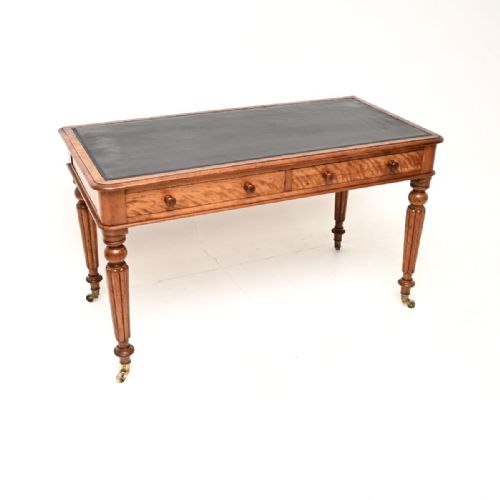
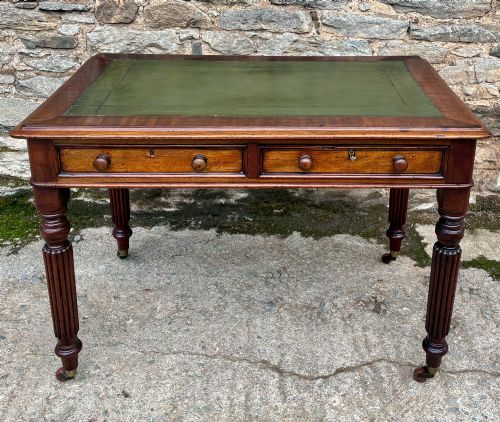
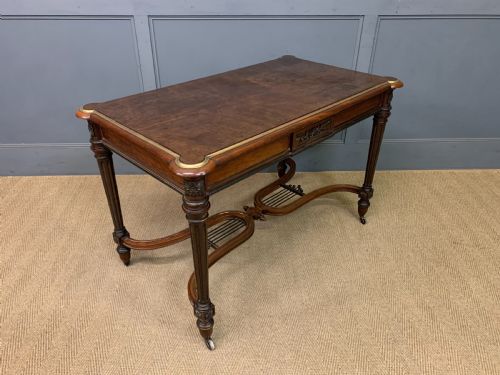
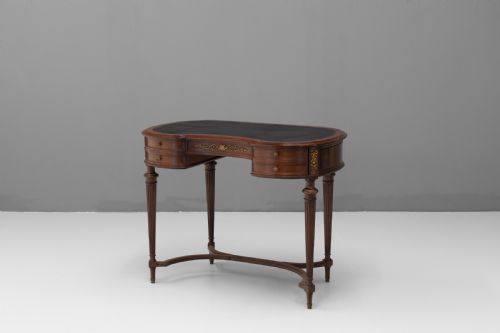
A fluted leg study desk brings architectural grace to a room, offering a disciplined workspace framed by classical carved columns.
Fluted Leg Study Desk
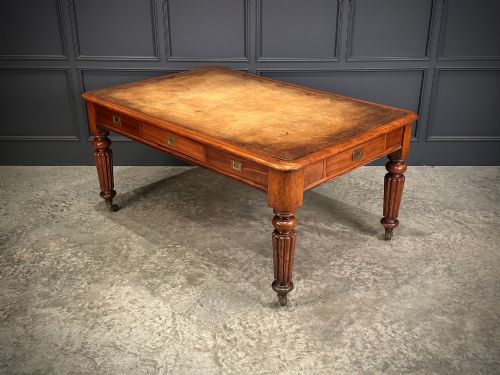
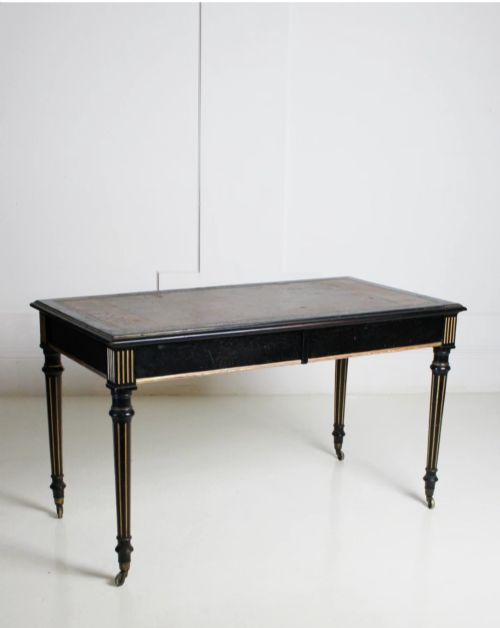
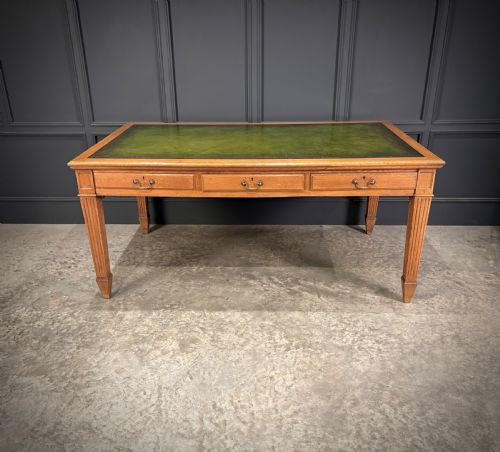
A fluted leg study desk is a dedicated workspace defined by vertical concave grooves carved into its supporting legs, drawing directly on classical architectural columns. The versions most frequently encountered on this page span the Georgian, Victorian, and Edwardian eras, often taking the form of library tables, writing tables, or partners desks.
These pieces serve as functional writing surfaces while displaying the decorative priorities of their respective periods, ranging from the restrained lines of the Regency style to the ornate gilt mounts of Louis XVI Revival pieces. Woods such as mahogany and oak dominate the selection, frequently paired with inset leather writing surfaces.
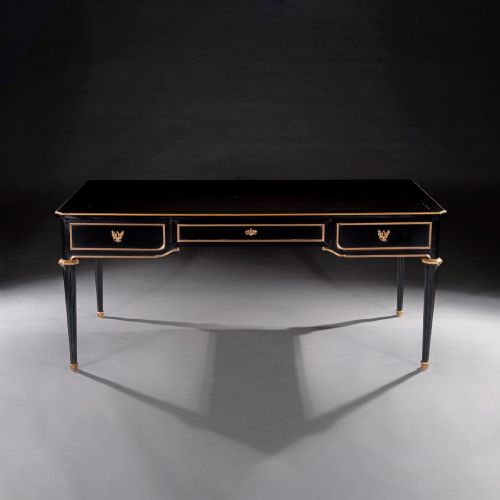
Beyond standard writing desks, the category encompasses bureau plat forms and Carlton House desks, providing varied configurations of drawers and compartments. Each variation reflects the domestic and professional demands of its period, from grand country house libraries to compact Edwardian studies.
Materials and construction methods
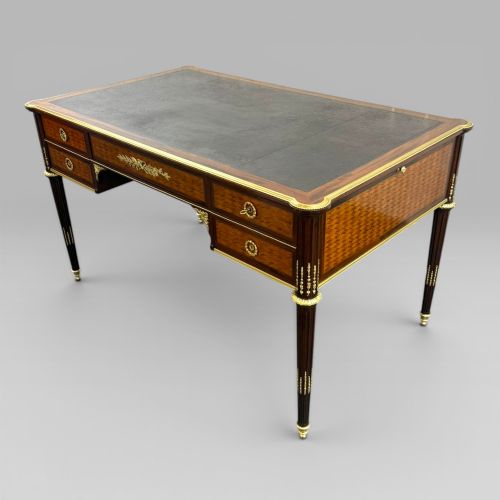
Makers utilised dense timbers such as mahogany, oak, and ebonised wood to build the foundational carcase and legs of each desk, ensuring structural stability for daily writing. Cabinetmakers hand-carved the characteristic flutes into the solid wood legs, sometimes enhancing French examples with ormolu or gilt bronze mounts.
Writing surfaces were typically inset with tooled leather, providing a durable and refined texture for correspondence and study. Inlaid satinwood, parquetry, and brass detailing were applied by hand to elevate the decorative finish of finer pieces.
Fluted Leg Study Desk Retail Price Guide 2026
Typical asking prices for fluted leg study desk among the pieces listed under this phrase on Sellingantiques today, from the lower quarter to the upper quarter. They describe what is for sale here now, not the wider market.
Distinctions in craftsmanship
Quality reveals itself in the precision of the timber selection, such as figured mahogany or quarter-sawn oak, matched symmetrically across the top and drawer fronts. Superior examples display crisp, hand-carved fluting on the legs rather than shallow or machine-milled channels.
The integration of secondary woods in drawer linings and the smoothness of the drawer action indicate the level of care invested by the cabinetmaker. Signed pieces by established makers carry distinct structural and decorative refinements that set them apart from unmarked workshop production.
François Linke·Johnstone Jeanes and Co·Maple and Co·Gillows
The Fluted Leg Study Desk Glossary
- Bureau plat
- A freestanding French writing table featuring a rectangular top and one or more rows of drawers beneath. These tables are finished on all sides so they can float in the centre of a room.
- Fluting
- Vertical parallel concave grooves carved into a column or furniture leg. This decorative technique derives from classical architecture.
- Ormolu
- Gilded bronze applied as a decorative mount on furniture. It is frequently found on French pieces from the nineteenth century.
- Parquetry
- Geometric mosaic woodwork arranged in patterns resembling brickwork or tiling. It is often utilised on tabletop surfaces for decorative contrast.
Fluted Leg Study Desk: Frequently Asked Questions
What is a bureau plat?
A bureau plat is a traditional French writing table with a leather-lined top and drawers integrated into the frieze.
Unlike standard desks that sit against a wall, these pieces are polished and finished on all four sides for central room placement.
How should I care for a leather desk top?
Leather desk tops require regular dusting with a dry cloth and occasional treatment with specialist leather balms to prevent cracking.
Avoid using harsh chemical cleaners or excess water, which can stain the hide and damage the surrounding wood trim.
How do I distinguish Regency style from Victorian pieces?
Regency desks typically display cleaner, neoclassical lines inspired by ancient Roman and Greek design, often incorporating brass inlay and rosewood or mahogany.
Victorian pieces tend to be heavier in proportion, frequently utilising dense mahogany or oak with deep carvings and darker finishes.