

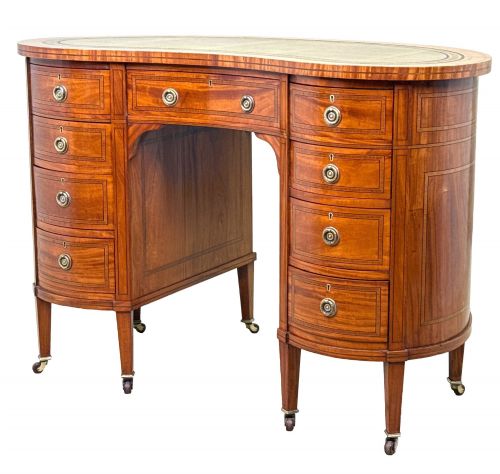
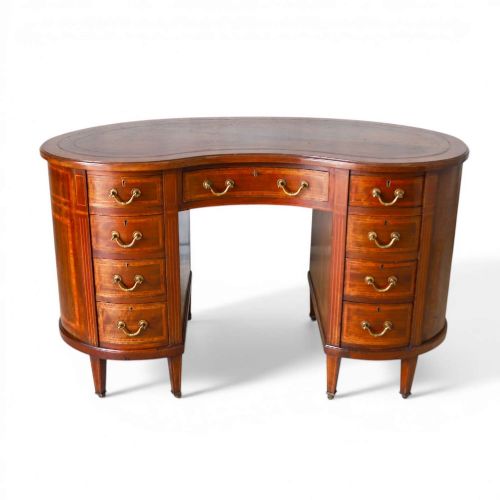
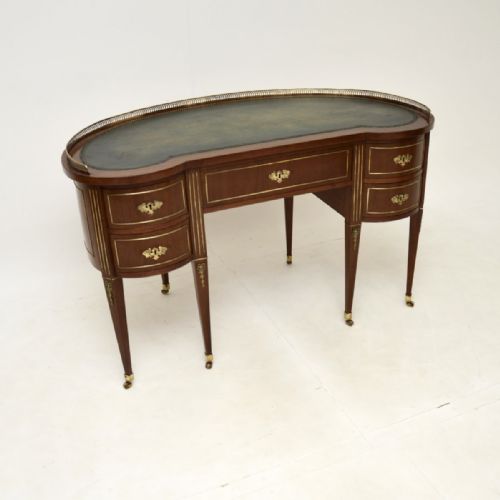
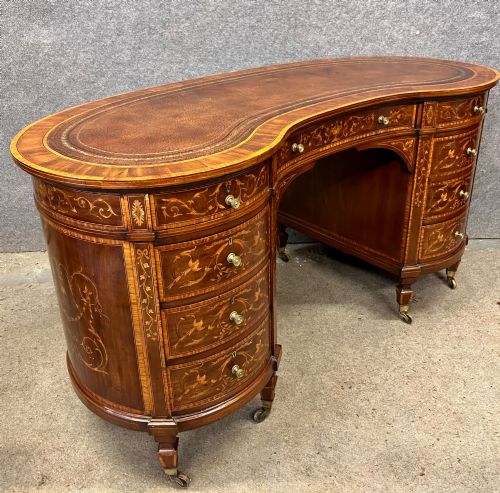




Curved Leather Desk
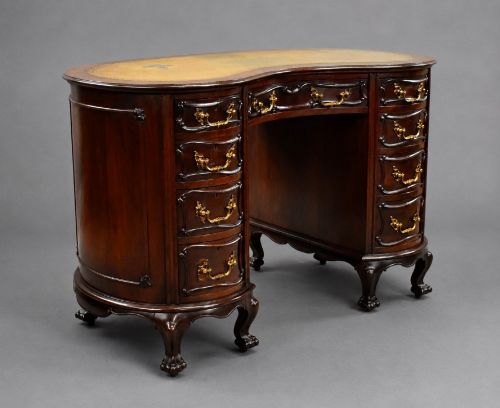
A curved leather desk offers a sweeping writing surface framed in fine timber and inset with a gilt-tooled hide, combining practical workspace with undeniable elegance.
Curved Leather Desk
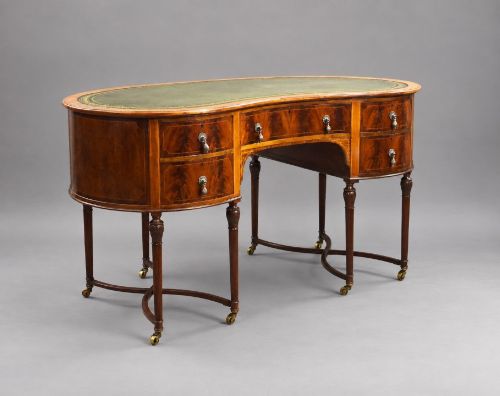
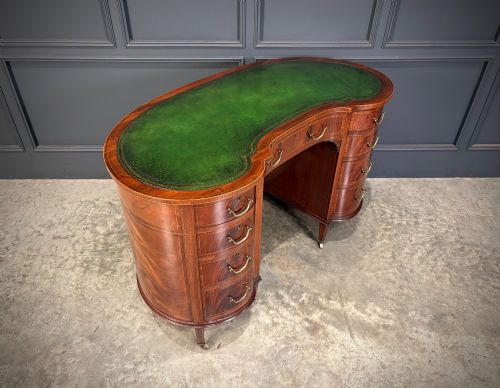
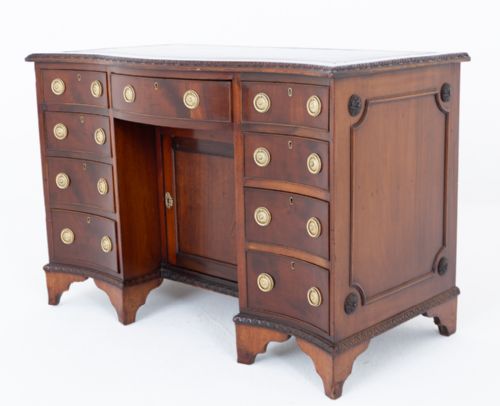
A curved leather desk provides a distinctive writing surface designed for comfort and proportion, most frequently appearing in kidney-shaped forms or serpentine configurations. When exploring a curved leather desk, buyers encounter variations spanning the Victorian, Edwardian, and Art Deco periods, alongside styles referencing Sheraton Revival and Georgian traditions.
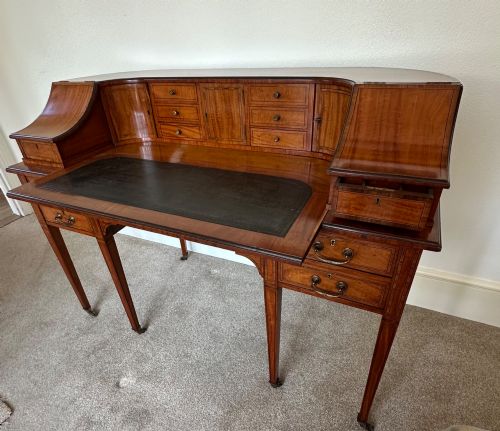
The pieces listed on this page encompass writing tables, Carlton House desks, and pedestal forms produced from the nineteenth century into the twentieth. Such tables serve as functional workspaces in libraries or studies while acting as centrepieces through their refined timber construction.
Materials and construction methods
Construction relies upon dense hardwoods such as mahogany, satinwood, oak, walnut, and rosewood, often selected for figured grain patterns like flame or burr elm. Cabinetmakers shaped these timbers into sweeping curves using steam-bending or segmented framing techniques before applying hand-tooled leather inserts.
Brass handles, casters, and stringing details accent the timber structures, while marquetry inlay and delicate satinwood cross-banding provide visual depth to writing surfaces and drawer fronts.
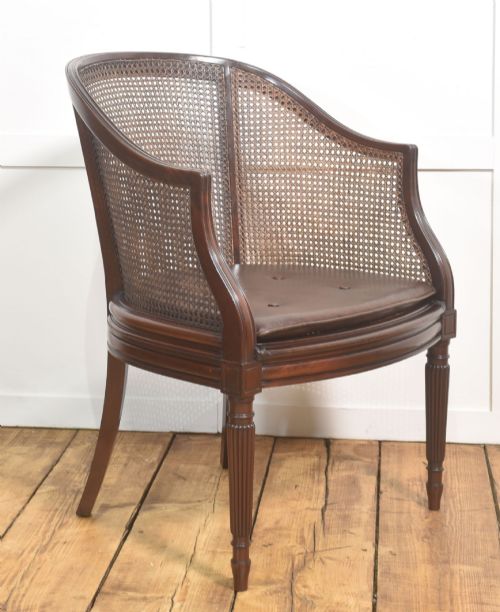
Several chairs matching these desks are designed with cane or tub backs, offering historical comfort for the dedicated writer.
Distinctions in craftsmanship
Quality separates pieces through the precision of the timber matching and the subtlety of the inlay work, where hand-cut stringing and marquetry demand exceptional joinery skill. The finesse of the leather top, particularly the crispness of the gilt tooling along the border, indicates the original workshop standard.
Structural integrity in the curved framing and the smooth operation of sweeping drawers distinguish finer examples from standard production pieces of the period.
Wolfe & Hollander·George Hepplewhite·Collinson and Lock
The Curved Leather Desk Glossary
- Kidney-shaped desk
- A writing table featuring a concave curve on the user side to fit the body comfortably. This form became particularly popular during the Victorian and Edwardian eras.
- Carlton House desk
- A form of writing desk characterised by a curved superstructure of small drawers and compartments wrapping around the back of the writing surface. George Hepplewhite famously produced influential designs for this type.
- Escritoire
- A writing cabinet or desk fitted with drawers and a folding writing flap. These pieces often incorporate fine mahogany or satinwood veneers.
- Pedestal desk
- A heavy writing table supported by two banks of drawers beneath the top. Variations include serpentine fronts and inlaid leather writing surfaces.
- Marquetry
- Decorative patterns formed by fitting together thin veneers of various wood types. It appears frequently on panels and tabletops from the nineteenth century.
Curved Leather Desk: Frequently Asked Questions
What periods do these desks date from?
The pieces available originate predominantly from the Victorian and Edwardian eras, alongside late nineteenth-century items and occasional Art Deco examples from the nineteen-thirties.
Craftsmen of these periods utilised traditional hardwoods and refined inlay techniques that define the character of each piece.
What woods were used for these writing tables?
Cabinetmakers relied heavily on mahogany, often enhanced with flame grain or satinwood, alongside oak, walnut, rosewood, and birchwood.
Finer versions frequently incorporate contrasting stringing and elaborate marquetry details across the top and drawer fronts.
Where should I place a curved desk?
Because many of these writing tables feature finished backs and polished timber throughout, they suit placement in the centre of a room rather than strictly against a wall.
Their sweeping profiles allow them to anchor a study or library layout effectively.