
Fluted Leg Mahogany Table
A fluted leg mahogany table offers classical dignity and fine timber, spanning dining rooms, libraries and drawing rooms across the nineteenth and early twentieth centuries.
Fluted Leg Mahogany Table
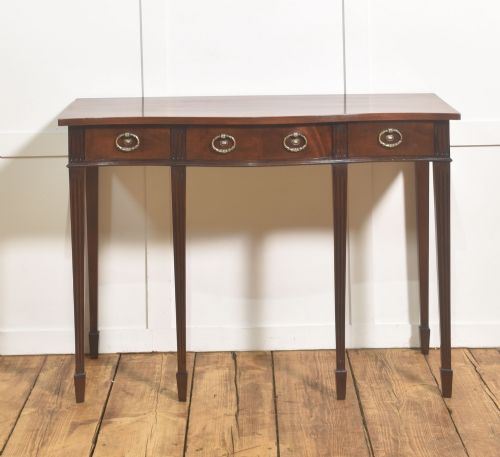
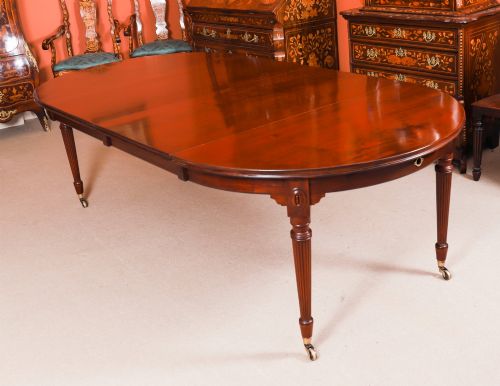
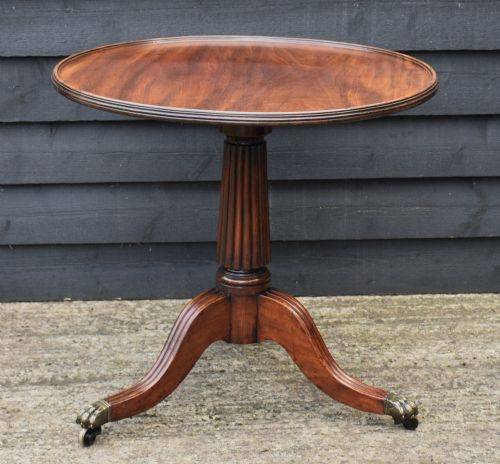
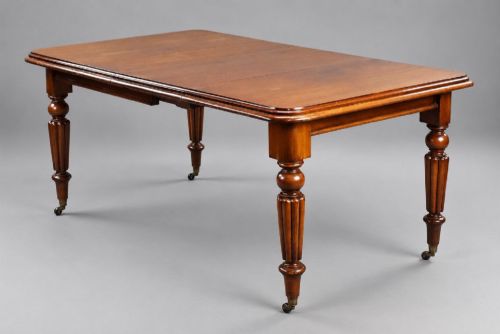
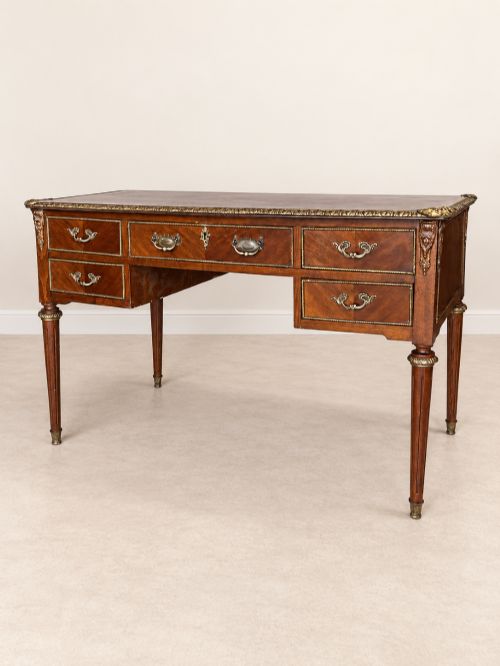
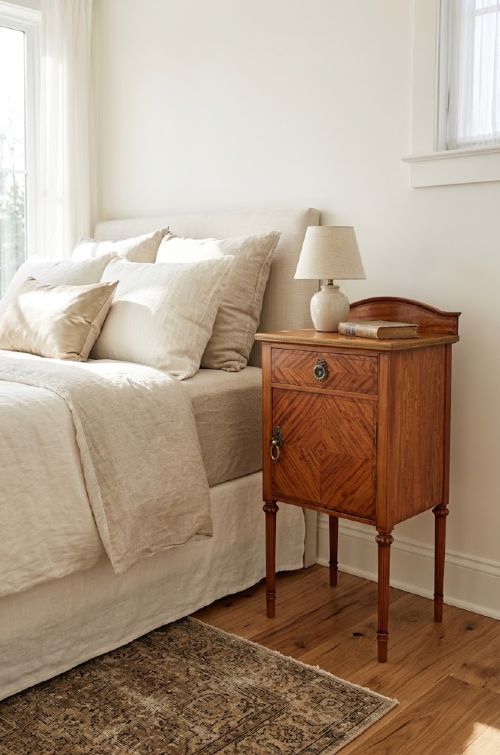
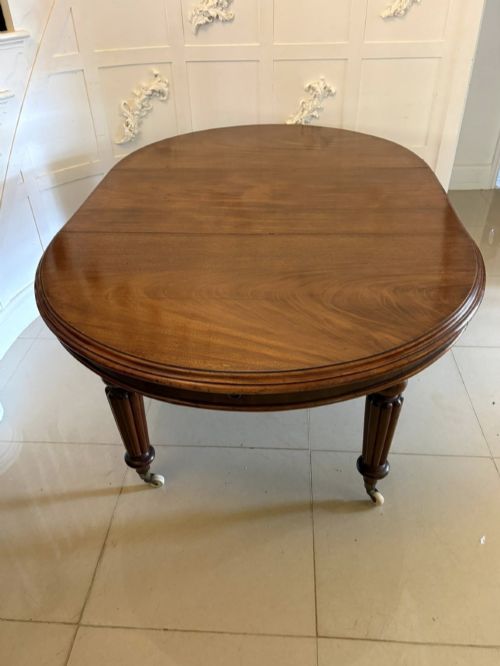
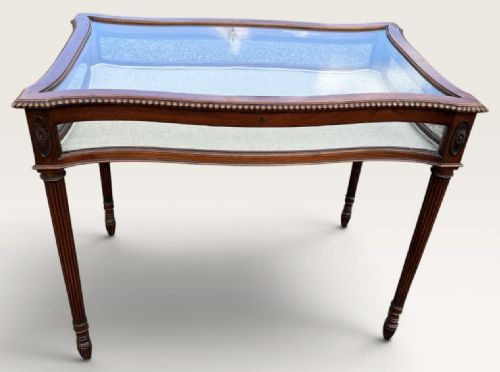
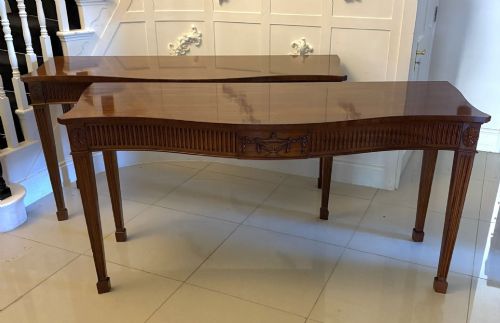
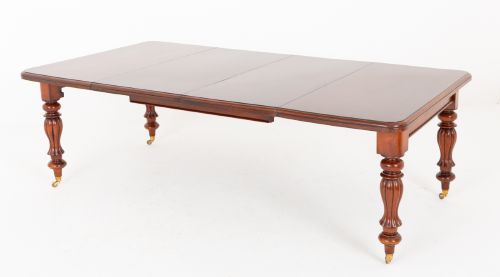
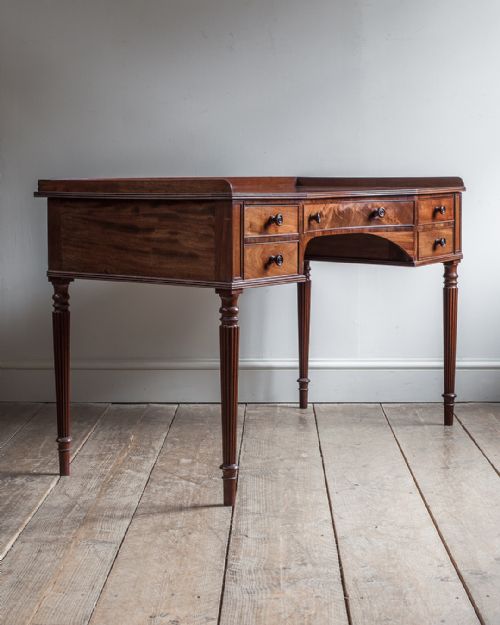
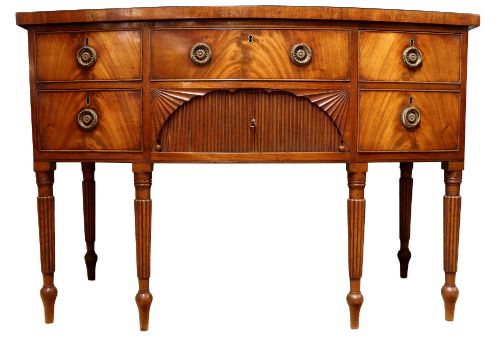
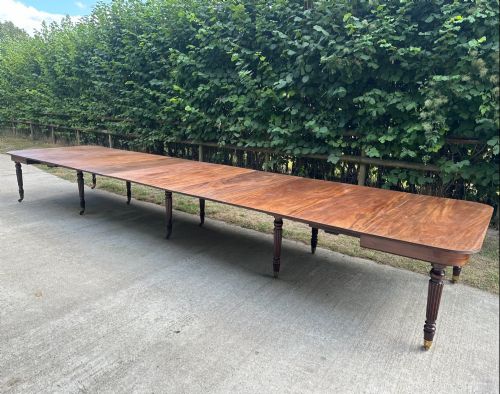
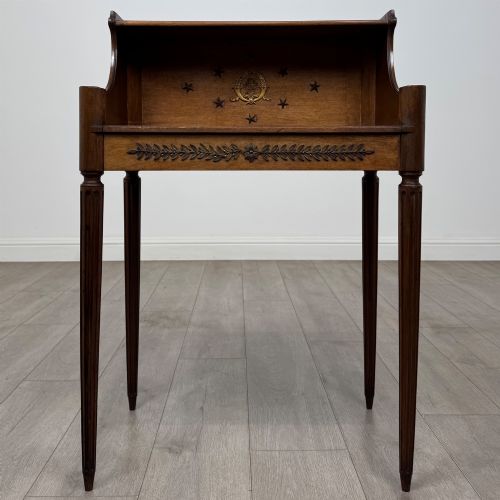
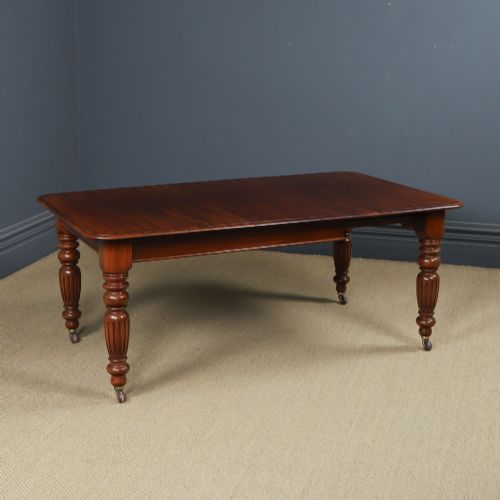
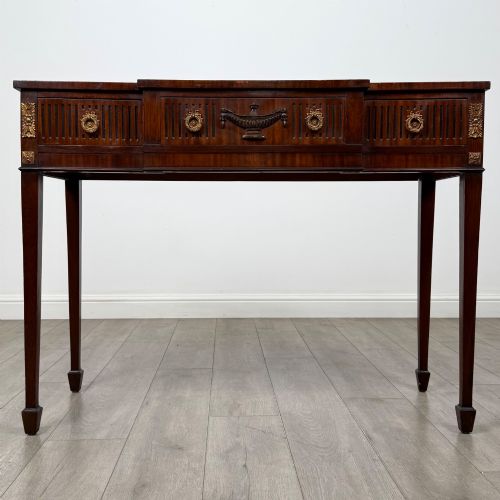
A fluted leg mahogany table brings together rich timber and classical vertical carving across a variety of domestic forms. Buyers encounter everything from large extending dining tables and serving consoles to writing desks, side tables and bedside cabinets.
The pieces on this page span the eighteenth century, the Regency and Victorian eras, and into Edwardian and early twentieth-century revivals. Dining tables with multiple leaves sit alongside smaller pembroke tables, writing desks and side tables featuring characteristic carved fluting on the legs.
Materials and Technique
Mahogany forms the primary structural timber, often selected for its figured grain and deep natural colour, occasionally complemented by satinwood, leather inserts or marble tops. Workshops utilised solid mahogany and fine veneers over secondary woods for stability.
Legs feature precision-carved flutes executed by hand, sometimes paired with brass castors, ormolu mounts, or gilt bronze details. Construction methods include traditional joinery, wind-out mechanisms on extending dining tables, and delicate parquetry on revival desks.
Listings feature numerous dining tables spanning George III, Regency, and Victorian periods, alongside Edwardian side tables and desks.
Craft and Character
The standard of timber selection and the crispness of the carved fluting determine the distinction of each piece. Superior examples display deeply figured mahogany with rich patination and carefully proportioned architectural detail rather than mechanical uniformity.
Makers of note and documented workshops elevate certain pieces through refined hardware, such as original brass castors and quality mounts. The integrity of the secondary woods and the precision of the joinery complete the measure of quality.
Gillows·Gregory And Co
The Fluted Leg Mahogany Table Glossary
- Fluting
- A series of shallow, parallel concave grooves cut vertically into the column of a table leg. This classical architectural detail draws the eye downward and lightens the visual weight of the mahogany support.
- Patination
- The glossy, deep sheen acquired by mahogany over decades through handling, waxing and oxidation. It reveals the warmth and grain of the timber in a way that modern finishes cannot replicate.
- Ormolu
- Cast brass that has been gilded with a mercury amalgam, producing a bright gold finish. Makers utilised ormolu mounts on French-influenced tables and gueridons to accent the mahogany frames.
- Pembroke table
- A small drop-leaf table with hinged flaps on either side, often fitted with a single drawer. They served as versatile occasional or writing tables in period drawing rooms.
- Wind-out table
- An extending dining table operated by a mechanical handle and internal wooden screw mechanism. This device allowed owners to insert additional leaves with ease.
Fluted Leg Mahogany Table: Frequently Asked Questions
How do I date a mahogany table?
Examine the construction methods, timber thickness, and secondary woods beneath the top and inside the drawers. Hand-cut dovetails and timber shrinkage patterns often point to eighteenth or nineteenth-century origins.
Style indicators also help distinguish eras, as strict Georgian proportions give way to heavier Victorian forms or later Edwardian revivals incorporating neoclassical motifs.
Are these tables suitable for daily dining?
Many extending dining tables and serving consoles were built precisely for frequent family meals and hospitality. Robust mahogany frames and solid joinery allow them to withstand regular daily use.
Protective mats and careful maintenance of the polished surface help preserve the timber against heat and moisture during meals.
How should I care for the mahogany surface?
Apply traditional beeswax periodically to nourish the timber and maintain the natural lustre of the patination. Avoid silicone sprays and keep tables away from direct heat sources and strong sunlight.
Promptly wipe away spills with a soft, dry cloth to prevent water marks from penetrating the French polish or wax finish.
What is the difference between Regency and revival pieces?
Authentic Regency pieces date from the early nineteenth century and reflect the era's fascination with Greek and Roman archaeology. They exhibit genuine period wear and structural characteristics typical of the Regency workshop.
Revival pieces, produced around the late nineteenth and early twentieth centuries, copy these classical forms using older stylistic templates while employing contemporary machinery and joinery techniques.