



Victorian Frieze Drawer Desk
A victorian frieze drawer desk is a sturdy writing table built to handle daily correspondence with timeless utility.
Victorian Frieze Drawer Desk
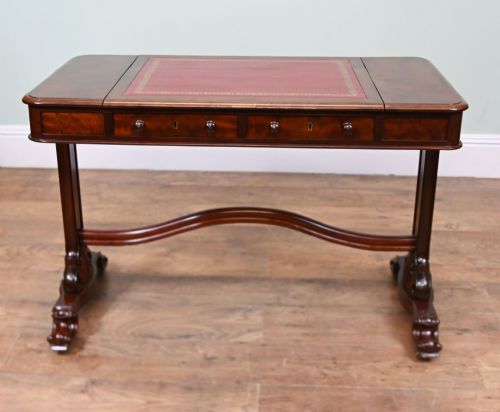
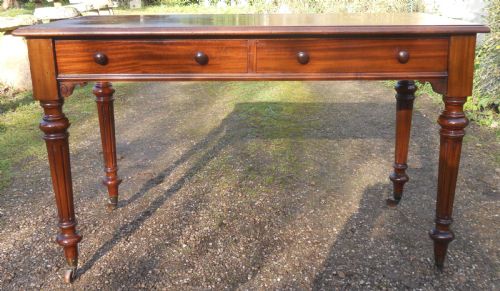
A victorian frieze drawer desk combines a flat writing surface with one or more shallow drawers built directly into the timber frame beneath the top. These pieces appear across the nineteenth century, including specific years like eighteen fifty, eighteen sixty, and eighteen eighty, reflecting the heavy writing demands of the period.
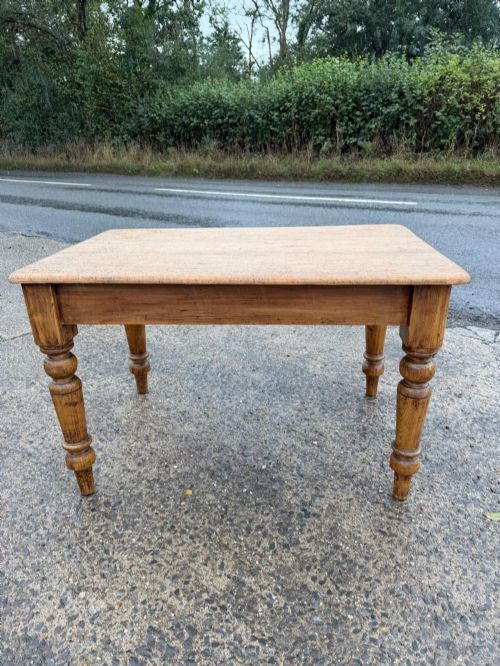
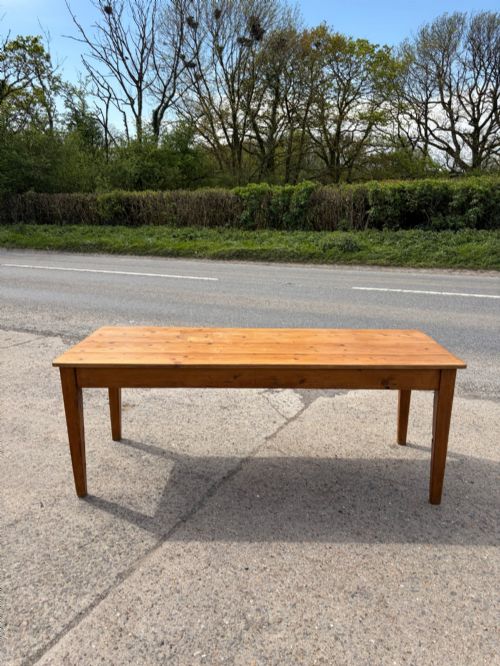
The items listed here span various forms including library tables, centre tables, and writing tables constructed in woods such as mahogany, oak, pine, rosewood, and walnut. Buyers frequently encounter pine and mahogany versions featuring single or double drawers set into the front frieze.
Makers such as Edwards and Roberts alongside attributed pieces by Donald Ross represent the finer end of these furnishings. Stylistic influences draw upon Regency, Renaissance Revival, and William IV alongside standard Victorian and Victorian Country designs.
How they were made
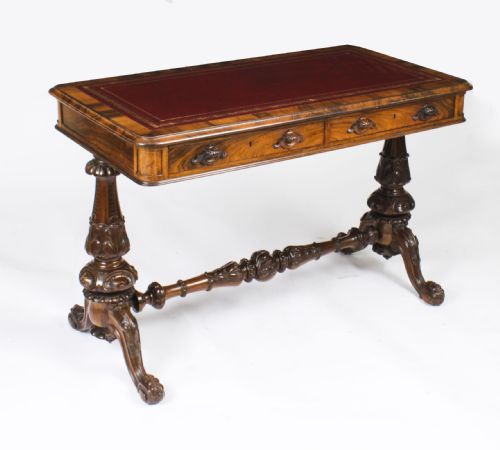
Carpenters built these desks using solid hardwoods like mahogany, oak, rosewood, and walnut, alongside softer structural timbers such as pine. Surfaces often incorporated inset leather writing panels and brass drawer hardware.
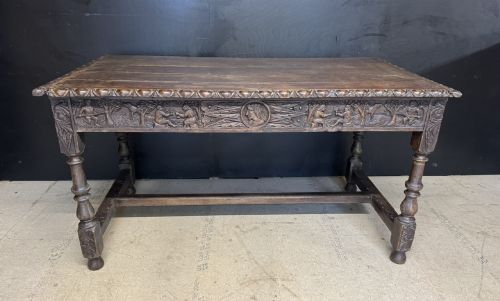
Construction techniques relied on traditional joinery to support the integration of frieze drawers into the timber framework. Carved details and parquetry patterns appeared on select examples to elevate the visual finish.
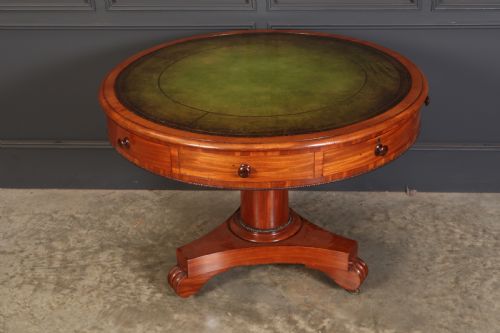
Some library tables rotate smoothly on heavy pedestals, letting you reach your inkwell without getting up from your chair.
What varies in quality
The grade of timber and the choice of secondary woods determine the underlying substance of each desk. Plain pine country pieces sit at a different level of craftsmanship compared to finely figured mahogany, rosewood, or parquetry surfaces.
Attribution to known makers like Edwards and Roberts or Donald Ross elevates a piece through documented workshop provenance. Subtle details such as crisp timber carving and the integration of brass fittings distinguish standard utility tables from superior library desks.
Edwards and Roberts·Donald Ross
The Victorian Frieze Drawer Desk Glossary
- Frieze
- The horizontal band or section situated directly beneath the top surface of a table or desk. Frieze drawers are built discretely into this space.
- Parquetry
- A geometric mosaic of wood pieces used for decorative inlay on furniture surfaces. This technique appears on select writing tables.
- Library table
- A large freestanding table designed for reading and writing, often finished on all sides to sit in the centre of a room. These frequently double as writing desks.
- Drum table
- A circular library table with a deep frieze containing drawers, resembling the shape of a drum. It rests on a central pedestal base.
Victorian Frieze Drawer Desk: Frequently Asked Questions
What is a frieze drawer?
A frieze drawer is a shallow drawer built into the horizontal framework directly beneath the top of a table.
These drawers sit flush with the front apron and provide storage for writing materials while keeping the overall profile clean.
Were these desks used in libraries?
Many of these pieces served as library tables or centre tables rather than dedicated office desks.
Their finished backs allowed them to stand away from walls in the middle of a room.
What woods were commonly used?
Cabinetmakers utilised a range of timbers including mahogany, oak, rosewood, walnut, and pine.
Hardwoods provided durable writing surfaces and attractive grain patterns for formal rooms.
How do I identify the period?
Dating relies on stylistic clues, construction methods, and materials associated with the nineteenth century.
References to specific decades like eighteen fifty or eighteen sixty help anchor the timeline.