


Floral Tapestry Footrest
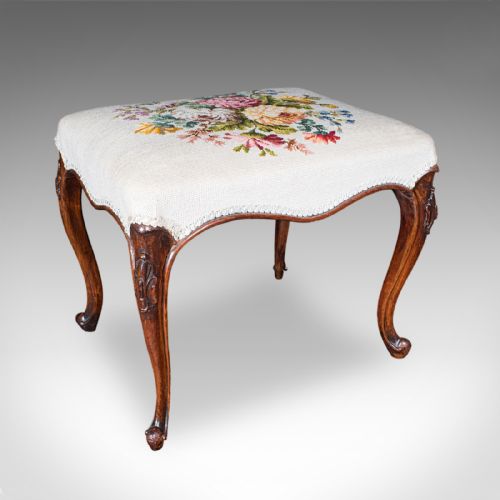
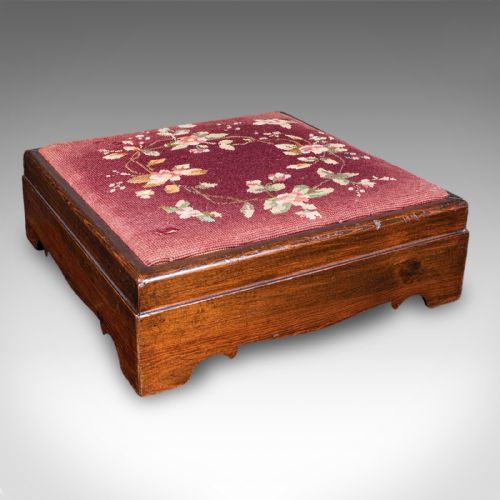
These floral tapestry footrest pieces combine needlework covers with timber frames, offering traditional comfort and period character.
Floral Tapestry Footrest
A floral tapestry footrest is a low stool or ottoman designed for supporting the feet, typically featuring an upholstered textile top. Buyers browsing this selection encounter various forms including fireside footstools, long footstools, and poufs spanning multiple centuries.
The pieces available originate across several distinct eras, stretching from the eighteenth century through the Victorian and Edwardian periods up to the nineteen-twenties. Common structural forms include both compact single stools and extended ottoman seats intended for larger rooms.
Stylistic influences vary significantly, taking cues from Queen Anne designs, Louis XV revivals, and French nineteenth-century aesthetics alongside traditional English cabinet-making. Frames are encountered in woods such as walnut, mahogany, pitch pine, oak, and ebonised or painted finishes.
How they were made
Construction relies on solid timber frames shaped into styles such as Queen Anne or revival forms, utilising woods like walnut, mahogany, oak, and pitch pine. Certain pieces incorporate brass details or painted finishes to enhance the overall appearance of the woodwork.
The upholstery technique centres on needlepoint and tapestry textile covers worked in wool, secured over padded foundations. These covers display detailed floral needlework designs that define the visual character of each footrest.
Several footrests come equipped with enough wool tapestry to survive centuries of resting tired feet without losing their floral charm.
What varies in quality
Quality is distinguished by the crispness of the timber carving and the fidelity of revival styles, such as authentic Queen Anne proportions versus later interpretations. Finer examples display superior timber selection and carefully executed joinery in the frame.
The needlepoint work itself dictates much of the visual standard, with tighter stitch density and more intricate floral compositions marking out the superior items in the range.
Whytock and Reid
The Floral Tapestry Footrest Glossary
- Needlepoint
- A type of canvas work embroidery executed with wool yarn, forming the floral tapestry top of the footrest.
- Ottoman
- A low upholstered seat or footstool lacking a back or arms, often built in a longer format.
- Pitch pine
- A resinous softwood utilised in the construction of certain Edwardian footstool frames.
- Ebonized
- Wood finished with a dark stain or polish to imitate the appearance of ebony.
- Queen Anne style
- A domestic design style originating in the early eighteenth century, characterised by cabriole legs and pad feet.
Floral Tapestry Footrest: Frequently Asked Questions
What is a floral tapestry footrest used for?
These pieces function primarily as low supports for the feet when sitting by a fireside or in a reception room. They also serve as small occasional seats or decorative ottomans within traditional interiors.
Their compact scale allows them to sit easily in front of armchairs or sofas while adding a textile accent to the room.
How do I identify a Victorian footstool?
Victorian examples often feature dark hardwoods like mahogany or rosewood, sometimes combined with ebonised finishes or elaborate needlepoint upholstery. The proportions and turning on the wooden components typically reflect nineteenth-century cabinet-making trends.
Examining the construction methods underneath the upholstery can also help confirm the period of manufacture.
Are these footstools suitable for daily use?
Most pieces are built with sturdy timber frames and durable wool tapestry covers that handle regular domestic placement. Proper care helps preserve both the wooden structure and the stitched textile top over time.
Placing them away from direct heat sources protects the timber and the natural wool fibres.
What wood types are common in these frames?
Makers utilised a variety of timbers depending on the period, including walnut, mahogany, oak, and pitch pine. Some pieces feature painted surfaces or dark ebonised treatments rather than exposed grain.
The choice of wood often aligns with the prevailing style of the specific decade.