
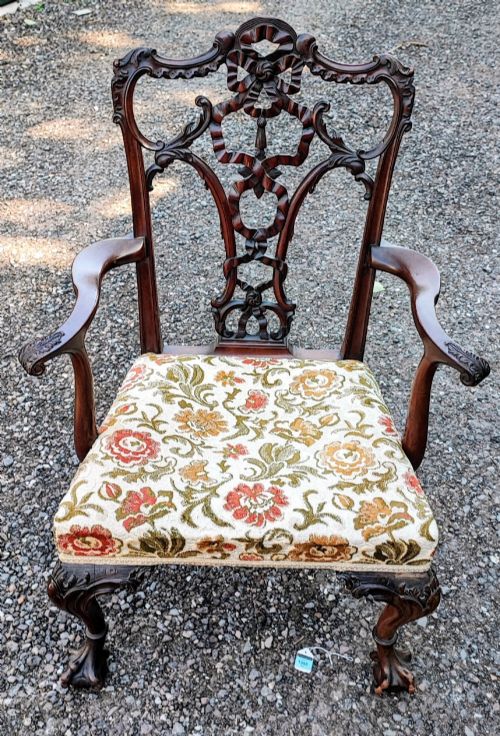


Floral Tapestry Dining Chairs
Floral tapestry dining chairs bring warmth and texture to a room through traditional woven textiles and timber frames.
Floral Tapestry Dining Chairs
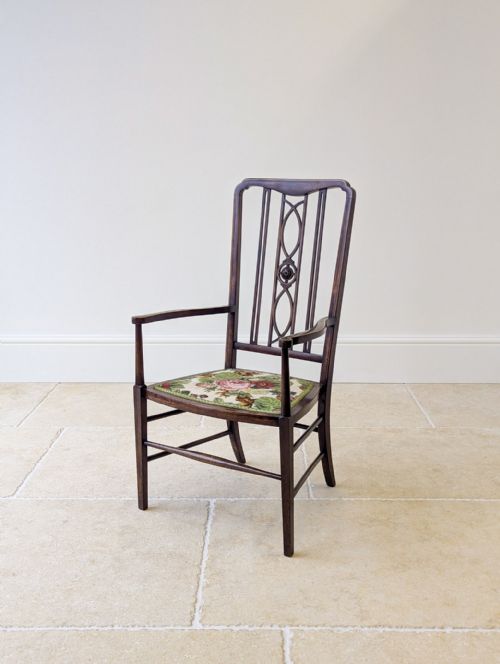
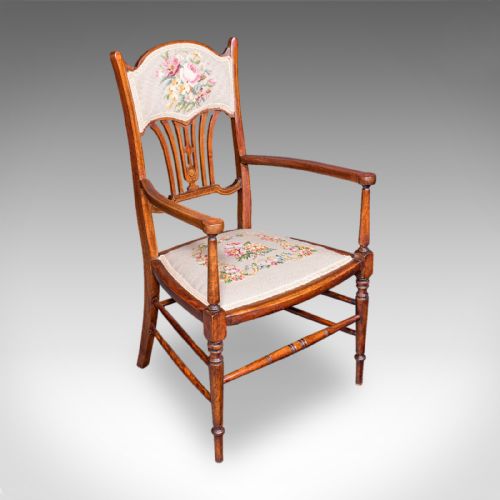
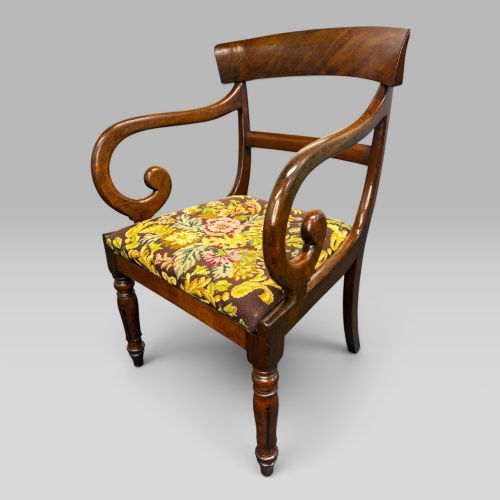
Floral tapestry dining chairs combine sturdy timber frames with decorative woven textile seats in styles ranging from Regency to Edwardian.
The selection includes sets of dining chairs alongside single carvers and side chairs spanning the nineteenth and early twentieth centuries.
Makers utilised woods such as mahogany, walnut and beech to construct these practical seats for dining rooms and parlours.
Materials and construction
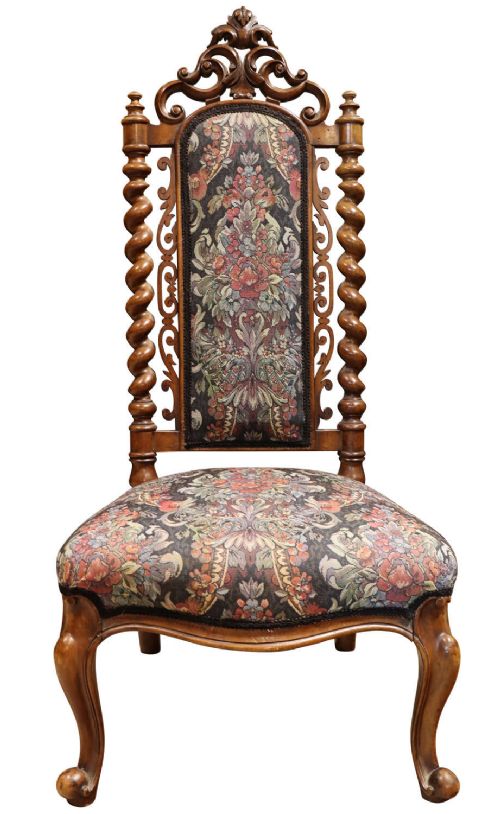
Frames rely principally on dense hardwoods like mahogany and walnut, shaped with carved splats, sabre legs or cabriole supports.
Seats and backs incorporate wool work, needlepoint and tapestry fabric secured over traditional padding.
Some nineteenth century needlepoint seats preserve wool work stitched by hand in domestic parlours.
Judging quality
The fineness of the carving on the mahogany or walnut framework separates standard seating from more ambitious examples.
The tightness and complexity of the wool work or needlepoint tapestry dictate the visual merit of the upholstered section.
Jas Shoolbred
The Floral Tapestry Dining Chairs Glossary
- Carver chair
- An armchair designed to sit at the head of a dining table or function as a desk seat. These pieces often feature open arms and matching side chair companions.
- Needlepoint
- A type of canvas work embroidery utilised for durable seat covers. This technique creates firm, detailed floral patterns using wool yarn.
- Splat
- The vertical central strip of wood in the back of a chair. Makers shaped these elements into vase and ladder designs.
- Sabre leg
- A curving, concave leg form popular during the Regency period. This profile tapers smoothly toward the foot.
Floral Tapestry Dining Chairs: Frequently Asked Questions
How do I clean tapestry seats?
Brush wool work gently with a soft brush to remove dust and surface particles.
Avoid using liquid cleaners on antique textiles to prevent damage to the fibres.
Can I mix different wood tones?
Mahogany and walnut pieces sit comfortably together within a traditional dining space.
Matching the chair height matters more than uniformity in timber shades.
Are these chairs suitable for daily use?
Nineteenth century dining chairs provide sturdy seating when joints remain tight and secure.
Periodic checking of the frame ensures stability during everyday meals.
What defines a carver chair?
Carvers include armrests, making them wider than standard side chairs.
Pairs often accompanied a larger set of dining chairs for the ends of the table.