


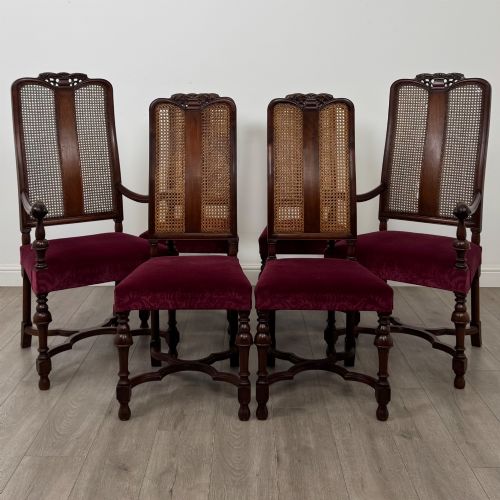
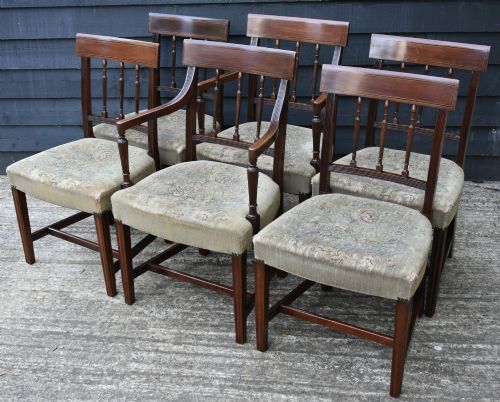
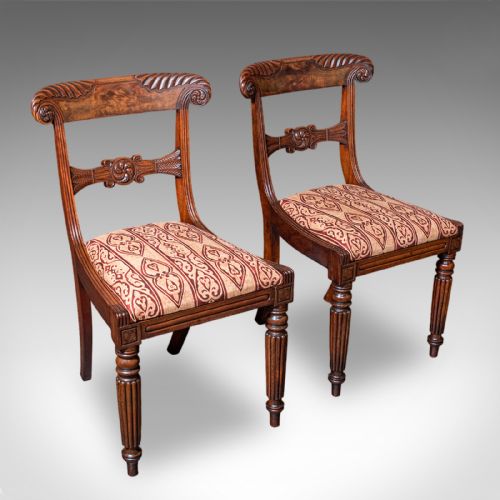
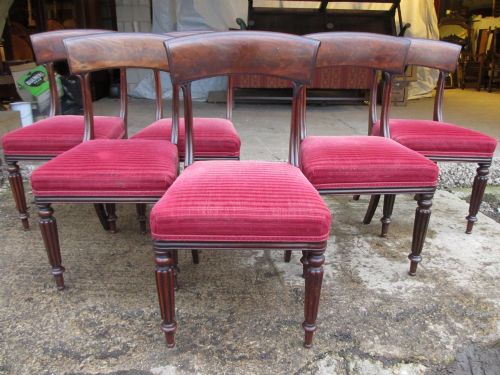
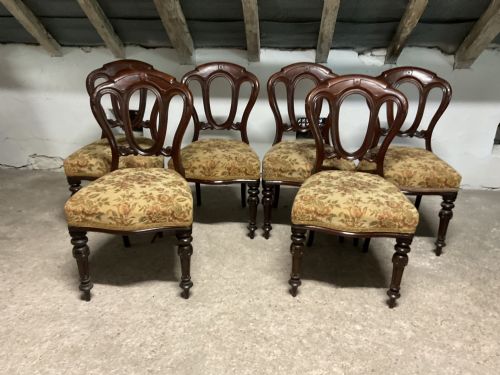
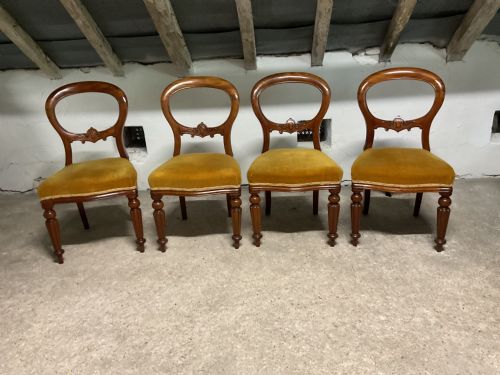
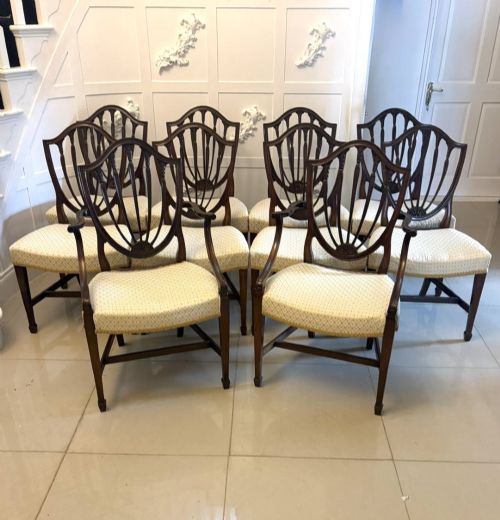
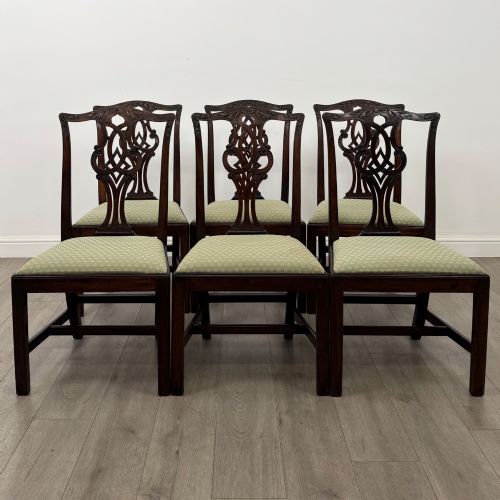
Vintage Mahogany Dining Seats
These vintage mahogany dining seats offer deep timber tones and classic forms to anchor a traditional dining room.
Vintage Mahogany Dining Seats
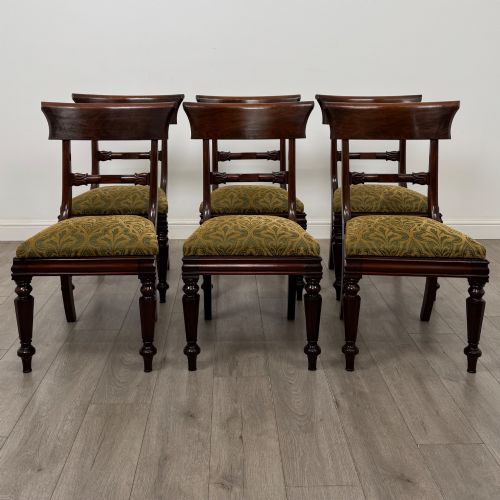
Vintage mahogany dining seats encompass side chairs, armchairs, and carvers designed for use around a dining table. The listings here include nineteenth-century pieces alongside Edwardian and later revivals.
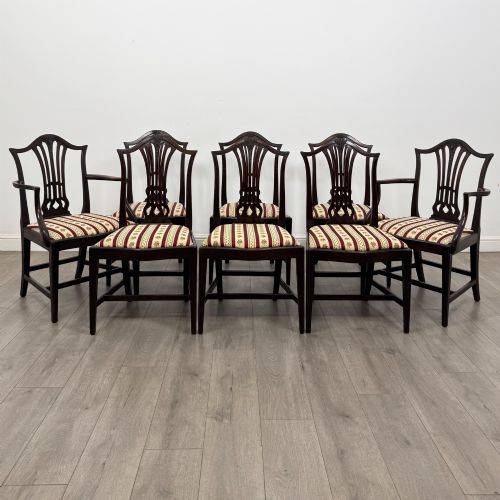
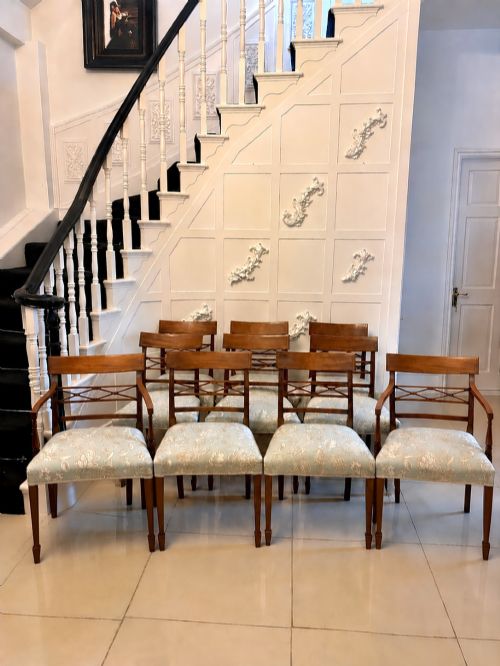
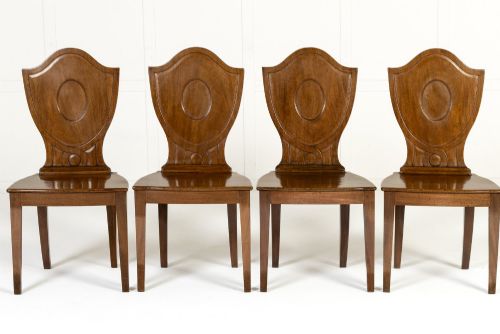
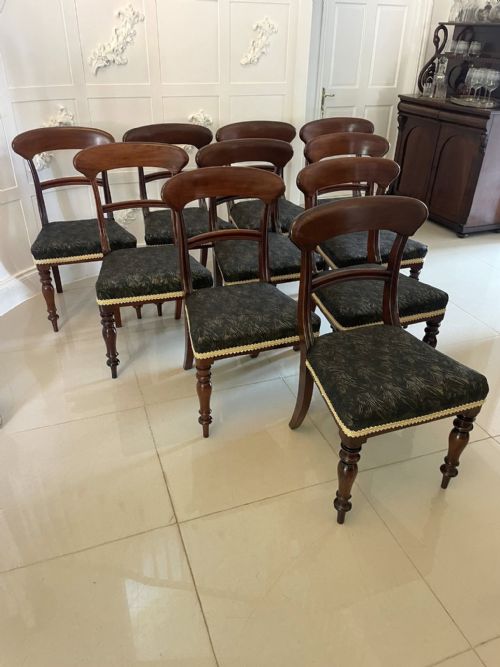
Buyers meet sets ranging from four to twelve chairs, often pairing standard side seats with matching elbow chairs for the heads of the table. Forms span shield backs, balloon backs, and wheel backs.
Periods represented stretch from the Georgian era through the Regency, William IV, Victorian, and Edwardian periods. Revival styles such as Chippendale and Hepplewhite appear frequently among the pieces available.
Materials and construction
Mahogany forms the primary structural timber, chosen for its strength, rich grain, and stability in large sets. Makers utilised this dense wood to shape intricate splats, curved armrests, and robust legs.
Upholstery materials include leather, velvet, and various woven fabrics fixed over padded seat pads. Brass inlay occasionally provides linear decoration along the top rails and uprights of Regency examples.
Evaluating quality in timber and carving
The standard of carving determines much of the distinction between ordinary sets and superior examples. Crisp, deep execution on shield backs and ribbon splats reflects the time lavished by the cabinetmaker.
Timber selection and matching across a set dictate visual harmony. Pieces retaining a deep, untreated patina and uniform grain density stand apart from mismatched or heavily refinished groupings.
Maple and Co·Wheelers of Arncroach
The Vintage Mahogany Dining Seats Glossary
- Carver
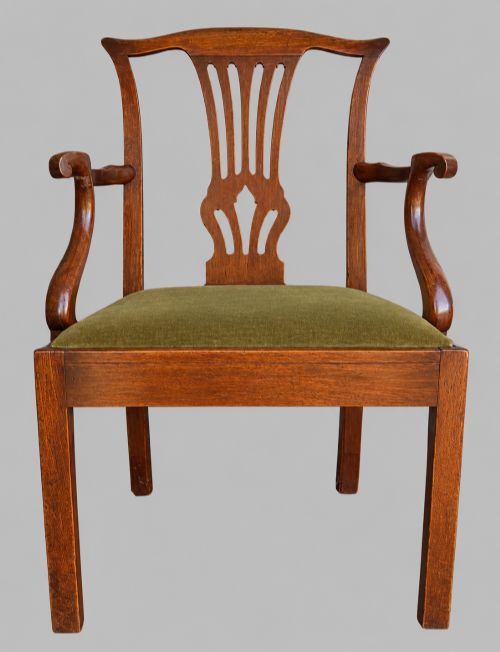
- An armchair designed to sit at the head of a dining table, usually matching the smaller side chairs in a set. These frames feature extended armrests to support the sitter.
- Shield back
- A chair back shaped like a heraldic shield, popularised during the eighteenth century and revived in later periods. This form often incorporates carved wheat ears or drapery.
- Balloon back
- A rounded, oval-shaped chair back introduced during the Victorian period. The continuous wooden loop provides ergonomic support while presenting a smooth profile.
- Splat
- The vertical wooden strip down the centre of a chair back connecting the seat to the top rail. Carved variations help identify specific revival styles.
- Regency
- An architectural and furniture style spanning the early nineteenth century. Pieces from this era often display classical restraint and brass inlay.
Vintage Mahogany Dining Seats: Frequently Asked Questions
How do I choose the right set size?
Consider the length of your dining table and the space available in your room. Sets on this page commonly run from four pieces up to ten or twelve.
Larger groups frequently include a mix of standard side chairs and a pair of carver armchairs for the ends of the table.
Are these chairs suitable for daily use?
Mahogany provides a durable frame that withstands regular sitting when joints remain sound. Traditional joinery holds these vintage chairs together securely.
Periodic checking of the underframe ensures the seating remains stable during family meals and gatherings.
How do I identify a revival style?
Revival pieces copy the cabinetmaking fashions of earlier centuries, such as Georgian Chippendale or Hepplewhite designs. Makers produced these alternative versions during the Edwardian period and early twentieth century.
Closer inspection of the wood colour, tool marks, and secondary timbers helps separate an eighteenth-century original from a later interpretation.
What is the difference between side chairs and carvers?
Side chairs are narrower seats built without arms, designed to line the long sides of a dining table efficiently. Their compact frames allow multiple chairs to fit comfortably side by side.
Carvers feature open arms and wider proportions, offering a more commanding presence at the head and foot of the table.