
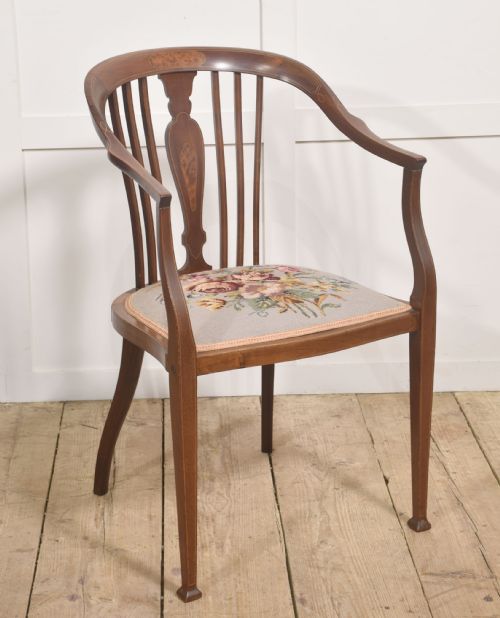


Floral Tapestry Desk Chair
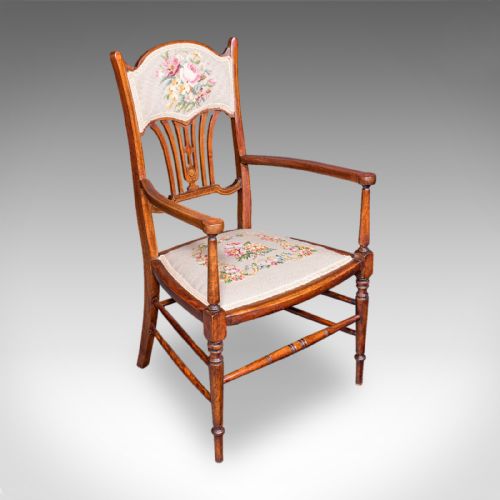
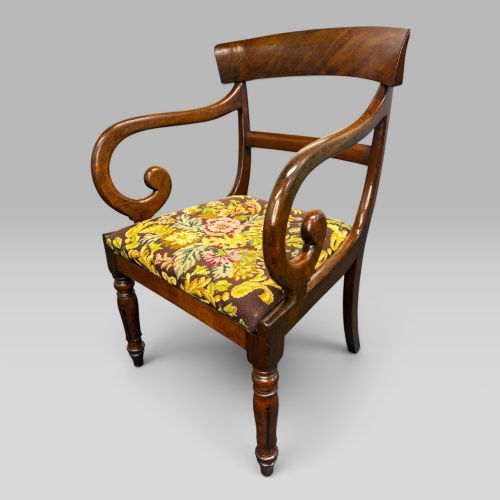
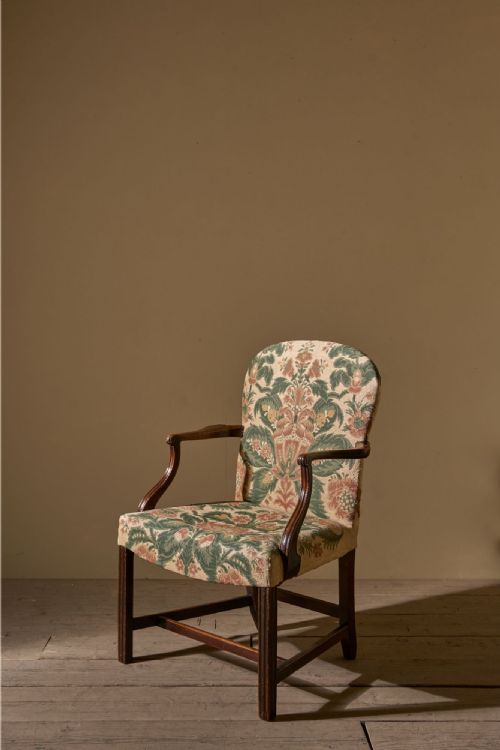
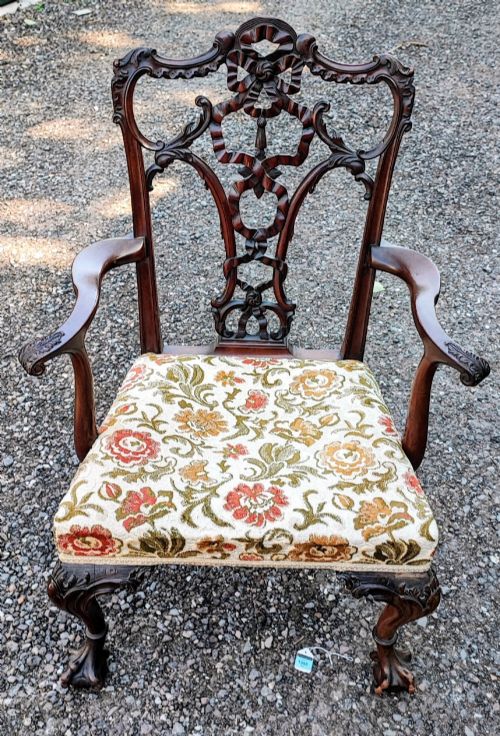
These floral tapestry desk chair pieces bring period character to a working space through upholstered needlework and timber frames.
Floral Tapestry Desk Chair
A floral tapestry desk chair unites practical seating with decorative textile work, appearing across Victorian, Edwardian, Regency, and Georgian periods. These pieces serve as functional workspace seating or decorative accents in a study.
The selections on this page draw from 19th Century, Victorian, Edwardian, and Regency eras, constructed in forms such as armchairs, side chairs, and carvers. Mahogany and walnut frameworks dominate, paired with tapestry upholstery and textile seats.
How they were made
Frames take shape from solid hardwoods like mahogany and walnut, occasionally incorporating satinwood inlay or padouk. Cabinetmakers shaped these timbers into vase splat backs, sabre legs, and carved elbow supports.
Upholstery relies on hand-stitched tapestry fabric and needlepoint textiles secured directly to the wooden seats. Brass elements and detailed carving finish the construction.
The furniture spans multiple eras, including Georgian, Regency, Victorian, Edwardian, and Art Nouveau styles.
What varies in quality
The refinement of the woodwork dictates much of the standard, separating simple turned legs from deeply carved Chippendale style details or precise satinwood inlay. Timber selection plays a primary role, with choice cuts of mahogany and walnut commanding attention.
Needlework density and the condition of the tapestry upholstery establish the visual success of the piece. Intricate hand-stitched floral patterns retain their definition better than worn or faded textiles.
Jas Shoolbred
The Floral Tapestry Desk Chair Glossary
- Tapestry
- A form of heavy textile woven with decorative designs, frequently utilised for upholstery on period seating. It provides both colour and texture to the seat.
- Elbow Chair
- An armchair featuring low arms designed to support the elbows rather than full armrests. These pieces fit easily beneath standard desk heights.
- Carver
- A dining or desk chair featuring arms, traditionally positioned at the head of a table or utilised at a writing desk. They offer a wider seating platform.
- Needlepoint
- Embroidery stitched onto canvas mesh to create dense floral or geometric patterns. This technique forms the durable surface seen on many period chair seats.
- Splater
- The vertical wooden strip down the centre of a chair back, sometimes shaped as a vase in Georgian and nineteenth-century examples. It supports the back while seated.
Floral Tapestry Desk Chair: Frequently Asked Questions
How do I identify a Victorian desk chair?
Victorian examples rely on dense timbers like walnut and mahogany, often featuring dark finishes and robust carving. Look for moulded frame edges and substantial proportions.
Upholstery on these pieces typically utilises heavy floral tapestry fabric or needlepoint, reflecting mid to late nineteenth-century interior tastes.
Can I use an antique carver at a modern desk?
Many carver chairs and elbow chairs fit standard desk configurations, though clearance varies by period. Georgian and Victorian desk chairs were built with lower writing surfaces in mind.
Measure the arm height of the chair against the underside of the desk before placement to ensure proper clearance.
What is the difference between tapestry and needlepoint?
Tapestry is produced on a loom as an integrated woven fabric, combining the pattern directly into the structure. Needlepoint is stitched by hand onto an open-weave canvas foundation.
Both materials appear frequently on nineteenth-century seating to provide durable, decorative surfaces.
How do I care for antique tapestry upholstery?
Keep textile upholstery away from direct sunlight to prevent the floral dyes from fading over time. Gentle vacuuming with a soft brush attachment removes surface dust.
Avoid liquid cleaners on antique needlepoint to protect the old wool and cotton fibres from shrinkage.