
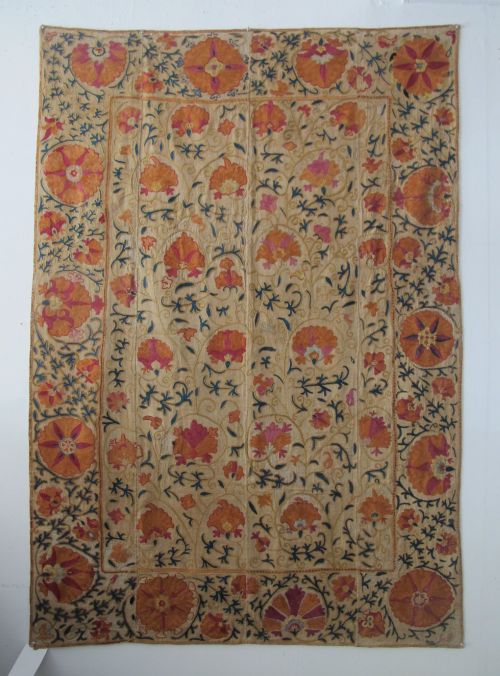
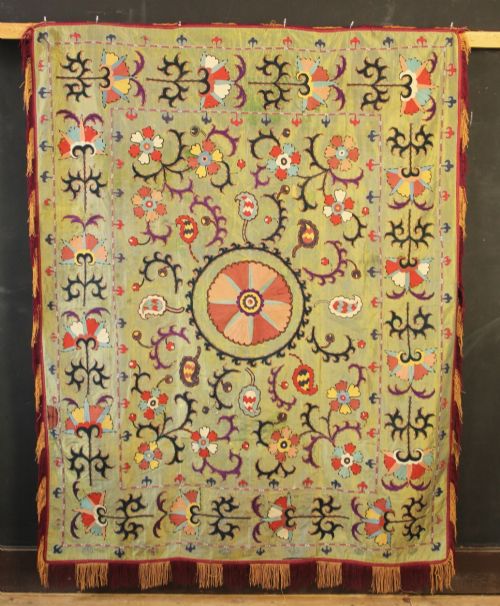
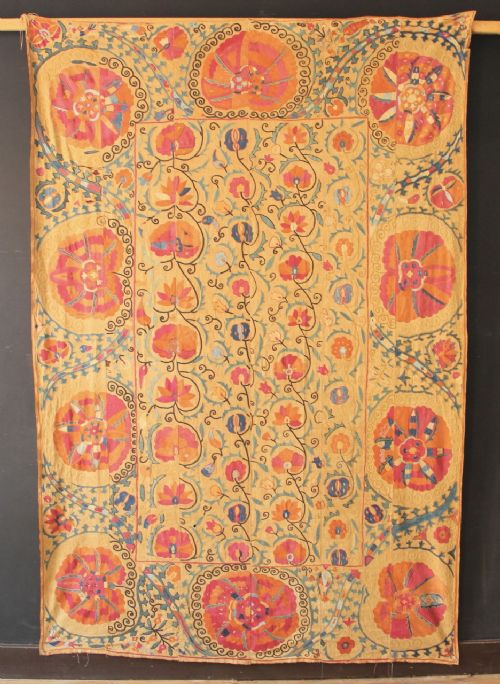


Floral Silk Suzani
These floral silk suzani textiles are Central Asian embroidered wall hangings and covers that bring rich colour and traditional pattern into a room.
Floral Silk Suzani
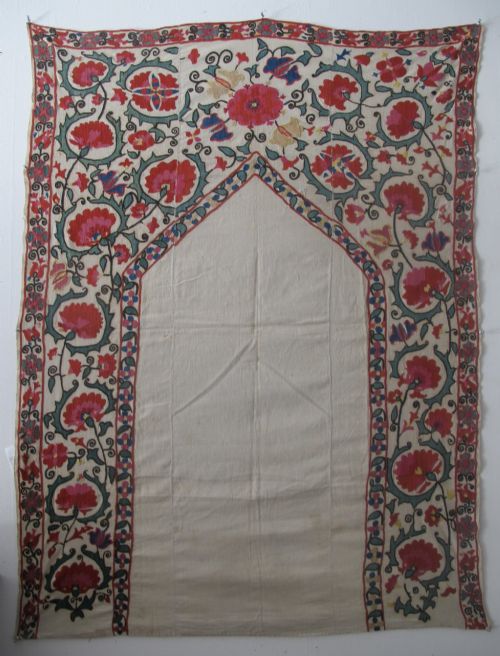
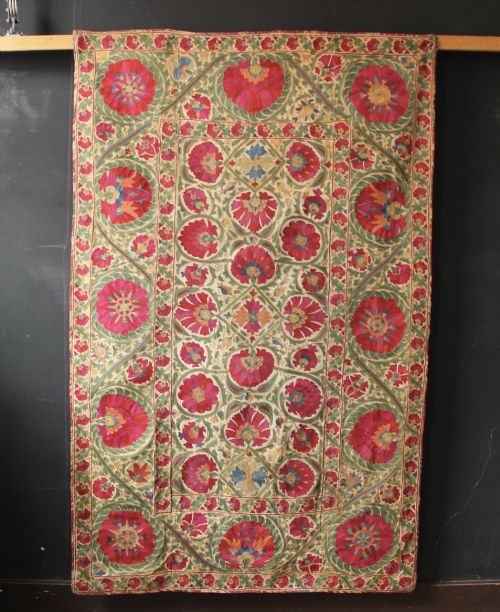
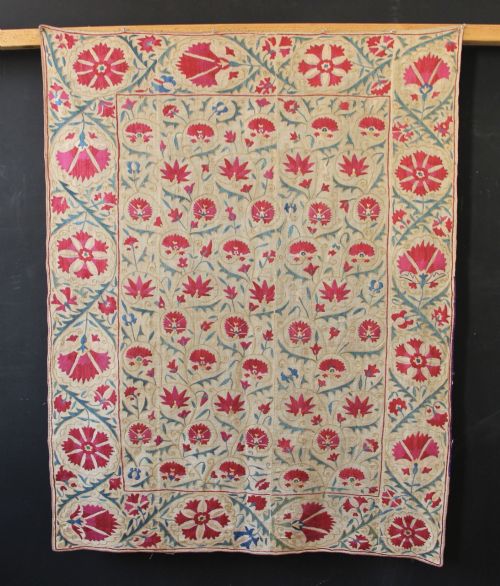
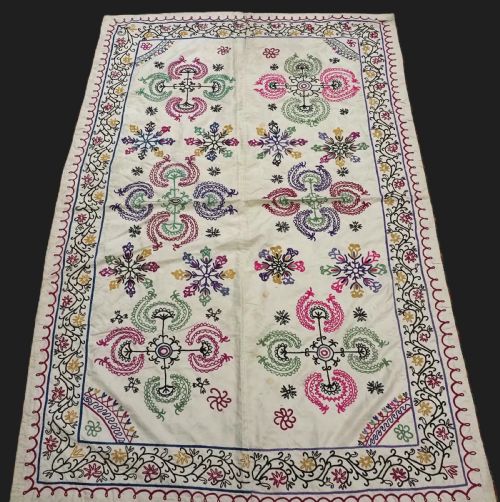
A floral silk suzani is a traditional embroidered textile originating from Central Asia, often associated with regions such as Uzbekistan, Bokhara, Nurata, and Shakhrisabz. These panels were traditionally created as part of a bride's dowry, executed by family members over several years to display needlework skill and social standing.
The pieces on this page span periods from the nineteenth century into the early twentieth century, incorporating cotton, linen, velvet, and silk grounds. Common formats include full-sized wall hangings, mounted panels, prayer formats, and smaller nim suzani pieces.
Designs range from large central medallions and architectural layouts to dense floral motifs and regional variants worked in silk thread. Each textile reflects the distinct folk art traditions of Uzbek, Tajik, and Lakai makers across Central Asia.
How they were made
Makers stitched vibrant silk thread onto a supportive ground fabric, which typically consists of woven cotton, linen, or red and yellow cotton grounds. Certain examples employ silk on silk or velvet grounds, providing different surface textures and visual depths.
The embroidery relies on specialised needlework techniques, predominantly tambour stitch or laidwork, executed by hand to cover large areas with dense floral patterns and geometric motifs. Artisans worked on separate panels that were later joined together, which accounts for the characteristic seams found in larger wall hangings.
Makers often incorporated slight intentional irregularities in their repeating floral patterns to ward off the evil eye.
What varies in quality
Quality rests primarily on the density and precision of the silk embroidery, alongside the complexity of the regional design scheme. Pieces with finely executed stitches and well-balanced compositions display a higher level of workshop skill.
The condition of the ground fabric and the vibrancy of the surviving silk threads also determine the overall standard. Tightly woven cotton or linen grounds that retain their original structure support the heavy embroidery more effectively over time.
The Floral Silk Suzani Glossary
- Suzani
- A traditional embroidered textile from Central Asia, typically used as a wall hanging or decorative cover. The word derives from the Persian term for needle.
- Nim Suzani
- A smaller half-size version of a standard suzani panel, often utilised for compact spaces or specific domestic functions. These pieces maintain the same density of embroidery as larger formats.
- Bokhara
- A historic Central Asian city and prominent centre for textile production and trade. Suzanis attributed to this region often show distinctive architectural or floral layouts.
- Ground
- The base fabric onto which the silk embroidery is applied. Grounds seen in these pieces include cotton, linen, velvet, and silk.
Floral Silk Suzani: Frequently Asked Questions
How were suzanis used originally?
These textiles were traditionally created as dowry items by brides and their families in Central Asia. They served as wall hangings, decorative bedcovers, or wraps for ceremonial objects.
Over time, families displayed them during weddings and other significant domestic events to signify wealth and status.
How do I hang a textile safely?
Mounting a textile requires spreading the weight evenly across the entire piece rather than suspending it from a single point. Conservation framing or stitching the textile to a padded Velcro support attached to a wooden batten works best.
Keep mounted pieces away from direct sunlight to protect the natural silk threads from fading.
What is a nim suzani?
A nim suzani is simply a smaller version of the standard suzani wall hanging. The Persian prefix nim means half.
These compact pieces fit more easily into modern domestic spaces while retaining the traditional hand-stitched silk patterns found on larger examples.
How do I date an antique suzani?
Dating relies on examining the type of ground fabric, the handspun nature of the threads, and the specific regional design characteristics. Nineteenth-century examples often feature natural dye palettes and hand-woven cotton foundations.
Early twentieth-century pieces can show shifts in colour brightness and cotton weave density as trade routes evolved.