
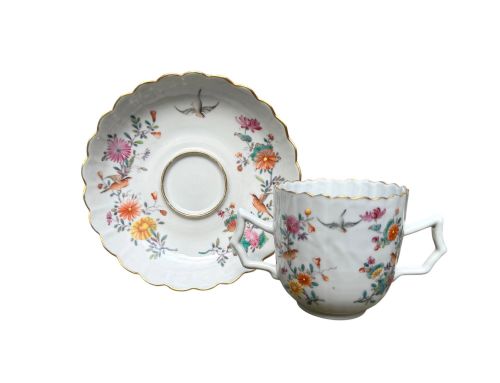
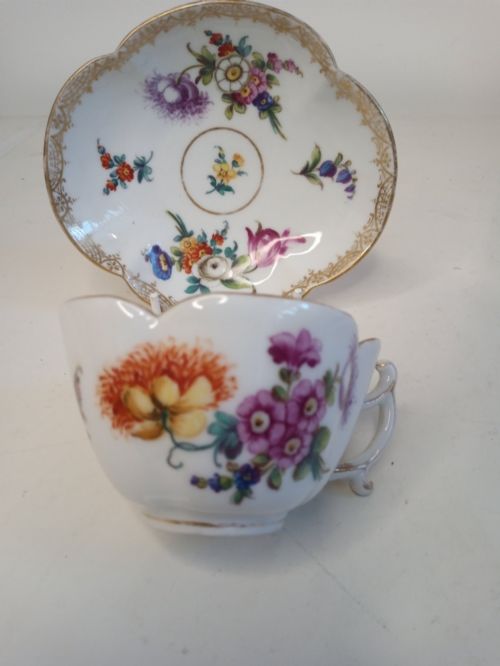
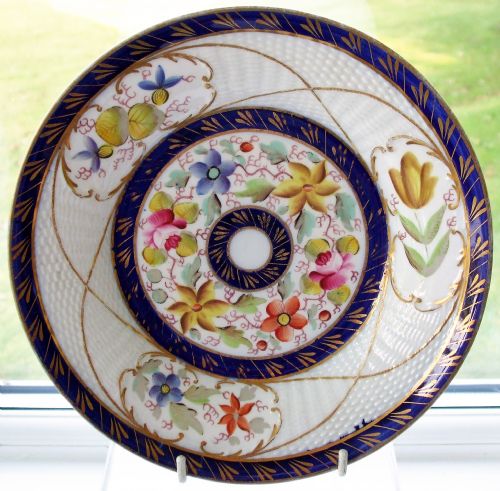


Floral Porcelain Saucer
A floral porcelain saucer brings hand-painted botanical charm to the table, uniting centuries of delicate ceramic artistry.
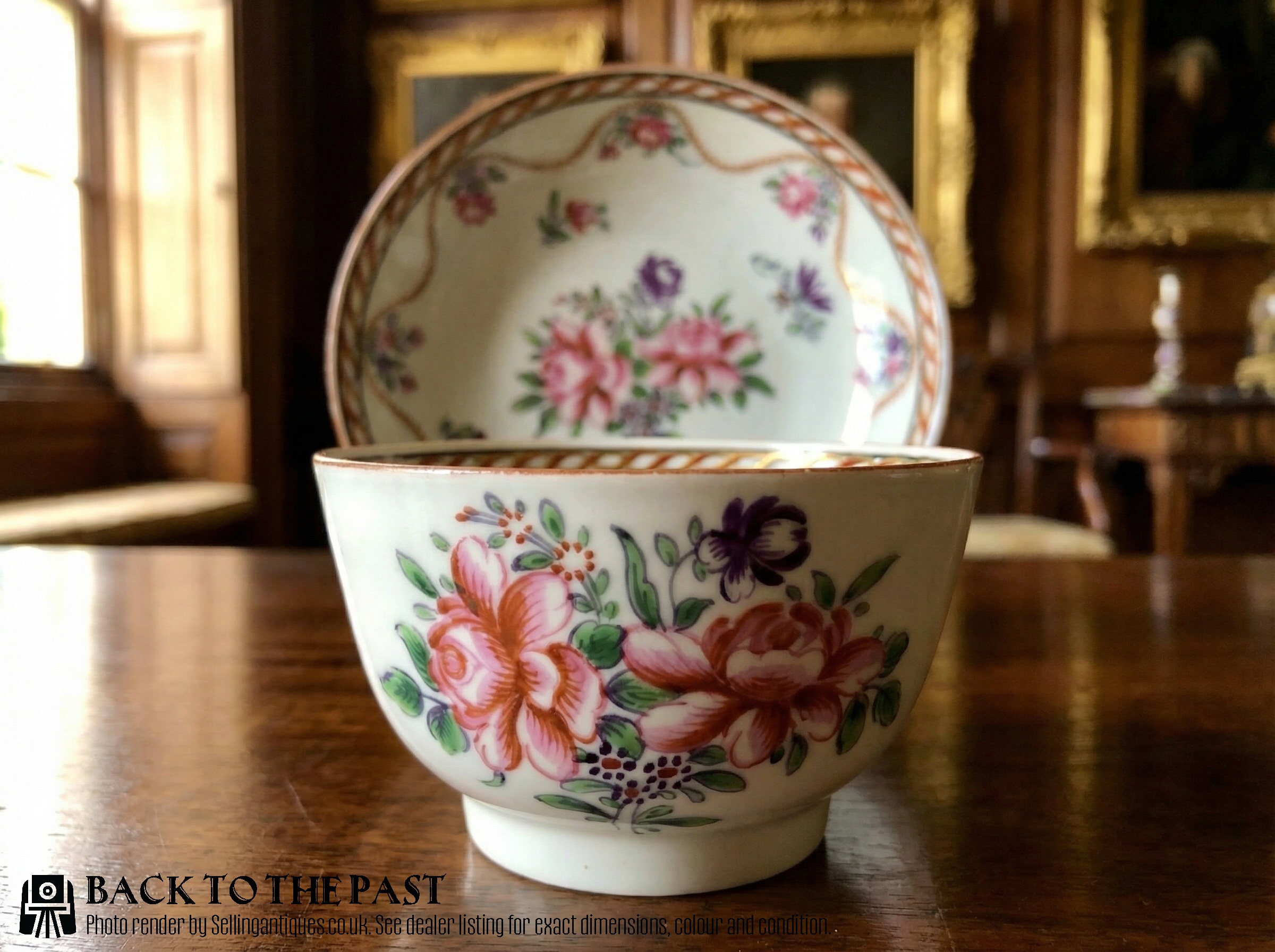
Floral Porcelain Saucer
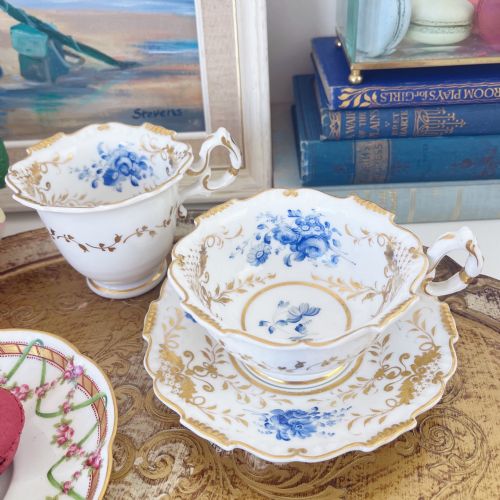
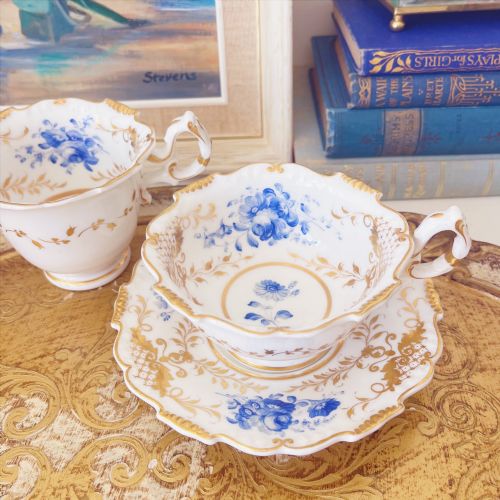
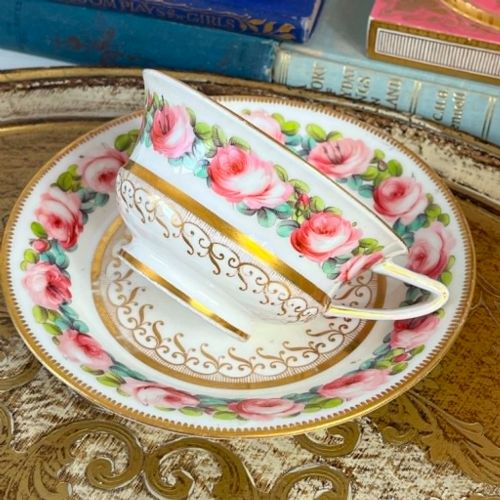
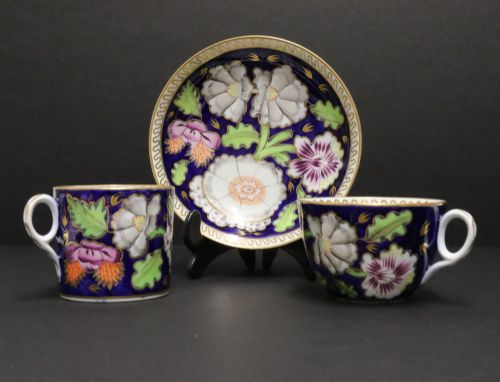
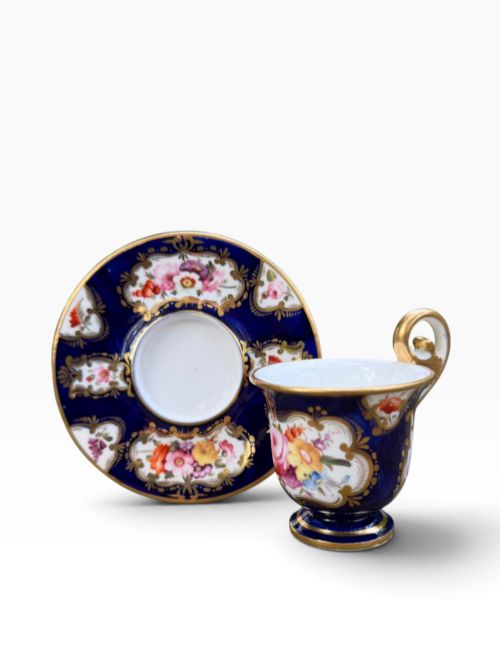
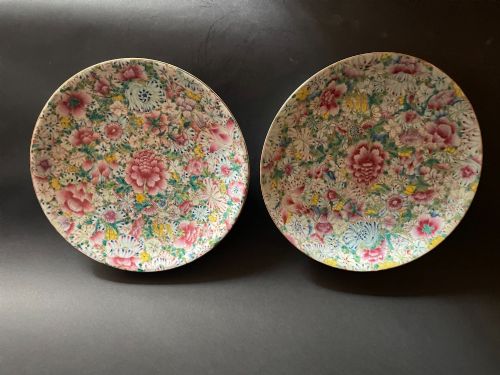
A floral porcelain saucer is a small, concave ceramic dish designed to hold a matching cup or stand independently as a cabinet piece. These items span periods from the eighteenth century through the 1930s, encompassing Georgian, Regency, Victorian, and later twentieth-century eras.
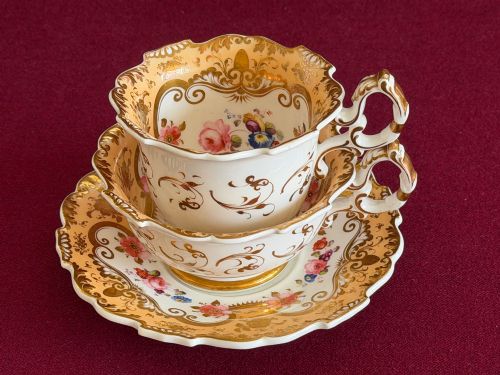
The specimens encountered here range from English factory wares by makers like Worcester, Coalport, and Davenport to continental pieces and Japanese exports. Most examples form part of trios, duos, or larger tea and coffee sets featuring painted or enamelled botanical motifs.
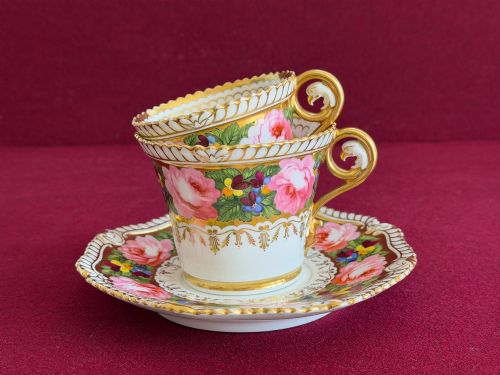
Buyers will frequently meet nineteenth-century English and continental wares displaying garden flowers, roses, or exotic blooms. These pieces serve as functional tea table accessories or decorative cabinet displays reflecting historical ceramic tastes.
Materials and construction methods
The foundation of these pieces relies upon hard-paste porcelain, bone china, or soft-paste bodies shaped by hand or moulded. Makers applied enamel colours and gold leaf accents by hand, often firing the pieces multiple times to set the polychrome details and gilding.
Surface decoration frequently combines hand-painted floral subjects with gilded borders, gold leaf highlights, or transfer-printed outlines filled with colour. Pigments such as famille rose enamels or cobalt blue provide the rich palettes seen across eighteenth and nineteenth-century examples.
Materials recorded across the inventory include bone china, enamel, gold leaf, and gilt finishes.
Assessing quality in ceramic design
Quality rests in the execution of the painting, the crispness of the porcelain body, and the preservation of the gilding. Superior examples display finely detailed botanical studies with subtle shading, whereas simpler pieces rely on standard factory patterns.
The refinement of the ceramic paste and the precision of the gold work distinguish standard production wares from high-status cabinet pieces. Greater artistic input from named decorators or prominent factories elevates the standing of individual items within the broader ceramic tradition.
H and R Daniel·Chamberlain Worcester·New Hall Porcelain·Coalport Porcelain·Royal Worcester·Gardner Moscow Factory·Meissen Porcelain·Wileman Foley Shelley·Hutschenreuter·Spode Copeland·KPM
The Floral Porcelain Saucer Glossary
- Porcelain
- A vitrified ceramic material made by heating raw materials, generally including clay in the form of kaolin, in a kiln to a high temperature. This process creates a hard, non-porous body that rings when struck.
- Bone china
- A type of soft-paste porcelain that is composed of bone ash, feldspathic material, and kaolin. Developed in England, it is known for high levels of whiteness and translucency.
- Enamel
- A decorative glass-like substance fused to the surface of porcelain through firing. Enamels provide the vibrant, durable colours found in floral motifs.
- Gilding
- The application of gold leaf or powdered gold to the surface of ceramics. This technique adds metallic lustre to rims, handles, and floral borders.
- Demitasse
- A small cup used to serve Turkish coffee or espresso, frequently found paired with a matching saucer in nineteenth and twentieth-century cabinet sets.
Floral Porcelain Saucer: Frequently Asked Questions
How do I date an antique saucer?
Dating relies upon examining factory marks, paste composition, and the painting style characteristic of periods like the Georgian era or the Regency years. Subtle clues in the shape and the type of gilding help narrow the decade of production.
Comparing the piece with documented factory patterns provides further chronological certainty. Structural traits unique to eighteenth-century bodies differ noticeably from twentieth-century manufacturing methods.
Can I use these saucers daily?
Most antique saucers require gentle handling due to their age and delicate enamel or gold leaf decoration. Hand washing in warm water preserves the fragile painted surfaces against the harsh environment of modern dishwashers.
Using them for special occasions or displaying them in cabinets ensures their longevity. Avoiding thermal shock prevents hairline cracks from forming in the historic ceramic body.
What does cabinet cup mean?
A cabinet cup refers to a decorative ceramic piece intended for display in a cabinet rather than for regular dining use. These items often feature elaborate hand-painted scenes or floral arrangements by skilled decorators.
They frequently include a matching saucer or stand and represent the higher artistic output of nineteenth-century factories. Their primary purpose was aesthetic appreciation by collectors.
How are Japanese imari pieces different?
Japanese imari wares utilise a distinct palette dominated by underglaze blue, iron red, and gold highlights over a white porcelain ground. This aesthetic contrasts with European floral styles that favour naturalistic botanical painting and soft pastel enamels.
Imari pieces imported during the nineteenth century reflect traditional Japanese design adapted for international markets. Their bold geometric and floral panels set them apart from contemporary English factory production.