






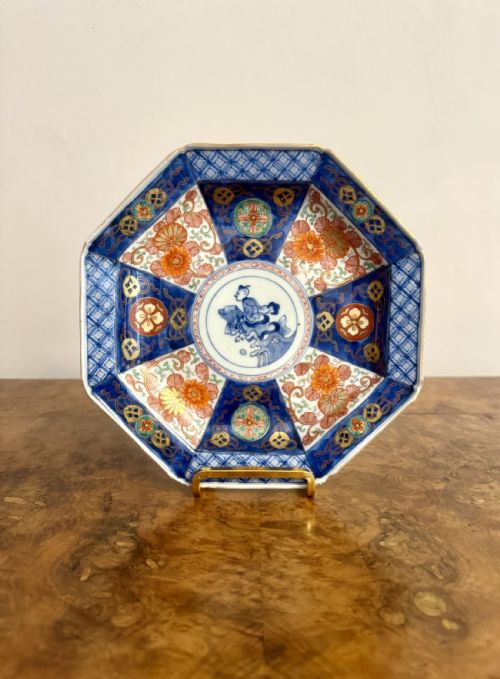
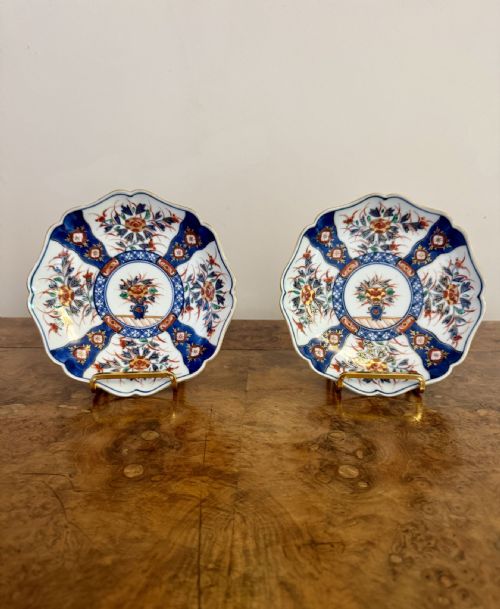
Floral Porcelain Display Plate
These floral porcelain display plates bring vibrant handpainted botanical motifs and rich Imari palettes from Japanese, Chinese, and European kilns straight to the wall or cabinet.
Floral Porcelain Display Plate
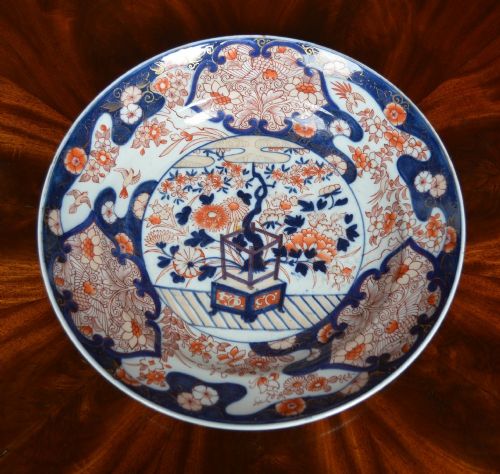
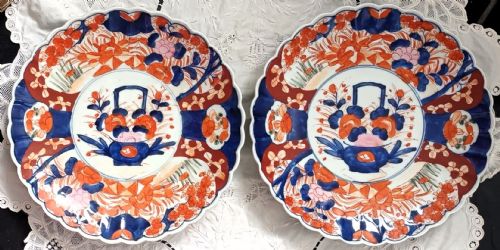
A floral porcelain display plate serves primarily as a decorative accent for walls, cabinets, and sideboards rather than everyday dining use. When exploring this selection, buyers encounter everything from large Imari chargers originating in Japan to delicate European cabinet plates from the eighteenth and nineteenth centuries.
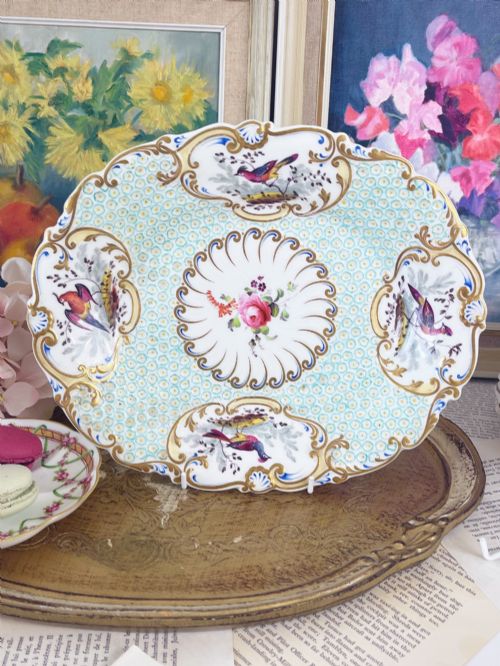
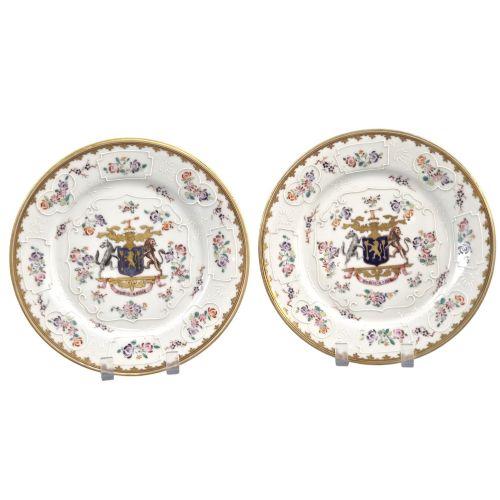
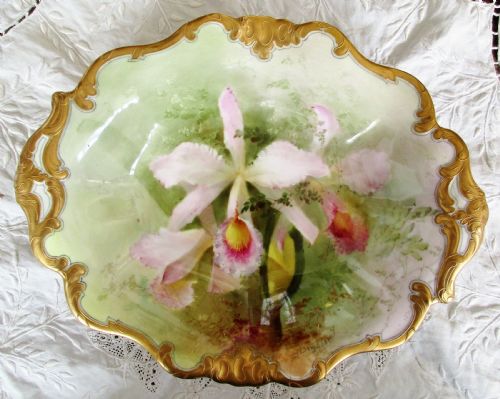
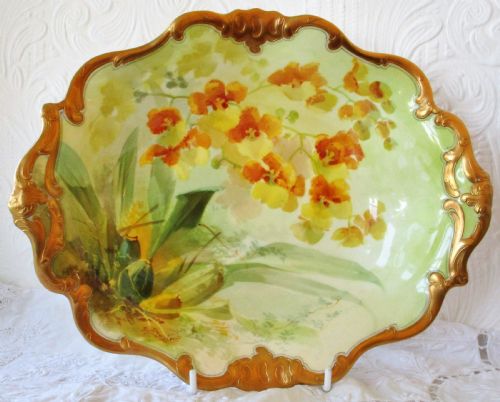
The inventory spans diverse periods, including eighteenth-century French and Chinese pieces alongside Victorian and Edwardian English works. Forms range from deep scalloped chargers and hexagonal dishes to traditional cabinet plates painted with birds, crests, and botanical studies.
How They Were Made
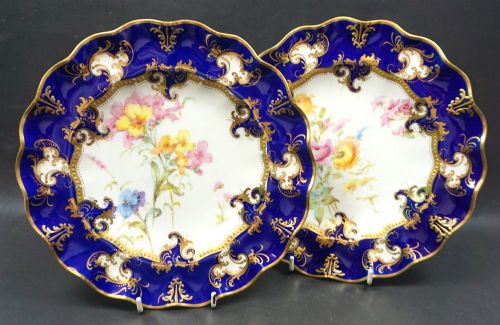
Potters utilised fine ceramic and porcelain bodies, often applying cobalt underglaze before handpainting intricate floral and avian motifs in enamel. Many examples incorporate rich gilding and gold leaf accents to highlight borders and central reserves.
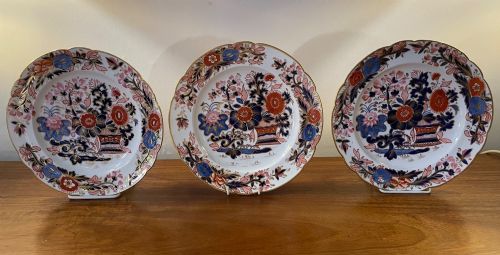
Techniques varied from traditional Japanese Arita kiln methods to European factory production in Paris, Staffordshire, and Derby. Firing processes required precise control to achieve the distinct ironstone, glaze, and Imari palette characteristics seen across these wares.
What Varies in Quality
The precision and detail of the handpainting set individual pieces apart, particularly in the rendering of botanical subjects and feathers. Crisp cobalt underglaze lines and carefully applied gold leaf indicate superior workshop execution.
The complexity of the ceramic form also influences distinction, with scalloped edges, hexagonal profiles, and large chargers demanding greater technical skill from the potter. Provenance linked to known makers or historic family crests adds further distinction to armorial porcelain.
H & R Daniel·Royal Crown Derby·Royal Doulton·John Ridgway·Furstenberg·Pucher Deroche·Sevres
The Floral Porcelain Display Plate Glossary
- Charger
- A large decorative plate, typically exceeding twelve inches in diameter, designed for display on a wall or sideboard rather than practical dining.
- Imari
- A style of Japanese porcelain featuring a distinctive palette of underglaze blue, iron red, and gold, widely replicated by European factories.
- Cabinet plate
- A fine ceramic dish created expressly for display within a glass-fronted cabinet rather than for table service.
- Cobalt underglaze
- A blue pigment applied to raw ceramic bodies before glazing and firing, capable of withstanding high temperatures without fading.
- Armorial porcelain
- Ceramics painted with specific family crests, coats of arms, or heraldic devices, often commissioned by prominent households.
Floral Porcelain Display Plate: Frequently Asked Questions
How do I hang a heavy charger safely?
Large chargers require robust, correctly sized brass spring hangers that distribute weight evenly across the rim. Ensure the wall fixing secures firmly into a stud or uses heavy-duty plaster anchors.
Avoid wire attachments glued to the footring, as old ceramic adhesives can fail over time. Check the tension of the springs periodically to maintain a secure grip.
Were these plates used for dining?
Most pieces categorized as cabinet plates or large chargers were intended strictly for visual display. Their delicate enamel work and extensive gold leaf would quickly wear away with regular use.
Some nineteenth-century dessert sets and ironstone services saw light table service, but surviving display examples usually owe their pristine condition to a history spent on walls or in cabinets.
How do I tell Japanese Imari from European copies?
Japanese Imari typically displays a slightly greyish or granular porcelain body beneath a translucent glaze with characteristic potting flaws. European factories often produced whiter, more uniform ceramic bodies when imitating these oriental styles.
Examining the footring and brushwork reveals differences in kiln furniture marks and the fluidity of the cobalt underglaze painting.