
Antique Floral China Plate
These pieces of antique floral china plate bring handpainted botanical artistry and rich heritage to any room, offering tangible links to historical kilns.
Antique Floral China Plate
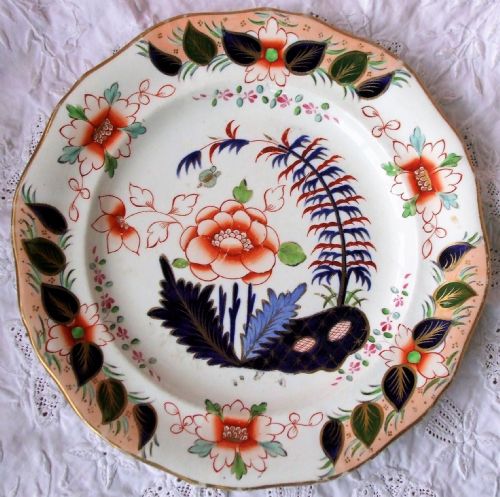
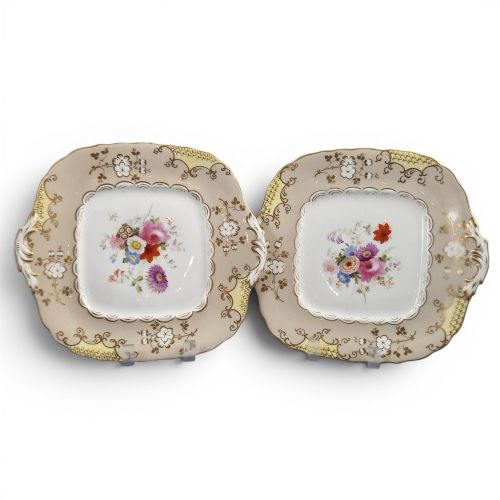
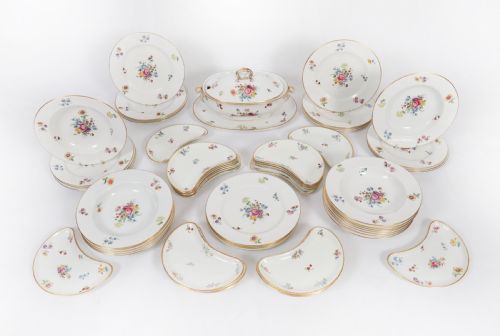
An antique floral china plate represents centuries of ceramic craftsmanship, focusing particularly on botanical handpainted motifs and transfer-printed patterns found across dessert services and cabinet dishes. Buyers searching for an antique floral china plate encounter diverse forms ranging from 18th-century soft paste porcelain to robust 19th-century ironstone and earthenware.
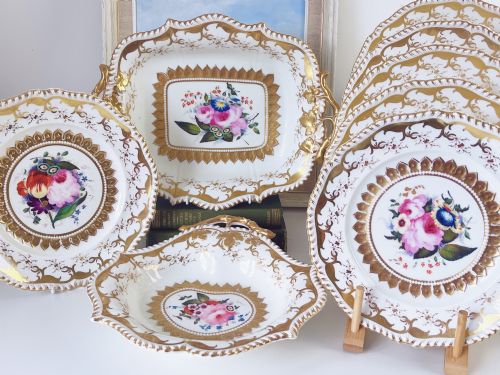
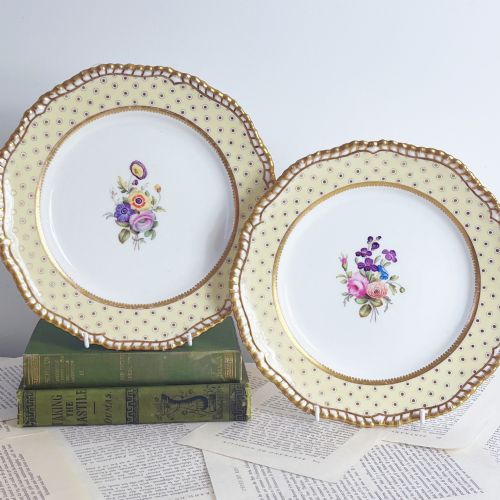
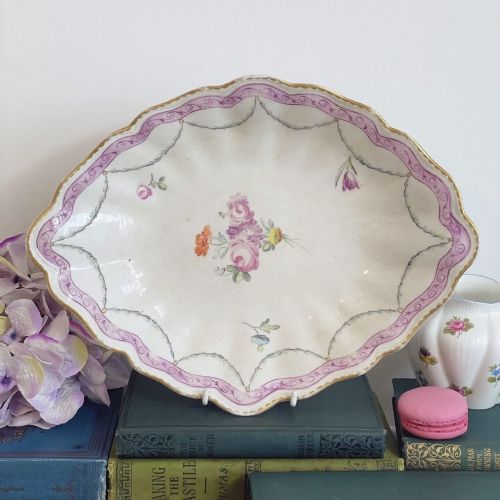
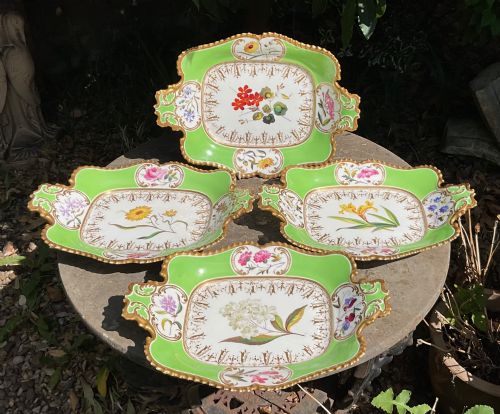
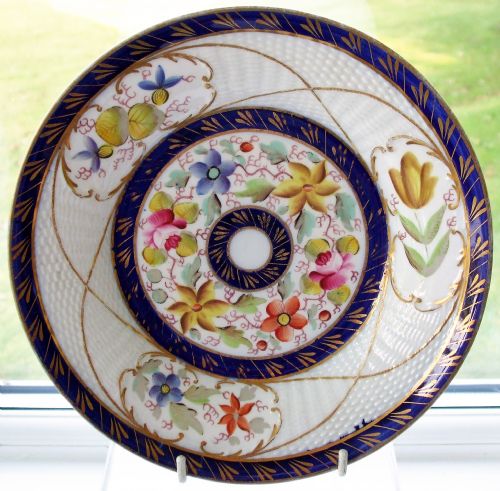
The selections available span multiple eras, including Georgian, Regency, and Victorian periods, alongside continental European outputs from factories such as Meissen and Sevres. Plates and serving dishes commonly feature polychrome floral sprays, feathered borders, and intricate gilding applied over ceramic bodies.
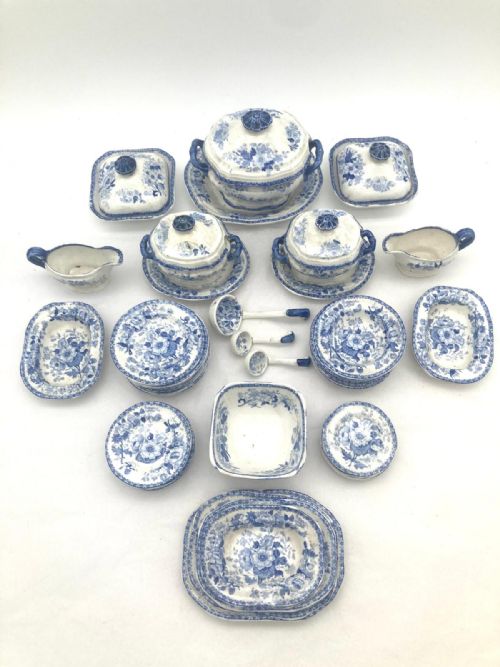
Many items survive as parts of larger dinner or dessert services, while others stand alone as decorative cabinet plates. These objects reflect the changing domestic dining habits and aesthetic preferences of past centuries, moving from formal dining rooms into curated display spaces.
How they were made
Potters utilised hard paste porcelain, soft paste porcelain, ironstone, and creamware as the foundational ceramic bodies for these plates. These materials were shaped, fired in kilns, and coated with glossy glazes to provide a smooth surface for subsequent decoration.
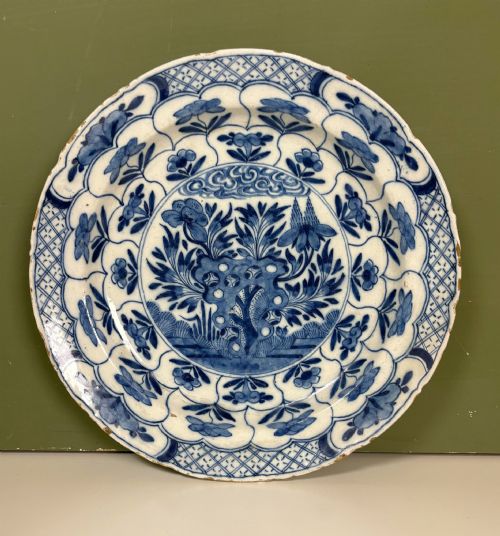
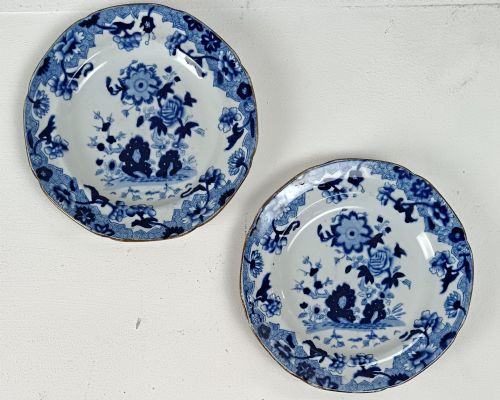
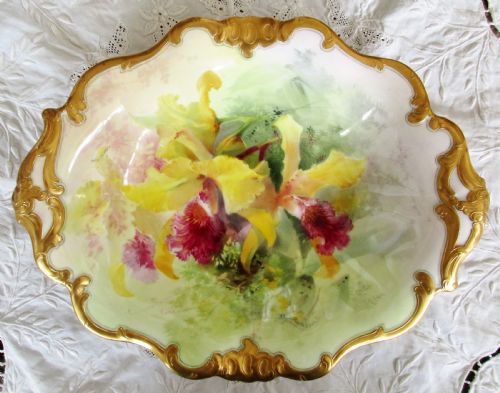
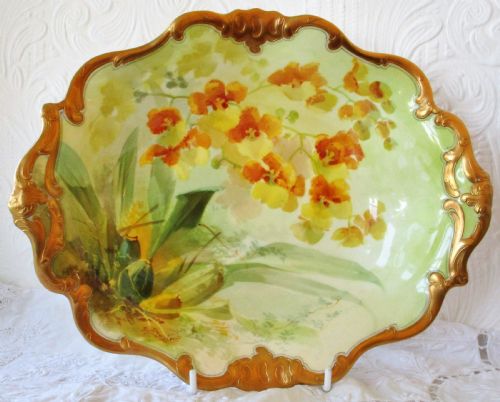
Decoration relied heavily on meticulous handpainted enamel work or blue and white transfer printing, often enhanced with gold leaf and gilding highlights. Firing techniques required precise temperature control to fuse polychrome pigments and metallic accents securely onto the glazed ceramic surface.
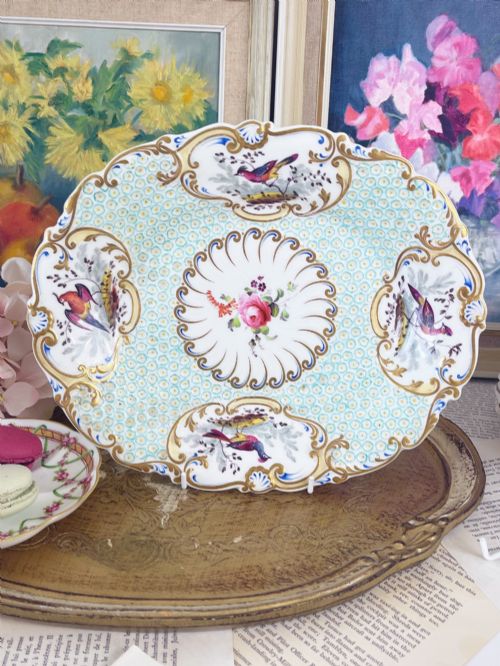
Several plates capture resilient garden flowers and exotic birds, preserving fleeting botanical beauty permanently in glaze.
What varies in quality
The nuance of the handpainted botanical brushwork separates standard production items from exceptional studio pieces, with finer examples displaying delicate shading and botanical accuracy. The precision of the gilding and the crispness of moulded borders, such as basketweave patterns or scalloped edges, also indicate higher manufacturing standards.
The sophistication of the ceramic body itself, whether translucent porcelain or dense ironstone, influences the overall desirability and preservation of the item. Additionally, provenance attributed to noted factories or identified artists elevates the standing of an individual piece within a collection.
Grainger Lee And Co·Spode·H And R Daniel·Royal Crown Derby·Chamberlains Worcester·Minton·Royal Doulton·John Davenport·Coalport·New Hall·Copeland·Meissen·Wedgwood·Sevres·Chantilly
The Antique Floral China Plate Glossary
- Cabinet plate
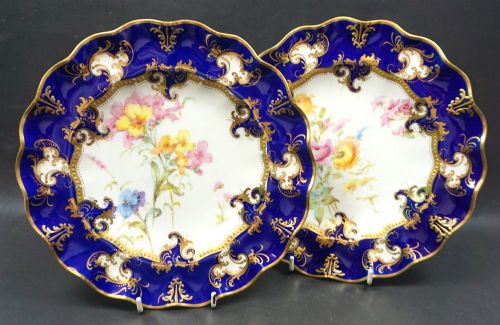
- A decorative ceramic plate intended primarily for display in a cabinet rather than for functional dining use. These pieces often feature elaborate painted scenes or rich gilding.
- Imari palette
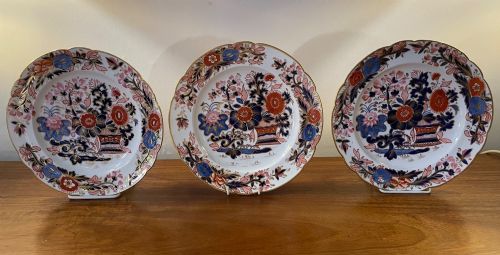
- A decorative style inspired by Japanese export porcelain, characteristically utilising cobalt blue, iron red, and gold. This palette was frequently adopted by English and continental factories.
- Soft paste porcelain
- An early ceramic composition fired at lower temperatures than hard paste porcelain, resulting in a slightly softer body and a warm glaze. It is commonly found in 18th-century European wares.
- Transfer printing
- A mechanical method of applying complex patterns to ceramics by engraving a design on a copper plate, printing it on paper, and transferring it to the biscuit or glazed surface. This technique enabled rapid production of detailed floral motifs.
- Polychrome
- Decoration employing multiple distinct colours, frequently seen in handpainted floral sprays across 18th and 19th-century tableware. It allowed artists to render realistic botanical specimens.
Antique Floral China Plate: Frequently Asked Questions
How do I date an antique floral china plate?
Dating relies heavily on factory backstamps, ceramic body composition, and stylistic markers characteristic of specific decades.
Changes in glaze formulas and painting techniques also help narrow down the period of manufacture.
Were these plates meant for daily dining?
Many items, such as robust ironstone plates and dinner service components, were designed for active household use.
Delicate cabinet plates and soft paste porcelain dishes, however, served decorative roles or specialised dessert functions.
How should I clean and care for antique plates?
Gentle hand washing with mild soap and lukewarm water preserves the fragile glazes and delicate gold leaf.
Harsh detergents, soaking, and mechanical dishwashers should be avoided to protect handpainted enamel decorations.
What is the difference between porcelain and ironstone?
Porcelain is typically vitrified, translucent, and fine-grained, developed for high-status dining and display.
Ironstone is a heavy, durable earthenware developed to withstand rigorous everyday use while mimicking porcelain.