

Floral Painted Pottery Urns
These floral painted pottery urns span centuries of ceramic artistry, offering striking hand-painted botanical motifs that elevate any interior display.
Floral Painted Pottery Urns
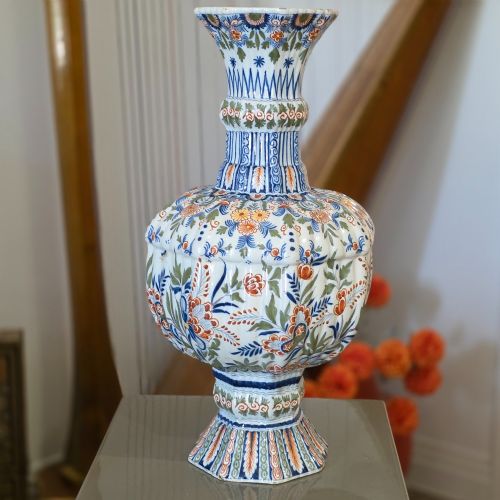
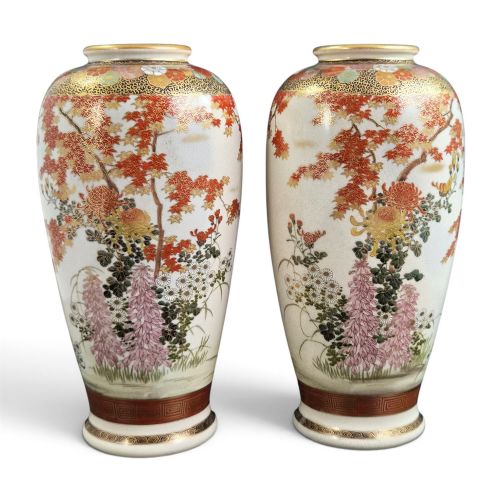
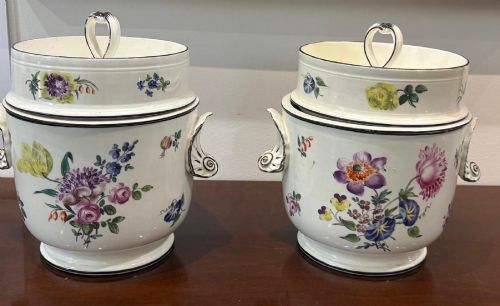
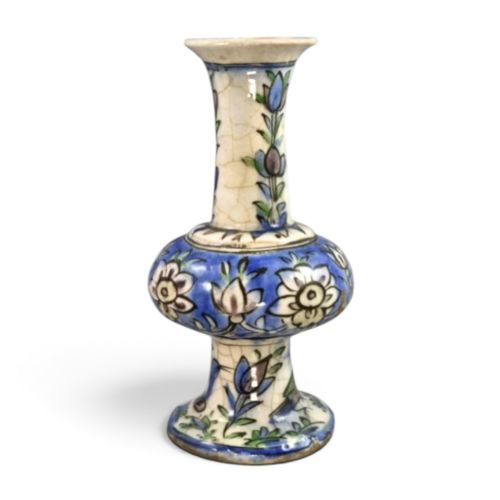
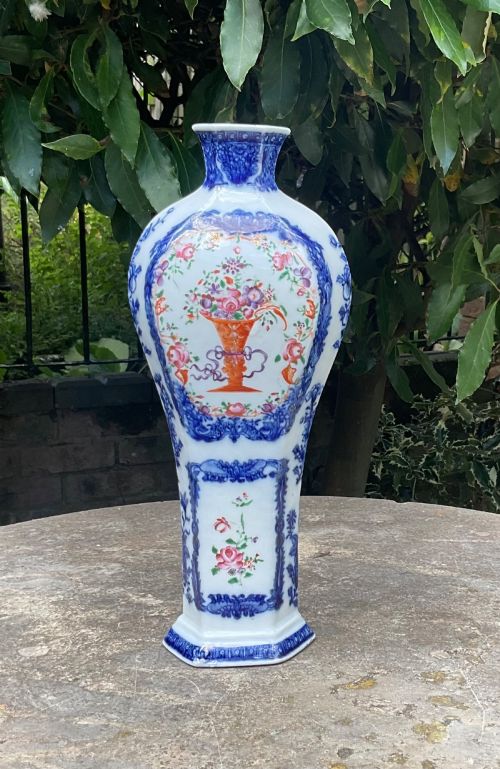
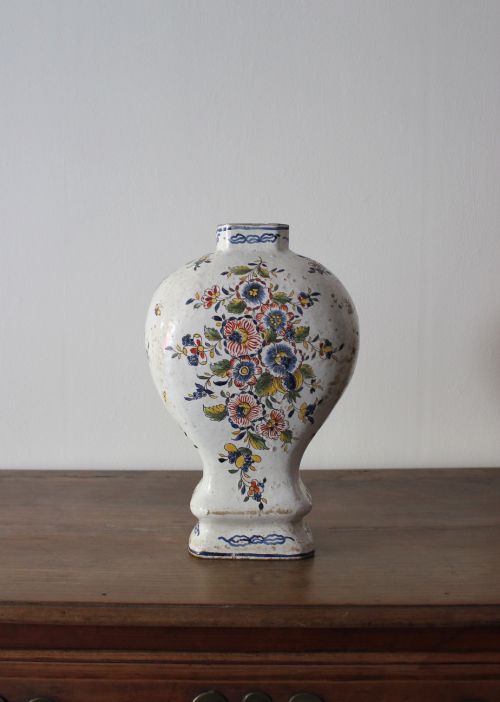
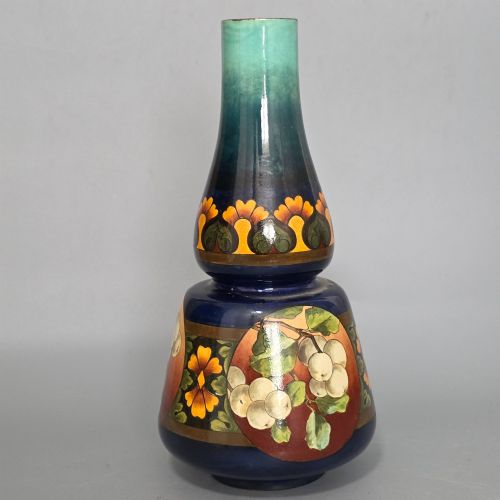
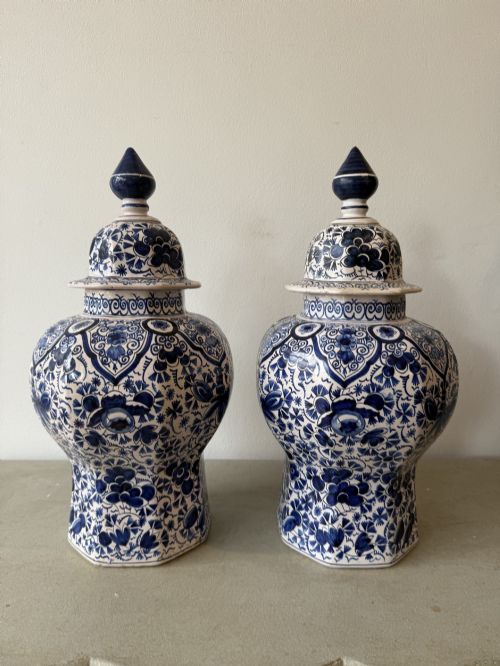
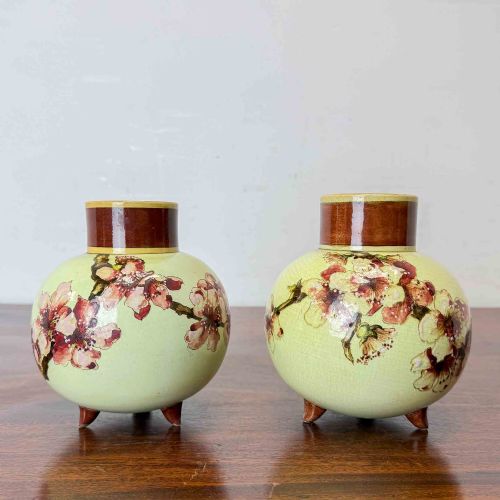
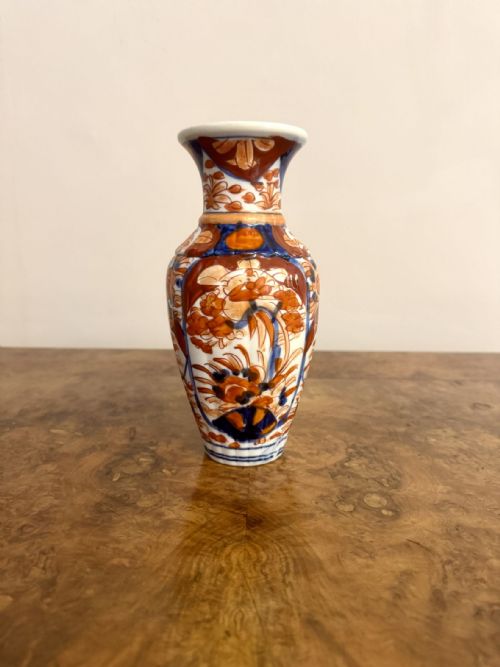
When you search for floral painted pottery urns, you encounter a diverse range of ceramic vessels designed for display, spanning the eighteenth, nineteenth, and early twentieth centuries. These pieces encompass everything from English creamware ice pails and Staffordshire porcelaneous vessels to Japanese Satsuma and Imari wares, alongside Dutch Delft and Doulton Lambeth faience.
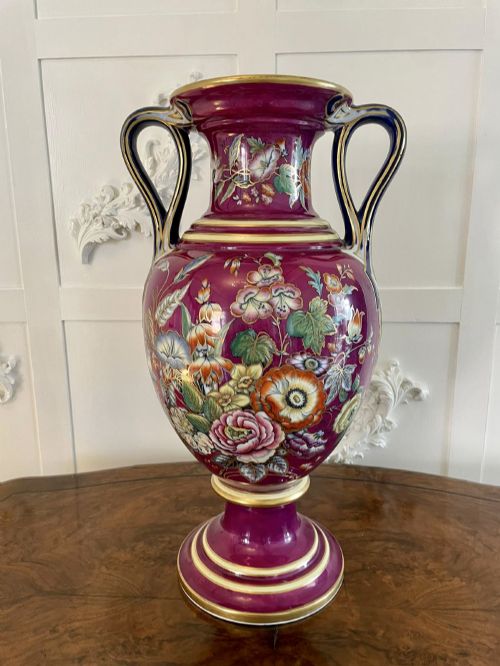
The selections on this page lean heavily toward nineteenth-century production, featuring prominent representation from English potteries like Doulton alongside Japanese export wares from the Meiji and Taisho periods. Forms range from monumental lidded vases and baluster shapes to twin-handled urns and bulbous vessels, each showcasing distinct botanical ornamentation.
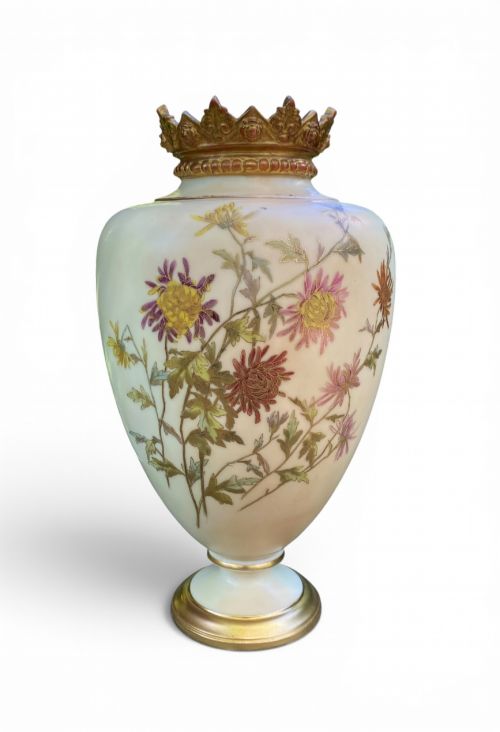
Geographic origins vary significantly, taking in European earthenware and porcelain alongside Persian glazed ceramics and East Asian stoneware. Collectors encounter diverse stylistic movements, including Art Nouveau, the Aesthetic Movement, and traditional Chinoiserie, all united by painted floral themes.
Materials and production techniques
Makers utilised various ceramic bodies including earthenware, stoneware, creamware, and fine porcelain, shaping them either by hand on the wheel or through mould-casting. These foundational bodies received specialised preparation to ensure structural stability before firing in kilns.
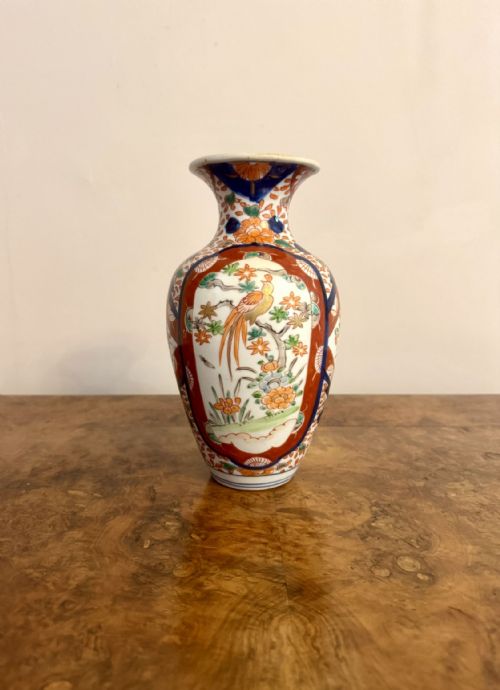
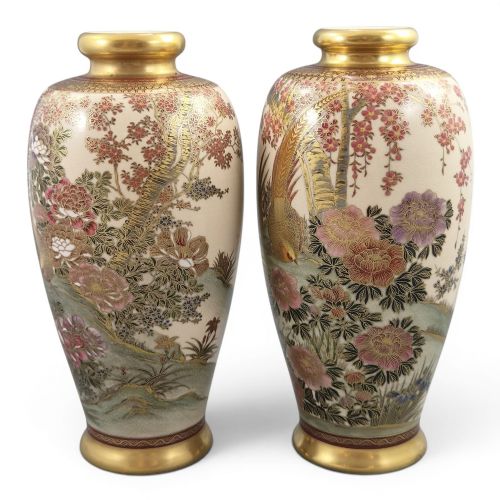
Surface decoration relies heavily on polychrome and blue-and-white enamels, glazes, and occasionally gold leaf or gilt highlights applied over or under the glaze. Hand-painting techniques range from delicate brushwork on faience to intricate layered designs on Japanese Satsuma and Imari wares.
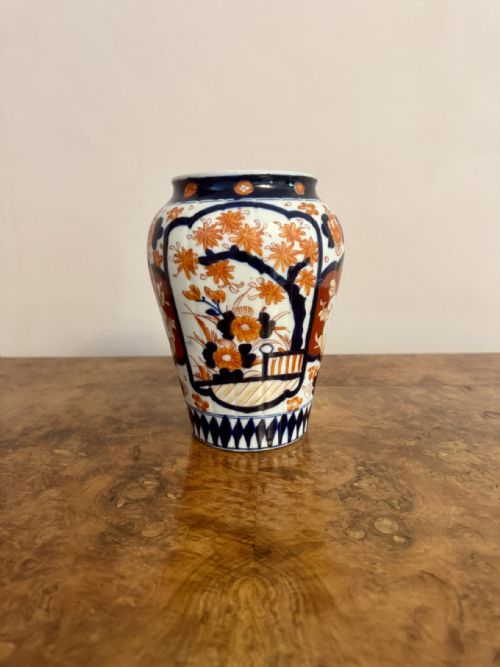
Several vases sport unexpected geometric inset panels that stubbornly interrupt otherwise serene hand-painted floral gardens.
Judging quality in ceramic urns
Quality rests primarily on the precision and artistry of the hand-painted floral decoration, distinguishing hurried factory output from masterwork brushwork. Finer pieces display confident, detailed botanical rendering with careful shading and harmonious colour palettes.
The sophistication of the ceramic body and glaze application also dictates standing, with superior items exhibiting smooth finishes, well-defined moulded details, and stable, even firing without distortion. Signed works by notable ceramic artists or established potteries command greater regard among collectors.
Alice Euphemia Thatcher·Eliza Simmance·Ernst Wahliss·Hakusan·Kinkozan·Manpei·Miles Mason·Poole Pottery·Royal Doulton·Royal Worcester·TG Green·Tunnicliffe·Wileman
The Floral Painted Pottery Urns Glossary
- Faience
- Earthenware decorated with opaque coloured glazes, often featuring hand-painted botanical motifs. This technique produces a smooth, tin-glazed surface common in European decorative vessels.
- Imari
- A style of Japanese export porcelain characterised by a palette of underglaze blue, iron red, and gold. These pieces frequently incorporate dense floral and geometric panel designs.
- Satsuma
- Japanese earthenware pottery with a characteristic ivory-coloured, crackle-glazed surface. Decoration typically involves elaborate polychrome enamel and gilt floral compositions.
- Porcelaneous
- A ceramic material sharing qualities of both pottery and true porcelain. It offers increased density and whiteness compared to standard earthenware.
Floral Painted Pottery Urns: Frequently Asked Questions
What periods do these urns come from?
The pieces originate primarily across the eighteenth, nineteenth, and early twentieth centuries, reflecting diverse manufacturing eras from Georgian creamware to Art Nouveau ceramics.
Production dates span specific stylistic movements such as the Meiji period in Japan, Victorian England, and the Edwardian era.
How were these decorative urns originally used?
These vessels served principally as ornamental display items within domestic interiors, intended to showcase wealth, taste, and refinement.
Certain forms, such as creamware ice pails, fulfilled specific dining functions before transitioning into purely decorative display pieces over time.
How do I distinguish Satsuma from Imari ware?
Satsuma wares are defined by a warm, ivory-coloured earthenware body with a fine crackle glaze, typically painted with detailed polychrome enamels and gold.
Imari pieces utilise a true porcelain or dense ceramic body decorated with a distinct palette dominated by cobalt blue, iron red, and gilding.
Where were Doulton Lambeth faience vases made?
Doulton Lambeth pieces were produced in London, England, where the pottery became renowned for its artistic studio ceramics during the late nineteenth century.
Many of these vessels bear the individual signatures or monograms of the talented female artists who painted them by hand.