


Floral Painted Columns
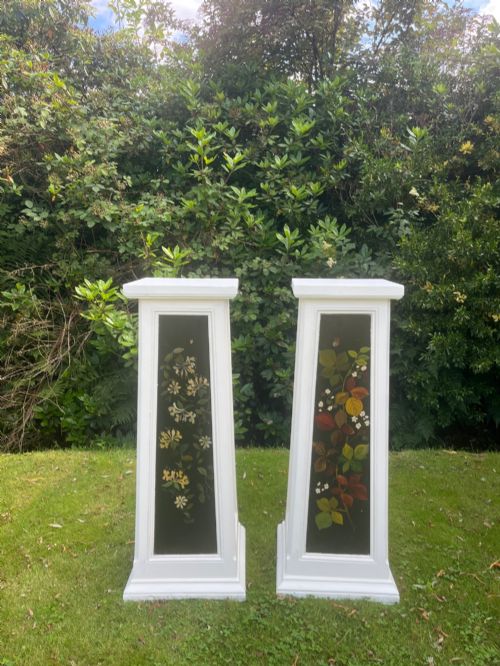
These floral painted columns combine structural display pieces and lighting with botanical decoration, offering a decorative addition to traditional interiors.
Floral Painted Columns
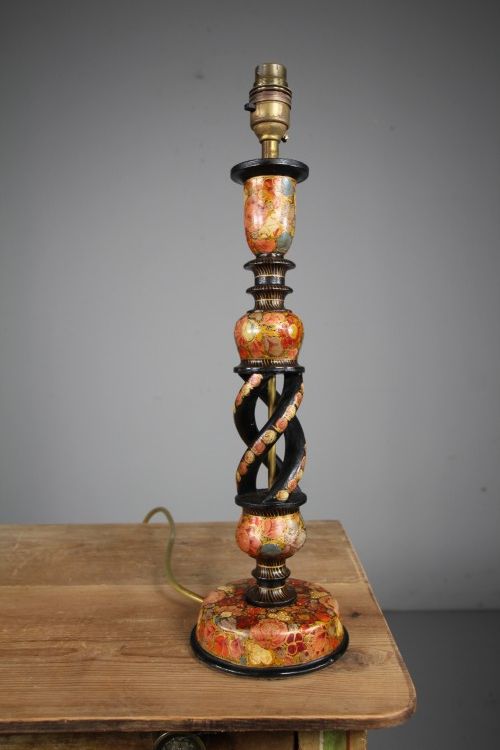
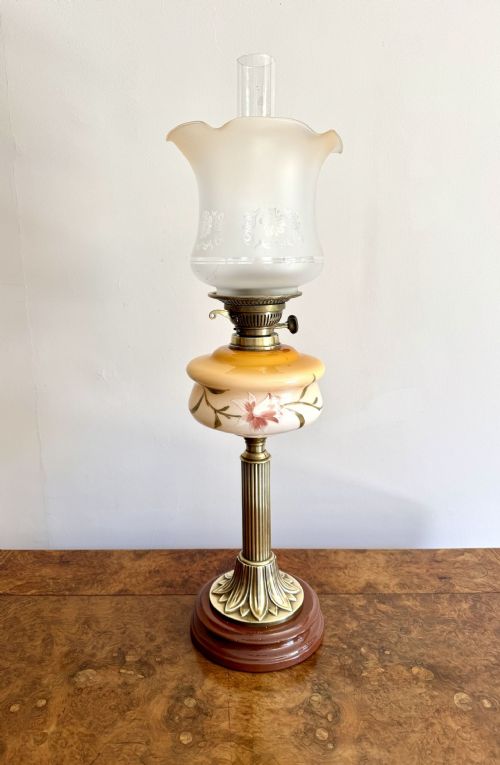
When you search for floral painted columns, you encounter a varied group of objects including pedestals, plant stands, table lamps, and oil lamps dating from the Victorian, Edwardian, and later periods. These pieces serve functional and display roles, utilising painted surfaces to introduce botanical motifs into interior spaces.
The selection ranges from tall lacquer torcheres and majolica jardiniere stands to brass oil lamps and carved bust stands. Victorian and Edwardian examples predominate, often employing traditional forms such as the Queen Anne revival black lacquer torchere or ceramic pedestals.
Many of these items integrate painted decoration directly onto the body of the column or lamp bowl, spanning materials from earthenware and glass to wood and papier-mache. They function as focal points in a room, supporting plants, busts, or providing illumination.
How they were made
Makers utilised a combination of wood, brass, glass, ceramic, and papier-mache, shaping them into turned columns, lamp bodies, and pedestals. Painted decoration was applied directly to wood, lacquer, or earthenware surfaces, frequently incorporating floral subjects.
Techniques varied by object type, from the majolica glazing on ceramic jardiniere stands to the hand-painted cream finishes on Kashmiri lamps and black lacquer decoration on torcheres. Brass oil lamps incorporated cast metal components paired with painted glass bowls and shades.
What varies in quality
The standard of a piece rests upon the execution of the hand-painted botanical details and the integrity of the underlying material, whether wood, ceramic, or brass. Finer examples display precise brushwork on the floral motifs and superior turning on the columns or stands.
Materials dictate much of the character, with majolica earthenware, cranberry glass, and detailed lacquer work representing more elaborate production methods. The harmony between the painted surface and the structural form separates standard items from exceptional ones.
The Floral Painted Columns Glossary
- Torchere
- A tall ornamental stand designed to hold a light or a plant. These slender columns often feature decorative painted surfaces or lacquer work.
- Majolica
- A type of colourful glazed earthenware popular during the Victorian and Edwardian eras. It frequently forms the body of jardiniere stands and pedestals.
- Jardiniere
- An ornamental pot or stand for plants and flowers. They are often paired with matching pedestals to elevate greenery in a room.
- Lacquer
- A durable finish applied in thin coats to wood or papier-mache objects. Black lacquer decorated versions were popular during revival periods.
- Cranberry glass
- A rich pink or red glass created by adding gold chloride to the molten mixture. It appears frequently in the shades of period oil lamps.
Floral Painted Columns: Frequently Asked Questions
What periods do these pieces date from?
The pieces span the late nineteenth century through to the early twentieth century, encompassing Victorian, Edwardian, and later revival styles.
Dates recorded across the items range from the 1870s up to the 1930s, reflecting changing domestic tastes in lighting and display furniture.
How were oil lamps utilised?
Oil lamps served as primary sources of domestic illumination before widespread electricity. They were placed on tables or pedestals to light living spaces.
Many surviving examples combine brass reservoirs with painted glass bowls and decorative shades, blending utility with ornamental design.
Where should I place a torchere?
Torcheres and plant stands function well in corners or empty alcoves to add height and vertical interest to a room. They support plants, busts, or decorative objects.
Because they feature painted columns or lacquer decoration, placing them away from direct sunlight helps preserve the surface finishes.
What materials are common?
The listings incorporate wood, brass, glass, ceramic, earthenware, lacquer, and papier-mache. Each material dictates the specific function and appearance of the object.
For instance, majolica ceramic appears in jardiniere stands, whilst brass and glass define the period oil lamps.