

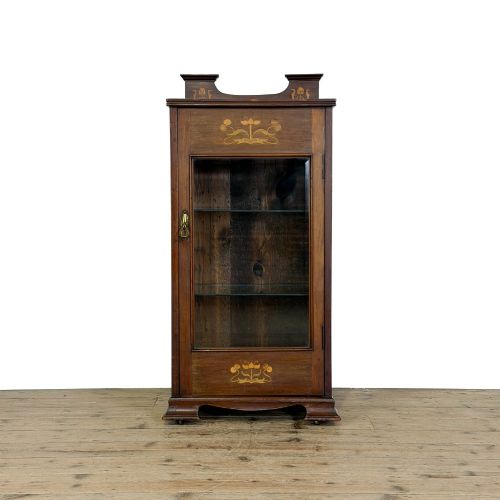
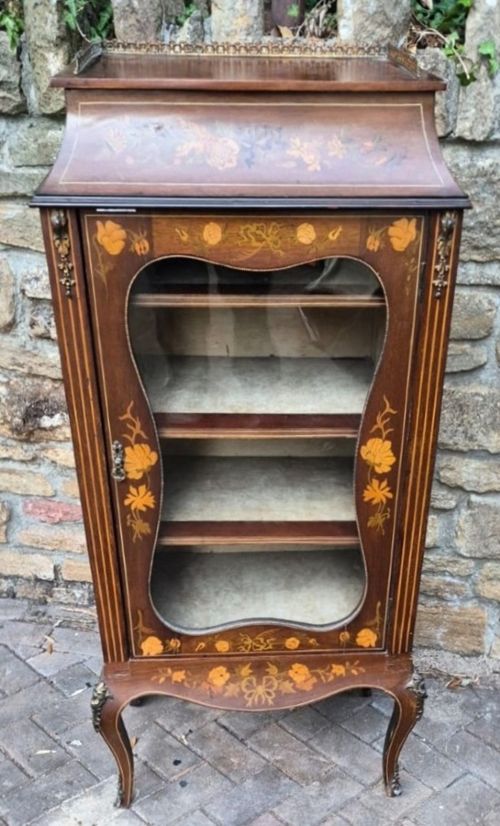
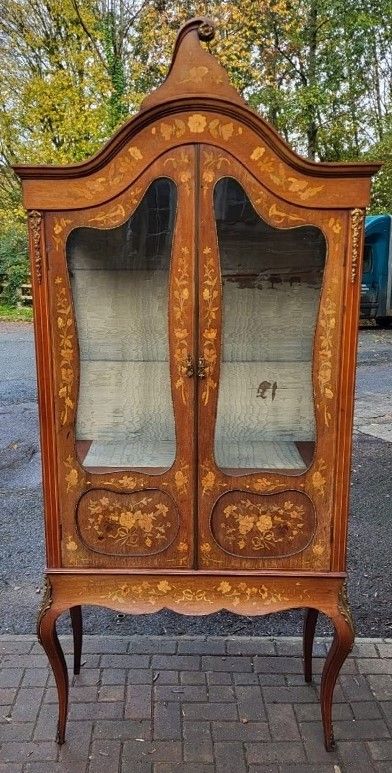
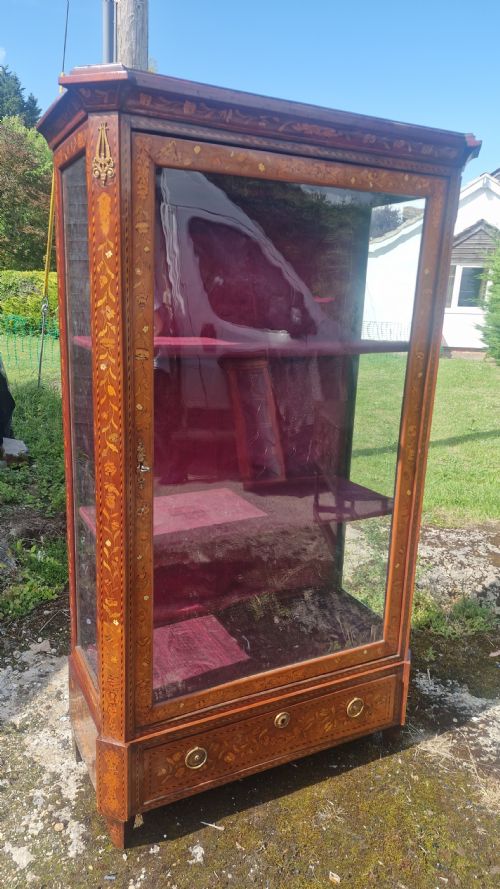


Floral Marquetry Vitrine
A floral marquetry vitrine combines delicate botanical wood inlay with glazed display space, offering a refined stage for precious collections.
Floral Marquetry Vitrine
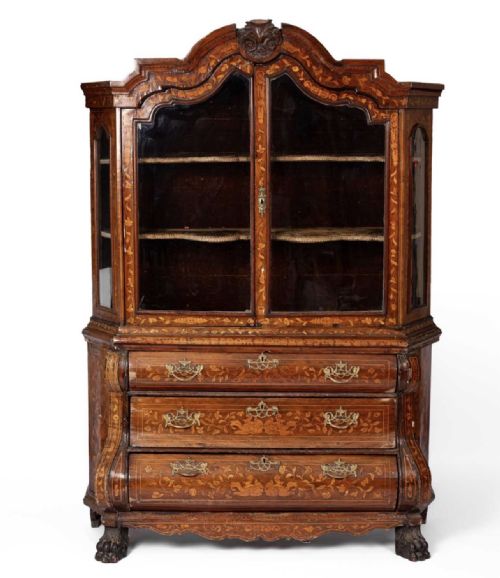
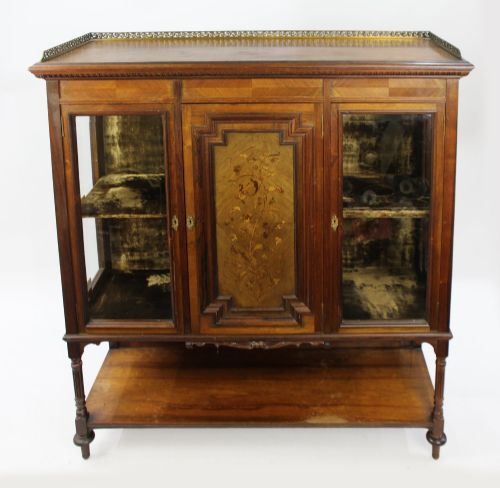
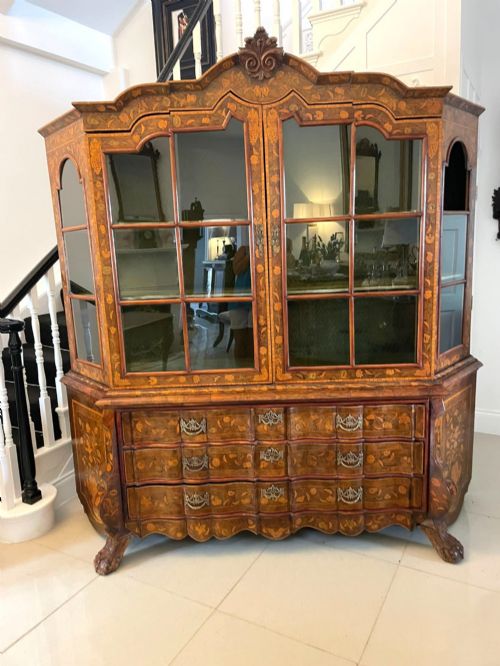
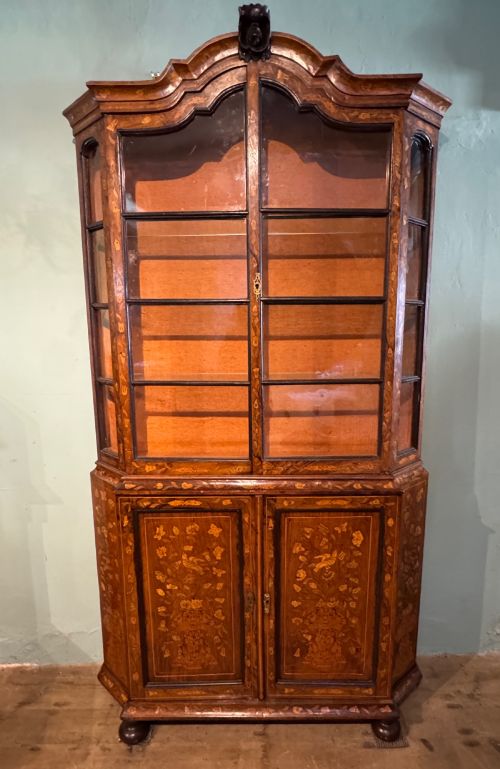
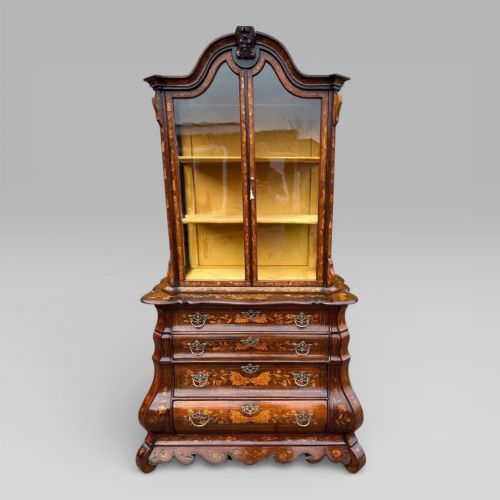
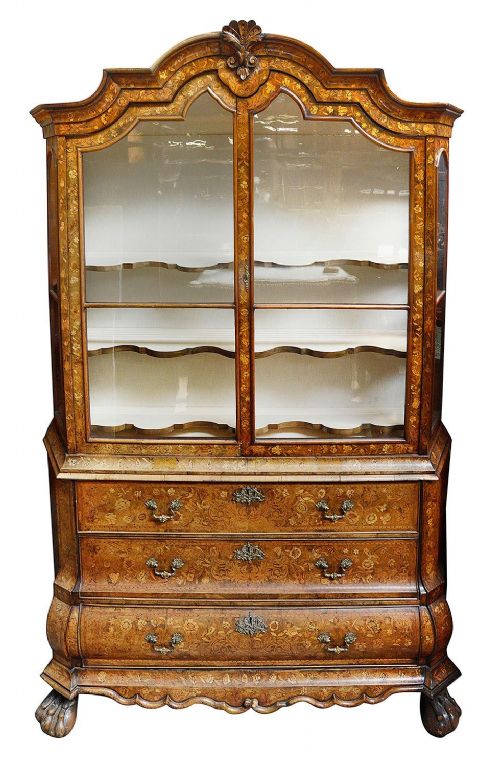
A floral marquetry vitrine is a glazed display cabinet adorned with intricate wood inlay depicting botanical patterns. These pieces appear across several distinct periods, most notably the eighteenth century, the Victorian era, and the Edwardian epoch.
The form ranges widely in shape and scale. Buyers encounter tall pier cabinets, wall cabinets, corner cupboards, and substantial bombé cabinets on chests.
Origin and regional style heavily influence the character of these pieces. Dutch examples frequently display exuberant floral motifs on walnut or fruitwood, whilst British iterations often utilise mahogany with restrained inlay.
How they were made
Cabinetmakers constructed the carcase using timbers such as walnut and mahogany, occasionally applying burr walnut veneers for richer figure. Glass panels were fitted to doors and sides to showcase the contents within.
Marquetry technique involved cutting finely tinted pieces of fruitwood, satinwood, and other contrasting timbers to form floral designs. These bespoke veneers were then painstakingly glued onto the cabinet surface.
Metal mounts in brass or ormolu frequently reinforced corners, framing, and feet. These hardware elements provided both structural protection and decorative contrast to the timber and inlay.
Floral Marquetry Vitrine Retail Price Guide 2026
Typical asking prices for floral marquetry vitrine among the pieces listed under this phrase on Sellingantiques today, from the lower quarter to the upper quarter. They describe what is for sale here now, not the wider market.
Cabinet forms include wall-hanging units, corner cupboards, bombé chests, and tall pier cabinets alongside standard display cases.
What varies in quality
Quality rests significantly upon the precision and complexity of the marquetry. Superior examples feature crisp, lifelike botanical shading created by scorching wood veneers in hot sand.
The choice and figuring of the primary timber dictate the overall stature of the piece. Well-selected burr walnut or fiddle-back mahogany elevates the visual depth far beyond plain ground timbers.
Structural harmony and proportion separate standard production from exceptional cabinet work. Bombe shaping, serpentine fronts, and well-integrated ormolu mounts demand advanced carpentry skill.
Edwards and Roberts
The Floral Marquetry Vitrine Glossary
- Marquetry
- A decorative technique applying fitted pieces of wood veneer to a structure to form intricate pictures or patterns. It differs from inlay by covering the entire surface rather than resting within recessed channels.
- Vitrine
- A glass-fronted cabinet designed for displaying porcelain, curiosities, or books. The term originates from the French word for glass.
- Bombé
- A swelling, convex furniture profile that curves outward on the front and sides. This exuberant shape is frequently found on Dutch eighteenth-century cabinets.
- Pier cabinet
- A tall, narrow cabinet designed to stand against the wall space between windows. Victorian examples in walnut are particularly common.
- Ormolu
- Gilded bronze used for decorative mounts and furniture embellishments. It adds a bright metallic accent to dark timber surfaces.
Floral Marquetry Vitrine: Frequently Asked Questions
What is a floral marquetry vitrine?
A floral marquetry vitrine is a display cabinet featuring glazed doors or panels and decorative wood inlay depicting flowers and foliage. These cabinets were designed to protect and exhibit valued possessions.
They combine practical storage with elaborate surface decoration, utilising contrasting timbers like fruitwood and satinwood on walnut or mahogany carcases.
How do I tell an 18th-century piece from a Victorian one?
Eighteenth-century examples often feature Dutch baroque styling, bombé fronts, and rich walnut surfaces with highly pictorial floral marquetry. The construction methods and timber ageing reflect this earlier period of craftsmanship.
Victorian and Edwardian versions tend to use different proportions, frequently appearing as pier cabinets or lighter mahogany display furniture. Comparing the secondary timbers and the style of the glass framing helps clarify the date.
How were these cabinets used?
These cabinets served as sophisticated storage furniture in formal reception rooms and drawing rooms. Owners used them to display fine porcelain, silver, and treasured curiosities.
The glass doors kept dust away from delicate collections while allowing guests to admire the contents and the intricate woodwork simultaneously.
How do I care for a marquetry cabinet?
Position the cabinet away from direct sunlight and heat sources to prevent the delicate wood veneers from drying out or fading. Maintaining stable room humidity protects the glued inlay from lifting.
Dust the surfaces gently with a dry, soft cloth and avoid using harsh chemical polishes that can damage the antique finish.