



Floral Marquetry Credenza
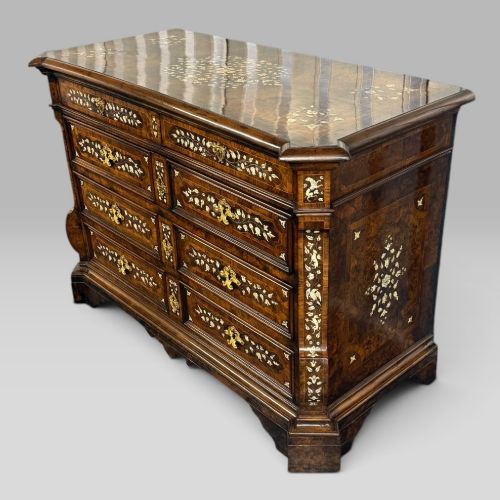
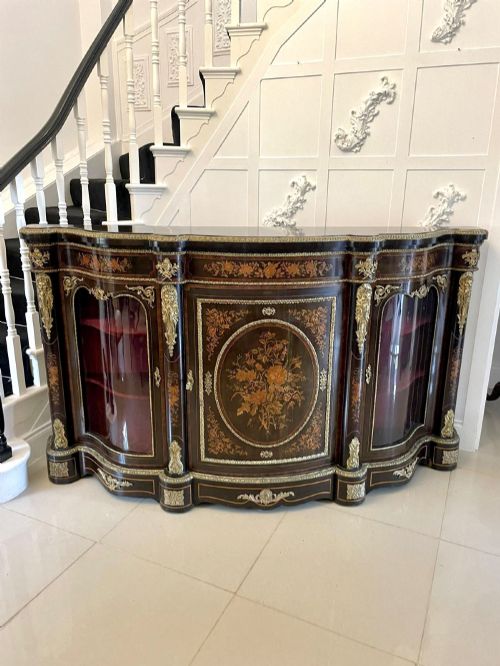
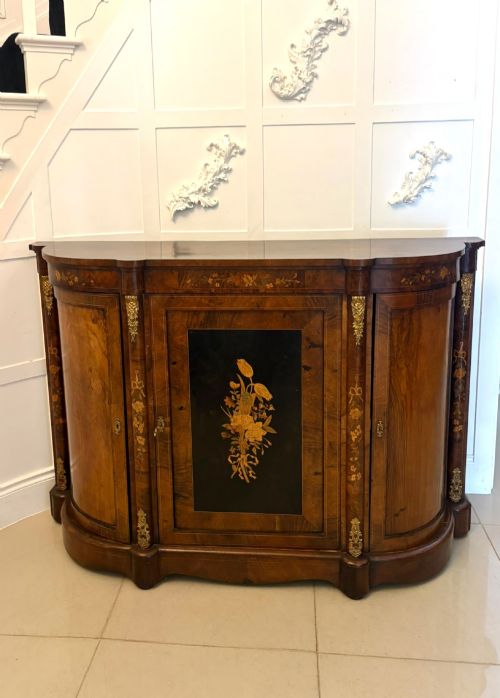
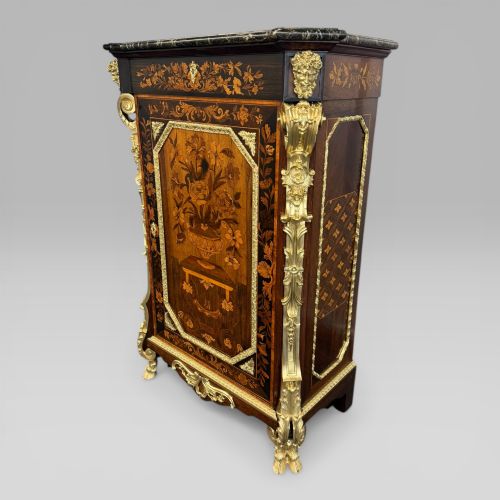
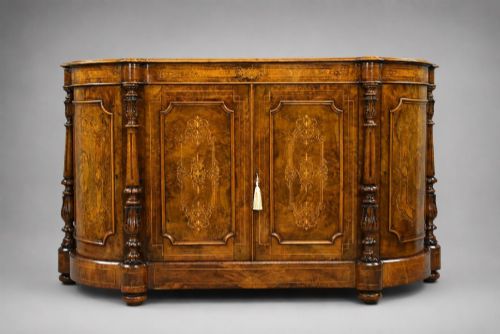
A floral marquetry credenza brings together detailed wood-inland flower motifs and substantial nineteenth-century cabinet work to anchor a reception room.
Floral Marquetry Credenza
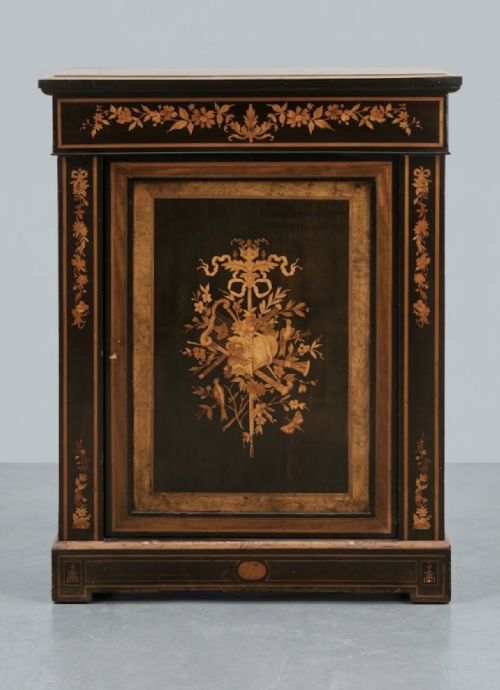
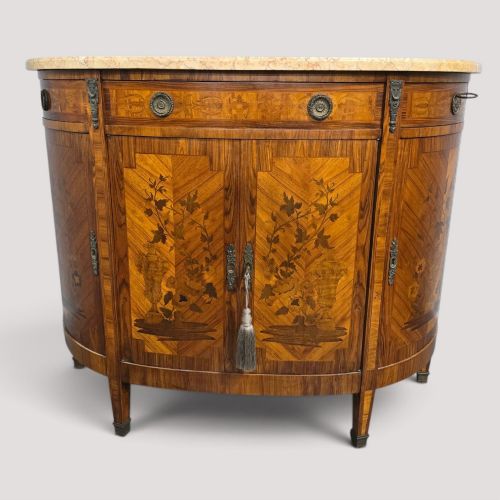
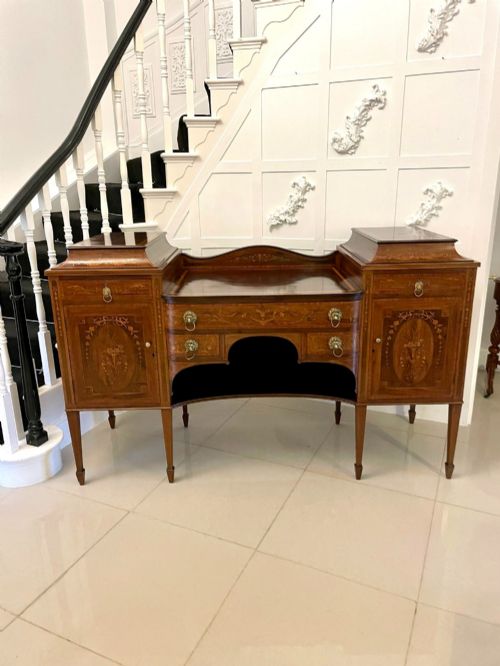
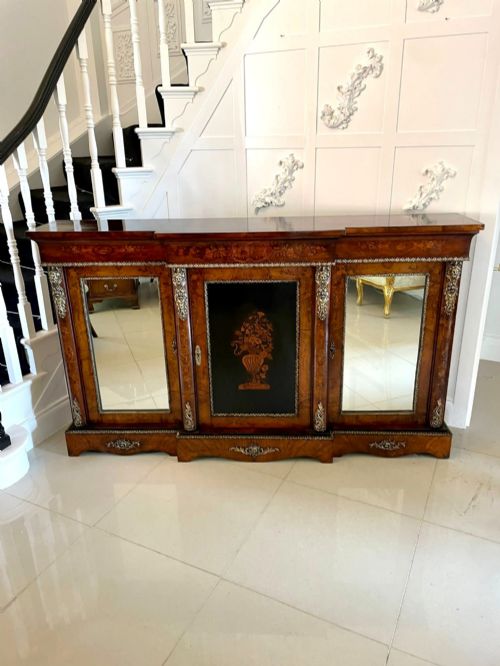
A floral marquetry credenza is a low, freestanding display cabinet or sideboard decorated with botanical patterns formed from different tinted veneers. These pieces typically present curved serpentine fronts or straight multi-door layouts designed to stand flat against principal walls. Most examples surface from the Victorian era, executed in figured walnut, burr walnut, or ebonised wood.
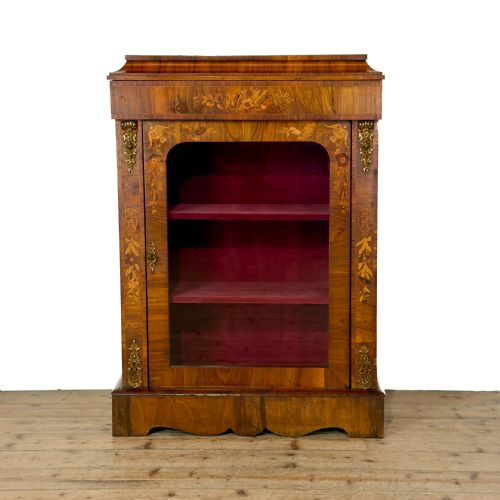
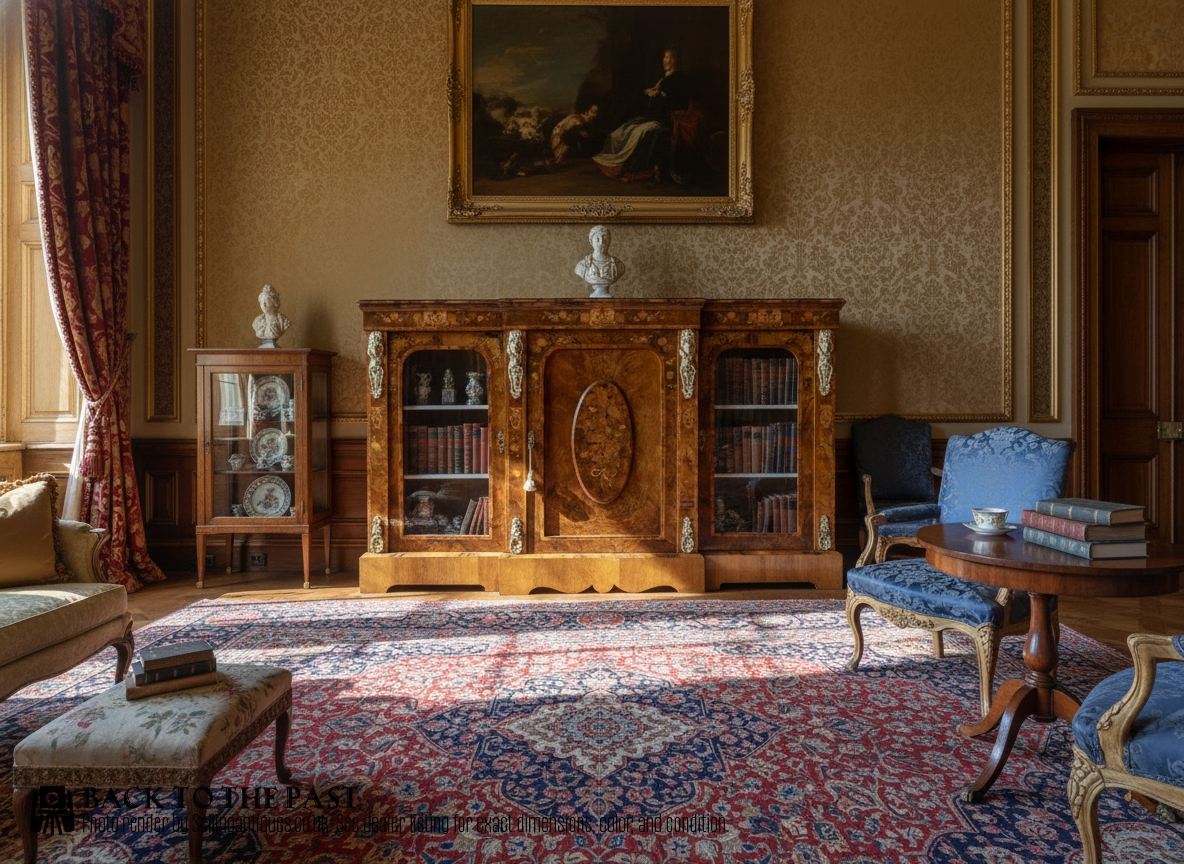
The form frequently incorporates central glazed doors flanked by curved side compartments, mounting glass shelves and silk-lined interiors for the display of porcelain or silver. Alongside standard credenzas, related sideboard and pier cabinet formats appear frequently across the listings. Walnut foundations dominate the domestic English and French output recorded in the archive.
Materials and construction methods
The primary bodies utilise solid timber carcases faced with expensive decorative veneers, principally burr walnut, kingwood, and mahogany. Cabinet makers sliced these woods into thin sheets to hand-cut intricate botanical floral scenes, assembling the tiny pieces together like puzzles before pressing them onto the backing boards.
Cast ormolu mounts, brass stringing, and white marble tops complete the construction of the finer examples. Gilding and bronze enrichment frame the door panels and highlight the serpentine curves of the cabinetry.
Floral Marquetry Credenza Retail Price Guide 2026
Typical asking prices for floral marquetry credenza among the pieces listed under this phrase on Sellingantiques today, from the lower quarter to the upper quarter. They describe what is for sale here now, not the wider market.
The listings show materials spanning burr walnut, kingwood, ormolu, and white marble across nineteenth-century Victorian forms.
Distinctions in craftsmanship
Quality separates by the precision of the veneer cutting and the depth of the timber figuring. Superior pieces deploy rich burr walnut with tightly matched grain patterns that frame the botanical marquetry panels without gaps or filler.
Hardware and secondary framing also dictate tier. Heavy, finely chased ormolu mounts and substantial marble slabs distinguish the top level of production from simpler domestic side cabinets.

Hewetsons London·Edward Holmes Baldock·Paul Sormani
The Floral Marquetry Credenza Glossary
- Marquetry
- The art of creating decorative pictures or patterns on wooden furniture by gluing thin pieces of tinted veneer onto a solid ground. This technique distinguishes floral cabinets from plain panelled furniture.
- Credenza
- A low cabinet or sideboard, usually featuring a central door with flanking curved glass display compartments. The form evolved during the nineteenth century to serve dining rooms and parlours.
- Ormolu
- Gilt-bronze mounts applied to furniture edges, feet, and corners for decorative enrichment. French workshops utilised this technique extensively.
- Burr Walnut
- A specialised wood grain obtained from tree growths, yielding intricate swirling patterns. It forms the favored background canvas for nineteenth-century floral inlay.
- Serpentine Front
- A cabinet facade shaped with a central convex curve flanked by concave sections. This undulating profile requires advanced joinery skills.
Floral Marquetry Credenza: Frequently Asked Questions
What is a floral marquetry credenza?
It is a low nineteenth-century display cabinet featuring detailed wood-inlaid botanical panels across its doors and curved front.
Cabinet makers built these pieces using walnut or ebonised foundations to display ornaments in principal reception rooms.
How were these credenzas used?
Victorian households utilised them for storing and displaying fine china, glass, and silver behind glazed doors.
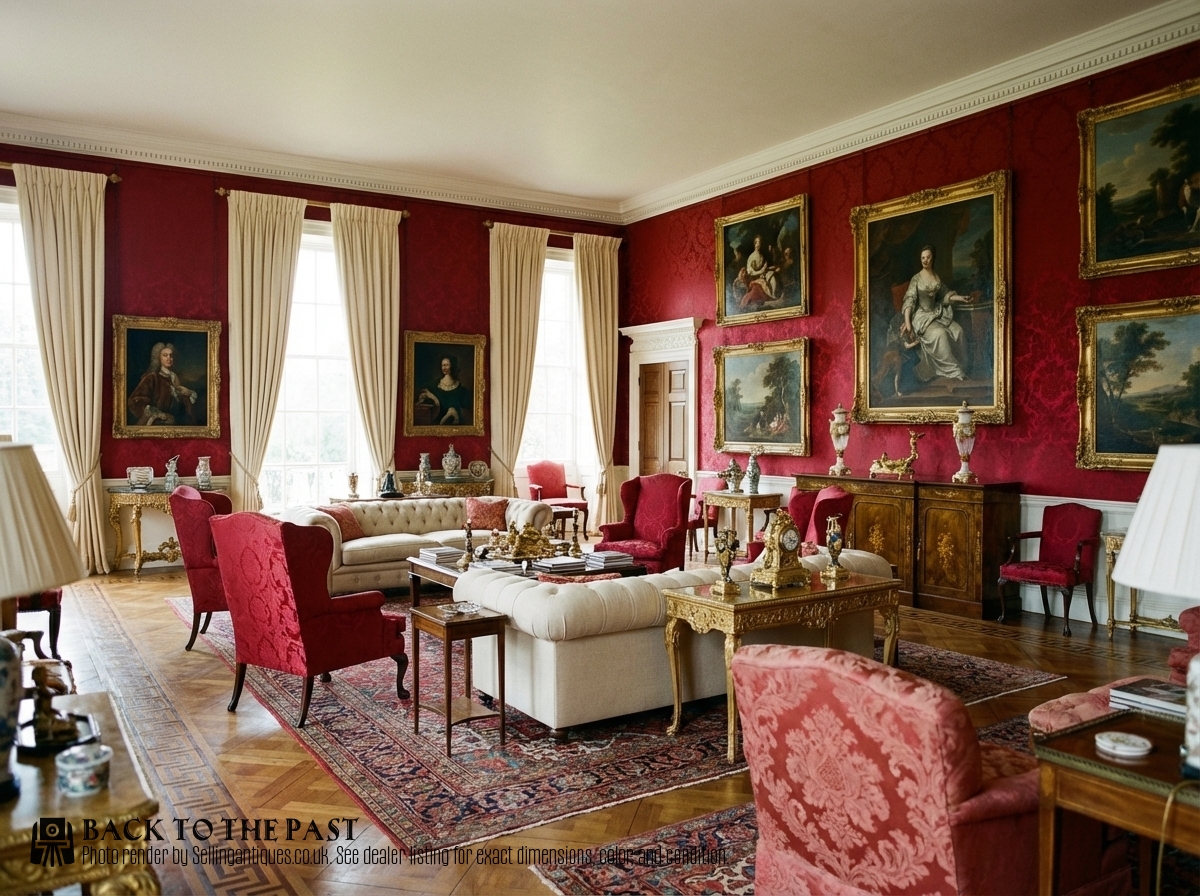
The flat marble or wooden top surface also provided space for lamps or decorative urns during gatherings.
Where were these cabinets made?
The recorded pieces originate primarily from English and French workshops working in the nineteenth century.
Maker signatures and stylistic details connect specific examples to London firms and Parisian cabinet makers.
How do I care for burr walnut?
Keep the timber away from direct sunlight and steady the room humidity to prevent the thin decorative veneers from lifting.
Apply traditional beeswax occasionally to nourish the historic wood finish without building up heavy wax layers.