
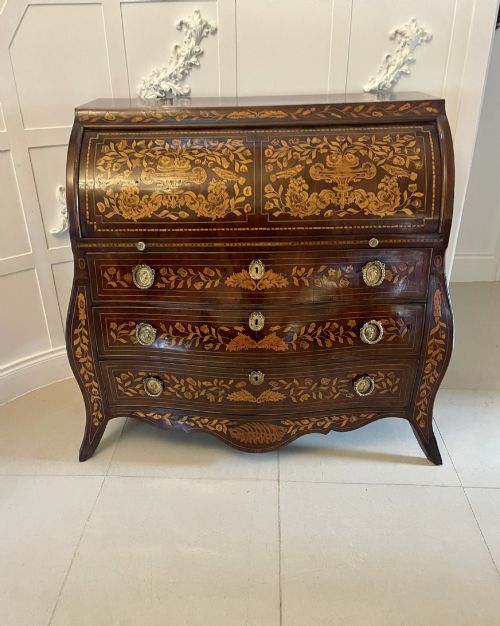
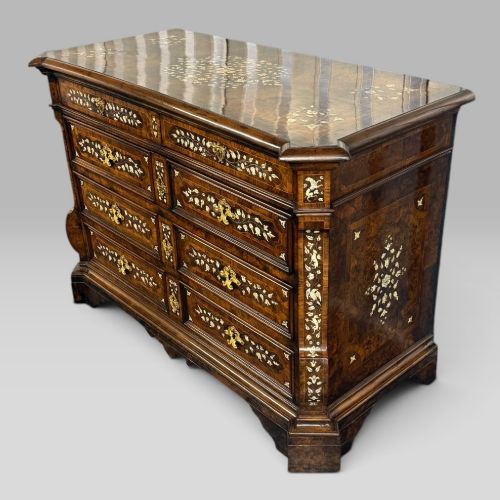
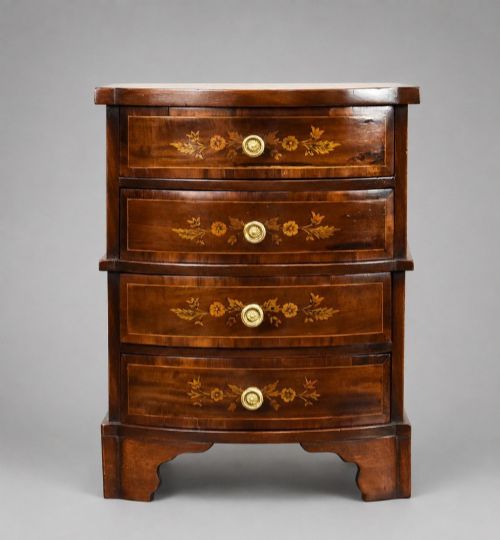
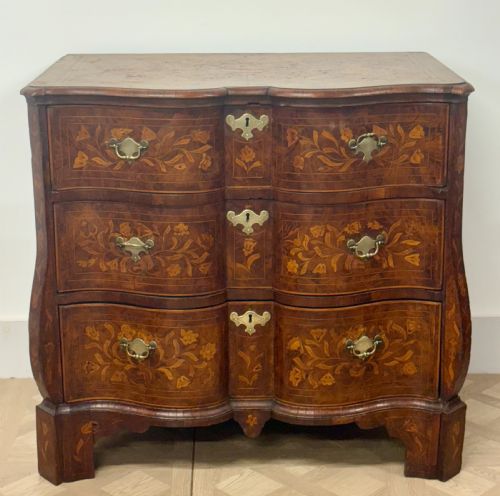
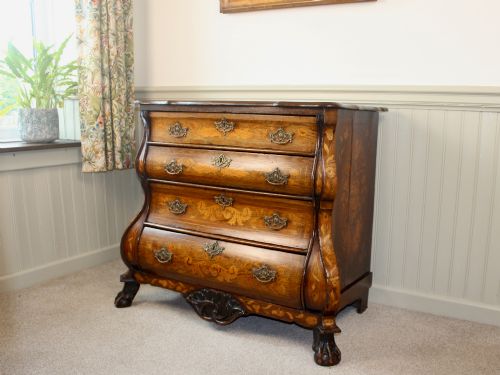

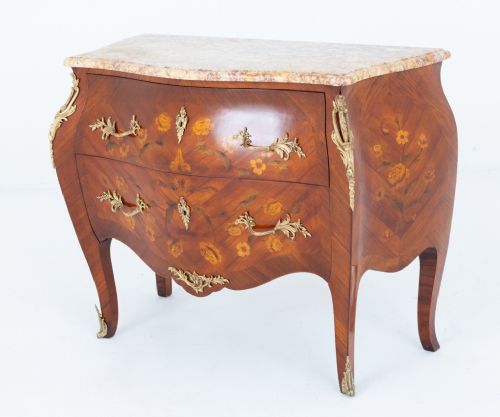


Floral Marquetry Commode Chest
A floral marquetry commode chest brings together precise wood-inlay technique and sculptural form, offering both storage and historical presence.
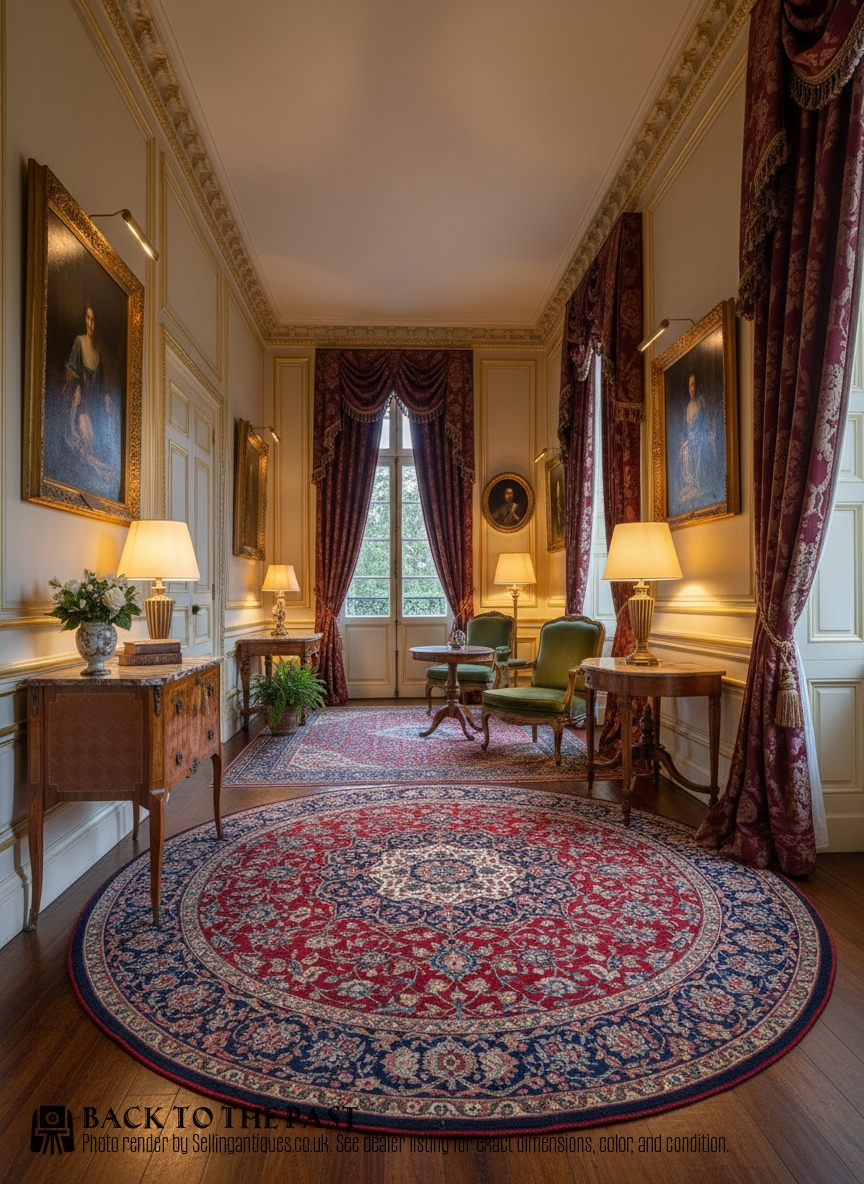
Floral Marquetry Commode Chest
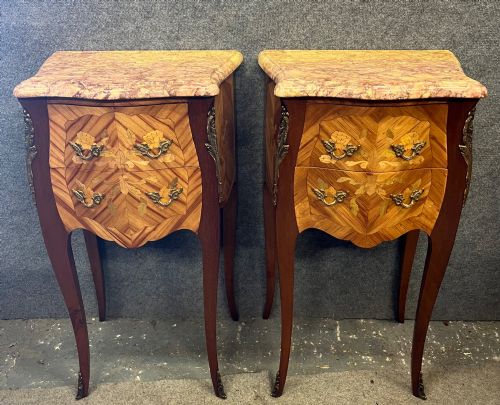
A floral marquetry commode chest encompasses a range of storage forms, from serpentine commodes and bombé chests to bedside tables and bureaus. Buyers encounter pieces spanning several centuries, with prominent examples originating from Dutch and French workshops.
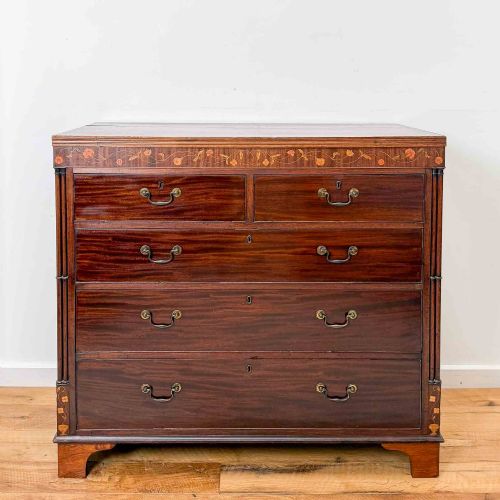
The selection on this page relies heavily on 18th-century and 19th-century interpretations, alongside Edwardian and later revivals. Common formats include chests of drawers, tallboys, and marble-topped sideboards decorated with floral inlay.
Materials and Technique
Cabinetmakers utilised primary woods such as walnut, mahogany, kingwood, rosewood, and oak as the structural base for these items. Surfaces received elaborate floral marquetry patterns created by fitting thin veneers of fruitwood, satinwood, and other contrasting timbers together.
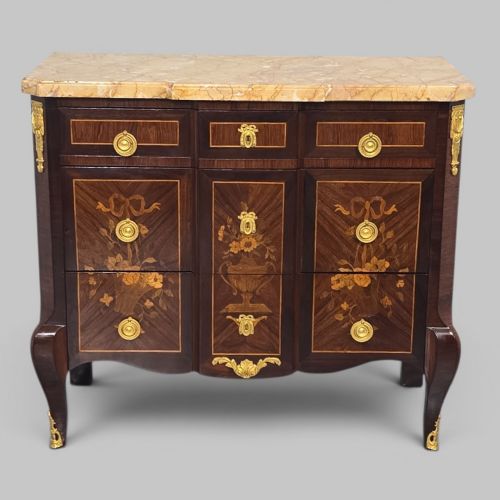
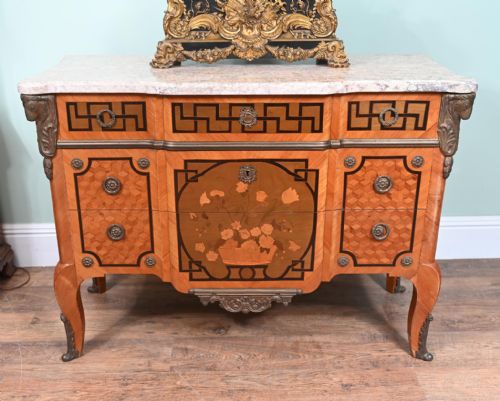
Many items incorporate mounts and details in ormolu and brass, while upper surfaces frequently feature fitted marble slabs. Construction methods reflect the prevailing standards of Dutch Baroque, William and Mary, and Louis XV revival periods.
Periods represented span from the seventeenth century and William and Mary eras through to Edwardian and later revivals.
Evaluating Execution
The standard of a floral marquetry commode chest rests on the precision of the veneer cutting and the tightness of the joinery within the floral motifs. Superior examples maintain crisp lines where disparate timbers meet, showing meticulous hand-cut alignment rather than loose fits.
Integration of secondary materials also dictates the tier of execution. Heavy, well-cast ormolu mounts and finely figured walnut or mahogany carcases separate exceptional items from simpler commercial production.
Edwards and Roberts
The Floral Marquetry Commode Chest Glossary
- Marquetry
- The art of forming decorative patterns on a wooden carcase by applying thin layers of veneer. Craftsmen assemble contrasting woods to create pictorial floral designs.
- Commode
- A low chest of drawers originating in France. These pieces typically stand on short legs and often incorporate marble tops.
- Bombe
- A swollen or bulging profile characteristic of certain continental furniture forms. This undulating shape requires advanced woodworking skill to veneer accurately.
- Ormolu
- Gilded bronze applied as mounts, handles, and feet on furniture. It provides metallic contrast against dark woods and marquetry.
- Veneer
- A thin slice of ornamental wood applied to a coarser timber carcase. This technique allows cabinetmakers to display rich grain and floral patterns economically.
Floral Marquetry Commode Chest: Frequently Asked Questions
What is a floral marquetry commode chest?
A floral marquetry commode chest is a set of drawers or cabinet decorated with detailed wood-inlay patterns depicting flowers and foliage. These items serve as decorative storage furniture.
Originating primarily in continental Europe and Britain, they span periods from the seventeenth century through to later revival styles.
How do I care for marble-topped chests?
Marble tops require gentle cleaning with mild soap and water to preserve the polished surface. Avoid acidic substances that can etch the stone.
Keep the surrounding wooden carcase polished with appropriate wax to maintain the condition of the floral veneer.
Where should I place a commode in a room?
A commode works well as a focal point in a living room, hallway, or bedroom where its decorative surface can be appreciated. Ensure it sits away from direct sunlight and heat sources.
Because many examples feature delicate inlay and marble tops, stable placement protects both the joinery and the stone.