
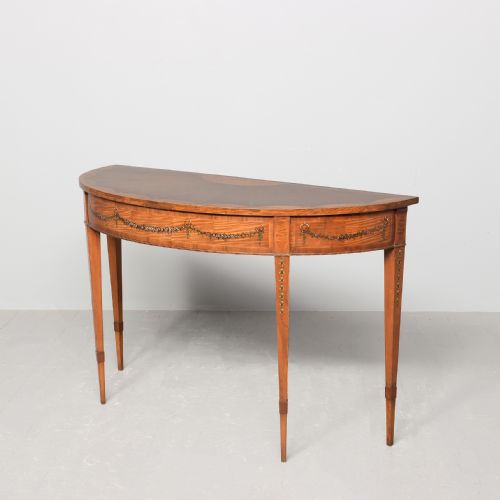
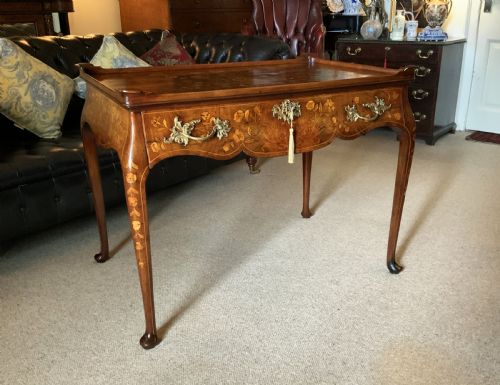


Floral Inlay Console Table
A floral inlay console table brings intricate botanical marquetry and architectural presence into a hallway or reception room.
Floral Inlay Console Table
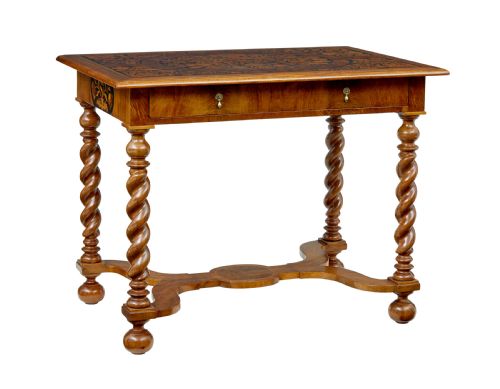
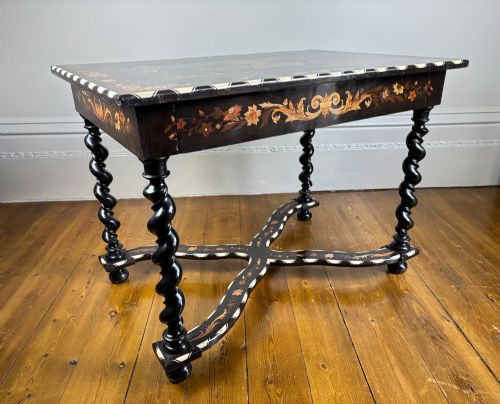
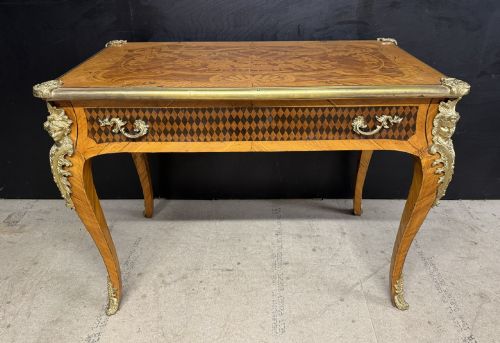
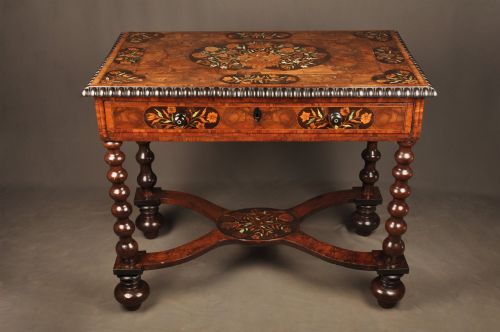
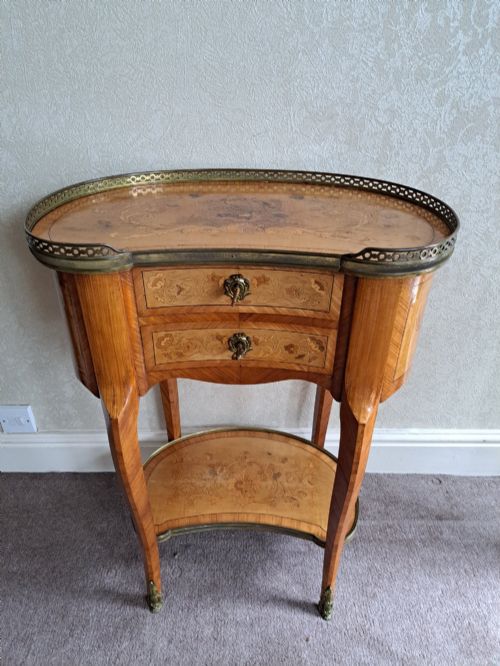
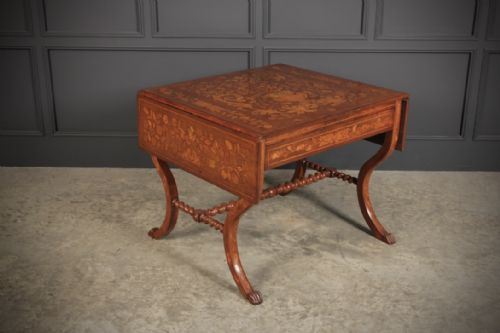
A floral inlay console table combines surface decoration with functional furniture forms originating mainly from the eighteenth and nineteenth centuries. These pieces span Dutch Baroque and Rococo designs alongside French Louis styles and Victorian adaptations.
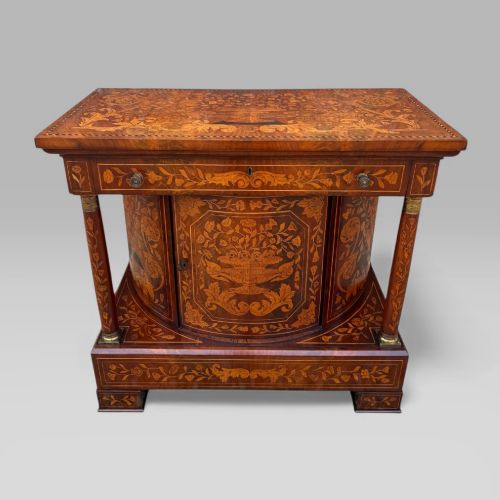
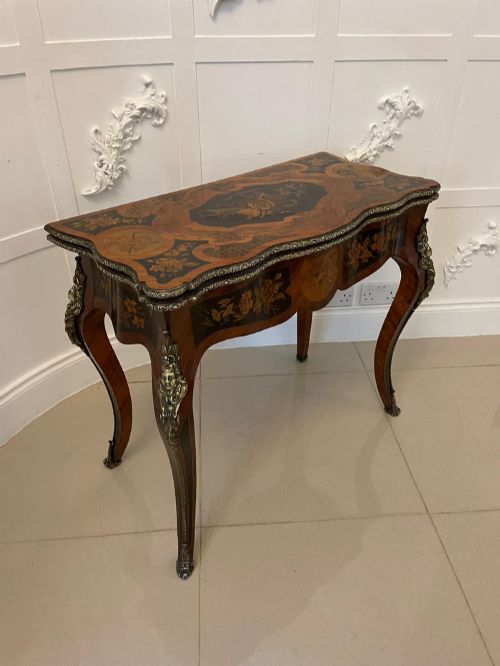
Buyers encounter console tables, side tables, and demi-lune formats constructed from foundational timbers such as walnut, mahogany, rosewood, and kingwood. The decorative scheme relies heavily on floral marquetry depicting blooms, foliage, and birds.
The selection here encompasses periods from the eighteenth century through the Edwardian era, showing both continental European cabinet-making and British workshop interpretations.
How they were made
Cabinet-makers constructed the carcase using dense timbers like walnut, mahogany, and kingwood, often applying contrasting veneers to create contrasting ground panels. Artisans then hand-cut delicate pieces of fruitwood, bone, and brass to form elaborate floral marquetry motifs.
French pieces frequently incorporate cast ormolu mounts to accent the curves of the framework, while Dutch examples depend entirely on dense floral and bird marquetry across the entire surface. Joinery techniques varied from traditional cabinet construction to drop-leaf and gate-leg mechanisms on gaming and side tables.
Several tables feature hidden card surfaces and secret compartments ready for eighteenth-century wagers.
What varies in quality
Quality rests upon the precision of the marquetry cutting and the choice of timbers used for the floral motifs. Finer examples display meticulous shading within the fruitwood veneers and crisp execution of the surrounding brass or ormolu mounts.
The structural integrity of the timber carcase and the balance of the overall design differentiate standard production items from exhibition-grade furniture. Cabinet-work showing careful grain selection and harmonious floral composition stands apart from simpler decorative applications.
Henry Dasson
The Floral Inlay Console Table Glossary
- Marquetry
- Decorative veneer work cut and fitted into a background to form intricate patterns such as flowers and birds. This technique distinguishes ornamental table tops from plain wooden surfaces.
- Ormolu
- Gilded bronze mounts applied to furniture edges and legs, common in French cabinet-making. These metal elements enhance the decorative profile of the piece.
- Demi-lune
- A half-moon shape used for console tables designed to stand flush against a wall. This format saves floor space while providing a decorative surface.
- Serpentine
- A curved line that undulates gently inwards and outwards, frequently seen on the edges of eighteenth-century table tops. This contour adds visual movement to the furniture form.
- Kingwood
- A dense, richly grained timber utilised in cabinet-making for its dark violet-brown colour and contrasting golden streaks. It forms a stable base for detailed inlay.
Floral Inlay Console Table: Frequently Asked Questions
Where should I place a console table?
A console table works best against a hallway or drawing room wall where the inlaid top remains visible. Its shallow depth prevents it from obstructing pathways while offering a surface for lamps or decorative objects.
Pairing the table with a wall mirror or cabinet completes a traditional interior arrangement without overwhelming smaller spaces.
How do I care for antique marquetry?
Maintain the timber and veneer by keeping the table away from direct sunlight and sudden temperature changes. Regular dusting with a soft, dry cloth preserves the polished finish without harming the delicate inlay.
Apply a microcrystalline wax sparingly when the wood appears dry, avoiding any buildup around the fine joints of the marquetry.
What is the difference between a console and a side table?
A console table traditionally sits flat against a wall, sometimes supported by brackets or legs that emphasise its frontal display. Side tables are generally freestanding pieces designed to be viewed from multiple angles.
Both forms appear with floral inlay, though console tables more frequently feature demi-lune or serpentine shapes tailored for wall placement.
How do I date a Dutch marquetry table?
Dating relies on stylistic shifts from eighteenth-century Dutch Baroque and Rococo designs toward later nineteenth-century revival work. Earlier pieces often display robust walnut frames with naturalistic floral and bird motifs.
Examine the secondary woods inside the construction and the sharpness of the marquetry cutting to help determine the period of manufacture.