

Floral Inlaid Occasional Tables
Floral inlaid occasional tables bring warmth and intricate botanical detail to a room, offering surface space with decorative depth.
Floral Inlaid Occasional Tables
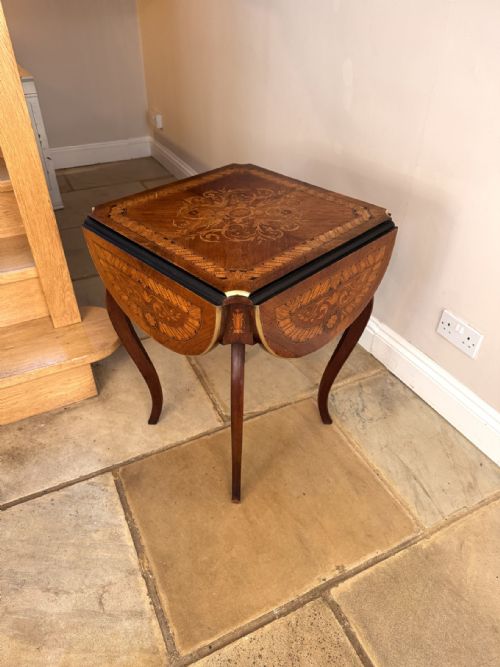
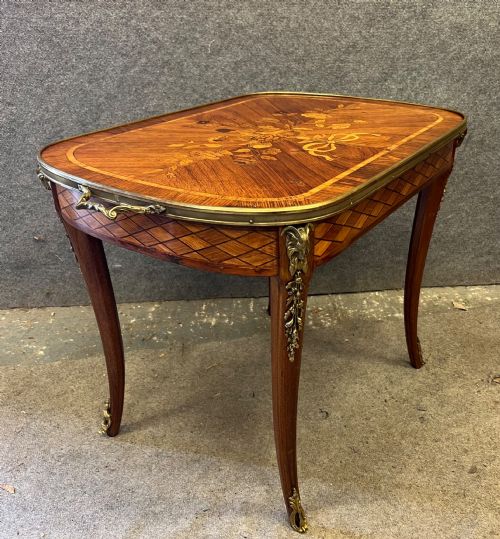
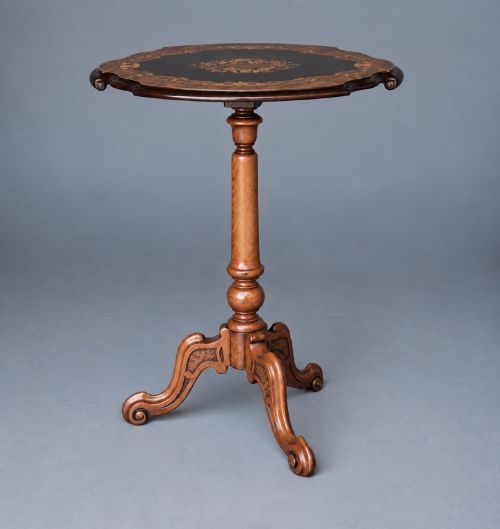
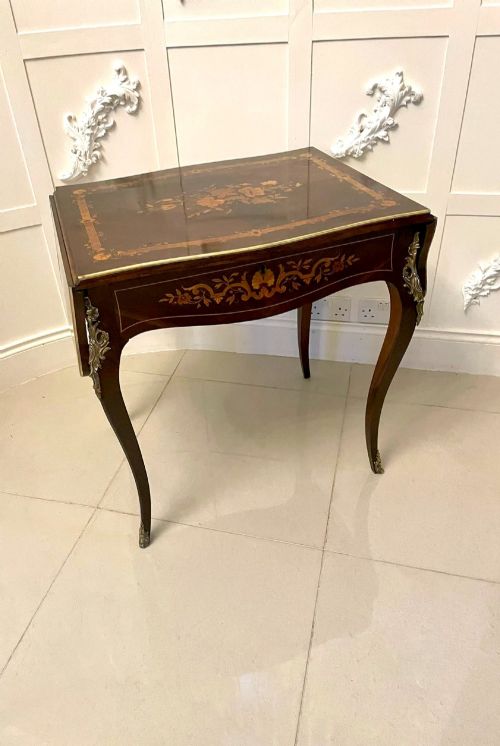
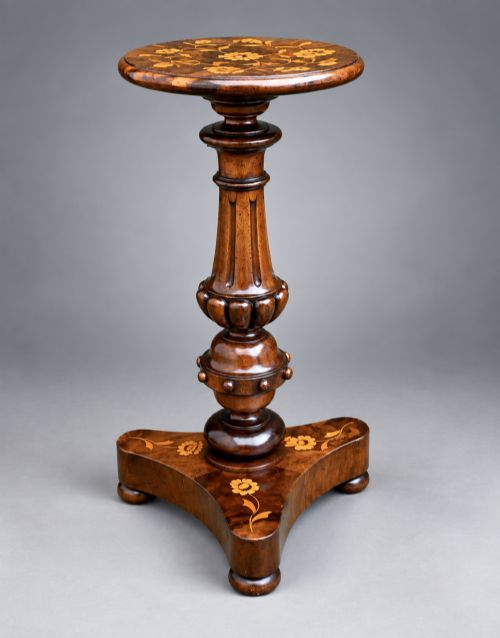
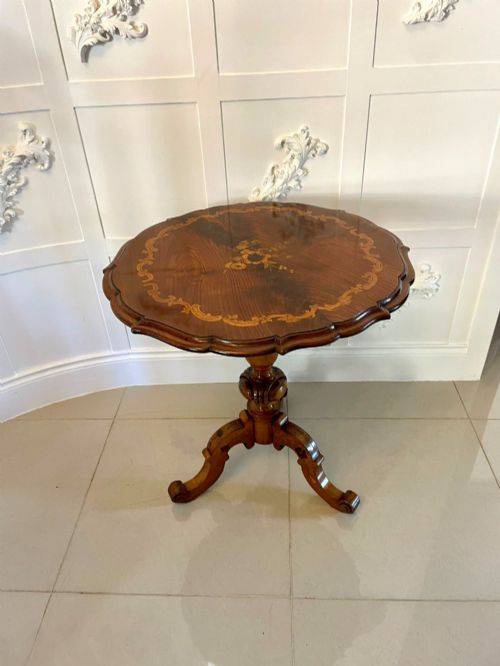
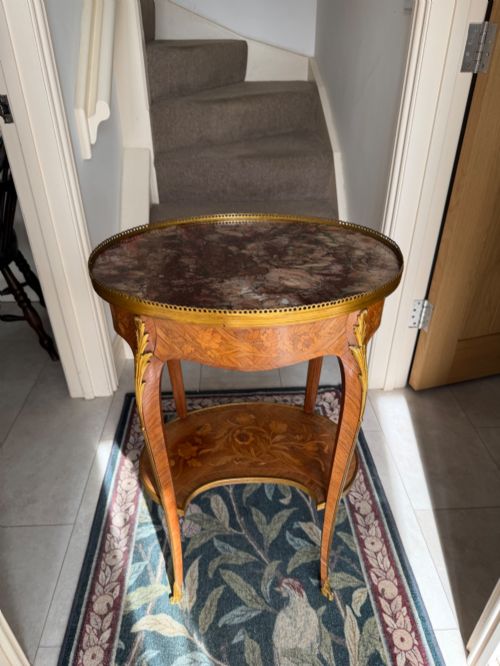
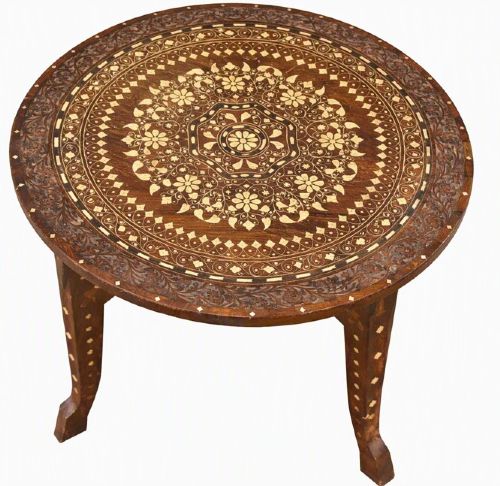
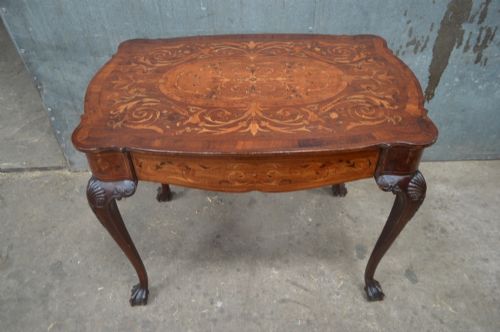
When searching for floral inlaid occasional tables, buyers encounter a diverse selection of small decorative stands designed for practical utility and display. The pieces on this page span the eighteenth, nineteenth, and early twentieth centuries, drawing on Victorian, Edwardian, and continental revival styles.
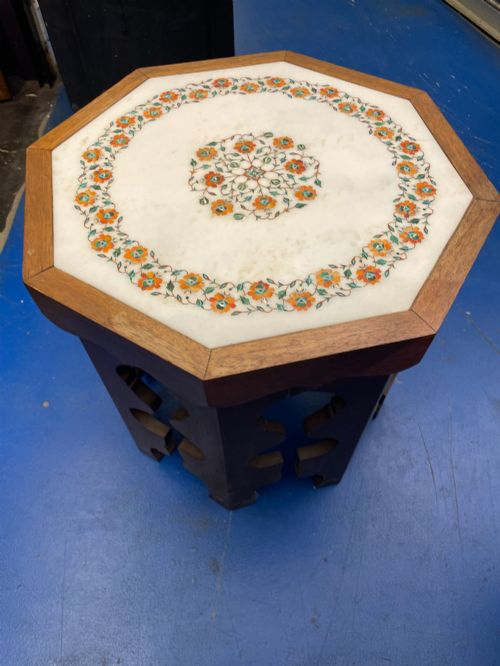
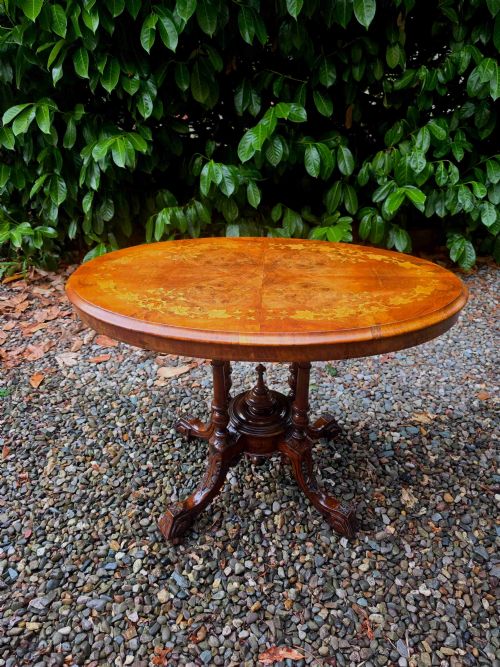
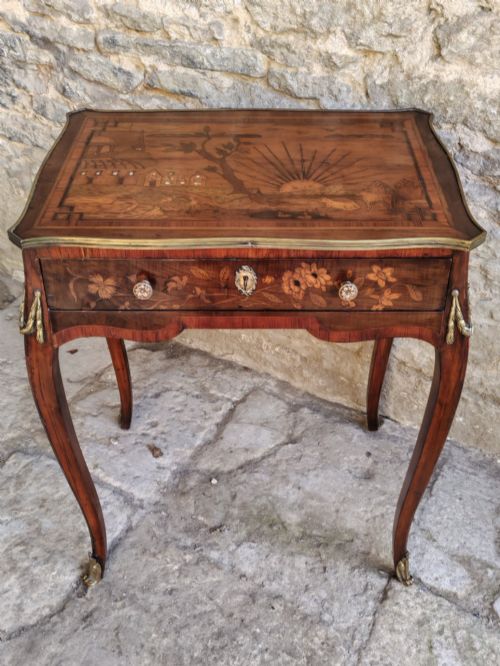
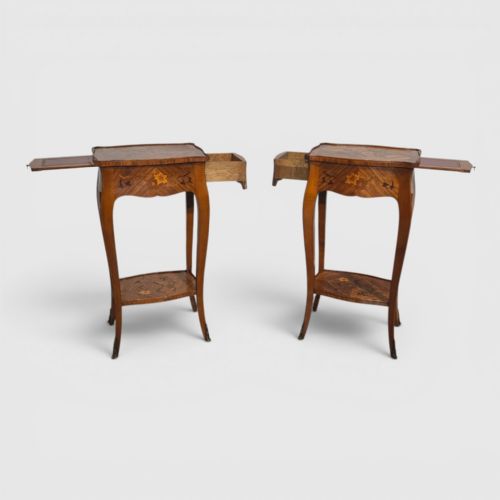
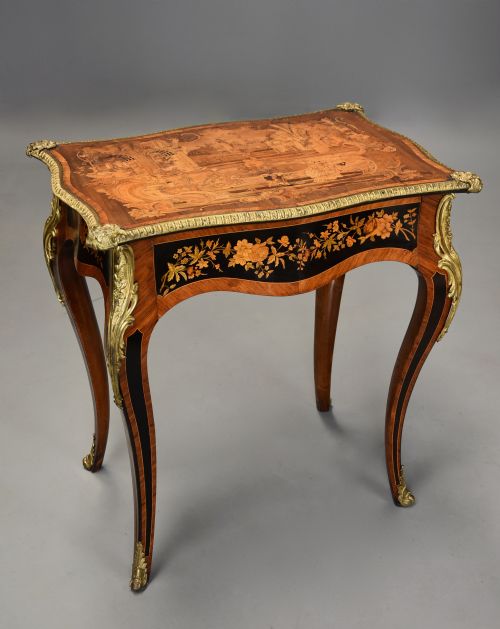
Most examples appear as centre tables, lamp tables, or side tables constructed in walnut, rosewood, mahogany, and kingwood. Makers utilised contrasting timbers to render floral marquetry across round, oval, octagonal, and rectangular tops.
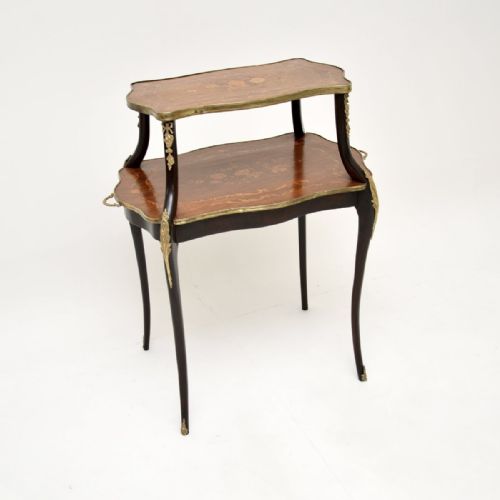
Continental pieces often follow French and Dutch rococo or empire designs, whilst British variants include Victorian walnut pieces and Edwardian satinwood or mahogany stands. Occasional pieces also comprise etageres, tier tables, and sofa tables featuring detailed surface decoration.
Materials and technique
Cabinetmakers built these tables using robust secondary timbers faced with fine cabinet veneers such as burr walnut, rosewood, kingwood, and satinwood. The distinct floral motifs rely on marquetry, a technique where thin veneers of different coloured woods, bone, or brass are cut and fitted together into a cohesive picture before being applied to the table top.
Many examples incorporate cast or applied ormolu mounts, brass banding, and turned or fluted legs that support the veneered top. Certain pieces integrate specialised surfaces such as marble or pietra dura panels alongside the timber marquetry.
Listings feature walnut, rosewood, kingwood, and mahogany as primary timbers for floral inlaid occasional tables across the nineteenth century.
Evaluating craftsmanship
Quality rests in the precision of the marquetry cutter and the selection of the timber figures. Superior pieces display crisp junctions between the inlaid floral elements and the background veneer, utilising burr walnut or figured rosewood with rich natural grain.
The sophistication of the underlying frame and mountings dictates the standing of a piece. Finer examples feature substantial cast ormolu details, well-turned timber supports, and stable joinery that maintains structural integrity across delicate forms like etageres and kidney tables.
Liberty & Co·Edwards & Roberts
The Floral Inlaid Occasional Tables Glossary
- Marquetry
- A decorative technique of applying thin pieces of wood veneer to a structure to form floral or geometric designs. It differs from inlay by covering the entire surface rather than being set into hollowed recesses.
- Ormolu
- Gilded bronze mounts applied to furniture for decorative effect. These metal elements accent the corners, legs, and aprons of continental and revival tables.
- Etagere
- A multi-tiered open shelving unit or small table used for displaying decorative objects. These tables provide multiple surfaces arranged vertically.
- Pietra dura
- An artistic technique using cut and fitted polished coloured stones to create inlay designs. It appears on select tabletops in place of wood marquetry.
- Burr walnut
- Timber taken from a growth or burl on a walnut tree, characterised by swirling knot patterns. Cabinetmakers prize it for its highly decorative grain.
Floral Inlaid Occasional Tables: Frequently Asked Questions
What is an occasional table?
An occasional table is a small, movable piece of furniture designed for a specific, intermittent use in a room, such as holding a lamp, book, or decorative object.
These versatile stands appear in various rooms as side tables, lamp tables, or coffee table alternatives, offering both surface utility and decorative character.
How do I care for antique veneer?
Protect antique veneered surfaces from direct sunlight and extreme humidity changes, which cause the timber to warp and the glue to fail. Dust gently with a dry cloth and avoid applying modern silicon polishes.
Maintaining a stable indoor climate preserves both the wood grain and the delicate floral marquetry inlay over decades of use.
What is the difference between marquetry and inlay?
Marquetry involves assembling a complete picture from various veneers and applying it as a single sheet across the entire surface of the furniture top. Inlay traditionally requires cutting recesses into a solid wood base and fitting pieces of wood, brass, or bone directly into those hollows.
Both techniques create detailed floral patterns, though floral inlaid occasional tables predominantly utilise the marquetry method.
How do I date a floral inlaid table?
Dating relies on examining the secondary timbers, the style of the legs, the assembly methods, and the specific characteristics of the floral marquetry. Victorian and Edwardian pieces often exhibit machine-sawn framing elements and standardised revival motifs.
Earlier eighteenth-century or mid-nineteenth-century examples show hand-cut joinery markers and distinct regional cabinetmaking traits that correspond to periods like the French Napoleon III or Louis XV revivals.