





Wooden Nesting Accent Tables
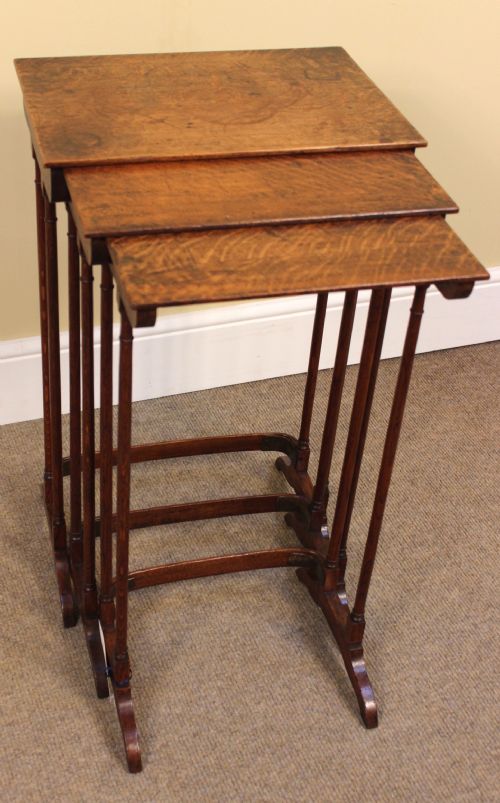
Wooden nesting accent tables are space-saving sets of graduating occasional tables that slide neatly beneath one another when not in use.
Wooden Nesting Accent Tables
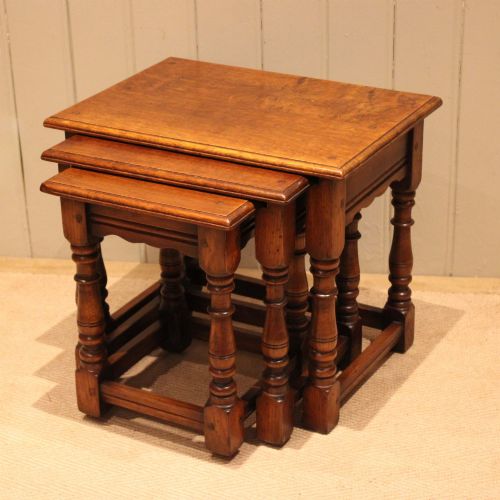
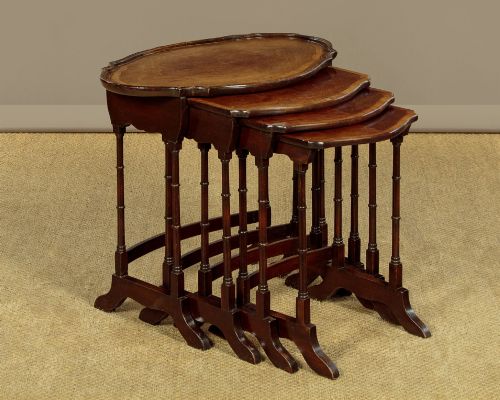
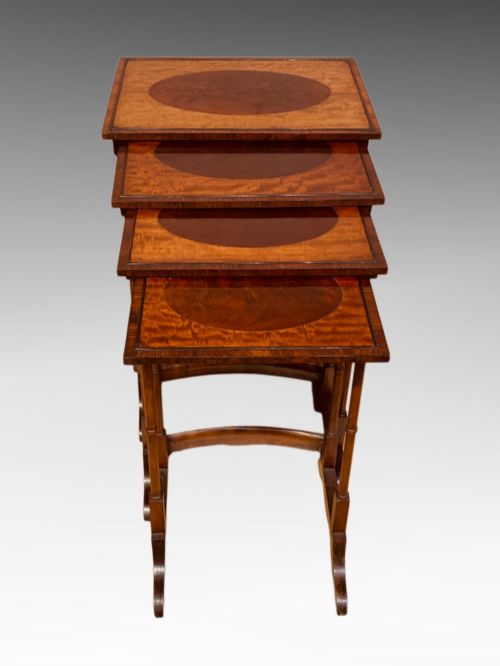
Wooden nesting accent tables arrive in sets ranging from three to five pieces, designed to slide together into the footprint of a single small table. Buyers seeking wooden nesting accent tables most frequently encounter Edwardian and Victorian quartetto sets alongside Chinese export pieces.
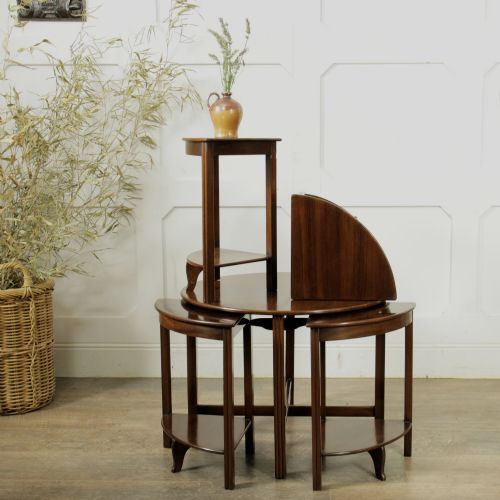
The forms span circular, oval, serpentine, and kidney shapes, as well as traditional rectangular designs. Construction relies on hardwoods like mahogany, oak, rosewood, walnut, and teak, often finished with detailed inlay work.
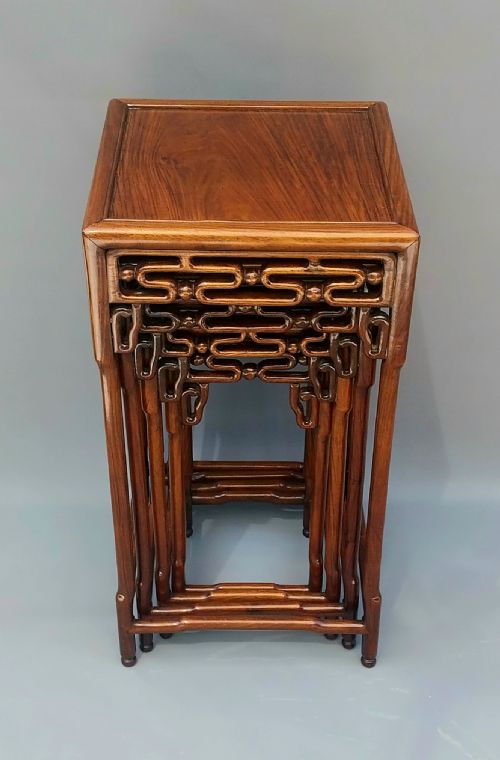
Origins stretch from English country workshops to Late Qing Dynasty export studios, offering a wide variety of domestic and oriental aesthetic choices. These sets function practically as coffee tables, side tables, or occasional surfaces that adapt easily to changing room layouts.
What varies in quality
The refinement of the timber selection and the precision of the inlay work dictate the standard of the piece. Superior examples display carefully matched grain patterns and harmonious wood tones across all graduating surfaces in the set.
Structural integrity depends on tight joints and smooth sliding tolerances between the individual tables. Subtle variations in serpentine shaping, carved details, and veneer thickness separate standard utility furniture from finer decorative examples.
Listings span the nineteenth and twentieth centuries, featuring materials from domestic oak and mahogany to imported teak and rosewood.
The Wooden Nesting Accent Tables Glossary
- Quartetto
- A matched set of four graduating tables designed to nest together. This term appears frequently in Edwardian and Victorian catalogue descriptions.
- Inlay
- A decorative technique where contrasting woods or materials are set flush into the surface timber. Satinwood and lighter veneers are often utilised for this purpose on dark mahogany bases.
- Parquetry
- Geometric mosaic woodwork formed by small pieces of timber arranged in patterns. This technique decorates tabletops to create striking visual depth.
- Hongmu
- A traditional Chinese term for dense hardwoods, often translated as red wood. Pieces in this material frequently exhibit intricate hand carving.
- Serpentine
- A gently undulating furniture line curving outward and inward. This shape requires advanced cabinetmaking skill to execute across nested table tops.
Wooden Nesting Accent Tables: Frequently Asked Questions
How were nesting tables used?
These sets served as versatile furniture for entertaining guests in Victorian and Edwardian drawing rooms. Individual tables were pulled out to hold tea cups or books as needed.
When the gathering finished, the smaller tables slid back into the master frame to reclaim floor space.
How do I care for wooden nesting tables?
Keep the wood away from direct sunlight and heat sources to prevent the veneers and fine inlays from drying out. Dust regularly with a soft dry cloth.
Lift each table carefully when separating the nest rather than dragging the frames against one another.
What is a quartetto nest?
A quartetto set consists of exactly four tables that graduate in size to fit snugly beneath the largest top. This specific grouping became particularly popular during the late nineteenth and early twentieth centuries.
Cabinetmakers applied this format across various revival styles and oriental export designs.
How can I tell Victorian tables apart?
Victorian examples often feature solid mahogany or rosewood construction with deeper tones and simpler structural lines. Later Edwardian versions frequently introduce lighter satinwood inlays and more playful shapes like kidney or serpentine forms.
Chinese export pieces from the same era display distinctive hand carving and dense woods such as hongmu.