


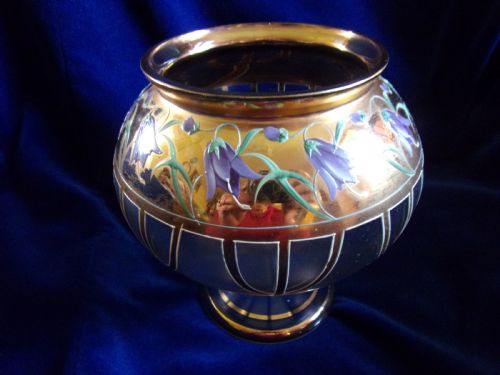


Floral Enamel Bowl
A floral enamel bowl brings together vibrant painted botanicals and vitreous colour, offering a striking focal point for a room.
Floral Enamel Bowl
A floral enamel bowl is a decorative vessel adorned with botanical motifs fused in glass paste, spanning centuries of global craftsmanship. These pieces range from delicate European glass and porcelain to robust Asian bronze and copper works.
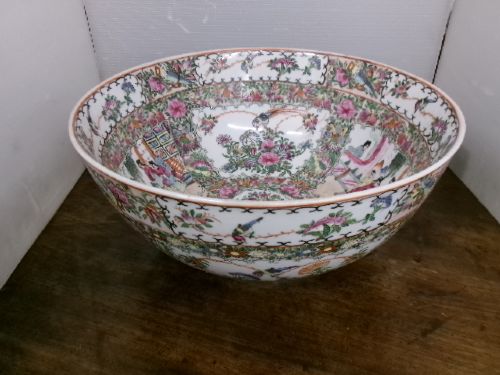
The pieces on this page lean heavily towards Japanese Satsuma and Cloisonne alongside Chinese Canton and Qing dynasty exports. Collectors encounter diverse forms, from large jardiniere planters to small miniature bowls and lidded jars.
European makers contribute French ormolu-mounted items and Bristol blue glass alongside continental porcelain punch bowls. Each tradition applies floral designs through distinct regional methods and stylistic preferences.
How they were made
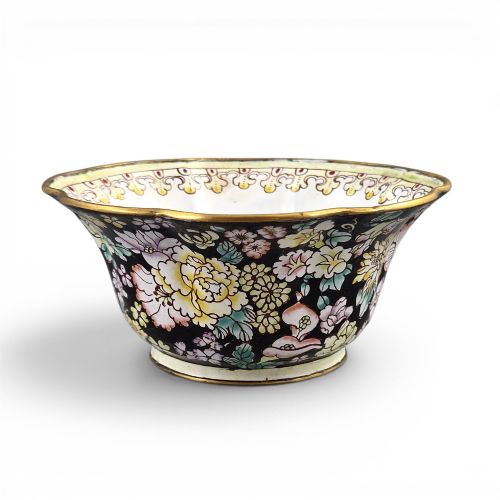
Maker utilise copper, bronze, brass, glass, and porcelain as the foundational body for these vessels. Artisans apply vitreous enamel powders, often combining cloisonne wirework, champleve cells, or freehand hand-painted pigments directly onto the prepared surface.
Gold leaf and rich gilding frequently accent the fired enamel designs to highlight floral petals and foliage. Subsequent high-temperature kiln firings fuse the powdered glass compounds permanently to the metal, ceramic, or glass substrate.
Several bowls feature intricate depictions of countless flowers or busy birds, ensuring the garden stays in bloom indoors regardless of the weather outside.
What varies in quality
Quality rests upon the precision of the enamel work and the crispness of the botanical painting. Superior examples exhibit fine wirework without distortion, smooth glazed surfaces free of pitting, and harmonious colour palettes.
The skill of the individual artist distinguishes standard production pieces from masterworks. Signed items, careful hand-painting, and heavier metal or porcelain foundations indicate higher tier execution.
Rene Lalique·Moser
The Floral Enamel Bowl Glossary
- Cloisonne
- A technique where metal wires are soldered to a metal body to create cells that hold enamel paste before firing. This method produces intricate geometric and floral patterns with distinct metal outlines.
- Satsuma
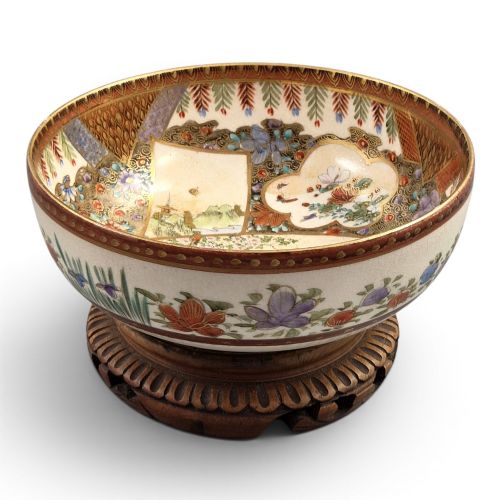
- A type of Japanese earthenware featuring a crackled ivory glaze decorated with polychrome enamels and rich gilding. These pieces frequently depict dense floral arrangements and traditional figural scenes.
- Orlomu
- An alloy of copper and zinc finished to imitate gold, often utilised for decorative mounts on nineteenth-century French pieces. It provides an ornate architectural frame for glass or enamel vessels.
- Imari
- A style of Japanese porcelain characterised by underglaze blue and overglaze red, green, and gold decoration. The palette creates a dense, colourful surface suited to traditional export wares.
- Gaiwan
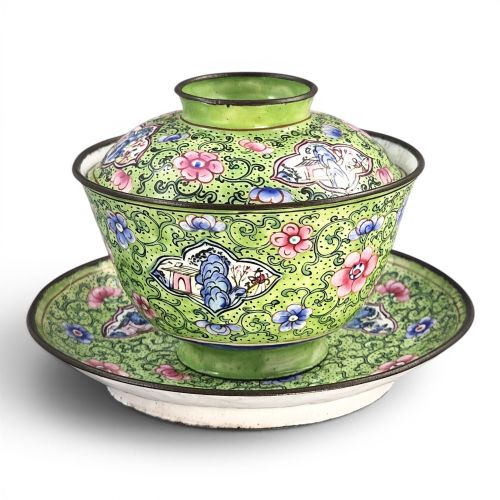
- A traditional Chinese lidded bowl used for steeping and drinking tea without a built-in strainer. It consists of a saucer, a bowl, and a matching lid.
Floral Enamel Bowl: Frequently Asked Questions
How were floral enamel bowls used?
These vessels served diverse functions depending on their scale and origin, ranging from centrepiece displays on dining tables to functional teaware and dressing table storage. Larger jardiniere forms held potted plants within nineteenth-century drawing rooms.
Smaller lidded jars and miniature bowls accommodated cosmetics, trinkets, or specialised dining uses. Punch bowls catered to communal hospitality during earlier centuries, while decorative trays functioned as receptacles for calling cards.
How do I care for an antique enamel bowl?
Maintain these pieces by dusting gently with a dry, soft cloth to prevent particulate accumulation on the vitreous surface. Avoid abrasive cleaners, chemical solvents, or immersion in water, which can damage delicate gilding or exposed metal wires.
Display the vessels away from direct sunlight and sudden temperature shifts to protect fragile glass, porcelain, and resinous components. Handle heavy bronze or ceramic examples with support beneath the base rather than relying on decorative rims or handles.
How do I identify the period of a cloisonne bowl?
Dating relies on examining the weight of the metal base, the brightness of the enamel colours, and the characteristics of the wirework. Earlier pieces often display heavier bronze foundations and softer, opaque colour tones compared to later productions.
Marks on the base, when present, offer clues to origin and dynasty, though many fine export pieces carry no maker's sign. Comparing the complexity of the floral motifs and manufacturing techniques to dated examples helps narrow the era of creation.
What is the difference between Satsuma and Cloisonne?
Satsuma ware utilises an earthenware or porcelain body decorated with hand-painted polychrome enamels and extensive gilding over a distinctive crackled glaze. The floral designs rely entirely on brushwork rather than metal boundaries.
Cloisonne builds the design using raised metal wires soldered to a metal substrate to form individual cells filled with glass paste. This technique creates a tactile, compartmentalised surface with distinct metallic outlines defining every petal and leaf.